Irene Ryan gave American television one of its most enduring comic treasures when she created the role of Granny in The Beverly Hillbillies, a series that ran from 1962 to 1971. For nine seasons, audiences watched her bring a blend of sharp-witted humor and folk wisdom to the screen, building a character that would define the final chapter of a career that stretched back to the vaudeville stages of the early twentieth century. Ryan was born in El Paso, Texas, on October 17, 1902. She discovered performing early, stepping onto a stage for the first time at age eleven in an amateur talent show in San Francisco.
Her Irish mother offered little encouragement and reportedly warned that if the devil existed anywhere, he would be found backstage. Despite that skepticism, Ryan pursued entertainment with determination. At twenty, she married Tim Ryan, a comedian, and the two built a vaudeville act together. They also appeared in eleven short comedies for Educational Pictures between 1935 and 1941 before divorcing in 1942.
The end of her marriage did not slow her career. She joined Bob Hope’s radio show for two years, appeared in several 1943 short films with comedian Edgar Kennedy, and made her feature film debut that same year in the musical Oh, My Darling Clementine. Interestingly, she and Tim Ryan continued to work together professionally, appearing in four feature films between 1943 and 1944 despite their separation. By 1946, she was back on radio with The Jack Carson Show.
Her first television appearance came in 1955 on The Danny Thomas Show, followed by roles on several other programs. In the 1950s, she also developed a successful nightclub act, establishing herself as a versatile performer capable of commanding a stage on her own. Then came The Beverly Hillbillies. Speaking in 1963 about the sudden success of the show, Ryan described the experience with characteristic charm.
She said it felt like she had gone to heaven, that the comedy was so simple she could just sit and laugh. She noted that six months earlier no one cared whether she was alive or dead, and now everyone she met asked how old she really was. She praised the show for its old-fashioned humor, pointing out that no one was neurotic, that the characters solved no world problems, and that there was no message behind anything. It was, in her view, simply good comedy.
Her path to the role, however, was not smooth. Ryan later recalled that she had to fight for the part. Her agent was told she was too young for the character of Granny. But Ryan had worked with the scriptwriter, Paul Henning, before on The Dennis Day Show, so she went directly to read for him.
During the reading, she had to close the script because she was laughing so hard. She told them that if they found someone older, that person would never manage to get up at five in the morning for filming. After what she described as a bit of a delay, she was notified that the part was hers. The role earned her two Emmy nominations.
Her portrayal of the sharp-tongued, fiercely independent Granny turned her into one of the most recognized faces on American television. The show itself became a cultural phenomenon, and Ryan embraced the recognition that came with it. When the series ended in 1971, Ryan did not slow down. The following year, she took on a very different challenge, appearing on Broadway in the role of Berthe in the Bob Fosse–directed musical Pippin.
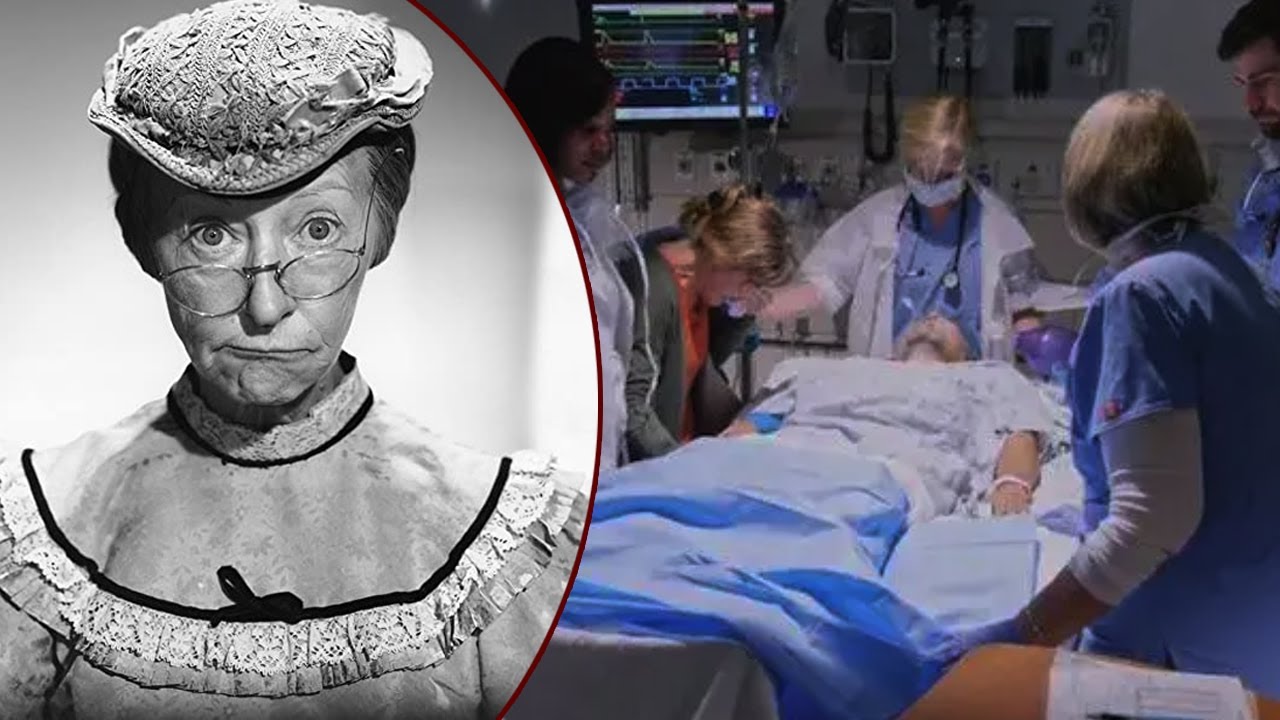
The production would go on to become a major hit, running for years and winning multiple Tony Awards. But Ryan’s time on the stage was cut short. On March 10, 1973, she suffered a stroke in the middle of a performance. She was flown home to California, where doctors delivered devastating news: she had an inoperable brain tumor.
She died on April 26, 1973, at the age of seventy. Throughout her life, Ryan maintained a quiet confidence in herself as both a person and a performer. As far back as 1953, she shared her personal philosophy in straightforward terms. She spoke of a time when she envied the most beautiful girl in her class, but she outgrew that feeling and learned to make the most of her own appearance.
She believed that happiness and success did not depend on having regular features, and she urged others not to let anything stop them from getting what they wanted out of life. She pointed out that the less beautiful a person was, the harder they would have to work on developing themselves, and that this was ultimately far better than depending on beauty alone. She closed her advice with a simple question: what would such a person have left when the beauty was gone? Her career, built on talent rather than conventional good looks, proved the wisdom of that approach.
From vaudeville to radio to film to Broadway, Irene Ryan built a decades-long career on hard work, comic timing, and the willingness to adapt to whatever form of entertainment the era demanded. Her greatest success came late in life, but it was no accident. It was the culmination of a career spent learning her craft and staying true to the strengths she had developed over more than fifty years in show business. Her death brought an end to that long and varied career, but the work she left behind, particularly her portrayal of Granny, continued to reach new audiences for decades.
The character she fought to play, the one she was initially told she was too young to portray, became the defining role of her life and one of the most beloved characters in American television history. The simple humor she celebrated in the show, the kind without neurosis or world problems or messages, proved to have remarkable staying power, just as she had a remarkable ability to find her place in an industry that constantly changed around her.