In the autumn of 1726, a poor woman in the English countryside began giving birth to dead rabbits. The first of these astonishing births took place on 27 September, when Mary Toft of Godalming, Surrey, called her mother-in-law and a neighbour to her bedside. Instead of a child, she produced what appeared to be the pieces of a dead rabbit. Within days the story had reached the royal court, where King George I himself took a personal interest.
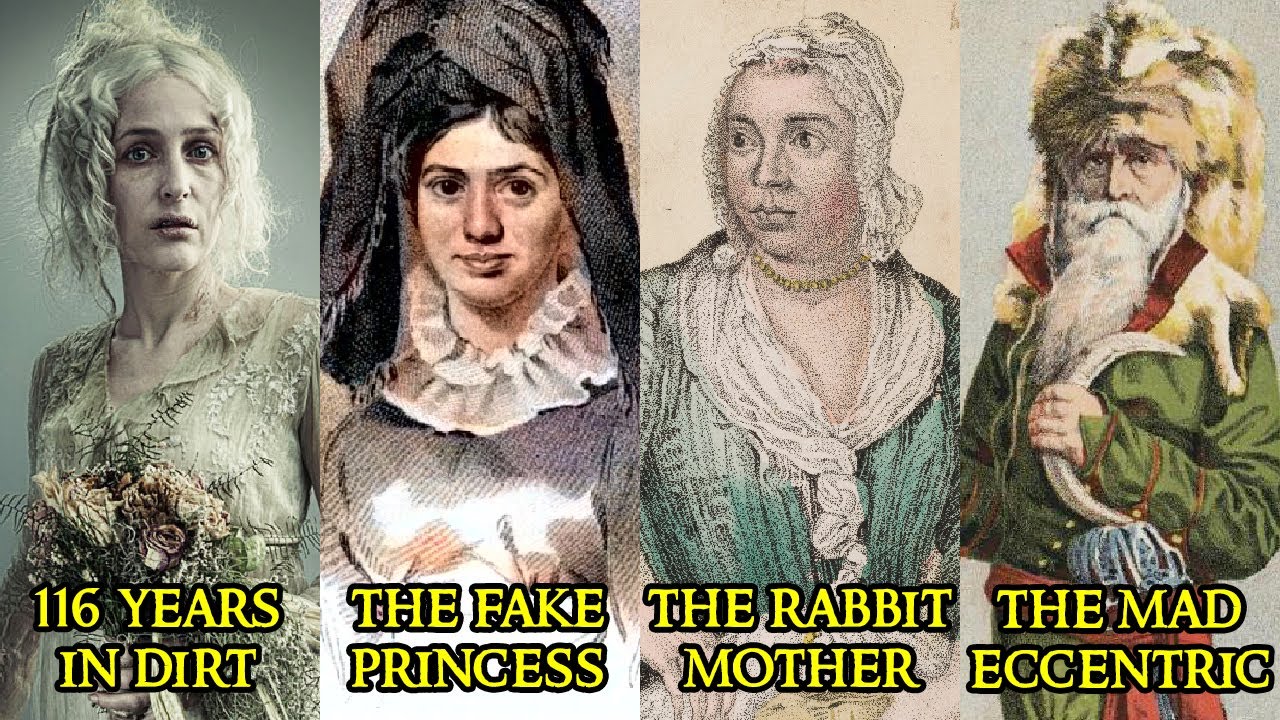
A growing number of witnesses, including the king’s own surgeon, would soon declare themselves convinced that a human being could indeed carry rabbits in her womb. Mary Toft was born around 1701 or 1703 and baptised in her parish church in February 1703. Her family was poor, and she married a tailor named Joshua Toft around 1720, still in her teens. The couple struggled.
The English clothing trade was weak in the early eighteenth century, and Joshua often had little work. They had three children in the early years of their marriage. Their poverty may explain why Mary was known for a difficult temper. In August 1726, pregnant again, Mary appeared to miscarry, producing several pieces of flesh.
A few weeks later she went into labour once more. Her mother-in-law and her neighbour, Mary Gill, were horrified to see her deliver what looked like pieces of a dead rabbit. A local surgeon, John Howard, was called in. He was at first suspicious, but when he visited a few days later and Mary again appeared to give birth to rabbit parts, he became convinced.
He arranged to move her to the town of Guildford, where he could oversee any further births himself. Mary offered an explanation. She claimed that early in her pregnancy she had been working in the hop fields near Godalming when a rabbit startled her. She tried to catch it to take home for food, but it escaped.
Shortly afterward she dreamed of rabbits. So it seemed natural, she said, that she now gave birth to rabbit pieces. By early November the story had spread across southern England and reached the court in London. The king sent a court official, Henry Davenant, to Guildford to investigate.
By then Mary was delivering rabbit parts every few days, and John Howard kept careful notes, preserving the remains in alcohol. To the surprise of many, the births continued under observation. Convinced, the official returned to London. The court then dispatched experts.
In mid-November the royal surgeon and anatomist Nathaniel St. André and Samuel Molyneux, private secretary to the Prince of Wales, travelled to Guildford. They examined the preserved specimens and Howard’s journals, then watched as Mary delivered her fifteenth rabbit. St.
André risked his reputation by publishing a pamphlet asserting that the births were genuine. Other pamphlets followed, and by early winter Mary Toft was the talk of the capital. But not everyone believed her. Another royal surgeon, a German who had served George I before he became king, travelled to Guildford himself.
He examined the evidence, witnessed the sixteenth birth, and returned to London to tell the king that the whole affair was a fraud. His own account appeared in print five days after St. André’s. The controversy was so great that the king ordered Mary brought to London.
She was lodged at Leicester Fields, where doctors gathered to see her deliver an eighteenth rabbit. But no rabbit came. Despite her claims of labour pains, she produced nothing. Disappointment turned to suspicion, and Mary was questioned intensely by physicians and magistrates.
In December the truth came out. A baron named Thomas Onslow discovered that Joshua Toft had been buying young rabbits throughout the previous month. On the same day another man, a porter named Thomas Howard, confessed to a magistrate that he had been bribed by Mary’s sister-in-law to smuggle a rabbit into Mary’s room. Mary denied everything at first, but under threat of a painful surgical procedure she finally confessed.
The whole affair had been an elaborate scheme. After her miscarriage in August 1726, Mary’s husband and mother-in-law had cut open a dead cat, removed its insides, and placed a meal-time spine inside its body. This concoction, made to look like a rabbit, had been placed inside Mary. The pieces she appeared to give birth to were assembled animal parts designed to fool John Howard and, through him, the surgeons and the public.
The motive had been financial. The Tofts hoped to become famous and earn money from people who would pay to watch Mary deliver her rabbits. They earned nothing. Mary Toft was imprisoned for several months.
Crowds gathered outside to catch a glimpse of her, but she was eventually released because no clear charge could be brought against her. No verdict was recorded. By April 1727 she was free and returned to Godalming. Her story lived on in the culture.
The poet Alexander Pope wrote a poem about a woman giving birth to monsters, and William Hogarth produced caricatures mocking the gullibility of those who believed such tales. Mary Toft herself sank into obscurity. She had one more child, a daughter born in 1728, and later appeared in court records for cattle theft. When she died in January 1763 at around sixty-two, her death notice was printed in the London newspapers.
A very different sort of wonder was Jane Lewson, who claimed to have lived to the age of 116. Born around 1700 into a respectable London family, she married a merchant in 1726 and had one daughter. When her husband died young, she did not remarry despite plenty of suitors. In her later years she became famous for her extreme old age, her strange habits, and her refusal to wash.
She feared that bathing would give her a cold, so instead she greased herself with lard, which she liked for its smoothness. She refused medicine and doctors. Her windows went uncleaned for decades, and the rooms fell into darkness and decay. She dressed always in the same outdated fashion, with powdered hair, a tall cap, and a long silk gown, and walked with a gold-headed cane.
She maintained her mind to the end. She was said to recall events from as far back as 1715. When a neighbour across the street died in May 1816, Lewson predicted her own death was near. She was right.
She died on 28 May 1816, supposedly aged 116, and was buried with great ceremony at a London cemetery. An obituary in The Observer made her famous across the country. Later research, however, casts doubt on her age. A burial record suggests she was ninety-six when she died, born around 1720, and a marriage record from 1751 records her wedding to a wealthy merchant named Robert Lewson.
Whatever her true age, her strange story provided inspiration for popular imagination, and some believe the eccentric figure of Miss Havisham in Charles Dickens’s Great Expectations was partly drawn from her. Even more extraordinary were two Irish women who fled their families and lived together in rural Wales for fifty years. Eleanor Butler was born in 1739 into one of Ireland’s most ancient noble families, the Butlers of Kilkenny Castle. Educated in a French convent, she became a devoted reader and returned to Ireland in the late 1750s refusing an arranged marriage.
Sarah Ponsonby was born in 1755 into a more modest but still influential family. She lost her mother at three, and after her father died when she was six, she was sent to relatives in Kilkenny. At thirteen she was placed under Eleanor’s care to continue her education. A close friendship grew between them, and by the mid-1770s they were deeply attached, although same-sex relationships were wholly unacceptable in their society.
Both women faced pressure to marry, and Eleanor’s family whispered that she should be sent to a convent. In March 1778 the two tried to escape in disguise with pistols, but they were found near the Waterford docks, reportedly because Sarah’s dog would not stop barking. Two months later they tried again and this time made it across the Irish Sea to Wales. They settled near the village of Llangollen, bought a cottage they called Plas Newydd, and spent the next half century renovating it in a Gothic style that made it famous across Britain.
They filled it with oak panelling, arched windows, and even a medieval cross from Chester Cathedral. The Ladies of Llangollen became celebrities. They placed a series of dogs named Sappho, a pointed tribute to the ancient Greek poet known for her love of women. Visitors included Sir Walter Scott, Lord Byron, the Duke of Wellington, and Charles Darwin.
The poet Wordsworth honoured them in verse, and it is said Queen Charlotte persuaded King George III to grant them a pension. They lived quietly, reading, drawing, and writing, each documenting days of simple contentment. Eleanor died in 1829 at ninety, and Sarah in 1831 at seventy-six. They were buried together in the same tomb, where their faithful servant Mary was also laid to rest.
Another famous fraud was the Princess Caraboo. In April 1817 a young woman in a black turban and strange foreign clothing walked into the village of Almondsbury near Bristol, speaking an unintelligible language. She was taken in by Elizabeth Worrall, wife of the town clerk. When she saw a picture of a pineapple, she appeared to call it by a South Sea word.
Some concluded she was Asian, and a Portuguese sailor claimed he could understand her. She told him she was a princess from an island called Javasu, kidnapped by pirates, who had escaped by jumping from a ship and swimming ashore. For months the so-called princess was treated as a celebrity. She was fed, clothed, housed, and honoured with a dance in the city of Bath.
She performed a war dance, drew strange writing, and produced tales of her homeland. Scholars came to examine her. One doctor concluded she spoke the language of Sumatra. Others were not so sure.
Money was placed on a table to see if she would look eagerly at it; she showed no interest at all. The truth emerged when the town clerk asked a scholar to publish his findings in the national press. A reward was offered for information, and within weeks people came forward who recognised her. She was not a princess.
She was Mary Willcox, baptised in Devon in 1791, who had suffered from rheumatic fever as a child and had later become unsettled. She made her language from random French and Spanish words and invented expressions. The marks on her head were scars from surgery. The Portuguese sailor who claimed to understand her had made up his story.
Mary had worked as a children’s nurse in London, married and lost a foreign husband who disappeared, lost a child, and finally become a wanderer who began to pretend she was a princess. Exposed, she sailed for America at Mrs Worrall’s expense. A newspaper even reported she was blown off course to the remote island of Saint Helena, where Napoleon Bonaparte, living in exile, asked her to marry her, and she refused. The story was absurd, as Saint Helena lies thousands of miles from any route to America.
She settled in Philadelphia, where she gave stage performances as the Princess Caraboo, but the act failed. By 1824 she returned to England and tried one last time to revive the character, but no one was fooled. She married a man named Richard Baker in 1828 and became an ordinary wife and mother, avoiding her past so thoroughly that she would flee when children called her name. She supplied the hospital at Bristol with leeches as a side occupation.
The woman who had once dazzled the public died in poverty in 1864 and was buried in an unmarked grave. Her daughter carried on the leech trade and died in 1900 when the family home burned down. These strange tales all share a common thread: the power of an extraordinary story to convince even the learned and the powerful. From the rabbit births of Mary Toft to the invented princess of Almondsbury, each was a fabrication that briefly turned the ordinary into the unbelievable.
In time, each fraud was exposed, and each impostor faded back into obscurity.