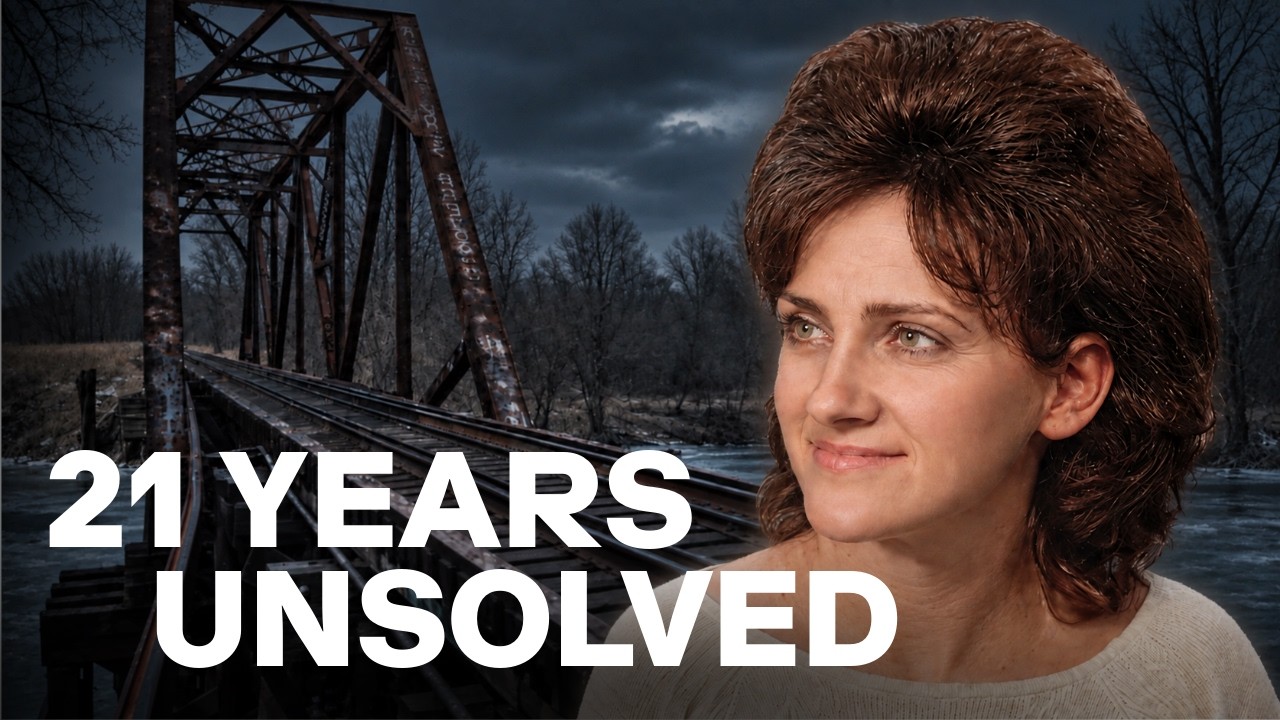
In late February 2003, a man searching for fishing bait near a railroad bridge in Michigan’s Flint River made a grim discovery: the naked body of a woman floating in the cold water. She had been stabbed thirteen times, including a wound to the artery in her neck. The woman was Janet Irene Wilton, a fifty-seven-year-old mother of three and grandmother of seven who worked at a local hospital and spent her days caring for her elderly father and, at times, her young granddaughter, who had an intellectual disability. Just hours before her body was found, her family had reported her missing to the Saginaw County Sheriff’s Office.
The connection was made quickly, and the investigation began. The circumstances of the murder pointed to someone she knew. On the night she was killed, Janet was at home with her father and granddaughter. Around nine o’clock, the family heard a vehicle stop and a knock at the front door.
Janet let the visitor in, which struck investigators as significant because most people who knew the family used the side door. The two talked for about an hour. When the granddaughter got up, she saw Janet embracing a man younger than her, about five-foot-seven to five-foot-eight, with dark hair, but nothing more specific. He left around eleven that night.
The next morning, Janet was gone. Her body was found near a small gathering spot along the river, a place locals used for fishing and meeting. It was a cold, icy day when detectives and the Michigan State Police laboratory arrived at the scene. They found drag marks in the snow leading toward the water and what appeared to be tire tracks.
Investigators collected three cigarette butts, a pair of gloves, and blood on a leaf, but none of it gave them a clear direction. Because Janet was found naked, investigators suspected a sexual assault. The forensic examination later confirmed it, and the cold air and water had, in a sense, preserved biological evidence that would have degraded in warmer conditions. The manner of the killing, thirteen stab wounds, suggested intense personal anger and proximity between killer and victim, reinforcing that the killer was likely known to her.
The ensuing investigation was massive and long. Janet had spent nearly her whole life in the community, worked at the local hospital for about twelve years, and was involved in church and bowling groups. She had no known enemies. Detectives interviewed neighbors, family, and friends, and looked closely at her ex-husband and former partners.
They examined her phone records, traced thousands of tips, and periodically re-publicized the case on the anniversary of her death. The case file grew to thousands of pages. Over the years, thirty investigators worked the case and collected seventy-nine DNA samples from various individuals for comparison. A single-source male DNA profile was obtained from evidence recovered inside her body, but it matched no one in the national CODIS database.
The case went cold. For nearly two decades, the file sat mostly untouched. Then, in 2022, the case was reopened as part of a cold case program run by Western Michigan University in partnership with the state police. The program had a threefold purpose: train the next generation of law enforcement officers, assist investigators, and, most importantly, provide answers and justice to families torn apart by unresolved cases.
Fifteen students were assigned to Janet’s case. The file was chaotic, approximately five thousand pages, and the students spent about two months reading every page and converting the material into a fully searchable digital format, including building an index of every person ever mentioned in the investigation. This became a critical tool in what followed. At the same time, the state laboratory and a DNA technology company called Othram reviewed the case and determined that the biological evidence might yield more information using advanced genetic sequencing.
In June 2022, Othram received a vaginal swab from the case. The DNA was from a single male source, but the sample was contaminated because the body had been submerged in the river, so the lab had to separate the perpetrator’s DNA from bacterial DNA before building a high-performance profile. By late 2022, the company began forensic genetic genealogy work. Early results revealed something important about the suspect’s ancestry: he was mostly European, but he also had Indigenous American components that traced specifically to Mexico or Central America.
The profile was uploaded to a public genealogy database, and investigators began building family trees. The work was difficult. The closest matches came from families that did not connect easily, and several of the people with the most shared DNA were adoptees who did not know their biological parents. This created a case within a case, requiring investigators to solve the adoptees’ own family mysteries before they could map the suspect’s lineage.
In one situation, law enforcement officers interviewed two brothers who appeared to be connected to the suspect based on the genealogy and their residence in Saginaw County. Both denied involvement, one insisting his deceased brother had been devoted to his high school sweetheart and could not have been responsible. The investigation shifted to the other side of the family tree. Eventually, investigators narrowed the search to a specific couple, both of Mexican descent, who had three sons.
As the genealogy narrowed and law enforcement eliminated one family branch through reference samples, the process of exclusion continued until the trail led to three brothers living in the Saginaw area. One of them, Jason Kappelo, had a significant connection to Janet Wilton’s family: he was the husband of Janet’s niece. He had been in the case file’s index, but he had never been a primary suspect. In 2003, Kappelo was twenty-six years old, while Janet was fifty-seven, an age gap that had led investigators to focus on other possibilities.
But the description given by Janet’s granddaughter of the man she saw at the door matched Kappelo closely, and he lived only about five miles away. His personality and history also drew attention. His ex-wife described him as aggressive and abusive, and he had a history of run-ins with the law involving women, though nothing that had ever led to his DNA being taken. When police finally interviewed Kappelo, he denied knowing Janet.
He claimed he did not know who she was, only that she was the aunt of his ex-wife, and he maintained they had never had contact. He was willing to discuss earlier assaults he had been arrested for, but not the attack on Janet. When confronted with the DNA evidence found inside her body, he could not explain it. He soon requested a lawyer and stopped speaking.
Based on the evidence, authorities obtained warrants for second-degree murder and first-degree criminal sexual conduct, and Kappelo was arrested. Those who knew him in his public life were shocked. He had worked for years as a maintenance technician for the city of Saginaw and had held a job, according to some accounts, at a Michigan prison. Coworkers described him as a polite, normal, great employee.
That outward ordinariness was exactly what unsettled investigators. He had lived openly among neighbors and colleagues, trusted by almost everyone he encountered, while being capable of an act as brutal as the one that ended Janet Wilton’s life. At trial, Kappelo entered a no-contest plea, accepting responsibility without formally admitting guilt. He gave no statement and offered no explanation.
Janet’s family never learned why he did it, and some of the physical evidence was never recovered. Her clothing and personal belongings were never found, nor were the clothes worn by her attacker, a common frustration in cold cases, where such evidence often disappears long before justice can catch up. Kappelo was sentenced to between twenty-three and forty-five years in prison. For the investigators and families who had waited two decades, the outcome was a relief.
Without the advances in DNA technology, the case would likely have remained a box of papers on a shelf. Janet Wilton’s killer had managed to live a normal life for years after the crime, but in the end, the evidence left behind on that cold February night, preserved by the very weather that had made the scene so difficult to work, was what brought him to account.