On January 27, 1950, an 86-year-old woman walked into Thompson’s Restaurant on 14th Street in Washington, D. C. , a few blocks from the White House. She sat down with three friends and asked to be served.
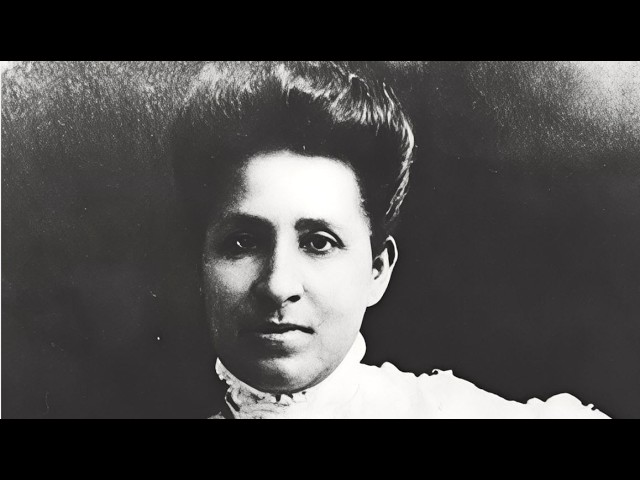
The manager refused. The restaurant did not serve colored people, he told her. She did not walk away quietly. She sued.
Three years later, the case reached the Supreme Court of the United States. She was 90 years old when the justices finally ruled. Her name was Mary Church Terrell. Mary Eliza Church was born on September 23, 1863, in Memphis, Tennessee, while the Civil War was still raging.
The Emancipation Proclamation had taken effect only months earlier. Both of her parents had been enslaved. Her mother, Louisa Ays, and her father, Robert Reed Church, had both been born into bondage. After the war, Robert Church built a business empire in Memphis, becoming one of the first Black millionaires in the South.
Mary grew up with money, comfort, and a father who believed fiercely in education—a combination almost unheard of for a Black child born in the aftermath of slavery. When Mary was eight years old, her parents sent her to school in Ohio. Memphis could not offer the education they wanted for her. She attended the Antioch College Laboratory School and then Oberlin College.
Oberlin had been the first college in the country to admit Black students and one of the first to admit women. Mary thrived there. She was elected freshman class poet, worked on the college newspaper, and joined a women’s literary club. In 1884, she graduated with a bachelor’s degree after completing the same demanding classical course as the male students.
Four years later, she returned and earned a master’s degree, making her one of the first African-American women in the United States to hold a college degree. Oberlin offered her a job as registrar, which would have made her the first Black woman to hold such a position anywhere. She turned it down. Mary began her career as a teacher, first at Wilberforce University in Ohio, and then in 1887 at the M Street Colored High School in Washington, D.
C. , one of the most respected Black high schools in the country. Washington in the late 1880s was strange territory for a Black professional: the nation’s capital on paper, a segregated Southern town in practice. Mary would live inside that contradiction for the rest of her life.
In 1891, she married Robert Everton Terrell, a fellow teacher who later became the first Black municipal court judge in the history of the capital. The early years of their marriage brought real loss. Several of Mary’s children died in infancy. Only one daughter, Phyllis, survived to adulthood, and Mary also adopted a niece.
In 1892, something happened that changed the direction of her public life. Thomas Moss, a childhood friend from Memphis, was lynched. Moss had done nothing wrong. He had simply run a successful grocery store that competed with a white-owned business nearby.
A mob dragged him out and killed him. Moss was also a close friend of the journalist Ida B. Wells, who had already begun investigating lynching case by case and gathering evidence that most victims were not criminals at all—they were simply Black people who had become inconvenient to someone with power. Mary and Ida joined forces.
Grief became a shared campaign that lasted for years. Mary did not stop at anti-lynching work. She began building institutions. In 1892, she helped found the Colored Women’s League in Washington.
In 1895, she was appointed to the District of Columbia Board of Education, the first Black woman ever to hold that position. In 1896, local Black women’s clubs from across the country united to form the National Association of Colored Women, and Mary became its first president. She gave the organization a motto that has outlived nearly everything else from that era: “Lifting as we climb. ” No one was meant to rise alone; every success was supposed to pull someone else up behind it.
Under her leadership, the NACW grew into the largest federation of Black women’s organizations in the country, tackling education, child welfare, and the daily indignities of Jim Crow. In 1904, Mary traveled to Berlin to address the International Congress of Women. She delivered her speech in three languages—English, German, and French—the only American at the entire Congress to speak in more than one. The audience was genuinely stunned.
It was a deliberate point. Mary Church Terrell stood before the world’s most educated women, representing the very people American law and custom insisted were naturally inferior, and she answered that insistence with fluency in three separate languages in a single afternoon. In 1909, a group of Black and white reformers founded the National Association for the Advancement of Colored People. Mary was a charter member, as was W.
E. B. Du Bois. The NAACP would become the most influential civil rights organization in American history, and Mary Church Terrell had been in the room at the very beginning.
Mary also threw herself into the fight for women’s suffrage. She picketed the White House, marched, and argued that Black women needed the vote as much as anyone. The mainstream suffrage movement was overwhelmingly white and not always comfortable including her. Some white suffragists worried that association with Black women would hurt their cause in the South.
Mary pushed forward anyway. When the 19th Amendment passed in 1920, it guaranteed women the right to vote on paper, but most Black women in the South remained blocked by poll taxes, literacy tests, and outright violence. The victory was real, and it was also incomplete. Mary understood that better than almost anyone and kept fighting on both fronts for the rest of her life.
In 1922, she helped organize a silent march on Washington demanding federal anti-lynching legislation. Congress never passed that law—not that year, not for decades afterward. Federal anti-lynching legislation would not become law until 2022, nearly a century later. Mary spent her entire adult life pushing for a law she would never live to see.
She kept working anyway. By the late 1940s, Mary was in her 80s. In 1948, she filed a lawsuit against the American Association of University Women after the organization initially excluded her based on race. She won, becoming the organization’s first Black member at age 84.
Then came Thompson’s Restaurant. Mary had a specific legal strategy in mind. Washington, D. C.
, had passed laws in 1872 and 1873 requiring every eating establishment in the city to serve any respectable, well-behaved person, regardless of color. Restaurants that refused faced a fine and the loss of their license. Those laws had never actually been repealed; they had simply been left out when the city’s legal code was rewritten in the 1890s. Nearly everyone had forgotten they still existed.
Mary hadn’t forgotten. She built her entire campaign around reviving them. The district sued Thompson’s on Mary’s behalf. The case moved to municipal court in the summer of 1950.
Mary did not wait quietly for a judge. She organized boycotts, picket lines, and sit-ins at other segregated restaurants across the city, applying pressure everywhere at once. The case bounced through multiple courts over the next three years. In May 1951, an appeals court ruled against the city.
In January 1953, a federal appeals court ruled in the city’s favor by a narrow 5-to-4 vote. The losing side pushed further. The Washington Board of Trade, a powerful and mostly white business organization, raised money specifically to help Thompson’s keep fighting. Mary kept pushing back, in the streets and in the courts, for three straight years.
The case finally reached the Supreme Court. Oral arguments were heard on April 30, 1953. On June 8, 1953, the justices issued their ruling. It was unanimous.
Washington’s old 1872 and 1873 laws were still valid, and segregated restaurants in the nation’s capital were illegal. Mary Church Terrell was 90 years old. She said she would be 90 on September 23rd and would die happy, knowing that children of her group would not grow up thinking they were inferior simply because they were denied rights other children enjoyed. Four days after the ruling, Mary and the same three friends who had been refused service in 1950 walked back into Thompson’s Restaurant.
This time the manager himself came over and personally carried Mary’s tray to her table. The same building, the same role, an entirely different outcome—three years and one Supreme Court ruling apart. District of Columbia v. John R.
Thompson Company ended legal segregation in the capital’s restaurants by reviving two laws from the 1870s rather than creating new constitutional doctrine. But its significance reached further than one city’s restaurants. It was decided in 1953, one year before Brown v. Board of Education, the case that would end legal school segregation nationwide.
Some historians see the Thompson case as part of the same legal momentum, the same court beginning to dismantle segregation piece by piece in the years right before its biggest ruling of all. Mary Church Terrell died on July 24, 1954, at Highland Beach, Maryland. She was 90 years old. She had been born during the Civil War to two parents who had been enslaved.
She died the year after her Supreme Court victory and just weeks after the Court decided Brown, the ruling that would end legal segregation in American public schools nationwide. She had spent her entire adult life working toward exactly that kind of outcome, and she got to see the beginning of it. After the Thompson decision, a magazine called Ebony commissioned an essay from Mary about her memories of Frederick Douglass, whom she and her husband had personally known. The piece ran in October 1953.
Her actual Supreme Court victory was mentioned only in a photo caption. Her erasure from popular memory began almost immediately. For decades, mainstream civil rights histories focused on younger figures and on the dramatic sit-ins and marches of the 1960s. Mary’s own sit-ins a decade earlier, led by a woman in her 80s, did not fit neatly into that later narrative.
That has started to change. Allison Parker’s 2020 biography, Unceasing Militant, remains the only full-length biography ever written about her and has helped restore her to a more central place in civil rights history. Historians increasingly describe her as a direct bridge between the Reconstruction-era fight for basic legal rights and the mid-century movement that culminated in Brown. Mary Church Terrell lived 90 years.
She became one of the first Black women in America to earn a college degree. She helped found the largest Black women’s organization in the country. She helped found the NAACP. She marched for anti-lynching legislation she would never live to see pass.
She fought for the vote twice over, for both her race and her sex. And in the final years of a nearly century-long life, she walked into a segregated restaurant, sat down, and refused to leave the fight until the Supreme Court itself agreed with her. Four days after her greatest legal victory, a restaurant manager carried her tray to her table with his own hands.
It had taken 60 years of her life to make that moment possible.