On the morning of June 18, 1944, a British officer lay bleeding on an Italian hillside, a bullet through his chest. His name was George Lascelles, and he was the nephew of the King of England. Captured by the Germans and carried off into a war that was already lost, he would become one of the most valuable hostages of the Second World War. But the story that mattered most was never really his.
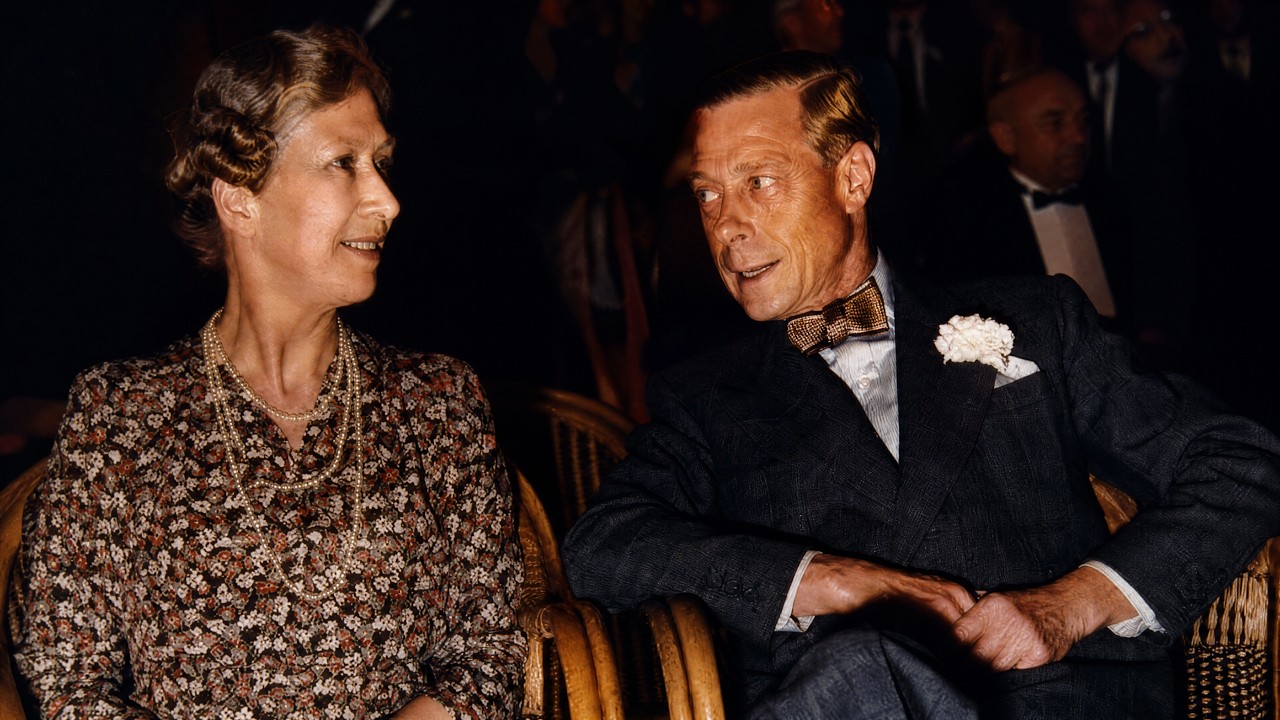
It belonged to his mother, Princess Mary, the only daughter of King George V, the royal the century agreed to overlook. Mary was born on April 25, 1897, at York Cottage on the Sandringham estate, a cramped and overcrowded lodge rather than a palace. She was the third child and the only girl among five brothers, raised in one of the most reserved royal households in Europe. Her father ran the nursery with something of the quarterdeck about him, a booming affection that could turn without warning into cold displeasure.
He was hard on his sons but gentle with his one daughter, calling her his favorite and making little secret of it. Her eldest brother David once remarked, half in jest and half in earnest, that it was a shame she was not heir to the throne, since she was far cleverer than he was. The reputation that settled on Mary was not cleverness but reserve. She was shy, self-contained, and plainly uncomfortable whenever eyes were on her.
The world read it as coldness. Those who knew her closely found her warm, funny, and generous, a woman who wrote thousands upon thousands of letters. But warmth in that household was rationed, and feelings were kept firmly out of view. During the First World War, Mary refused the customary role of a decorative princess waiting at home.
In October 1914, at the age of seventeen, she lent her name to an idea that became known as Princess Mary’s Christmas Gift Fund. Every sailor at sea and every soldier at the front was to receive a brass gift box at Christmas in the name of the king’s young daughter. The appeal blew past all estimates. The workshops produced more than two and a half million small brass boxes, and the fund gathered over £162,000, an immense sum for the day.
From mid-1918, she trained as a nurse two days a week on the children’s wards at the Hospital for Sick Children in Great Ormond Street, real work with bedpans and bandages. On November 20, 1918, days after the armistice, she became the first member of the royal family to cross to France, touring the hospitals and wreckage of the battlegrounds. In 1922, she married Henry Lascelles, Viscount Lascelles, heir to the Earldom of Harewood. He was close to forty, fifteen years her senior, a decorated Grenadier Guards officer who had been wounded and gassed on the Western Front, and one of the wealthiest men in England.
In 1916 he had inherited nearly £3 million from a reclusive great-uncle, a fortune attached to tens of thousands of acres of Irish land and nearly two thousand tenants. The country decided at once that Mary had been sold, that a cold, older man had bought himself a royal bride the way he might buy a racehorse. The legend proved durable, but it was a myth. A modern biographer who went back to the papers found courtship letters written before the engagement was announced, and her verdict was blunt: the marriage turned out to be incredibly happy, with absolutely no evidence that he had married for a bet.
Their own son remembered parents who genuinely liked each other, shared a wide circle of friends, and counted the days between meetings. Mary herself is said to have called it twenty-five years of perfect love and companionship. The central drama of Mary’s life was not a scandal at all. The public decided she was a cold woman in a cold marriage and used the one to prove the other.
Both halves of the judgment were false. She never once tried to correct the record, because correcting records in public was exactly the thing her whole upbringing had trained her never to do. In 1932, her father created her Princess Royal, a personal honor held for life, granted to only one woman at a time. Mary was only the sixth woman to carry it in three centuries.
She became the first female chancellor of the University of Leeds. Through the Second World War, she served as Controller Commandant of the Auxiliary Territorial Service, so rarely seen out of uniform that a generation of servicewomen thought of her as one of their own. She was made honorary general of the army in 1956 and had a regiment of Gurkhas renamed in her honor as Princess Mary’s Own. The woman remembered as the dim, beautiful sister did more solid public and military work than almost any royal of her time, and hardly anyone noticed at all.
When the abdication crisis struck in 1936, and her adored eldest brother David gave up the throne to marry Wallis Simpson, the family closed ranks against him. The exiled couple were treated as non-persons. Mary would not play. She had always been closest to David, and she stayed on genuinely warm terms with him and in time with Wallis as well.
She and Henry traveled to see the exiled Duke at a castle near Vienna in the months after the abdication when most of his relations were pretending he had ceased to exist. It set her quietly at odds with her own formidable sister-in-law, the new queen, and she did not budge. Her son George was born in February 1923, the eldest grandchild of the reigning king, sixth in the line of succession, and first cousin to the little girl who would one day be Queen Elizabeth. In 1942 he was commissioned as an officer in the Grenadier Guards, his father’s old regiment, and went to the hard road of the Mediterranean war.
The Italian campaign was among the cruellest theaters of the war, a slow, bloody crawl up the spine of a mountainous country, ridge after ridge, paid for in men. By June 1944, Rome had fallen, and the German armies were pulling north to a fresh defensive line anchored on the shores of Lake Trasimeno. The Grenadiers were sent into that fight, and Captain Lascelles with them. On June 18, 1944, at a place called Monte Corno, a bullet went into his chest and out through his hip, passing so close to his heart that survival was a matter of millimetres.
He lay out on the hillside through the long hours of the night, bleeding and alone, until the Germans gathered him up as a prisoner of war. The date carried a dark family echo: it was the anniversary of the day his own father had been wounded on the Western Front, and further back still the anniversary of Waterloo, on which a Lascelles ancestor had also been hurt. The Germans soon understood exactly what they were holding. The son of the Princess Royal, grandson of one king and nephew of another, was not an ordinary captured captain.
He was a prominente, one of the prominent ones, a category the German high command had invented for prisoners with blood ties to the leaders of enemy nations. They were not being kept for what they had done, but for whose blood ran in them, human bargaining chips worth more alive than dead. In time, the most valuable hostages were gathered in the grim hilltop fortress of Colditz. Among the men around him were a nephew of Winston Churchill’s wife, a nephew of the queen, the son of Field Marshal Haig, and the son of the American ambassador to Britain.
Mary’s son sat among them because his uncle was the king. By the early spring of 1945, Germany was finished, and the theory of the hostages curdled into something murderous. An order came down concerning the prominente that turned from custody to execution. That such a kill order existed is not in doubt, though the claim that it was signed personally at the very top rests largely on the later testimony of the senior SS general responsible for prisoners of war, a man with every reason after the war to shape the story to his own advantage.
On the night of April 12–13, 1945, the prominente, around twenty-one men in all, were roused and taken out of Colditz in the darkness over the loud protests of the senior British officer, loaded into vehicles and driven south toward the mountains of Bavaria and Austria. Only days later, American troops reached the castle and liberated it. Had the hostages been left where they were for another seventy-two hours, they would have been freed without a scratch. Instead, they were carried off at the exact hour that rescue was arriving at the gates.
In the end, their lives turned on the private calculation of the very man ordered to see them killed, the SS general Gottlob Berger. Whether from a late flicker of conscience or, far more likely, a shrewd reading of which way the wind was blowing, he refused to carry out the execution. Instead of killing the hostages, he provided them with lorries and an armed escort and set about delivering them alive toward the American lines. On May 4, 1945, they drove out into the no-man’s-land under a Swiss flag and crossed into American lines, received with no fuss at all.
The next day, a photograph was taken of the freed hostages at a hotel above Innsbruck, a set of thin, worn, faintly disbelieving men who had walked out of the shadow of a death sentence only days before the war in Europe ended. For all the documented drama of her son’s capture, the hostage years, the death warrant, the rescue, there survives no recorded word of what Princess Mary felt through any of it. No letter pouring out a mother’s terror, no cry of relief set down for history to read. The woman who wrote thousands of letters left almost nothing on the one subject that must have haunted her for the better part of a year.
She had been trained from the nursery to feel everything and show nothing. Two years after her son came home, her husband died. Henry Lascelles suffered a heart attack at Harewood on May 24, 1947, at the age of sixty-four. The estate faced death duties of some £800,000, the same tide of taxation that had cut down a hundred other great houses now swinging through her home.
Later that same year, her niece Princess Elizabeth was married in Westminster Abbey. Mary did not attend, giving her reason as ill health, saying she felt the wedding festivities might prove too great a strain. Whether it was a pointed protest at the continued exclusion of her beloved brother or the genuine grief of a widow of six months, or an inseparable knot of both, she took the answer with her. She kept faith with the exiled Duke to the end.
In 1953, she cut short a tour of the West Indies, diverted north to New York, and sat openly with David and Wallis for the cameras, among the very first members of the royal family to be seen publicly at the side of the woman for whom a king had given up his crown. In March 1965, when David came to London for an operation on his eyes, she went to visit him and spent three-quarters of an hour with the Duke and Duchess, a sister calling on her brother, faithful to the last. On March 28, 1965, she was walking in the grounds of Harewood with her son and grandchildren when her heart gave way. She was sixty-seven.
Her memorial service was held at Westminster Abbey, and among those who came to mourn her were the Duke and Duchess of Windsor, appearing together at a British royal occasion in a rare and pointed gesture, coming to say goodbye to the one member of the family who had never turned her back on them. She was buried quietly at the little church near Harewood. Her estate came to some £347,000, a modest sum beside the millions she had married into, and a fair measure of a life that had never been about the money. The blood that lifted her to a life of privilege and duty reached across a continent in the worst year of the century and marked her son for death.
He was hunted for whose son he was, and whose son he was ran back through her. A young man lay bleeding through the night on an Italian hillside, worth more to his captors than a thousand ordinary soldiers, for one reason only: the mother who spent her whole life asking for nothing and saying almost nothing at all. She left no record of what it cost her.
And that silence, in the end, was the truest thing she ever said.