On July 11, 1869, at the head of a shallow ravine on the open plains of eastern Colorado, a young Cheyenne warrior named Wolf with Plenty of Hair untied a blue sash from his waist, dropped it into the dirt, and drove his long lance through it. The sash pinned him to the ground. It was a promise to every soldier charging toward him, and to every warrior beside him, that he would not retreat. He would die where he stood.
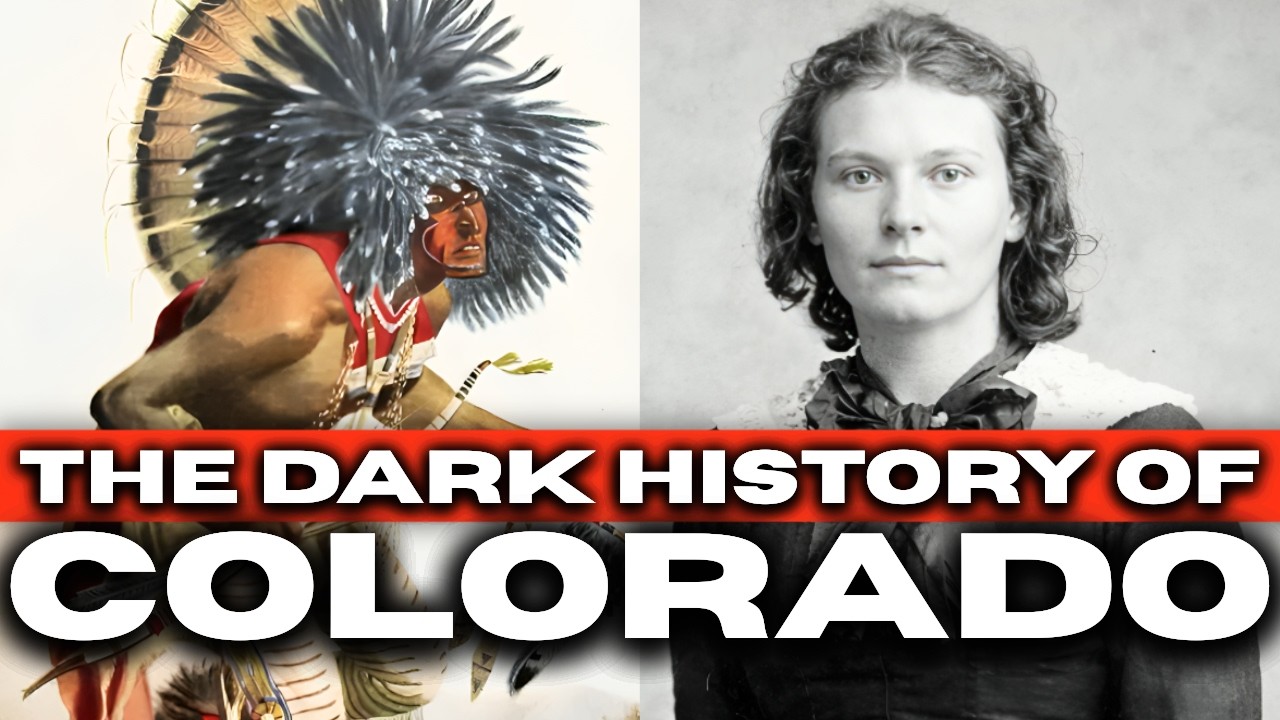
The man leading the defense around him was Tall Bull, a legendary war chief of the Dog Soldiers, the most feared warrior society of the Cheyenne. Tall Bull had ordered the survivors of his village into the ravine after a sudden attack had caught them completely by surprise. Minutes earlier, most of the village had been eating their midday meal. Now the ground was littered with dead and dying warriors, and terrified women and children were being gathered up as prisoners.
Tall Bull had made his choice: he and his men would fight to the last man to protect their families. The force smashing into the ravine was led by Major General Eugene Carr, commander of a contingent of U. S. Army soldiers, cavalry, and Pawnee scouts.
Among them rode William F. Cody, the frontiersman who would become known to the world as Buffalo Bill. Within moments, the charge collided with the Cheyenne line in a brutal, close-quarters fight inside the cramped ravine. Dust, gunfire, and screams filled the air as warriors fell one after another, often within yards of their own wives and children.
This ambush, brutal as it was, was not random. It was the climax of a war that had been simmering for years, one rooted in the Sand Creek Massacre of 1864, when U. S. troops under Colonel John Chivington had slaughtered a Cheyenne village of men, women, and children who had been under the impression they were at peace with the United States.
In the five years since, the Cheyenne had sought revenge across the plains of eastern Colorado, making settlement there extraordinarily dangerous. The particular trail that led to the ravine had begun six weeks earlier, in late May 1869, when Tall Bull and his Dog Soldiers swept through the homesteads along the Saline River. On the afternoon of May 30, a group of warriors attacked two travelers, Eli Ziegler and John Albertson, who narrowly escaped by hiding under a creek bank until the raiders moved on. That same day, Tall Bull’s band had cut down a Danish immigrant couple out for a Sunday walk along the creek.
Shortly afterward, they attacked George Weichel, his wife Maria, and their neighbor Fred Meigerhoff. Weichel and Meigerhoff fought back fiercely, covering Maria’s escape in a three-mile running fight, but when their ammunition ran out, both men were killed. Maria Weichel was seized and carried off. The warriors then struck the home of Michael Haley, where a young woman named Susanna Alderdice was staying with her four children while her husband Thomas was away on business.
Also staying there was Bridget Cain and her two-month-old daughter. When the Cheyenne appeared, Susanna grabbed her youngest child and made a run for the river, followed by Bridget Cain. Both women were heavily pregnant. Bridget managed to slip over the bank and hide beneath an overhang, clutching her infant, praying the baby would not cry.
Susanna was not so lucky. As the warriors closed in, her three young sons were struck down by arrows. She was then tied to a horse, still holding her eight-month-old daughter, and carried off into captivity. That same day, two young Cheyenne, one of them little more than a teenager, approached two local boys, Arthur Schmutz and John Strange, pretending to be friendly Pawnee scouts.
After a brief, tense exchange, the teenage warrior suddenly struck Strange in the head with his war club so hard the handle broke. Strange cried out and collapsed dead. Schmutz took an arrow to the chest and another to the back but managed to run all the way to the Strange family cabin, where the slain boy’s younger brothers grabbed their guns and drove the raiders off. When Thomas Alderdice returned home and learned what had happened, he found his sons and stepsons dead and his wife and infant daughter missing.
He was a former scout who knew the plains well, and he decided that if the army would not help him, he would find his family himself. For weeks he rode across the prairie, tracking the Cheyenne, only to be repeatedly refused assistance by military officers who claimed they lacked orders. When he finally secured a meeting with General John Schofield at Fort Harker, the general insisted the Cheyenne had surely already left the area and declined to commit troops. Alderdice returned to the Cheyenne camp site he had located and found it abandoned.
While searching the trampled grass, he discovered the body of his infant daughter, killed by the Cheyenne and left hanging in the branches of a tree. He buried her himself in the hard prairie ground. It was only after the newspaper coverage of his ordeal embarrassed the army that General C. C.
Augur finally ordered Eugene Carr to take to the trail. Carr, with his Pawnee scouts and Buffalo Bill Cody among his command, located the Cheyenne camp on July 11 and attacked at noon, catching Tall Bull’s village utterly by surprise. Inside the village, Captain Sylvanus Cushing of the 5th Cavalry found a young woman crawling toward him, covered in blood. She was Maria Weichel.
She had been shot in the back by her captors and left for dead, but she had survived. She identified herself, and Cushing rushed her to the field hospital. When questioned about the other captive, the pregnant Susanna Alderdice, Weichel said she was somewhere in the village, but she did not know where. Thomas Alderdice, who had ridden with the army, searched frantically lodge after lodge for his wife.
He found no trace of her. In the ravine, the Dog Soldiers had staked themselves to the earth. Warrior after warrior fell as the cavalry and the Pawnee scouts, longtime enemies of the Cheyenne, pressed the attack. Tall Bull lost his youngest wife early in the fighting.
Despite their desperate defense, the Dog Soldiers were overwhelmed. Wolf with Plenty of Hair lay dead at the head of the ravine, his body still tethered to his lance. Tall Bull himself was killed, though accounts of who fired the fateful shot would later be hotly disputed. Buffalo Bill Cody would claim the kill for years, even staging the scene in his famous Wild West shows, but other officers and Pawnee scouts offered conflicting versions.
By the end of the fighting, only one Cheyenne in the ravine, a woman, survived. After the battle, scouts found the body Susanna Alderdice had been searching so desperately to find. She had been struck on the forehead with a war club and shot just above the left eye. Tall Bull’s surviving widow later stated that Tall Bull had kept Susanna as his prisoner and had killed her himself.
Thomas Alderdice buried his wife near the battlefield. According to one observer, as the cavalry played the funeral dirge, many a cheek was wet that had long been a stranger to tears. The soldiers then combed the abandoned village for evidence and loot. In one lodge, they found a necklace made of human fingers, one still wearing a ring.
Maria Weichel identified it as the wedding band of her husband, George. The village was burned to the ground, and the column marched for Fort Sedgwick, arriving two days later. The dogs of the Cheyenne gathered on a nearby ridge and howled as their owners disappeared over the horizon. María Weichel survived her wounds and gave birth to a healthy girl two months later in Omaha.
The surviving Cheyenne fled north. So complete was their terror that they refused to return to the site to bury their dead, an almost unheard-of break with their traditions, and it was Lakota allies who finally performed the burials two months later. Thomas Alderdice remarried and raised his surviving stepson, Willis, who walked with a limp for the rest of his life and carried the scars of Dog Soldier arrows until his death in 1920. Alderdice lived to be 84.
He never returned to the site of the massacre on the Saline River until 1911, when he went hoping to find the graves of his son and stepson. He could not find them, and he left forever. The Battle of Summit Springs, as it came to be known, was a crushing blow to the Cheyenne. Their hold on the central plains was broken for good.
The war with the United States would drag on for another decade, but the way of life that had once sustained them on those prairies would never fully recover.