In 1984, Elisabeth Fritzl disappeared from the small Austrian town of Amstetten. She was eighteen years old, a quiet and polite young woman who lived with her parents and siblings in a modest home on Ibrustraße. Her father, Josef Fritzl, told the family that she had run away to join a cult, and he produced a handwritten letter from her to support the story. Police searched briefly, but without leads, the case went cold.
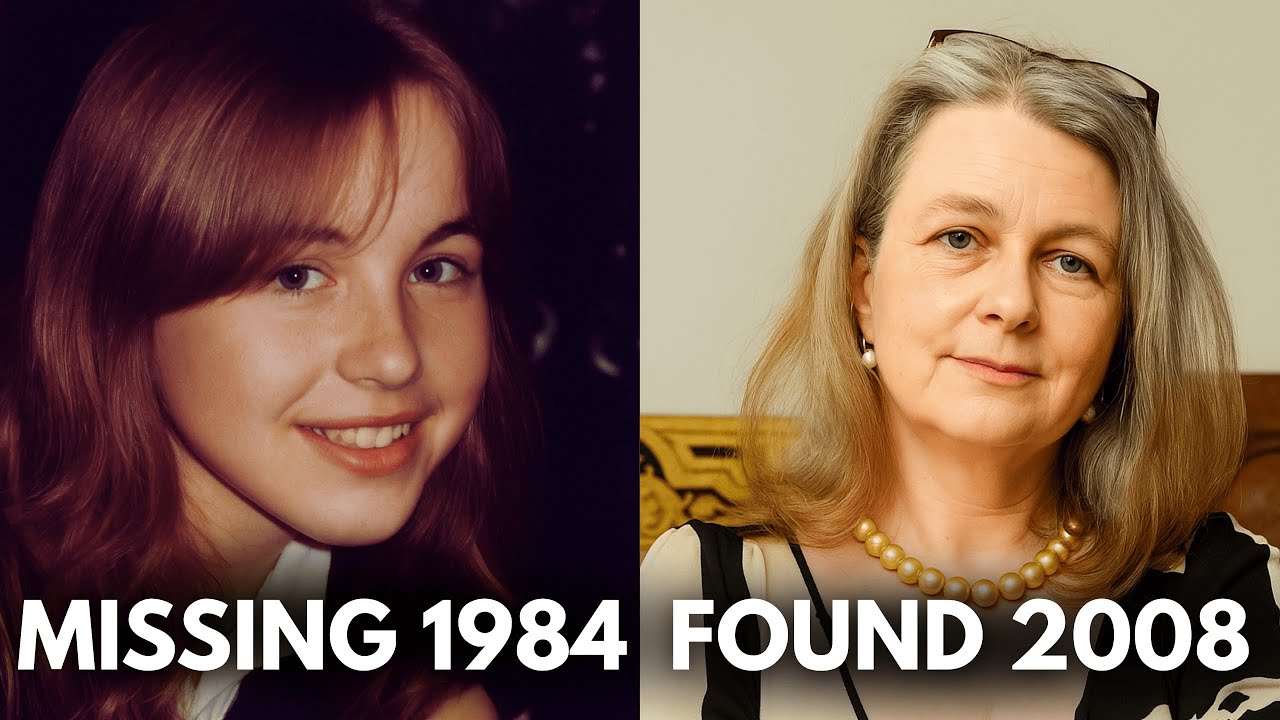
To the world, Elisabeth was simply another runaway. What nobody knew was that Josef Fritzl had spent years building a hidden bunker beneath the family home. Behind thick concrete walls, reinforced steel, and soundproofing, he had created a small underground labyrinth: a sleeping area, a rudimentary kitchen, a washroom, and a cramped corridor. It was lit by a single fluorescent bulb and sealed by multiple steel doors that only he could open.
He called it a storm shelter. In truth, it was a prison. On August 28, 1984, Josef asked Elisabeth to help him carry a door into the basement. She followed him down without suspicion.
Once she was inside, he closed the heavy door behind her and locked it. Hours turned into days, and days into years. Elisabeth screamed and begged and pounded the walls. No one could hear her.
Her father had erased her from the world above while keeping her alive just meters below it. The abuse began almost immediately. Josef controlled every aspect of her existence: when she could sleep, when she could eat, when she could speak. He brought her meager supplies and stayed for hours at a time.
Upstairs, he maintained his double life entirely. He was known in the neighborhood as a disciplined engineer and a strict but ordinary family man. To his wife, Rosemarie, and their other children, he remained a stern patriarch. To reinforce the lie that Elisabeth had disappeared on her own, he forced her to write letters under duress, which he then mailed from cities far away, making it appear that she was alive and free.
In reality, she was listening to the muffled footsteps of her family directly above her, unable to make herself heard. As the years passed, Elisabeth became pregnant. The first time, Josef gave her painkillers and a towel and left her to give birth alone in the concrete cell. Her son Kerstin was born in 1988, followed two years later by Stefan, and then five more children over the following years.
In total, seven children were born inside that underground world. Josef handled each birth with the same cold calculation. He took three of the children upstairs and presented them as abandoned babies left at the family doorstep by Elisabeth, who was supposedly still living in a cult. Social services accepted the story without question, even praising Josef and Rosemarie for taking in their grandchildren.
No one asked how a woman who had cut all contact could keep leaving infants at her father’s house without ever being seen. Three children, however, never saw daylight at all. They were raised entirely underground with Elisabeth, who taught them to read and write using old books her father brought down. They had never seen the sky.
The fluorescent bulb above them was the only sun they knew. The noise of life upstairs, the hum of the television, the creak of the floorboards, was their only evidence that another world existed. For twenty-four years, the secret held. Josef attended neighborhood gatherings, went shopping, took vacations, and carried on as if nothing unusual existed beneath his feet.
His world was built on control, and control had become perfect. The first crack appeared in April 2008. Kerstin, the eldest daughter born in the cellar, was nineteen years old and suddenly became gravely ill. Her body shut down, she fell unconscious, and Elisabeth could not revive her.
Fearing that the girl would die in the same darkness where she had been born, Elisabeth begged her father for help. Josef, terrified that losing Kerstin would expose everything, finally made a decision that would unravel his secret entirely. On April 19, 2008, he carried Kerstin upstairs and brought her to a hospital in Amstetten, claiming that Elisabeth had dropped the girl off for treatment before disappearing again. Doctors were immediately alarmed.
Kerstin was pale and malnourished, and her blood results made no sense. Her condition reflected a lifetime of deprivation, not a sudden illness. When police asked to contact her mother, Josef said he did not know where Elisabeth was, that she had joined a religious group and refused to be found. The inconsistencies began to pile up.
Kerstin’s medical state was impossible for someone living freely. DNA testing told a story of incest and captivity. Police publicly appealed for Elisabeth to come forward. Josef felt the power balance shifting.
On April 26, 2008, under his condition, he took Elisabeth and her two remaining children above ground for the first time in their lives to visit the hospital. That decision destroyed him. Hospital staff immediately noticed Elisabeth’s terrified demeanor, her gaunt frame, her reluctance to speak. Police quietly separated her from Josef and brought her to an interview room.
At first, she refused to talk. She did not believe she was safe. She thought it was another trick, that saying the wrong thing would send her back underground forever. Investigators made a promise: she was safe now, and he could not hurt her anymore.
For the first time in twenty-four years, she believed them. For two hours, Elisabeth poured out the story. She described her abduction at eighteen, the endless years underground, the births, the abuse, the lies. When police searched the Fritzl home that night, they found everything exactly as she described: the hidden entrance behind a shelf, the descending passage, the narrow tunnels, the metal doors.
Inside were children’s drawings, toys, worn bedding, and notes written by Elisabeth trying to keep her sanity. By morning, the story was global. Josef Fritzl was arrested on the spot. During questioning, he said little, though at times he appeared proud of what he had built, insisting that he had provided a good life for those below.
Investigators saw no remorse, only control even in defeat. Elisabeth and her six surviving children were taken into medical and psychological care. She saw sunlight for the first time in over two decades. Her eyes burned.
Her skin was pale. Some of the children had never seen the sky and had to be carried outdoors with their faces shielded against a brightness they could not comprehend. The trial began in March 2009 at the regional court in Sankt Pölten. Elisabeth refused to appear in person, but her recorded testimony was played in the courtroom.
She described the abduction, the years of abuse, the births, the fear. The courtroom was silent. Josef stared blankly ahead as if his daughter’s words were noise. He was charged with murder, rape, incest, enslavement, and false imprisonment.
Prosecutors argued that one of Elisabeth’s newborn twins, a child named Michael, had died shortly after birth when Josef refused to seek medical help. That single act elevated his crimes beyond cruelty. The trial lasted four days. On March 19, 2009, Josef Fritzl was found guilty on all counts and sentenced to life imprisonment at Austria’s most secure psychiatric facility, where he remained under constant supervision.
Elisabeth changed her name, relocated with her children to a secret location, and cut all contact with her past. The Austrian government provided round-the-clock protection, and psychologists worked with the family to rebuild trust, social connection, and basic human freedom. Freedom itself had become frightening. It took years for them to feel safe sleeping in rooms with unlocked doors.
Open spaces triggered panic attacks. But slowly, through therapy and time, the family began to heal. Elisabeth refused to be defined by her father. She told therapists she wanted to live normally, that she was done being his prisoner.
She found small joys: cooking with her children, walking her dog, tending to plants. The media, after years of chasing her, finally stopped. The family’s wish for privacy was respected. Somewhere in Austria, away from the noise, Elisabeth built a life on her own terms, one that Josef could never touch.
Today, the children who once lived in darkness are adults, each finding their own way in a world that once forgot them. Elisabeth lives under a new name. She does not speak publicly, and she protects her children fiercely. The house in Amstetten became a chilling reminder that evil can hide behind ordinary walls.
But for Elisabeth, the story was never about the dungeon that held her. It was about the choice to live freely every single day after. For twenty-four years, the world forgot her.
She never forgot who she was.