In February 1943, a Navy pilot in San Diego ran a series of test flights against a captured Japanese Zero. The results would eventually save the lives of Marine aviators fighting thousands of miles away in the Solomon Islands. But that knowledge still had a long journey to reach them. The Zero had achieved a stunning record since 1940, roughly twelve Japanese kills for every loss.
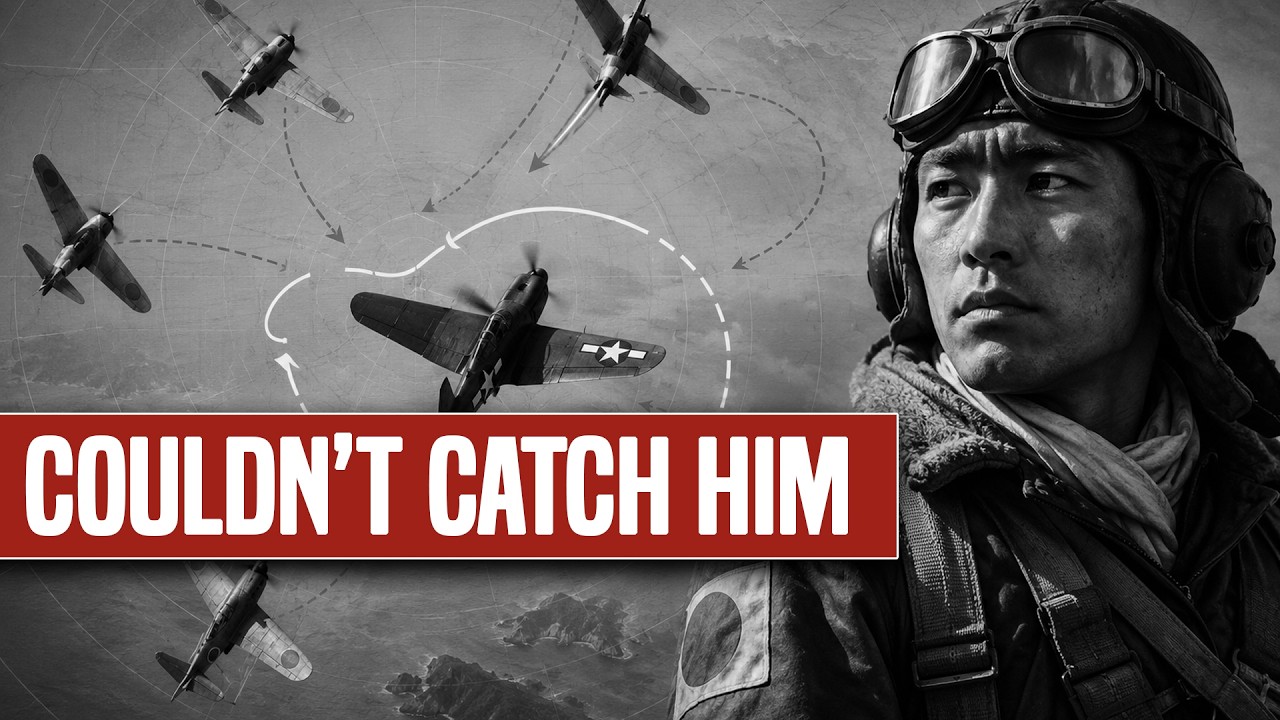
That was the ratio awaiting the pilots of Marine Fighting Squadron 124 when they landed on Guadalcanal in February 1943. They had reason to believe it. The squadron was the first Marine unit in the Pacific to fly the new F4U Corsair, and the pilots who reached Guadalcanal on February 12 had only about twenty-five hours of flight time in the aircraft. It was an unproven machine, unfamiliar even to the men flying it.
The Japanese already had a name for it, drawn from the whistling sound it made when pulling out of a dive, a sound that carried for miles. Two days after landing, the squadron escorted bombers to the Japanese airfield at Kahili on Bougainville. The Zeros were waiting, warned by coastwatchers who monitored every major airstrip in the Solomon Islands. Fifteen American aircraft were lost that evening and the following day, including two of the new Corsairs, against only two Japanese losses.
The survivors called it the Valentine’s Day Massacre, and it was not a joke. Shortly afterward, inside a pilots’ hut on Guadalcanal, a veteran Wildcat pilot who had learned to fight the Zero the hard way was asked how a Corsair pilot was supposed to engage it. His answer survived in the records as five blunt words: you have to dive on him. That was the only doctrine available in February 1943, and it was almost entirely wrong.
The real answer had been sitting in a hangar in San Diego for five months, unknown to anyone on Guadalcanal. A nearly intact Zero had crashed on a muddy island in the Aleutians the previous June, and its pilot drowned in the wreck. By September, a Navy test pilot named Eddie Sanders was flying it against American fighters to learn what it could and could not do. His discovery took only one flight to notice.
Above roughly two hundred knots, the Zero’s ailerons froze completely, making it heavy and unresponsive exactly when a pilot needed maximum agility. Push it into a steep dive, and its carburetor-equipped engine would choke and cut out. Sanders recorded both weaknesses, along with a one-line answer for what a trapped American pilot should do if a Zero was on his tail: dive straight down at full power. That report reached the Solomons slowly, leaking through intelligence bulletins and squadron talk.
But by spring, clear instructions had formed for Corsair pilots. Keep your speed. Never enter a turning fight with a Zero below about 250 knots. Use the dive, not the turn, because the dive was the one place where the Zero’s strength became its weakness.
It sounds simple stated plainly. Learning it had cost an entire squadron a terrible slaughter. For weeks afterward, engagements were rare. Squadron 144 flew consecutive missions through March with no meaningful results, a lesson in itself.
Since the squadron could not fix what it never tested, pilots kept flying missions that ranged from bomber escort to searching for downed pilots, covering distances up to 500 miles round trip and spending nine hours in the cockpit on long days. On April 1, First Lieutenant Kenneth Walsh, one of the most experienced pilots in Squadron 124, got his chance to apply the new doctrine. Walsh was a former enlisted man who had earned his wings as a private years before the Corsair existed. His patrol had already finished its shift that day when a formation of about twenty Zeros attacked the P-38s on watch south of Bougainville.
Walsh turned back into the fight instead of returning to base, and emerged with three enemy aircraft credited to him. Six weeks of rest in Australia followed, and then on May 13, during an escort battle east of the Russell Islands, he shot down three more Zeros and damaged a fourth, becoming the first ace on the Corsair anywhere in the Pacific. The squadron that six months earlier had a record no one wanted to discuss was now quietly achieving the opposite. A test pilot none of these men had ever met, working alone in a San Diego hangar for three weeks the previous year, had ended up saving Marine pilots eight months and 6,000 miles away.
Within a year, the greatest surviving Japanese ace described the Corsair as the aircraft his side feared more than any other in the entire war. That judgment had nothing to do with Guadalcanal in February. It had everything to do with what pilots like Walsh were doing with that doctrine by summer. August brought the odds sharply into focus, twice in eighteen days.
On the twelfth, while escorting bombers over Choiseul in a battle against another Zero squadron, enemy fire struck the hydraulic system of Walsh’s aircraft. He landed the crippled fighter too fast at Segi Point without wheels or flaps, sliding into another aircraft already parked on the strip. He was flying again three days later, on the fifteenth, when he led his formation diving on a Japanese formation over Vella Lavella that outnumbered them six to one, and came out of the fight with two dive bombers and a fighter shot down. His aircraft was so riddled that the ground crew stopped counting the holes.
Whatever the records said about the men who might have been blamed for the February disaster, it was still the same outfit, carrying the same squadron number, flying from the same stretch of Solomon Islands that had nearly finished it in its second week. Then came the thirtieth. That morning, Walsh’s Corsair engine began malfunctioning during an escort mission for B-24s headed to Kahili, the same airfield where his squadron had first met disaster in February. His four-plane division landed before noon at a forward strip in the Russell Islands, and there, just before reaching the target, the engine began running disturbingly rough.
He landed the damaged aircraft at Munda, where ground crews were busy replacing another aircraft’s engine, and traded his plane for one available on the field. He took off without wasting time and turned back to catch his formation over the target. He never found them. The escort had already departed with the bombers, and any radio call that might have told Walsh where to look went unheard or arrived too late.
The skies over Bougainville that time of year had the usual monsoon weather of the Solomons, scattered cumulus clouds piling up over green coastlines and open water by mid-afternoon, the kind of cover that could hide one aircraft from a formation, and a formation from one aircraft, in equal measure. What Walsh found alone over Kahili once the clouds cleared was roughly fifty Japanese Zeros controlling the sky. They were led that day by the most experienced pilots the Japanese side still had in the Solomon Islands campaign, men who had been doing this since before Guadalcanal and had not been drained the way most of their squadron mates had. Fifty against one means nothing from the ground.
From inside a single cockpit, it meant that a man could still choose his targets. Walsh did not try to outmaneuver any of them. That refusal was everything the doctrine born in that San Diego hangar a year earlier had given him. Every attack was the same.
A dive from above, a burst of fire while passing through, then a climb back to altitude before any Zero in the formation could pursue him. It is a simple and strange description to apply to fifty aircraft at once. But the mechanics of combat did not change with the numbers. A Zero that tried to match his dive lost control of its ailerons above 200 knots, exactly as Sanders’ test reports had said a year earlier.
A Zero that tried to follow him in a steep dive risked its engine cutting out entirely at the worst possible moment. Neither weakness had changed since September 1942, and the presence of fifty aircraft in the sky could not change it. The Corsair had the aerodynamic power and the structure to make the dive work, the only advantage a lone pilot needed against a formation that size. And since altitude, unlike ammunition, cannot be taken from you, he shot down two Zeros on his first pass through the formation.
Then a third, then a fourth, continuing the fight alone against the entire formation as the paperwork would later describe it. Between attacks, there was no wingman to cover his back, no squadron leader to pick a target, nothing on the radio that would have helped him even if someone had been listening. Whatever instructions existed for a lone Corsair against fifty Zeros, no one had written them, because no one had expected them to be needed. The nickname the squadron had given the aircraft was not a combat nickname at all.
Pilots had called the Corsair the “widow maker with the crooked wings” since training in the United States at bases like Miramar, where the plane’s long nose and violent stall habits killed men who never came near Japan. No one in the records explained why a name earned at California training fields continued to be used over Bougainville, but it did. The number of Zeros stacked over Kahili that afternoon is not a confirmed figure. The citation refers to about fifty aircraft.
Some later accounts lower the number. Others do not lower it at all. No one involved in the fighting was in a position to count accurately, and the later paperwork repeated whatever number had been spoken loudly at the base. A fifth Zero was recorded as a probable kill, never confirmed.
Then the Japanese found their range. Cannon fire shredded the controls of Walsh’s aircraft, and his Corsair stopped responding the way any aircraft should. He lost hydraulics, lost stick response, and beneath him was an enormous expanse of ocean. Over the waters of Vella Lavella, a crew of Navy engineers working on the shore had watched the battle high above them, close enough and low enough to identify every aircraft.
They saw Walsh’s Corsair go down in an emergency landing without an engine. No engine, no real control, just a long, shallow glide toward the water, and they were moving toward the crash site before the waves had settled. They pulled him from the water. Four confirmed victories that evening, and a probable fifth.
The recommendation later praised it as a single-man battle against an overwhelming force striking with relentless fury, without saying a single word about February, or Munda, or a crippled aircraft in the channel at Segi Point. Walsh had been forced to land in the water three times now in seven months of combat. This was the third and the worst. Each time, the water gave him back.
The squadron’s score for August 30 closed as the records of other days closed. Eight days later, Squadron 124 was called home. Its combat tour in the Solomon Islands was over.
Its Corsairs were handed over to the squadron that followed, and the war continued in September as it had since February, mission after mission.