In late August 2017, Derek Vaughn and Natalie Brooks left Denver for a weekend camping trip in the San Juan National Forest near Pagosa Springs, Colorado. Vaughn, a thirty-one-year-old insurance adjuster, and Brooks, a thirty-three-year-old dental hygienist, had planned the trip for weeks. They packed basic gear, told Vaughn’s brother they would be back by Monday evening, and drove off in a silver Honda CRV. When neither returned to work by Tuesday and their phones went straight to voicemail, their families filed missing person reports.
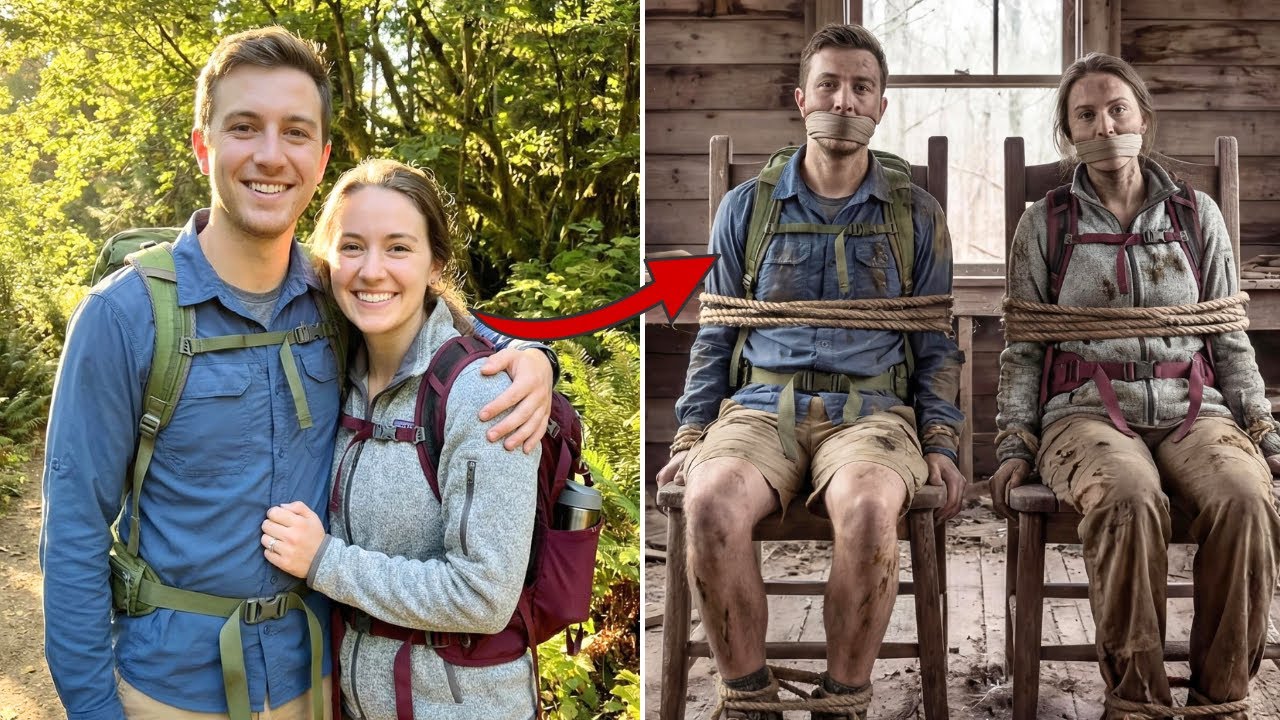
The vehicle was found three days after they were supposed to return. A ranger on routine patrol spotted the CRV parked at a trailhead near the West Fork of the San Juan River. The search that followed covered more than twenty square miles of dense forest, steep terrain, and river crossings. Helicopters were limited by the thick canopy.
Search dogs picked up a scent that led two miles into the forest before vanishing at a rocky creek bed. Handlers noted that an abrupt end often meant the person entered water or was transported, though no vehicle access existed in that part of the forest. For two weeks, teams checked known campsites, riverbanks, old logging roads, and caves. They found no clothing, no gear, no footprints, no sign of struggle.
Vaughn and Brooks had simply vanished. The families issued public appeals. Vaughn’s brother organized a private search and hired a wilderness investigator. Tips came in but led nowhere.
By mid-September, the official field search was suspended due to lack of evidence and approaching cold weather. The case remained open, but investigators had nothing to follow. Then on September 22, nearly four weeks after the couple disappeared, Gordon Phelps, a Forest Service contractor inspecting old infrastructure, drove his ATV along an access road toward a decommissioned hunting cabin eight miles from the nearest maintained road. The cabin was not on public maps and had been abandoned for at least a decade.
Phelps noticed the door was partially open and the padlock had been cut. He pushed the door open and found two people tied to chairs in the middle of the room. They were alive but barely responsive, gaunt, filthy, and hollow-eyed. He ran back to his ATV, drove until he found reception, and called 911.
First responders reached the cabin in nearly an hour. Vaughn and Brooks were severely dehydrated, malnourished, and showing signs of prolonged restraint. Their wrists and ankles had deep infected marks from ropes. They were airlifted to Mercy Regional Medical Center in Durango.
Doctors reported severe malnutrition, muscle atrophy, infections, and, in Vaughn’s case, a partially collapsed lung. Neither could speak clearly at first. They had been held captive for nearly a month. The forensic team arrived at the cabin by late afternoon.
It was a single-room structure with boarded-up windows and no electricity or running water. The two chairs faced each other. The ropes were standard nylon cord, tight but not professionally knotted. Near the chairs were empty water bottles, granola bar wrappers, and a bucket used as a makeshift toilet.
Someone had provided just enough food and water to keep the victims alive. A sleeping bag, camping stove, and duffel bag with men’s clothing and canned food indicated someone had been living in the cabin. Fingerprints and DNA were collected and sent to the state lab. Investigators canvassed the area and found fresh tire tracks on an old logging road.
They were not distinct enough to identify a specific vehicle, but they confirmed someone had been driving in and out of the area during the time the couple was missing. They also checked recent permits. One name stood out: Clifford Brennan, forty-two, who had purchased a hunting permit for the San Juan National Forest on August 20, five days before the couple disappeared. Brennan lived in Bayfield, about thirty miles from Pagosa Springs.
He had a prior record: aggravated assault in New Mexico in 2009, three years in prison, and a 2014 arrest for illegal firearm possession that was dropped on a procedural error. He was currently on probation for a DUI conviction. On the morning of September 24, deputies went to his trailer. Brennan was not home.
His dark green Chevrolet Silverado was spotted hours later at a rest area off Highway 160. He was detained without incident. During interrogation, Brennan said he had been hunting in the forest in late August and might have passed through the West Fork area, but could not recall specific dates. He admitted using old cabins in the past for shelter during bad weather, but claimed he had not done so recently.
He denied owning the items found in the cabin and said he could not remember being on the road near it. The lab results broke the case. Fingerprints from the water bottles and flashlight in the cabin matched Brennan. When confronted, he changed his story.
He admitted being inside the cabin, but claimed it was weeks before the couple disappeared, saying he had stopped to rest during a long hike and left supplies. The timeline did not hold. The water bottles had production dates from mid-August, and the granola bar wrappers were from a brand only available since early September. The items had been brought to the cabin during the time the victims were missing.
A search warrant for Brennan’s trailer and truck on September 26 turned up more of the same nylon rope, bolt cutters matching the cuts on the cabin padlock, a cooler with canned goods and bottled water, and a notebook with handwritten notes. One entry, dated August 26, contained a crude map with an X marked near the cabin’s location. Another, dated September 10, read, “Check supplies, keep quiet. ” Brennan was charged with kidnapping, false imprisonment, and aggravated assault and held without bail.
By late September, Vaughn and Brooks were stable enough to give statements. Vaughn described the hike into the forest on August 25 and a night spent without incident. The next morning, while exploring a ridge, they met a man who said he was a hunter and asked about elk. They found him unsettling but continued on.
About an hour later, the same man appeared with a rifle and ordered them not to run or scream. He marched them through the forest for at least two hours to the cabin, tied their hands behind their backs, and bound their ankles to the chairs. He did not explain why, made no demands, and left, locking the door. For the first two days, they heard nothing.
On the third day, the man returned with water and granola bars, untied their hands just long enough for them to eat, then restrained them again. This pattern continued for weeks. He never spoke. He never showed emotion.
He brought minimal supplies, watched them, and left. Brooks said that on one occasion he took photographs of them while they were restrained. On another, he sat in the corner and ate a meal in front of them without offering any. Both victims identified Brennan without hesitation from a photograph.
They said that if Phelps had not found them when he did, they would have died. The man had not returned for days, and they had run out of water. The trial of Clifford Brennan began on January 15, 2018, in the Archuleta County Courthouse. The prosecution argued that the abduction was a sustained act of cruelty requiring planning and a complete disregard for human life.
The defense argued that Brennan was a deeply troubled man who had acted impulsively, kept the victims alive, provided them food and water, and never physically harmed them beyond the restraints. The jury heard testimony from Phelps, the doctors, and Detective Laura Simmons, who walked them through the physical evidence. Vaughn testified on the fifth day, identifying Brennan in the courtroom and telling the jury he had believed every day that he would die in that cabin. Brooks testified that the psychological torment was worse than any physical pain.
Brennan did not testify. On January 28, the jury found him guilty on all counts: two counts of first-degree kidnapping, two counts of false imprisonment, aggravated assault with a deadly weapon, and criminal restraint. At sentencing on February 14, Vaughn spoke of the nightmares, the anxiety, and the shattered trust that had once made him feel safe in the world. He told Brennan that he had had every opportunity to let them go and had chosen not to.
Brooks described the terror of realizing nobody was coming and the strain the trauma had placed on her relationship with Vaughn. The judge sentenced Brennan to 32 years on each kidnapping count, 12 years on each false imprisonment count, 16 years for aggravated assault, and 6 years for criminal restraint, all to run consecutively. The total sentence was 98 years, effectively life in prison. He was also ordered to pay restitution of more than $200,000.
The case prompted the Forest Service to review abandoned structures in national forests and establish new inspection protocols. Vaughn eventually returned to his work and began speaking at conferences on victim rights and outdoor safety, later becoming involved with organizations supporting families of missing persons. Brooks left dental work, studied psychology with a focus on trauma, and became a counselor for survivors of violent crime. Their relationship ended, not through anger, but because each needed a different path forward.
Brennan remained in a maximum security facility, granting no interviews and offering no explanation. Investigators never established a clear motive. The account of the case suggests he abducted them simply because he could.