On April 6, 1941, Nazi Germany invaded Greece under Operation Marita. Adolf Hitler saw the country as a potential threat to the southern flank of his planned invasion of the Soviet Union and wanted to secure vital supply routes for German forces in the Balkans. Within weeks, Axis forces occupied Greece and divided the country into German, Italian, and Bulgarian zones of occupation. As resistance against the occupiers grew, the Germans responded with increasingly brutal measures.
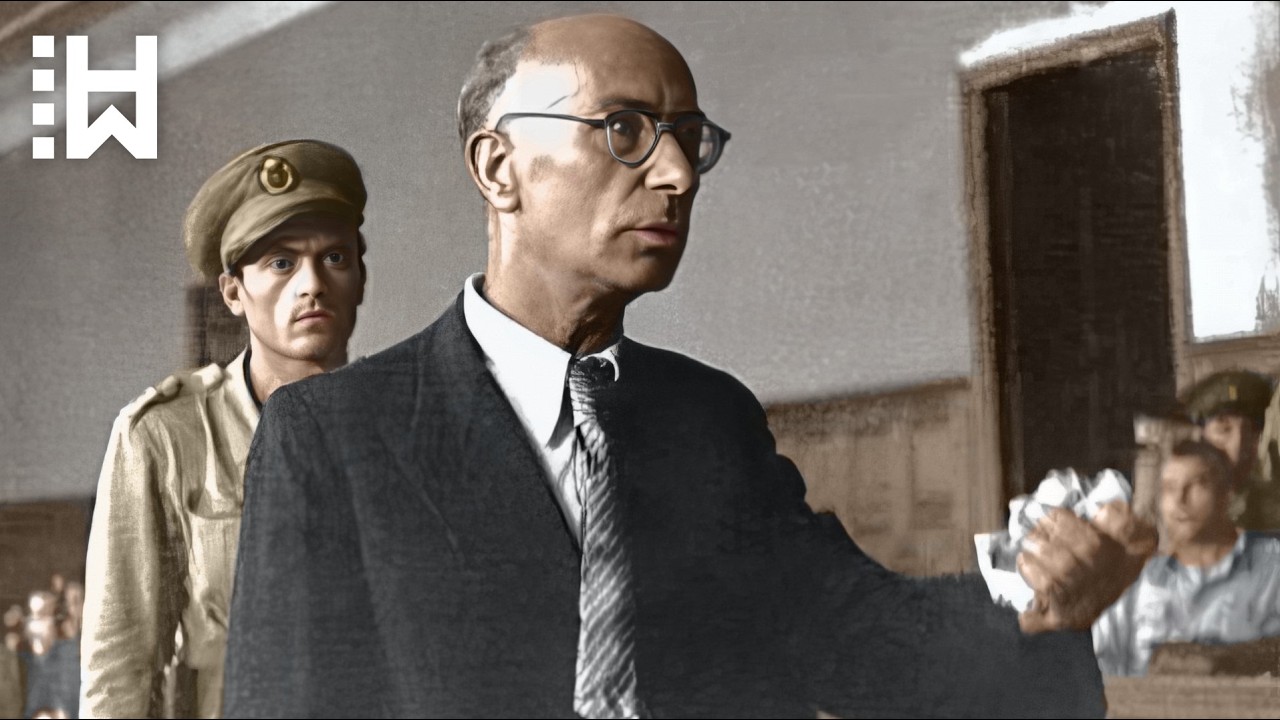
Entire communities suffered under Nazi rule, and countless innocent men, women, and children became victims of the occupation. One man responsible for carrying out this campaign was a German army officer who led one of the most feared collaborationist units in occupied Greece. His name was Friedrich Schubert. Friedrich Fritz Schubert was born on February 21, 1897, in the city of Dortmund, then part of the German Empire.
During the First World War, which lasted from July 1914 to November 1918, Schubert served in the Imperial German Army. He reportedly fought in the Ottoman Empire, where he claimed to have received the Star of the Crescent, an Ottoman military decoration he wore with pride for the rest of his life. After the war, he is believed to have returned to Dortmund, where he worked as a machine technician before moving to Turkey during the 1920s. In 1925, Schubert married an Italian woman, and the couple later settled in Alexandria, Egypt, where they lived for roughly 15 years.
On January 30, 1933, Adolf Hitler was appointed Chancellor of Germany, and in January of the following year, Schubert became a member of the Nazi Party. The Second World War began on September 1, 1939, when Nazi Germany invaded Poland. The early stages of the war saw rapid German advances across Europe, with the fall of Poland, the invasion of France, and the evacuation of British forces from Dunkirk in 1940. After the successful campaign in France, Hitler turned his attention toward the Soviet Union.
Before he could launch Operation Barbarossa, Hitler first had to secure Germany’s southern flank. On April 6, 1941, the Nazis invaded Greece. The German Twelfth Army, led by armored divisions, quickly crushed the forces of Greece and the British Commonwealth. Key positions such as Thessaloniki fell rapidly, while German airborne troops played a decisive role in securing strategic locations.
By April 27, 1941, Athens had fallen and mainland Greece was under Axis control. After the fall of Athens, Greek soldiers and Allied forces withdrew to the island of Crete and other nearby territories. The invasion of Crete began in May 1941 with Operation Mercury, the first major airborne invasion in military history. Despite fierce resistance from Allied forces and the Cretan population, the superior firepower and tactics of 22,000 German paratroopers eventually ensured control of the island.
Friedrich Schubert, who had returned to Germany after the outbreak of the Second World War, first appeared on Crete in the summer of 1941 as a military translator attached to a local German military command in the city of Chania. He served under Alexander Andrae, a general of the air force and commander of occupied Crete. Schubert spoke Greek, Turkish, Italian, and Arabic, making him particularly useful to the German occupation authorities. Around August 1941, he was transferred to the regional command in the city of Rethymno.
Later that autumn, he was moved again, this time to the city of Heraklion, where he served in German military counterintelligence under Major Hartmann. Because Schubert spoke Greek with a strong Turkish accent, the locals nicknamed him “the Turk. ” Major Hartmann established an armed collaborationist group composed mainly of pro-Nazi Cretans from the village of Krousonas. After taking command in June 1942, Schubert expanded the unit by recruiting additional collaborators and convicted Greek criminals, turning it into a force personally loyal to him.
In April 1943, Schubert was transferred to the German field military police in Chania. As tensions escalated between Schubert and Hartmann, Hartmann ordered Schubert imprisoned. But General Bruno Bräuer, the commander of occupied Crete, intervened quickly and ordered his release. Afterward, Bräuer granted Schubert, who then held the rank of senior non-commissioned officer, almost unrestricted authority to suppress resistance without being held accountable for his methods.
In September 1943, his unit was formally established under the name Jagdkommando Schubert, an anti-communist militia tasked with hunting resistance fighters and those accused of supporting them. Their campaign of terror quickly intensified. Ordinary members of the unit wore captured Italian uniforms, while officers continued to wear Wehrmacht dress, and they became known among the people of Crete as the Schuberei, with its members called Schuberites. They gained a notorious reputation for sadistic attacks against civilians, including beatings, torture, field executions, and the destruction of entire villages.
To this day, the word “Schuberite” remains a grave insult on Crete, synonymous with betrayal and cruelty. The brutality of the Schuberei soon provoked a massive reaction. Local resistance fighters and British Special Operations Executive agents, responsible for supporting resistance movements in occupied Europe, were determined to eliminate Schubert and his men at any cost. As attacks against the unit increased, the Schuberei gradually lost effectiveness, unable to operate far from their base without protection from large Wehrmacht escort forces.
German officers stationed on Crete are also believed to have been angered, because Schubert’s methods were considered excessively cruel even by Nazi standards. One of the most infamous examples of this brutality took place in the mountain village of Kaly Sykia in October 1943. Two days earlier, a rebel group led by Manolis Badouvas had ambushed and destroyed a German detachment near their hideout after receiving food and supplies from the villagers. In response, General Bruno Bräuer ordered a brutal retaliatory operation.
On October 6, Schubert and his forces surrounded the village and gathered everyone they found for interrogation. By that time, most of the village men had already fled to the surrounding mountains in fear of German retaliation. Only women, children, and a few elderly people remained. Schubert’s men immediately began setting fire to several houses while beating the women and threatening them with death, demanding to know where their husbands and sons were hiding.
Despite the violence, none of the women revealed any information. In a fit of rage, the Schuberites dragged many of them into neighboring houses, closed the doors, and deliberately set the buildings on fire. Trapped inside, the women were burned alive. In total, 12 women were killed that day, eight from Kaly Sykia and four from the neighboring village of Rodakino.
One of the victims was eight months pregnant. An elderly man unable to leave his home was also burned inside the building. Although far larger massacres occurred elsewhere in occupied Greece, the killings at Kaly Sykia were unique because the victims were almost exclusively women. But the Schuberei did not stop there.
On October 8, 1943, Schubert and his men headed west to the neighboring village of Klikratis. A strong force of Wehrmacht troops surrounded the village from several directions while the Schuberei entered with them. Residents were pulled from their homes and marched toward the village church at gunpoint. Some men who refused German orders were executed outside their homes in front of their families.
Others were led to an abandoned house in the northern part of the village where they were executed en masse. By the end of the operation, roughly 30 civilians had been killed. Like Kaly Sykia, Klikratis was destroyed as deliberate collective punishment rather than for military necessity. During the following months, Schubert’s unit carried out similar operations in many other villages across Crete, spreading panic throughout the island.
Entire communities fled whenever rumors spread that the Schuberei were approaching. One survivor later summed up Schubert’s reign of terror with these words: “If there had been 10 Schuberts, no Greek would exist today. ”
In January 1944, General Bräuer ordered Schubert to leave Crete. The men under his command were given the choice between staying on the island or following him to Macedonia in northern Greece.
About half chose to continue serving under Schubert, joining the Poulos Verband, a collaborationist battalion led by Lieutenant Colonel Georgios Poulos. Their methods did not change much. Villagers suspected of supporting the resistance continued to face collective punishment. On September 2, 1944, Schubert’s unit took part in the Hortiatis massacre, in which 149 civilians were killed, most of them women and children.
Dozens were burned alive after being locked inside buildings, while others were shot or stabbed while trying to flee. Less than two weeks later, Schubert’s men took part in another retaliatory operation in the town of Giannitsa, where more than 100 civilians were executed. These massacres became among the bloodiest crimes committed by Schubert and his followers during the occupation of northern Greece. When German forces withdrew from Greece in October 1944, Schubert retreated through Yugoslavia with about 70 of his followers before eventually reaching Austria.
There, he tried to avoid arrest by assuming a false identity as Konstantinos Konstantinidis and pretending to be a displaced Greek civilian accompanied by his mistress. Nearly four months after the end of the Second World War in Europe, on September 5, 1945, he boarded a plane in Munich that was carrying former concentration camp prisoners returning to Greece, hoping to blend in among the survivors. The ruse did not last long. After the plane landed at the Elefsina military airfield near Athens, Greek police interrogated Schubert.
His vague and contradictory answers immediately raised suspicion, and he was detained. During the investigation, numerous witnesses recognized him as the notorious leader of the Schuberei. He was arrested and brought before the special court for war criminals in the Greek capital. On August 5, 1947, the court convicted Friedrich Schubert of killing 271 civilians, along with numerous other crimes including rape, arson, wartime looting, theft, and cold-blooded murder of women and children.
He was sentenced to death 27 times, in addition to prison terms totaling several thousand years. Friedrich Fritz Schubert was 50 years old when he was executed by firing squad at the Eptapyrgio prison in Thessaloniki on October 22, 1947. Standing before the firing squad, he remained loyal to the Nazi ideology to the end. His last words were: “Germany lives and will never die.
I hope it becomes great again so it can compensate for everything it suffers today. ”
Bruno Bräuer, promoted in June 1944 to the rank of general in the paratrooper forces, also faced accountability after the war. As commander of occupied Crete, he had intervened to secure Schubert’s release and later granted him almost unrestricted authority to suppress resistance. Bräuer was extradited to Greece, convicted of war crimes, and executed in Athens on May 20, 1947.
Georgios Poulos, Schubert’s partner in the Poulos Battalion, also tried to escape accountability but met no better fate. When German forces withdrew from Greece, he fled with his men through Yugoslavia to Austria, where the U. S. Seventh Army eventually captured him and later handed him over to Greece.
He was convicted of treason and collaboration with the German occupation authorities before being executed in Athens on June 11, 1949. In the end, Schubert, Bräuer, and Poulos all faced accountability for their roles during the occupation.