In the autumn of 1889, a twenty-nine-year-old feature writer for the Knoxville Sentinel rode into the high country of the Smoky Mountains to find Atohi Long Walker, an eighty-three-year-old Cherokee who had remained in the hills after removal. Most of those who stayed did not want to be written about. Atohi was different. He had sent word through a peddler that if the young journalist wanted the story he had to tell, he should come before the first hard frost.
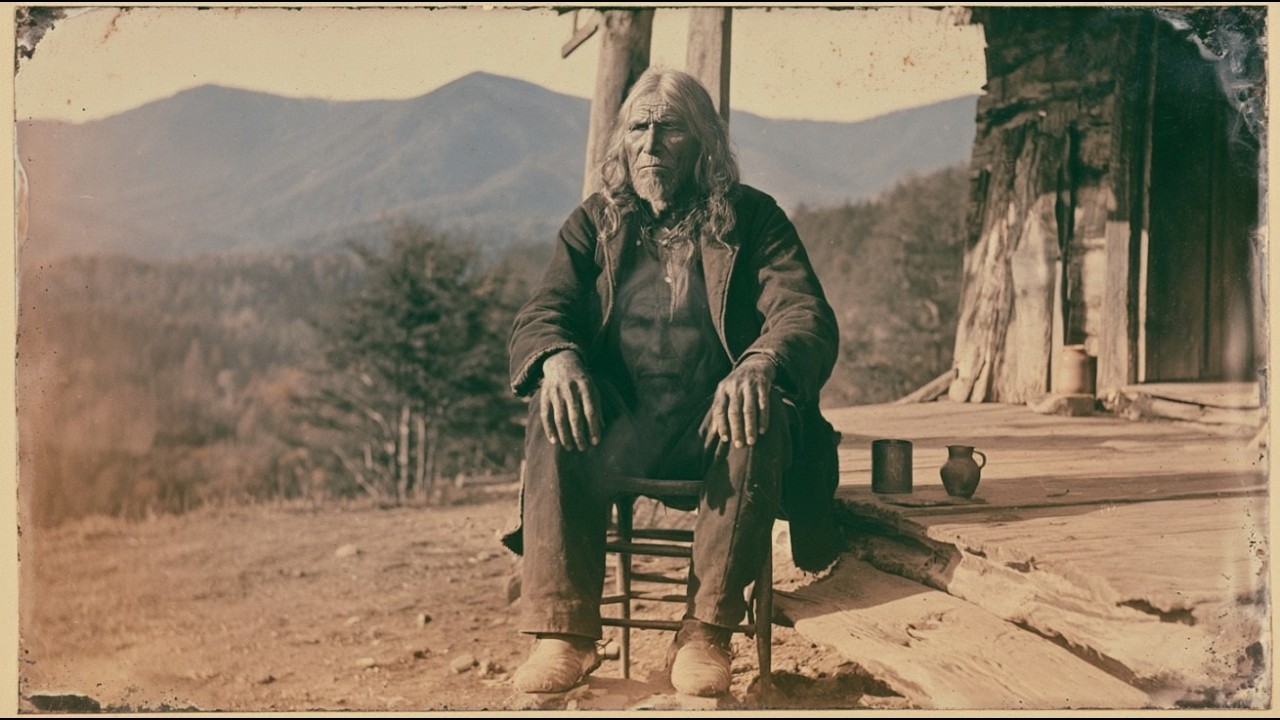
The cabin sat in a notch above the Oconaluftee, hidden so well that a man could pass within thirty paces and never see the smoke. Atohi was waiting on the porch. He looked at his visitor for a long moment, then said, plainly, “You came for the dark one. Sit.
”
The story he told concerned the spring of 1873, when the state of Tennessee had finally set itself to finishing the survey work abandoned before the war. Plat maps were needed for tax purposes, boundary lines for timber speculators who had bought country they had never seen. A man named Cornelius Grimshaw held the contract for the eastern section. He was forty-four, born in Maryland, trained at the topographical bureau, and counted by his employers as the steadiest hand they had.
Sober, patient, a man who could spend a full week in the field without raising his voice, he had a wife in Knoxville and wrote to her every Sunday whether he had anything to say or not. His party was four men: Lemuel Ashcraft, his rodman, who had worked with him for six seasons; Hosea Tillman, a quiet chainman from Maryville who carried a Bible in his coat; Vernon Crowley, the cook and wagon driver; and a hired guide named Mordecai Pickering, raised in those very hills. They came up through Cardiff Branch in the third week of April. That first night they stopped at the only homestead within an hour’s ride of the foot of the ridge, a cabin held by a widow named Velma Thornwood.
Her husband, Edwin, had walked into those hills six years before and never walked out. She fed the party and then asked Grimshaw plainly what he meant to do. When he explained the contract, the lines, the markers, she said only, “Don’t go up there. ” When he finished his polite assurances, she said it again.
Edwin had gone up, she told him, the best timberman in the hollow, and never came back. The buyer hired three more men. The Welshman came back and never spoke again for the rest of his life. The two locals were still up there somewhere.
Grimshaw asked what the Welshman had written. She said he wrote the same line over and over, and she had written it down once and would not write it again. Mordecai Pickering set down his cup. He told Grimshaw he would take them to the foot of the trail but would not go past the second cairn.
He would wait three days. If they were not back by the third evening, he would wait one more, then go down and tell them in Cardiff Branch. That was the most he would give, and he would give it only because he had taken the money. Grimshaw answered that it was fair, and that they would be back by the third evening.
He was wrong. The next morning was clear and cold. Velma stood in her door and watched them go, the face of a person who had stopped hoping and made her peace with it. They took the wagon as far as the lower stream, unhitched, and started up on foot.
The first cairn was a low pile of river stones where the trail crossed a spring. Mordecai touched the topmost stone, then crossed his palm against his trouser leg as if drying it. They climbed for two hours. Around midday they reached the second cairn, a taller pile of slate and quartz with a broken stick laid across it.
Here Mordecai stopped. He set down the bag he had carried for them and said, “This is where I stop. Three days, I’ll wait below. After that, I’ll go.
” He shook hands with Grimshaw and Tillman. Ashcraft laughed at something and said words Atohi would not repeat. Then they went up. Mordecai sat on a stone and watched them out of sight.
He waited a full hour to see if anyone came back. Nobody came back. For the first half hour past the cairn, the going was easy. The trail was clear.
The woods opened into a long swale of yellow grass with a creek running through it that Ashcraft said was not on any survey map he had seen. Grimshaw made the first note in his survey book: a watered swale, half a mile long, oriented north-northwest, position to be confirmed, time 12:40 in the afternoon. The next note, at 2:15, said they had been walking and the swale was below them still. At 2:40, again, the swale below them, though they had crossed it and left it behind, and had been walking uphill for an hour and twenty-five minutes.
Grimshaw took out his compass. The needle was steady, the bearing northwest as intended, the slope rising underfoot. The sun was consistent with the hour. There was no explanation.
He did not turn around. That, Atohi said, was the moment he should have. By three o’clock the woods had changed. The pines thinned and gave way to trees Ashcraft could not identify, though he had identified hundreds of species in six seasons of fieldwork.
The bark was smooth where it should have been rough, dark like wet slate. The leaves were the wrong color for the season, as if painted by a man working from memory. The light itself was wrong, not darker or brighter, but coming from a direction the sun was not in. Tillman noted in his pocketbook that the shadows on the trunks did not match the position of the sun.
He noted it twice and underlined it the second time. At four o’clock they came on the first thing that should not have been there. A surveyor’s chain, a sixty-six-foot Gunter’s chain of the kind used in the eastern survey before steel tape, hung from the lower branch of one of the smooth-barked trees, and the tree had grown around it, the bark closed over the metal like flesh over an old wound. The handle plate was stamped with a maker’s name and a year.
Ashcraft cleaned it with his thumb. 1831. The chain was forty-two years older than they were, hanging from a tree that had grown around it over the better part of a man’s lifetime. There was nobody in that country in 1831.
Ashcraft started to laugh, then stopped, and the second laugh he made was not the first kind. Grimshaw put a hand on his arm. They left the chain in the tree. Mordecai had told them the rule of the high ridge: do not take what is given.
They went on past the chain because Grimshaw was the kind of man who could not unfinish a contract. They climbed another forty minutes. The slope kept rising. When Tillman looked back, the swale was no longer below them.
It was beside them, at the same elevation. Tillman, the quiet one, sat down on a fallen log and said, very low, that he would like to go back now. Grimshaw said, “A little farther. We are close to the top.
” Tillman said he would like to go back now. Grimshaw said, “A little farther. ” They left him on the log. Atohi stopped in the telling and looked hard at his listener.
You do not leave a man on a log, he said. There is something about a man sitting down and saying he wants to go back that you must respect, and a man who does not respect it is no longer a friend to the man on the log. He is a thing the man on the log is now afraid of. Tillman watched them go and wrote in his pocketbook: “They have left me.
The Lord have mercy. I am alone and I am not alone. ”
An hour later, because the light had stopped behaving as light behaves and because something he could not see had moved twice in his peripheral vision, Tillman got up and started back down what he believed was the trail. His pocketbook was found in 1876, three years later, four miles south of the second cairn, left on a flat rock in the open as if set there for finding.
The last entry was dated April 23rd, 1873, the very day he had sat down on the log. He had been walking down for three hours, he wrote, and was at the same place where they had left him. The light was wrong. The trees were wrong.
He could hear them above him still, though they had gone on past him a long time. There was something walking beside him on the right that would not let him look at it. The last line, in an unsteady hand, read: “If you find this, my name was Hosea Tillman of Maryville. Tell my mother I tried to come home.
” He was not found. By the time Tillman was writing those words, Grimshaw and Ashcraft were standing in a clearing the survey notes said should not have been there. It was perfectly round, about sixty feet across, the ground bare and dark and oddly fine, as if sieved. In the center was an old fire ring of river stones, and the stones were warm.
There was no ash, and there had been no fire that day or that week, but the stones were warm. Ashcraft stood at the edge and would not enter. Grimshaw walked in. There was a notebook in the fire ring, bound in dark leather, swollen with damp.
On the inside cover was a name, the name of one of the men who had crossed the ridge in 1831, when no one was supposed to have been there. The first pages were a surveyor’s record, clean and orderly. Around the eleventh page, the bearings stopped making sense. The same bearing was recorded a dozen times.
Then a sentence: “I am not where I think I am. ” On another page: “I have been writing in this book for the better part of a week, and I find, when I turn back the pages, that what I have written is not what I remember writing. ” There was a sketch of a face, not a human face, not an animal face. On a later page: “It sat with us by the fire last night.
It was wearing Pemberton’s coat. Pemberton has been gone since Tuesday. ” And again: “I have been writing in this book for 9 days. Today I went back and counted the pages.
There are 44 pages of writing. There should not be 44 pages. ” The last entry was written very lightly: “If I leave the book in the ring, it may find another to read it. ”
Grimshaw closed the notebook and put it in his coat.
He turned to call to Ashcraft. Ashcraft was no longer at the edge of the clearing. The leaves where he had stood were undisturbed. There was no track of a man going anywhere, as if he had been lifted out of his own footprints.
Grimshaw called his name three times. The third time, the woods answered him, in Ashcraft’s voice. “Cornelius, I am over here. Cornelius, please come over here.
” He did not go. He turned the other way and began to walk. A man who runs in those woods, Atohi said, is a man hunted by his own breath. After twenty minutes he came to the second cairn.
By his watch it was five o’clock in the afternoon of the day they had gone up. Mordecai was not there. There were no tracks in the soft dirt around the cairn, including his own, though he had crossed that ground twice that morning and once that evening. He went down on one knee and put his hand in the dirt.
He could feel the give of it, the way good loam takes a print. He looked back and saw the prints of his hand. Where he had walked, his boots had left no mark. His boots were clean, as if he had put them on that morning out of a closet.
At some point he heard someone coming up the trail from below. It was Lemuel Ashcraft, the same gait, the same slight favor of the left knee from the horse kick the spring before, the same jacket, the same hat. Ashcraft stopped within ten feet and smiled the way Ashcraft smiled, mostly with the left side of his mouth, and said, “Cornelius, there you are. I have been looking for you for the longest time.
We need to get off this ridge before dark. ” Grimshaw asked where he had been. “In the clearing. Where you left me.
” Grimshaw said, “I did not leave you. You left me. ” Ashcraft kept the smile and said, “You are tired, Cornelius. Come down.
” Grimshaw said, “Take off your hat. ” The smile did not change. “I am very tired, too. Let us go down.
” Grimshaw said again, “Take off your hat. ”
What the thing did then, Atohi would not describe, because the man who lived to tell the story would not say. He would only say that he turned and walked off the trail and walked until full dark. When he came out of the woods, he was not at Velma Thornwood’s homestead.
He was twelve miles to the south, on a dirt road outside a town called Webb’s Cross, walking barefoot. His boots were gone. His own survey notebook was gone. The forty-two-year-old leather notebook was still in his pocket.
He never opened it again. He kept it in a locked box in his attic in Knoxville for the rest of his life. After his death, his wife gave the box to a Methodist preacher, who took it home and burned it without opening it. The preacher told her he had known a man in West Virginia who brought something out of high country in a leather book, and the man had not done well by it.
It was the second time in his life he had taken such a book to burn. Grimshaw took the train back to Knoxville the morning after he came out at Webb’s Cross. He did not file the survey. He walked into his house, kissed his wife, sat down in his armchair, and did not speak for two days.
The doctor’s note, which his nephew later showed the journalist, read: “Patient appears physically unharmed. Patient cannot give a coherent account of events. Patient asks repeatedly that all the windows of the house be locked at night and that the curtains be drawn. Patient does not sleep in his own bedroom.
Patient does not look in mirrors. Patient is, I believe, of sound mind, which is the part of this that troubles me most. ” Lemuel Ashcraft was never seen again. Hosea Tillman was never seen again, except for the pocketbook on the flat rock.
Vernon Crowley became a teamster in Sevierville and told the story once, late at night, to a young man named Ezra Holloway, whose affidavit later entered the county records. Mordecai Pickering had not been at the cairn that afternoon. He waited one hour, saw something walk across the trail below the cairn that he refused to describe, and went home. He told the story to the postmaster, who told the sheriff, who took it down in writing.
He died in his sleep in 1881. He had told his sister, in his last spring, that he had not been right in his sleep since ’73. Velma Thornwood lived on at the cabin for nine more years. The buyer from Asheville sent a man to make a fair offer for the homestead.
She would not sell. He came again. She would not sell. The third year, he stopped coming.
She told the postmaster she could not leave because Edwin was up there still, and as long as she was at the cabin, he might find his way back down some night, and somebody had to be there. She believed that until she died in 1882, of a winter fever. The cabin stood empty after. When Atohi finished, he sat still for a long while.
The journalist asked the question he had been holding: What is it? What is up there? What walks around in Lemuel Ashcraft’s coat? What sits by fires in stone rings in the middle of bare ground in clearings that are not there?
Atohi said he was asking the wrong question. The question was not what. The question was who. That, too, was the wrong question.
Then he looked out at the ridgeline and said the mountains were not haunted. That was the white man’s word for what the white man could not understand. What was up there was not a ghost, not a spirit that had been a person, not a demon out of any book. It was older than any of those things, and patient, and it had a habit his people had known how to honor and the newcomers had forgotten.
It would meet anyone who walked into its country. It would meet you as you, as the you that you most expected to find. It would speak with your voice, wear your coat, smile your smile. And if you stayed long enough, it would learn you so well that when you came home you would not be sure which of you was the one that came down off the mountain.
“The people who went up the ridge in ’73,” he said, “were not afraid of what they did not know. That was their mistake. They were afraid of what they thought they did know, and the hush taught them the difference. ”
Asked whether the Cornelius Grimshaw who walked into his house in Knoxville was the same man who had walked up the ridge, Atohi said, “I am saying that the man who came home came home and the man who went up went up and those two things may not be the same statement.
”
As the light failed, Atohi walked the journalist to the path and put a hand on his shoulder. He told him to write the story if he must, but before he wrote it, to look at himself in the mirror by his front door when he got home, and to look a long time, and to make sure he knew who was looking back. If he was not sure, he should not write the story. As the journalist was leaving, Atohi called his name once.
The hush, he said, was not the only place. It was the one easiest to keep a name on. There were others, in the country between the high ridges. Most were smaller.
Some were larger. The largest was not in these mountains at all. He did not say where it was. The journalist rode home and looked in the mirror by his front door and was satisfied with what he saw.
He wrote the story the next morning. But weeks later, a photograph he had taken of Atohi that afternoon came back from a friend in Boston, developed from a clean, undamaged negative. In the picture, over Atohi’s clear face, was a second face, faint, set over his as if two photographs had been printed on top of one another. The eyes were open.
The mouth was not. The friend in Boston could offer no explanation. The second face was on the negative. The journalist kept the photograph in a drawer and never returned to that country.
Atohi died, he was told, in the winter of 1892. At night, when he could not sleep, the journalist would take the photograph out and look at it, and the face had never moved. He did not know whose it was.
He was afraid that one night he would look at the photograph and the face would be familiar, and he was not yet sure whose face he was afraid would look back.