On March 10, 1992, Patricia Capoalo pulled into her driveway in Bensonhurst, Brooklyn, after picking up her children from school. She was thirty-eight years old, a mother of three, with no criminal record and no connection to the underworld. As she came to a stop at 5:45 in the evening, a stolen van slammed into her car. Two men jumped out, raised pistols fitted with silencers, and fired across the street.
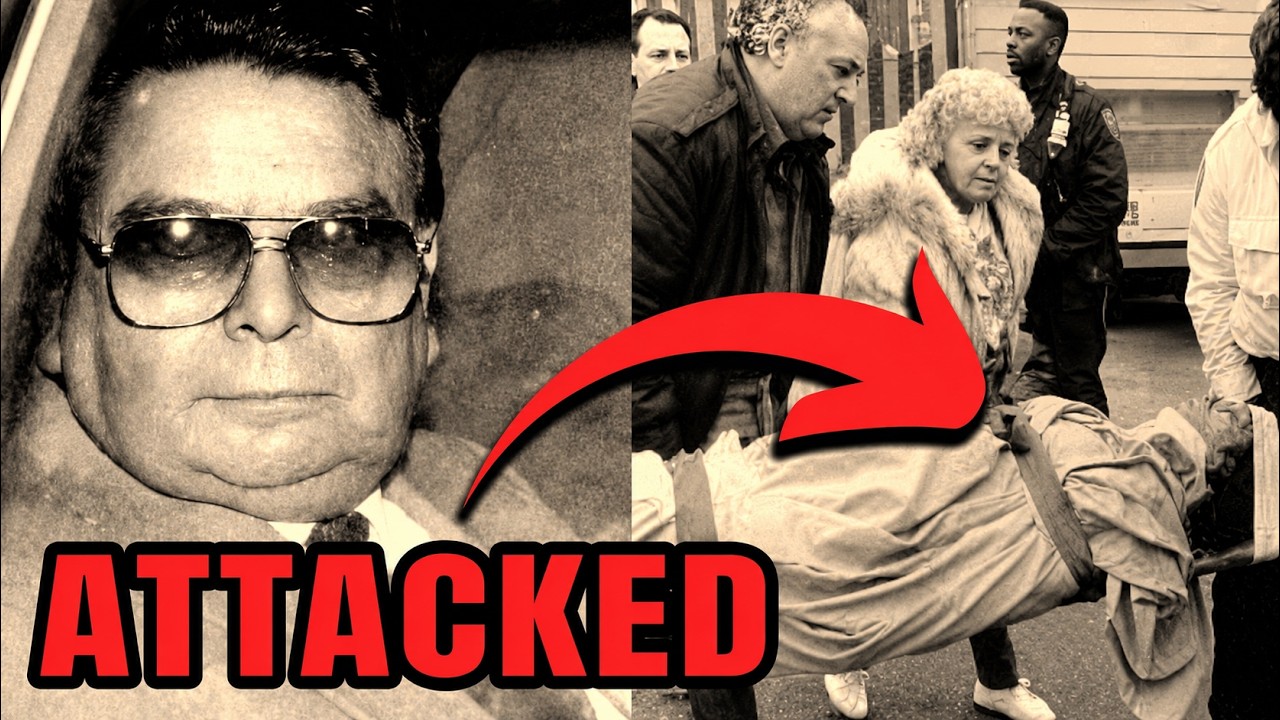
One bullet tore through her neck, another into her back. Glass shattered, blood soaked the front seat, and the shooters sped away, leaving her to die. It was not a robbery. It was not a mistake.
It was a message, aimed not at Patricia, but at her brother, Peter Chiodo, a captain in the Lucchese crime family. Chiodo had already taken twelve bullets for the mob and refused to break the code of silence. He kept his mouth shut, did exactly what a loyal wise guy was supposed to do, and in return his own boss ordered the murder of his civilian sister. In breaking the most sacred rule of the American mafia, that family crossed a line that would bring down one of the most powerful criminal organizations in New York.
Peter Chiodo was not the typical Hollywood mobster. By the 1980s, he weighed well over four hundred pounds, and his friends called him Fat Pete. Born in 1950, he grew up in the working-class Italian neighborhoods of Brooklyn, surrounded by mobsters from birth. His father and uncles were connected, and for a kid like Peter, the mafia was not some shadowy secret society.
It was the local neighborhood administration. At twenty, he was running errands for Lucchese family soldiers, collecting debts, delivering messages, learning the golden rule early: keep your mouth shut, kick your money up, never ask questions. By 1987, Chiodo was officially inducted into the Lucchese family. He rose through the ranks because he was an incredible earner.
Operating out of social clubs in Brooklyn and Staten Island, he ran a large crew of soldiers and associates. Every morning he woke early, drank espresso, met with his men, and collected envelopes stuffed with thousands of dollars in cash. To his neighbors he looked like a successful businessman. To the FBI, he was a massive target.
At the time, the Lucchese family was being taken over by two of the most ruthless men in criminal history: Vittorio Amuso and Anthony Casso. Amuso was the boss, Casso the underboss, but everyone on the street knew Casso pulled the strings. Casso was a paranoid psychopath. He ordered murders not for business reasons but because he suspected everyone.
He had two corrupt NYPD detectives on his payroll who fed him information and committed killings for him. Under Amuso and Casso, the Lucchese family became a bloodbath. For a while, Chiodo was safe. He was making too much money for his bosses, largely through one of the most lucrative schemes in mafia history: the Windows case.
The New York City Housing Authority planned to replace hundreds of thousands of windows in public housing projects across the city, a project worth over one hundred fifty million dollars. The mob controlled the union that supplied the workers and the companies that manufactured the windows. They set up a cartel, decided in advance who would win each contract, and used union thugs to break the legs of independent contractors who tried to bid. The mob charged the city an extra one to two dollars for every window installed, more than half a million windows, and collected millions in pure cash profit.
Chiodo was the Lucchese point man, handling the union delegates, collecting payoffs, and making sure Amuso and Casso got their cut. But the scheme was too visible. The FBI noticed the inflated prices, turned a union official, and planted a wire. Within months, a massive RICO indictment was unsealed against the bosses of the Five Families.
In 1990, knowing they were about to be arrested, Amuso and Casso did something bosses rarely do: they went on the run, hiding in safe houses across the country and communicating with the family through messengers. While they were in hiding, their paranoia reached insane levels. They appointed Alphonse D’Arco as acting boss. D’Arco received his orders through secret phone calls and coded letters, and the orders were almost always the same: kill this guy, kill that guy.
Peter Chiodo was facing serious prison time for the Windows case. At forty years old, he was looking at twenty years behind bars. His lawyers advised him that going to trial was suicide. The government had tapes, witnesses, and financial records.
In 1991, Chiodo decided to plead guilty. He did not agree to cooperate, he did not give up names, he simply admitted his own guilt to get a lighter sentence. But he broke a rule: he did not ask Amuso and Casso for permission. When Casso heard about the guilty plea, he lost his mind.
In his paranoid brain, a guilty plea could only mean one thing: Chiodo was talking, making a deal with the FBI. Casso immediately contacted D’Arco. The order was given. Chiodo had to be eliminated.
Chiodo sensed the danger. People stopped returning his calls. Friendly hugs turned into cold handshakes. He knew how this life worked.
He knew a hit was coming. But he refused to run. He still believed in his loyalty. On May 8, 1991, on Staten Island, Chiodo drove to a local gas station to get work done on his engine.
He pulled into the service bay and stepped out of the car, unarmed. Two seasoned killers from the Lucchese family, tracking him in a stolen car, pulled up, stepped out, and opened fire with semi-automatic handguns. The noise was deafening inside the concrete garage. Chiodo tried to run, but a man weighing four hundred pounds cannot run fast.
Bullets tore into his arms, legs, and torso. He collapsed on the greasy floor, and the hitmen stood over him, firing until their magazines were empty. Twelve hollow-point rounds struck him. The killers sped off, certain he was dead.
But Chiodo survived. The sheer mass of his body stopped the bullets from penetrating his vital organs. Paramedics rushed him to a trauma center, surgeons pulled twelve slugs from his frame, and he lived. The FBI arrived at the hospital within hours.
They stood by his bed, hooked up to monitors and tubes, and told him the truth: his own family had betrayed him. Casso had ordered the hit. If Chiodo went back out on the street, they would finish the job. The agents offered witness protection, a new life, and a chance to destroy the men who tried to murder him.
Chiodo shook his head. He told them to get out of his room. Even after twelve bullets, he refused to say a single word about the Lucchese family. He upheld omertà.
When Casso learned Chiodo had survived, he went berserk. He was terrified Chiodo would flip, and he did not believe in loyalty. He decided to send a message so horrific it would paralyze Chiodo with fear forever. For over a hundred years, the American Mafia had one supreme rule: you do not touch civilian family members.
Wives, children, sisters, all off limits. If a mobster stepped out of line, you killed the mobster. That rule was the only thing that gave the Mafia any semblance of honor. Casso did not care about honor.
He ordered a hit on Chiodo’s sister. Patricia Capoalo was a civilian, a mother, completely innocent. On March 10, 1992, as she pulled into her driveway, the stolen van crashed into her car, and the hitmen opened fire. Miraculously, she survived.
The bullet in her neck missed her carotid artery by a fraction of an inch. The bullet in her back missed her spine. But the damage was done. The line had been crossed.
The sacred rule was broken. When Chiodo heard that his innocent sister had been shot by his own crime family, something inside him snapped. The blind loyalty vanished. He realized the oath he had taken, when his finger was pricked and the holy card burned, was a complete lie.
There was no honor. Only greed and murder. Chiodo picked up the phone and called the FBI. He was ready to talk.
When he talked, the entire Lucchese family collapsed. He was one of the highest-ranking members of the Mafia to ever cooperate with the government. He had an incredible memory. He knew where the bodies were buried, the union payoffs, the extortion rackets, exactly how Amuso and Casso operated.
Placed in witness protection, he spent months being debriefed and recorded hundreds of hours of testimony. The ripple effects were catastrophic. By breaking the rule about touching families, Casso made other mobsters realize they were no longer safe. Acting boss Alphonse D’Arco was the next to flip, realizing Casso was planning to kill him too.
He walked into an FBI field office and became the first official boss of a New York crime family to turn informant. Soldiers flipped, capos flipped. The Lucchese family was decimated. Vittorio Amuso was captured in 1991 in Pennsylvania.
At his trial, Chiodo took the witness stand, massive and imposing, pointed his finger at his former boss, and detailed every murder, every racket, every lie. Amuso was convicted and sentenced to life in federal prison without parole. Anthony Casso was captured in 1993, hiding in a house in New Jersey. The man who ordered dozens of murders tried to make a deal with the government, attempting to become an informant himself to save his own skin.
The government listened for a while, but Casso was such a pathological liar that they kicked him out of witness protection. He was sentenced to thirteen consecutive life terms plus 455 years. He died in prison in 2020, miserable and alone. Peter Chiodo lived the rest of his life in witness protection.
He testified in multiple major Mafia trials and helped put dozens of dangerous men behind bars. He died of natural causes in 2016 at sixty-five years old.