Anna Maria Luisa de’ Medici was the last of her name, the final member of a dynasty that had risen from Florentine money-lending to rule one of Italy’s most celebrated states. She was born into splendor on 11 August 1667 in the Pitti Palace, the grand ducal residence in Florence, but her life was shadowed by sickness, scandal, and the slow collapse of her family’s power. It was only in death that she executed her final and most brilliant move, securing the Medici legacy not through politics or blood, but through art. The Medici had first emerged as a powerful banking family in late fourteenth-century Florence when the city was still a republic.
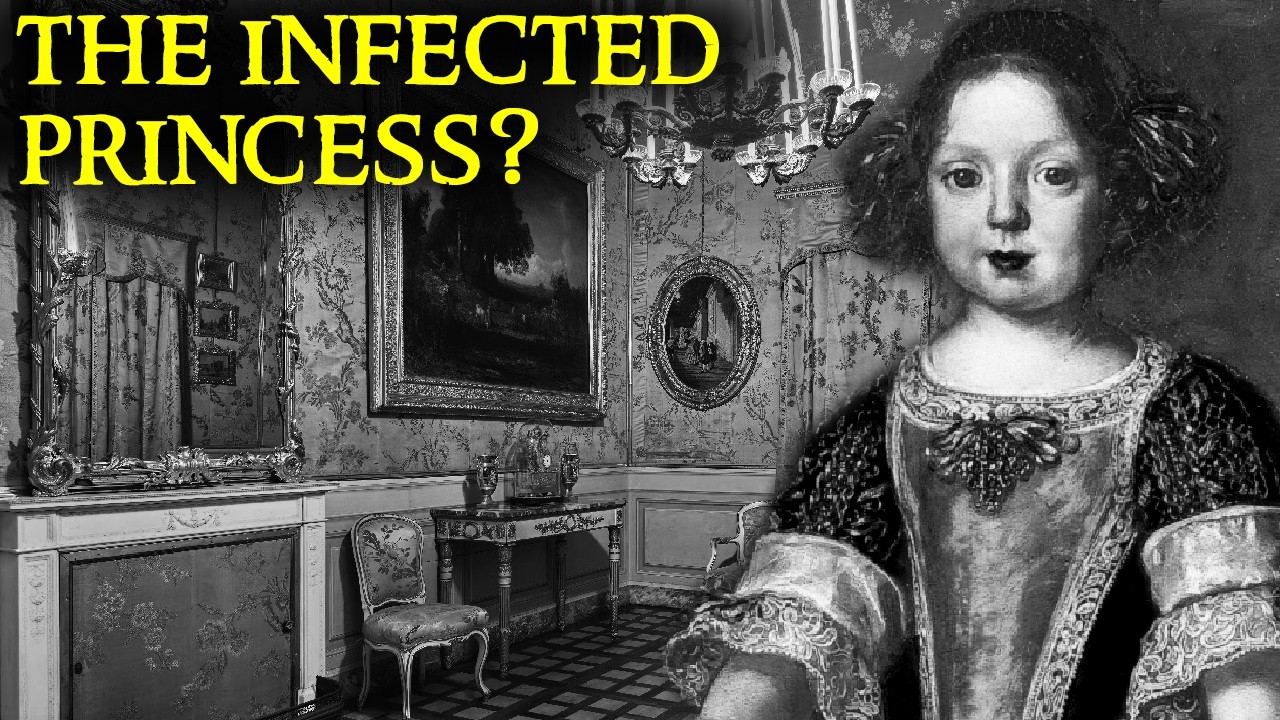
Over the following century, they tightened their grip on governance from behind the scenes, and in 1532 they formally became dukes of Florence. By 1569, they had been elevated to Grand Dukes of Tuscany, transforming the republic into a hereditary monarchy. Anna Maria’s father, Cosimo de’ Medici, became Grand Duke Cosimo III three years after her birth. Her mother was Marguerite Louise d’Orléans, a princess from a collateral branch of the French royal family.
The marriage was a political alliance between France and Tuscany, and it was a disaster from the start. Marguerite Louise found her husband repulsive and made no secret of it, mocking him publicly. Legend claims she even tried to provoke a miscarriage by riding recklessly while pregnant. After years of bitter conflict, she abandoned the Medici court entirely in 1675, fleeing to France and leaving her seven-year-old daughter and two sons to be raised by their grandmother.
They never saw their mother again. The Medici had long intermarried with the major royal houses of Europe, including the French Bourbons and the Austrian and Spanish branches of the Habsburgs. The consequences of such close dynastic interbreeding were painfully visible, most notoriously in Spain’s Charles II, who reigned from 1665 to 1700, a sickly, disfigured man whose twisted jaw left him barely able to speak or chew. Anna Maria herself was frequently ill, and historians have long debated whether generations of inbreeding contributed to her frailty.
Others whispered a darker explanation: syphilis, a rumor that still provokes debate among scholars today. Anna Maria had two brothers: Ferdinando, the heir, four years her senior, and Gian Gastone, four years her junior. As the grand duke’s only daughter, her marriage was a matter of state from childhood. An early proposal would have married her to the Grand Dauphin of France, the heir to Louis XIV, but that plan fell through.
Other candidates included King Peter II of Portugal. Ultimately, her father approved a marriage to Johann Wilhelm, Elector Palatine, ruler of an important principality in the Rhineland of western Germany. The match also secured Cosimo the title of Royal Highness, placing him among the ranks of Europe’s kings despite his lesser grand ducal status. The couple married on 5 June 1691.
Anna Maria was twenty-four; Johann Wilhelm was thirty-six. The marriage was a mixed success. The couple shared a genuine love of music and culture and supported one another at their elaborate court in Düsseldorf. Yet disappointment shadowed the union, and disease may have tainted it.
Johann Wilhelm had long been rumored to have contracted syphilis during his first marriage, and although his first wife had died of tuberculosis in 1689, the whispers never faded. Syphilis is a slow, cruel illness that can break the body down over decades. If Anna Maria contracted it from her husband, it could explain the chronic health problems that plagued her, casting doubt on whether inbreeding alone was to blame. A chilling clue came in 1692, when she became pregnant and quickly miscarried.
After that, she and Johann Wilhelm had no children. With that single lost pregnancy, the Medici line drifted closer to extinction. The childlessness of Anna Maria and her husband was not merely a personal tragedy. It sent shockwaves through the dynasty.
Her brother Ferdinando, the heir to the Grand Duchy, died in 1713 without children. Gian Gastone’s loveless marriage to Anna Maria of Saxe-Lauenburg produced nothing but misery, and no heirs. By the time Ferdinando died, the end of the direct Medici bloodline was inevitable. In desperation, Grand Duke Cosimo III issued a radical decree declaring that his daughter could succeed to the Grand Duchy if no male heir remained.
The Holy Roman Emperor Charles VI was outraged, insisting that only he could alter the succession, since Tuscany was an imperial fief. He briefly acknowledged Anna Maria’s claim, then quickly backtracked, demanding that Austria and Tuscany agree on which royal house would inherit the Medici crown. It is difficult to see what Cosimo hoped to accomplish. Anna Maria was forty-six by then, well past childbearing age.
Even if she inherited the Grand Duchy, there would be no one to succeed her. On 25 October 1723, Cosimo issued a final proclamation: Tuscany must remain independent, Anna Maria Luisa would succeed unchallenged after Gian Gastone, and the grand duke would name his own heir. It was a last desperate attempt to control the future from his deathbed. Six days later, at the staggering age of eighty-one, Cosimo was dead.
Gian Gastone succeeded as Grand Duke of Tuscany, ruling until 1737, while Anna Maria Luisa remained alive and ready to inherit, just as their father had decreed. But Cosimo’s final wish was crushed. When the moment came, Europe turned its back on his proclamation and on Anna Maria. Behind the scenes, the great powers were already carving up Tuscany’s future.
Diplomatic wheels turned in Vienna, Paris, and Madrid to place a Habsburg on the Tuscan throne. At first, attention fell on Infante Charles, the future king of Spain, but he was pushed aside in 1736. In his place, the crown was promised to Francis of Lorraine, soon to be Holy Roman Emperor Francis I, securing Habsburg control and sealing the Medici fate. Anna Maria could do nothing.
Tuscany was far too small to defy the will of Europe’s giants, and the British, French, Spanish, and Austrians settled its future without a second thought for the Medici legacy. The Grand Duchy remained in Habsburg hands until the fires of Italian unification swept through more than a century later. Anna Maria’s return to Florence had been peculiar. Her husband died in 1716, and she moved back the following year from Düsseldorf.
For the next two decades she was a senior figure at a court growing ever more diminished. She and her brother Gian Gastone shared little more than blood and bitter resentment. He loathed her for arranging his disastrous marriage, and he lived in vulgar excess, known for vomiting at banquets and cracking filthy jokes. Anna Maria, by contrast, became the refined, respectable face of the crumbling dynasty.
With the reluctant help of her elegant widowed sister-in-law, Violante Beatrice, she worked to salvage Gian Gastone’s public image, despite mutual dislike simmering behind every courtly smile. Gian Gastone finally succumbed to what was described as an accumulation of diseases, dying on 9 July 1737 amid illness and clergy, his ever-watchful sister at his side. With his death, Anna Maria Luisa inherited everything: centuries of priceless art, vast estates, glittering treasures, everything except the Grand Duchy itself. The new rulers, the Lorraines, were despised by the Florentine public.
Despite her prominence and symbolic status as the last Medici, Anna Maria was allowed to remain undisturbed in her own wing of the Pitti Palace. There she lived a fairly reclusive life, rarely granting audiences and staying in her private quarters. Yet she earned admiration for her remarkable generosity, donating what would amount today to over a million dollars a year to charity. As she aged, questions of her health arose again, and the rumors of syphilis swelled.
Accounts of her death on 18 February 1743 noted that a nodule had appeared on her breast some time beforehand, leading historians to suspect she may have died of breast cancer rather than syphilis or some condition related to the family’s inbreeding. The truth remains uncertain. In 2012, her bones were exhumed and studied using modern methods to determine the cause of death, but the study proved inconclusive. She was seventy-five when she died, a long life despite her chronic ailments.
She was laid to rest in the Medici crypt at San Lorenzo, the very chapel she had helped complete. Her death marked the final end of one of Europe’s most powerful dynasties. The Medici, who had begun as humble money lenders and clawed their way to ducal power, were finished. Her father’s desperate bid to secure the succession had failed long before, and with Anna Maria Luisa’s passing, the direct Medici line was gone forever.
Yet Anna Maria is most remembered today not for her role in the dynasty’s fall, but for her patronage of the arts. The Medici had long been the most important patrons of the Italian Renaissance. In the fifteenth century, Lorenzo de’ Medici and his grandfather Cosimo had spent the modern equivalent of hundreds of millions of dollars supporting artists and schools in Florence. Botticelli, Michelangelo, Leonardo da Vinci, Donatello, and Raphael all enjoyed their support at various times.
The family amassed one of the world’s greatest art collections, and in the mid-sixteenth century they began building a grand space to house it, the Uffizi Gallery. Nearly two centuries later, Anna Maria inherited that collection in its entirety: paintings, sculptures, and treasures gathered over three and a half centuries. Fearing it might be scattered or sold after her death, she took bold, visionary action. She commissioned the family pact, a legal decree forbidding the collection from ever leaving Florence.
Instead, it would remain intact and open to the public at the Uffizi, preserving the Medici legacy not through power, but through art. In an age before the Louvre, the Prado, and other great museums existed, this was remarkably forward-looking. As a result of her decision, the Uffizi Gallery opened to the public in 1759, sixteen years after her death, and became one of the world’s first publicly accessible art galleries. Today it holds some of the greatest Renaissance works anywhere, including Botticelli’s La Primavera, Titian’s Venus of Urbino, and paintings by Leonardo da Vinci and Caravaggio.
It is thanks to Anna Maria Luisa de’ Medici that the collection remains complete in Florence, a lasting testament to the patronage of the family she outlived. The last Medici ended up one of the greatest art patronesses in history.