On the night of July 14th, 1881, a single gunshot in a pitch-dark bedroom ended the life of the most wanted man in the American West. His body was examined, identified, and buried the next morning. Case closed. Sixty-nine years later, an old man in Texas stood up and claimed that wasn’t him.
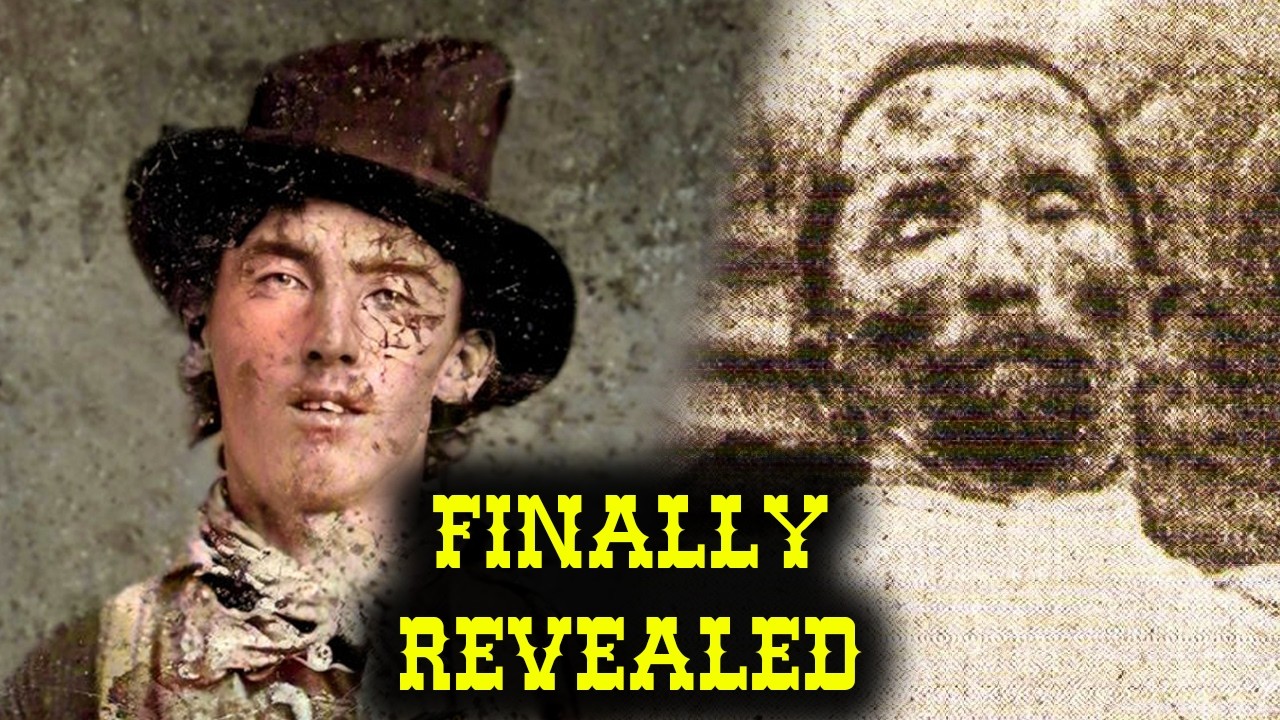
The story of Billy the Kid shaped the mythology of the Wild West—the dime novels, the movies, the gunslinger archetype. If the official story was wrong, one of America’s founding myths unraveled. The legend credited him with twenty-one kills; the real number was somewhere between four and nine. The legend was already a lie before the body was cold.
Billy the Kid was born Henry McCarty around November 23rd, 1859, in New York City. His mother died of tuberculosis when he was fourteen. His stepfather showed no interest in raising him. Within a year, the boy was drifting through the mining towns of New Mexico Territory.
Everyone who met him remarked on the same thing: not his violence, but his charm. He was likable, funny, quick with a grin. He was also, by his mid-teens, a petty thief who slept in back alleys and stole laundry. He was not yet dangerous.
He was simply desperate. The world he entered was dominated by the Murphy-Dolan clique, which controlled the dry goods monopoly in Lincoln County. They owned the store, held the government beef contracts, and had the sheriff in their pocket. It was a feudal arrangement wearing a cowboy hat.
In 1877, a young Englishman named John Tunstall rode into Lincoln with money and a plan to break the monopoly. He opened a rival store and hired cowboys. He took a liking to the teenage drifter, giving him a job and a sense of belonging. Tunstall was cultured, educated, and catastrophically naive about the kind of men he was challenging.
Before the Lincoln County War even began, Billy killed for the first time. He was seventeen, maybe eighteen. In a saloon in Bonita, Arizona Territory, a blacksmith named Frank Cahill pinned the smaller teenager to the ground. Billy pulled a pistol and shot him in the belly.
Cahill died the next day. Billy escaped custody and rode east into New Mexico. He was not yet Billy the Kid. He was just another frontier teenager with blood on his hands and nowhere to go.
On February 18th, 1878, a posse of Murphy-Dolan men rode out to seize Tunstall’s cattle. They found Tunstall on the trail and shot him off his horse. When word reached Billy, something broke. He joined a group of Tunstall loyalists who called themselves the Regulators.
Their stated purpose was to serve warrants on Tunstall’s killers. Their actual purpose was revenge. The Lincoln County War had begun. The next six months were a cascade of ambushes and gunfights.
The Regulators lost their commander, Dick Brewer, in a shootout at Blazer’s Mill. Billy stepped further into the void. Then came the Battle of Lincoln in July 1878, which lasted five days. On the final night, McSween’s house was set ablaze.
Alexander McSween died in the firelight, unarmed. Billy, trapped in the same burning house, sprinted through the back door into the darkness, firing as he ran. He was one of the few Regulators to survive. The war was over.
The Murphy-Dolan faction had won. Governor Lew Wallace arrived in New Mexico and offered amnesty to combatants willing to testify. Billy took the deal, met Wallace in person, and waited for his pardon. It never came.
Wallace, consumed by his literary ambitions, quietly let the promise expire. Billy, betrayed by the one authority figure who might have saved him, returned to cattle rustling and outlawry. Then the man who would kill him arrived in Lincoln County. Pat Garrett was not a stranger.
He was a tall, quiet former bartender who once shared drinks with Billy in Fort Sumner. Now he was the newly elected sheriff, with one mandate: bring in Billy the Kid, dead or alive. Garrett set a trap in December 1880. When Billy’s gang rode into the ambush, gunfire erupted.
Tom O’Folliard, Billy’s close friend, was shot from his horse and died. Billy escaped into the frozen night. Days later, Garrett cornered Billy and the remnants of his gang at a rock house called Stinking Springs. Charlie Bowdre stepped outside and was shot dead.
Cold, hungry, and out of options, Billy surrendered. Billy was tried in Mesilla in April 1881 for the murder of Sheriff William Brady. It was the only murder trial in which he was formally convicted. The sentence was death by hanging.
He was transported to Lincoln and held under guard in a room above the courthouse. Two deputies guarded him around the clock: James Bell and Robert Olinger. Bell was regarded as decent. Olinger was cruel, taunting the prisoner with a loaded shotgun.
On April 28th, 1881, while Olinger was across the street eating lunch, Billy asked to be taken to the outhouse. Deputy Bell escorted him, shackled at the wrists and ankles. What happened on the stairs as they returned remains debated in specifics, but the outcome is beyond dispute. Billy got a gun and shot Bell.
Bell staggered down the stairs and died within minutes. Billy, dragging his ankle chains, hobbled to the window and picked up Olinger’s own shotgun. Across the street, Olinger heard the shot and came running. He looked up at the second-floor window.
Billy fired both barrels. Olinger dropped dead in the street. Billy, still shackled, calmly asked a townsman to bring him a pickaxe. He spent nearly an hour chipping away at his leg irons on the courthouse balcony while the town watched.
No one intervened. When the chains finally broke, he took a horse and rode out of Lincoln at a leisurely pace. He reportedly sang as he rode away. For nearly three months, Billy hid in and around Fort Sumner.
He should have run to Mexico or Colorado, but he didn’t. Fort Sumner was home. His friends were there. On July 14th, 1881, Garrett rode to Fort Sumner with two deputies.
He went directly to Pete Maxwell’s ranch and entered his bedroom in the dark. They spoke in low voices. Then footsteps on the porch. A figure appeared in the doorway, not wearing boots, no gun belt, carrying a butcher knife.
He stepped into the room and saw a shape he didn’t recognize. He whispered into the darkness, “¿Quién es? ¿Quién es? ” Who is it?
The room was dark. The only light came from a faint wash of moonlight. Garrett was sitting on the edge of Maxwell’s bed, his back to the door. Maxwell heard the voice and knew it instantly.
He leaned toward Garrett, grabbed his arm, and whispered, “That’s him. ”
Garrett drew his revolver. Billy said something, perhaps one final question. Garrett fired.
The first bullet struck Billy in the chest, just above the heart. The muzzle flash filled the room with a split second of white light, the only moment either man fully saw the other. Garrett fired a second time. The second shot missed, striking the headboard.
The entire exchange took no more than two or three heartbeats. Garrett scrambled off the bed and out the door. On the porch, his deputies nearly shot him as he stumbled through the doorway. Garrett told them he thought he shot Billy the Kid, but he wasn’t sure.
Minutes passed. Someone brought a candle. On the floor, a young man lay on his back, still. The butcher knife was near his hand.
He was dead. By morning, Fort Sumner knew. The Hispanic community, the people who sheltered Billy, came to see the body. The women of Fort Sumner washed his body and dressed him for burial.
A coroner’s jury of six local men examined the corpse and confirmed the identity. No one disputed it. Billy was buried the next day in the Fort Sumner military cemetery alongside Tom O’Folliard and Charlie Bowdre. No headstone initially, just wooden markers that would rot and shift over the decades, eventually making the exact grave location uncertain.
For decades, there was no controversy. Garrett published his account in 1882, and it became the foundation of the legend. The dime novels multiplied. The myth grew.
Billy became the eternal boy outlaw, frozen at twenty-one. For sixty-nine years, no one seriously suggested that Pat Garrett shot the wrong man. Then, in 1950, an old man named Ollie Brushy Bill Roberts walked into the governor’s office in Santa Fe. He claimed he was Billy the Kid, that the killing in Fort Sumner was staged, a body double, a deal with Garrett, a cover-up.
He wanted one thing: the pardon Governor Lew Wallace promised back in 1879. He showed scars he claimed matched Billy’s injuries. He recited details about the Lincoln County War. Governor Thomas Mabry listened and denied the pardon.
Roberts returned to Hico, Texas. On December 27th, 1950, he suffered a massive coronary and died. A marker at his grave identifies him as Billy the Kid. The evidence does not support his claim.
Six men examined Billy’s body the morning after the killing. They were local men who knew him personally. No contemporary source disputes their finding. Roberts claimed to have been born in 1859, but people who met him described a man who looked significantly older.
Dental records and physical features didn’t match the single authenticated tintype photograph. When pressed on details, Roberts made errors—wrong names, wrong sequences, wrong details about events Billy would have known intimately. His knowledge was broad but shallow, consistent with someone who had read the books, not someone who had lived the events. For Roberts’ story to be true, Garrett’s posse, Pete Maxwell, six jurors, and an entire community would have had to participate in a conspiracy of silence lasting decades, and not one of them ever broke that silence.
A 2003 attempt to settle the question with DNA was inconclusive because the grave markers had shifted. The test did not support the survival theory. Billy the Kid died on July 14th, 1881, at the age of twenty-one, asking who was sitting in the dark.
He never got an answer.