By the end of 1941, the German Army was taking prisoners by the millions. Gathering and escorting more than nine million captured soldiers—5. 7 million Soviets, 1. 5 million French, hundreds of thousands of Poles, Yugoslavs, Belgians, British and Americans—fell not to frontline troops but to a corps of military enforcers known throughout the Wehrmacht as the “chain dogs.
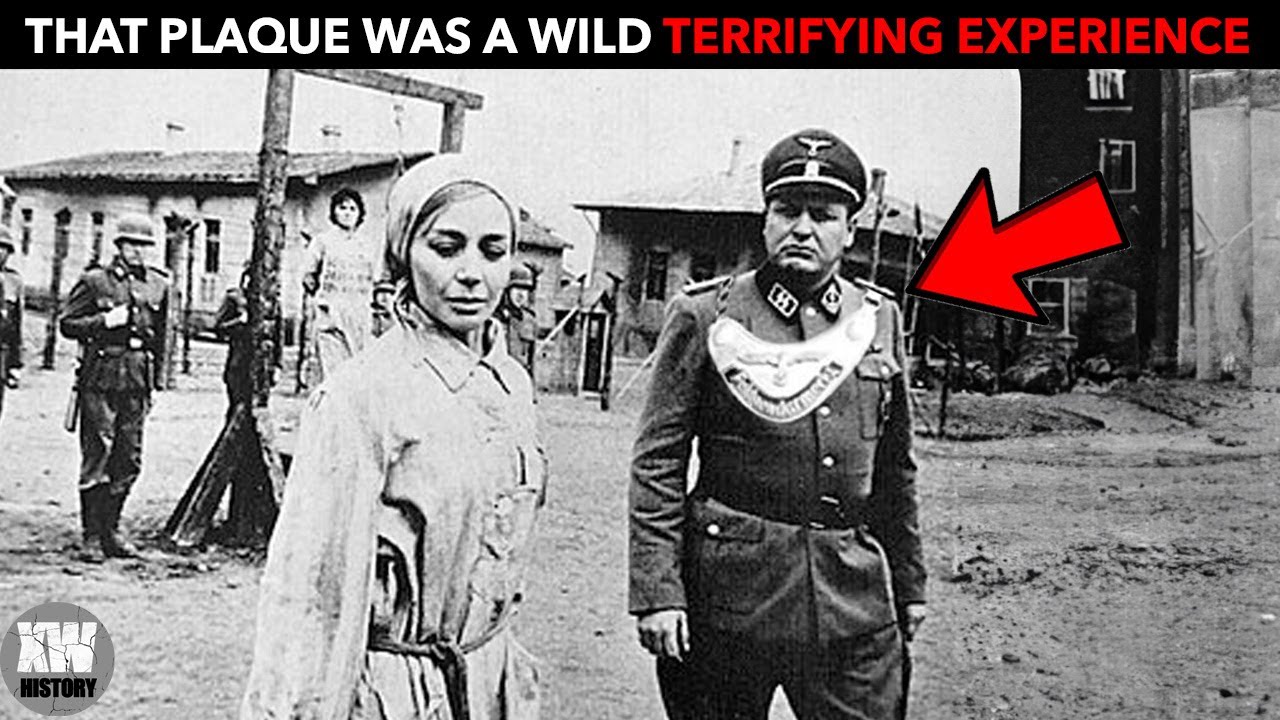
” Their badge was a large crescent-shaped metal gorget worn on a chain around the neck, inscribed with the Gothic lettering “Feldgendarmerie. ” For ordinary soldiers, the sight of that plate meant one thing: discipline, arrest, or worse. For partisans and the prisoners themselves, it marked men who were to be shot on sight, whenever the chance arose. The military police tradition in German-speaking lands was older than the Third Reich itself.
Germany had obsessed over order and discipline since the first empire of German-speaking peoples took shape in the tenth century, and the clearest expression of that obsession appeared under Frederick the Great of Prussia. In 1740 and 1741, Frederick created cavalry and infantry corps of armed men wearing special metal plates, the forerunners of the Feldgendarmerie. Frederick personally composed military marches and even added the flute to his orchestras to instill rhythm, clarity, and robot-like coordination in his military units. The mess reflected a culture that prized punctuality and exact obedience as the foundations of survival.
By the end of the Franco-Prussian War in 1870, the Germans formally recreated their military police corps, tasking its soldiers with maintaining order and discipline inside the army. The institution faded in importance as time passed, though a few thousand gendarmes still served on the battlefields of the First World War. Then came the Nazis’ rise to power in 1933. The new regime needed men to control the “cheerful spirit” and political literacy of the troops, so it drew people from six branches of the party and state apparatus to restore the Feldgendarmerie to life.
The men who staffed the new corps were a mix of ordinary Wehrmacht soldiers, SS men, Gestapo officers, and fanatics from the Nazi Party. Around ninety percent belonged to the NSDAP, and the training schools at Berlin, Prague, and Litzmannstadt drilled them in Nazi ideology alongside the law. They studied criminal, transport, industrial, and forestry codes, as well as passport control, forensics, and medical care. The field gendarmes were among the best-armed and most mobile personnel in the entire German military.
In a tank or motorized division, a Feldgendarmerie company might include six motorcycles, four sidecar motorcycles armed with MG34 or MG42 machine guns, seventeen Volkswagen Kubelwagen, two 2-ton trucks, and two 3-ton Opel Blitz trucks. Their personal weapons were the finest available as well. By 1939, non-commissioned officers carried Walther P38 or Luger P08 pistols, while officers preferred more compact sidearms. Many also carried MP38 or MP40 submachine guns, and MG34 or MG42 machine guns protected control points or were mounted on motorcycles.
As the war ground on, they acquired the Panzerfaust anti-tank weapon as the front lines pushed closer to their own positions. The military police force grew to at least eight thousand men by the time the war reached its midpoint. A Feldgendarmerie regiment generally consisted of five battalions, and each battalion had a clear structure: a staff of an officer, a sergeant major, two non-commissioned officers, and three privates, with a Kubelwagen, a commander’s car, and a bus. A squad of military traffic controllers consisted of one NCO and three privates, equipped with a motorcycle and a Kubelwagen.
A platoon followed with an officer, three NCO drivers, seventeen other NCOs, and ten privates. Support detachments handled clerical work, traffic control, weapons repair, cooking, and shoemaking, relying on two 2-ton and two 3-ton trucks. That level of organization and equipment made the chain dogs feel nearly untouchable. The gendarmes’ pride was their gorget.
Made of nickel silver, an alloy of copper with five to thirty-five percent nickel and up to forty-five percent zinc, the plate displayed an eagle, an SS sign, and a swastika on the reverse beneath a dense dark fabric. It resembled modern police badges, and the chains that held it in place earned the Feldgendarmerie their nickname. The men had been trained to inspire fear, and the whole image of the chain dogs worked toward that goal. They patrolled the roads, checked documents, regulated traffic, guarded railways, and swept through garrison towns at all hours.
They knew every map, every airfield, and every railway schedule, and they understood exactly what was being transported where. That knowledge made them extraordinarily valuable to Allied intelligence and partisan groups, who actively sought to capture them alive if possible, to mine them for information. Their powers over ordinary soldiers were nearly absolute. A Feldgendarme of any rank had the right to search military personnel and equipment, cross checkpoints freely, enter restricted zones, and demand any support he required.
They always took priority over other servicemen of the same rank regardless of branch of service, and they could arrest privates and NCOs on the spot. Soldiers and even lower-ranking officers dreaded hearing a motorcycle engine approaching because it often meant an encounter with the chain dogs. For anyone who refused to advance into battle, the gendarmes could impose the ultimate penalty. They were the enforcers of wartime discipline, and they were ruthless.
That ruthlessness made the Feldgendarmerie one of the most hated institutions inside the German Army and all across occupied Europe. They were responsible for collecting and escorting prisoners of war to army assembly points and then to transit camps, a task that called for brutal efficiency. Prisoners who collapsed on death marches were shot rather than spared. In occupied territories, the gendarmes searched civilian homes for weapons, confiscated rifles and even hunting guns, and shot anyone who resisted on the spot.
They actively participated in war crimes and crimes against humanity, and after the war their officers stood trial at the Nuremberg trials. The hated men who wore the gorget became symbols of the Nazi occupation regime, more feared than the ordinary soldier because they were the ones who enforced the new order with open cruelty. As the war wore on, the chain dogs began appearing on the front lines more often, and their behavior there earned them a particular kind of enmity. Partisans and enemy soldiers, especially those fighting in the East, learned to shoot the Feldgendarmerie first whenever a firefight broke out.
It was not simply anger, though plenty of that existed. It was self-preservation as well. The gendarmes were hard to take prisoner; they fought to the end, shot captives themselves, and tried to escape when captured. For those fighting the Germans, the safest option was to kill them in the field.
By 1944, the gendarmes began to remove their gorgets in combat zones, fearing that the distinctive badge would mark them for snipers or draw the fire of their own soldiers, who had grown sick of being driven into hopeless attacks by brutal military police at their backs. They wore the badge only when they felt safe. The third Feldgendarmerie command, formed in Vienna, served on the Western European front under a succession of commanders, while the first and second commands operated on the Eastern Front. The last German units to lay down their arms in the entire Second World War were from the third command in southern Germany.
They were disarmed only on June 23, 1945, and handed over to the American Army, nearly two months after the official German surrender. It was these disciplined, brutal, and intensely feared men, the self-appointed guardians of a collapsing empire, who held out the longest before finally standing down. Even after surrender, the gorgets remained prized objects. Collectors pay impressive sums on the black market for the metal plates found in the ground, and some Germans have used those recovered badges to locate the remains of ancestors who served in the Feldgendarmerie.
The military police of the Wehrmacht thus left a double inheritance: a legend of merciless discipline that haunted the German Army, and a trail of hatred that outlived the regime that created the chain dogs.