On a cold December morning in 1910, Dorothy Arnold walked out of her family’s Manhattan townhouse and vanished from history. The twenty-five-year-old socialite told her mother she was heading downtown to buy an evening dress for her sister’s party. She never came home for dinner, and no one who knew her ever saw her again. Dorothy had been born into the upper reaches of New York society on July 1, 1885.
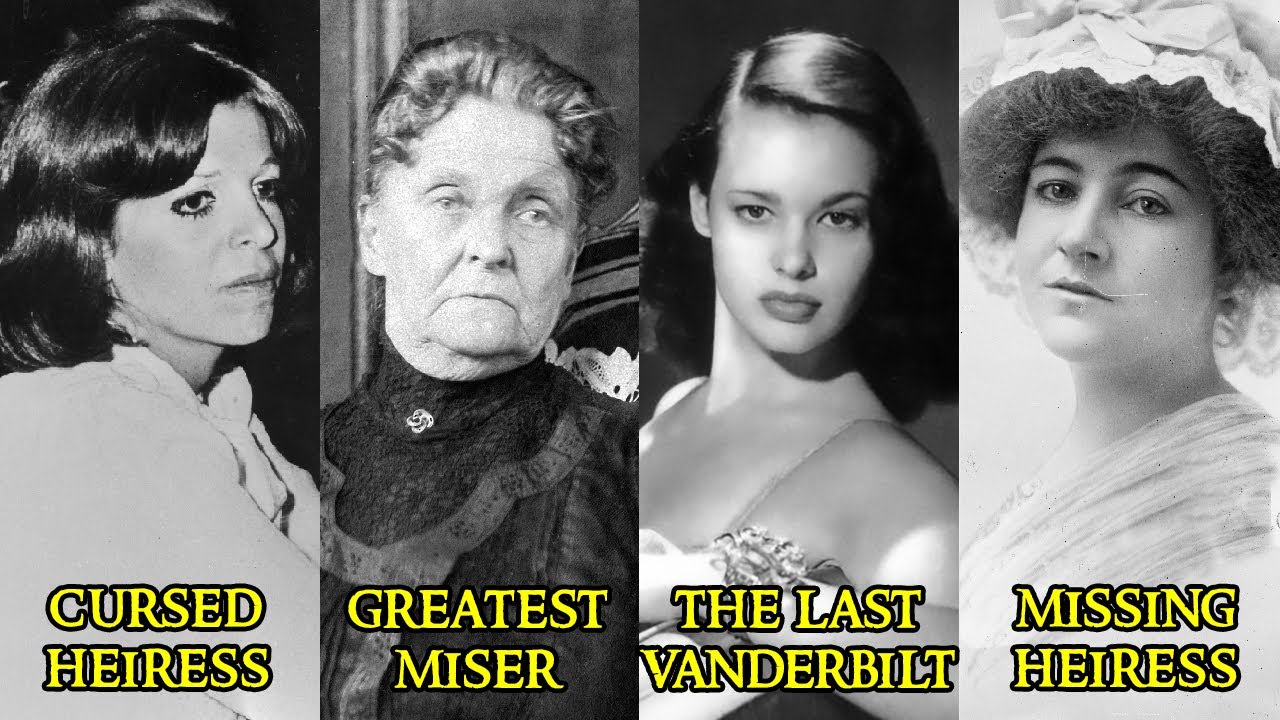
Her father, Francis Arnold, ran a flourishing import business that brought luxury goods, especially perfume, into America at the height of the Gilded Age. The family’s ancestry reached back to the earliest days of European colonization, and her aunt had married a justice of the United States Supreme Court. Dorothy grew up in a large townhouse on the Upper East Side, attended elite schools, and graduated from Bryn Mawr College in 1905 with aspirations of becoming a writer. But her stories were repeatedly rejected by publishers, and her family mocked her ambitions.
When she asked her father for money to rent her own apartment in Greenwich Village, he refused, telling her she could just as easily write at home. On the day she disappeared, Dorothy was dressed in an expensive blue serge coat trimmed with fur and wore a black velvet hat with two blue roses. Around two in the afternoon, outside Brentano’s bookstore on Fifth Avenue, she ran into Gladys King, a family acquaintance. Dorothy mentioned that she was heading home, probably walking through Central Park.
That was the last conversation anyone had with her. That evening, the Arnold family made discreet calls to Dorothy’s friends but did not contact the police. Fearing scandal and media attention, they waited weeks before filing a missing person report. Even when a family friend telephoned past midnight asking if Dorothy had returned, her mother claimed she was home and asleep with a headache, a lie that later fueled suspicion that the Arnolds knew more than they admitted.
The family hired private detectives, and only after the Pinkerton agency failed to find any leads did they finally go to the police in mid-January, more than a month after Dorothy had vanished. When the disappearance became public in late January 1911, the predicted media frenzy followed. Francis Arnold offered a reward of one thousand dollars for information leading to his daughter. Attention quickly turned to Dorothy’s relationship with George Griscom Jr.
, the son of a wealthy Pennsylvania businessman, whom she had met while at Bryn Mawr. Griscom was vacationing in Italy at the time of her disappearance and denied knowing her whereabouts. The police considered the possibility that Dorothy had been attacked while walking through Central Park. Her father speculated grimly that her body had been thrown into the park’s reservoir, but investigators dismissed that theory, noting the water level had been too low to conceal a body.
In early February, the Arnolds received a postcard signed Dorothy that read simply, “I am safe. ” The handwriting resembled hers, but her signature had recently been published in newspapers as part of the investigation, and the card was dismissed as a cruel hoax. By late February, with Dorothy missing for seventy-five days and no evidence of any kind, police scaled down the investigation. Their conclusion was blunt: she was almost certainly dead.
Sightings of Dorothy continued for decades, as late as 1935, when someone reported seeing her on Fifth Avenue near where she had last been seen. None of these reports ever produced anything concrete. Her father spent more than a quarter of a million dollars before his death in 1922 trying to find out what had happened to her. Three major theories have persisted.
One holds that Dorothy was pregnant, most likely with Griscom’s child, and died during a botched abortion. In 1916, a convicted felon in Rhode Island claimed to have helped dispose of her body, but his story fell apart on investigation and he later retracted it. The other two explanations remain more plausible: either she was attacked and killed in Central Park, her body disposed of without a trace, or, disappointed by her stalled literary ambitions and a deteriorating relationship with Griscom, she took her own life. A letter she had written to Griscom hinted at despair, mentioning failure and a long road with no turning.
With no evidence to settle the question, what happened to Dorothy Arnold remains unknown. The same Gilded Age that produced Dorothy Arnold also produced one of America’s most notorious figures, a woman whose fortune rivaled the era’s greatest tycoons but whose name became synonymous with miserliness. Henrietta Howland Robinson was born in New Bedford, Massachusetts, on November 21, 1834, into a family that ran the largest whaling fleet in the area and traded with China. By age thirteen she was keeping the books for the family business.
From her father she learned a harsh lesson: never give anyone anything, not even kindness. When her father died in 1865, he left her six million dollars, a sum worth well over one hundred million today. Her aunt’s death around the same time added another two million. The young woman, known as Hetty, soon established herself as one of the most formidable investors on Wall Street during the Gilded Age.
She invested heavily in railroad bonds and held vast quantities of Civil War-era greenbacks, which surged in value when the Grant administration backed them with gold in 1875. Over the years her wealth grew into the tens of millions, and she became the largest private lender to New York City. But Hetty Green’s fortune was accompanied by a legendary unwillingness to spend it. Known as the Witch of Wall Street, she lived a near-itinerant existence, drifting between hotels and rented flats to avoid property taxes.
She reportedly never used hot water, never turned on the heating, and avoided washing her hands. She wore the same black dress until it was tattered and green with filth before buying another. Rumors said she once searched a carriage for hours over a lost two-cent stamp. She refused to see a doctor for a painful hernia for twenty years, then argued with the surgeon over the fee.
Her miserliness had darker consequences. When her son Ned broke his leg as a child, she tried to have him admitted to a free clinic, but administrators recognized her and refused, noting that the queen of Wall Street could easily afford medical care. Unwilling to pay a doctor, she treated the injury herself. The wound became infected, gangrene set in, and the boy’s leg had to be amputated.
He used a cork prosthesis for the rest of his life. She controlled her daughter Sylvia’s romantic life with equal suspicion, believing any suitor must be after her inheritance. When Sylvia finally married in 1909, Hetty insisted the groom sign a legal agreement relinquishing any claim to her money. Hetty Green died on July 3, 1916, at the age of eighty-one, reputedly the richest woman in America.
Her estate, split between her two children, was worth somewhere between one hundred and two hundred million dollars. Much of that immense fortune was eventually given away to charities, schools, and hospitals by her daughter and her heirs, strangers who benefited from the wealth she had guarded so obsessively. Tragedy of a different kind surrounded the shipping dynasty of Aristotle Onassis. His daughter Christina was born on December 11, 1950, in New York City, the second child of Aristotle and his wife Tina, the daughter of his great rival, shipping magnate Stavros Niarchos.
Christina grew up in extraordinary wealth, moving between homes on three continents, raised largely by servants while her parents attended to their sprawling business empire. Her parents divorced in 1960 after a rocky marriage troubled by Aristotle’s long affair with the singer Maria Callas. In 1968, the family entered an era of intense public scrutiny when Aristotle married Jackie Kennedy, widow of the assassinated president. Neither Christina nor her brother Alexander warmed to their stepmother, whom Christina privately called her father’s unfortunate obsession.
On January 22, 1973, Alexander, who had developed a passion for flying, took out a small amphibious plane to give a lesson to a new pilot. Shortly after takeoff from Athens airport, tangled cables caused the right wing to dip, and the plane crashed. Alexander bore the brunt of the impact and died the following day at twenty-four. His death made Christina the heir to her father’s enormous fortune, and Aristotle, consumed by paranoia, became convinced the CIA had killed his son, offering rewards to anyone who could confirm his suspicions.
The family’s unraveling continued. Christina’s mother, who had struggled with prescription medications for years, died of a drug overdose in Paris on October 10, 1974. Aristotle, already suffering from a muscular disorder, seemed to lose the will to live after his son’s death. He died on March 15, 1975.
In less than twenty-six months, Christina had lost her brother, her mother, and her father. She would later say she was all alone in the world. She inherited nearly the entire fortune, worth around six hundred million dollars, and control of a business empire spanning shipping, airlines, and oil. She sold off large parts of it and devoted much of her attention to a famously turbulent personal life, marked by four marriages and divorces between 1971 and 1987.
She struggled with crash diets, prescription drug addiction, and clinical depression. Her final marriage, to French businessman Thierry Roussel, produced her only child, a daughter named Athena, born in 1985. Two years later, that marriage also ended. On November 19, 1988, Christina was found dead in a bathtub at a friend’s house in Argentina.
She was thirty-seven. The cause of death was ruled a heart attack, almost certainly aggravated by her drug abuse. She was buried in Greece beside her father and brother. Her daughter Athena, only three years old, inherited an estate of roughly two hundred fifty million dollars, which became the subject of intense legal disputes until she came of age.
Christina’s short life had been defined by wealth, relentless public attention, and the crushing weight of losing everyone closest to her. A more fortunate ending belonged to Gloria Vanderbilt, born in Manhattan on February 20, 1924, into one of America’s most storied dynasties. Her father, Reginald Vanderbilt, was a great-grandson of Cornelius Vanderbilt, the steamship and railroad tycoon. He squandered much of his inheritance on equestrian sports and gambling, drank heavily, and died of cirrhosis in 1925, leaving his infant daughter a trust worth about five million dollars.
Gloria’s mother, also named Gloria, spent much of the late 1920s living lavishly in Paris, London, and Biarritz, often leaving her daughter with relatives in New York. In 1934, Gloria’s aunt, the sculptor Gertrude Vanderbilt Whitney, sued for custody, arguing that the girl’s mother was unfit. The resulting trial became a media sensation, with newspapers printing salacious testimony that painted Gloria’s mother as a neglectful socialite more devoted to parties than parenthood. The ten-year-old was described in the press as a poor little rich girl.
The court awarded custody to Gertrude, and the relationship between mother and daughter never fully healed. Gloria went on to live a long and varied life. She married four times, including to conductor Leopold Stokowski and director Sidney Lumet, and had relationships with figures like Marlon Brando and Frank Sinatra. In the 1970s, she launched a highly successful line of designer jeans, establishing herself as a businesswoman.
She wrote several memoirs and novels, painted, and worked as a philanthropist. She died at home in Manhattan on June 17, 2019, at the age of ninety-five, decades after the childhood trial that had made her a symbol of wealth and loss. She had outlived the scandals of her youth and one of her own sons, and in the end her life was a story of survival rather than tragedy.