On a gray February afternoon in 2014, Mimi O’Donnell stood outside a Manhattan church with her three children, watching a casket carried down the steps. Inside was Philip Seymour Hoffman, the actor who had shared her life for fifteen years and fathered those three children. Reporters called her his partner, never his wife. It was a detail most people glanced past without thinking.
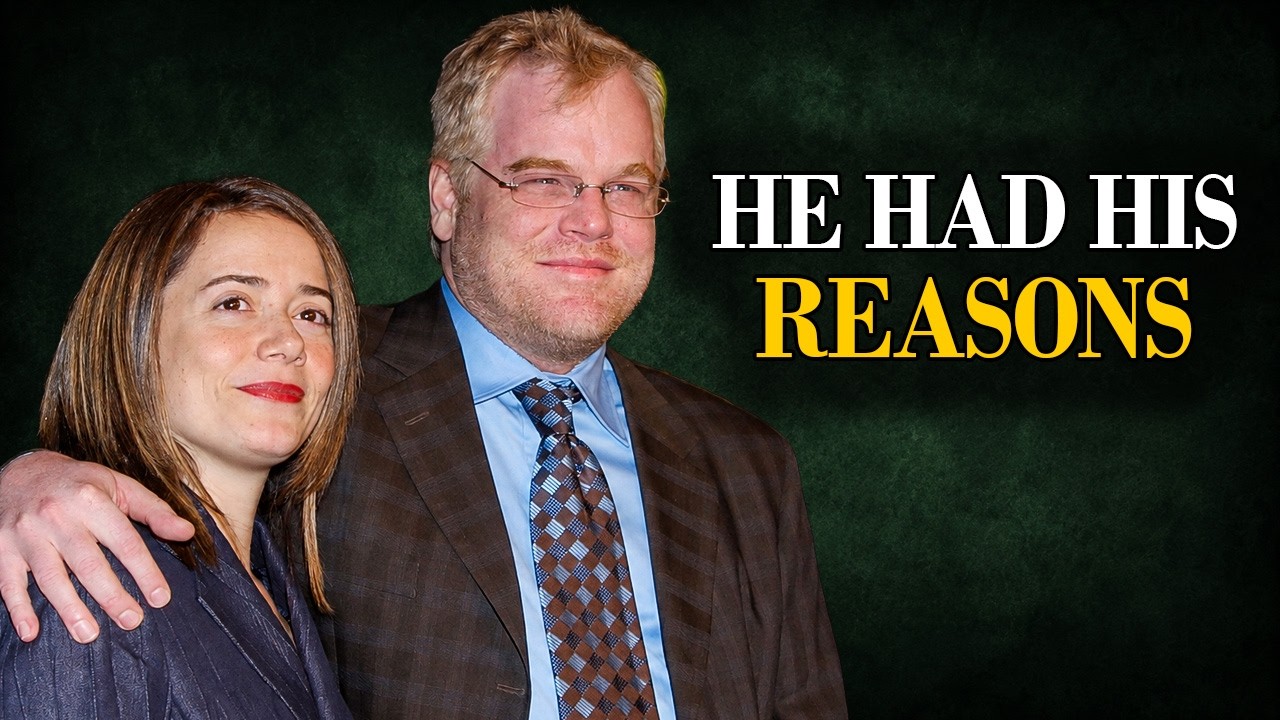
But a court filing later revealed the reason: according to his accountant, Hoffman did not believe in marriage. That sentence, simple as it was, concealed a far costlier story. The funeral took place at Saint Ignatius of Loyola on Manhattan’s Upper East Side. Photographers captured the moment the family watched the casket leave—O’Donnell with Cooper, who was ten, Tallulah, who was seven, and Willa, who was five.
To anyone looking at those photographs, the picture seemed complete: a mother, three children, a father gone at forty-six. Nothing suggested that the central relationship in that frame had never been made official. In daily life, the missing marriage certificate seemed irrelevant. Couples live together for decades without one, raise children, split bills, and nobody questions whether they are a family.
But there are places where the paper is the only thing that counts. A probate court is one. The tax code is another. When a person dies, the law does not look at photographs from church steps.
It looks at documents—who is named, what relationship is written down, what the state recognizes. In the eyes of that system, Mimi O’Donnell was not Philip Seymour Hoffman’s widow. She was a woman he had named in a will. To understand how a couple this close ended up in that position, you have to go back to a small theater company downtown and a job opening for a costume designer.
In 1999, Hoffman was already a respected film actor, known for supporting roles that made audiences lean forward. He was also a stage director deeply involved with the Labyrinth Theater Company in New York. That year, he was directing a play called In Arabia, We’d All Be Kings, and the production needed a costume designer. Mimi O’Donnell applied.
According to her own account, published years later in Vogue, she had worked in costume design for a long time and was at Saturday Night Live then. Hoffman was impressed by her background. She got the job. O’Donnell later wrote that she talked about him in a way that made her sister tell her she was going to marry him.
It was the kind of remark families make half as a joke. It turned out to be the most accurate prediction anyone ever made about the relationship—and it named the one thing that never happened. They did not start dating right away. By O’Donnell’s account, the relationship began in 2001, and she remembered a dinner in the West Village where she told him she wanted them to be exclusive.
The life they built moved quickly. Cooper was born in 2003, Tallulah in 2006, Willa in 2008. O’Donnell kept working in theater. Hoffman’s film career soared, and in 2006 he won the Academy Award for Best Actor for playing Truman Capote.
By every outward measure, the sister’s prediction had come true—except for one thing. And the first time that missing piece shows up in the record, it is not in a tabloid or an interview. It is in a legal document Hoffman signed when his son was still a baby. In October 2004, Hoffman signed a will.
Cooper was about a year old; the daughters had not been born. The document was simple. It left everything to one person, Maryanne O’Donnell, known as Mimi, and it described her with a phrase newspapers would later quote around the world: not my wife, not even my partner, but his friend and companion. At first, that phrase sounds cold.
Then you read the rest of the will, and it is anything but. Hoffman asked that his son be raised in Manhattan. If that was not possible, then Chicago or San Francisco. And if none of those worked, he wanted Cooper to visit those cities at least twice a year so the boy would be exposed to their culture, arts, and architecture.
This was not a man indifferent to the future. He had firm ideas about exactly how his child should grow up. The will also created a trust for Cooper, but only as a backup in case O’Donnell was not alive when Hoffman died. Everything else ran through her.
He was trusting one person with the entire structure of his family’s future. Then the document simply stopped moving. Estate lawyers who later analyzed it pointed out that it had been signed in Colorado, even though the family lived in New York, and that it was never updated. Two more children were born.
His earnings multiplied after the Oscar. The will stayed exactly as it was. A man precise enough to name the cities his son should visit left the most basic legal fact of his relationship undefined for nearly a decade. Friend and companion could mean almost anything.
For years, nobody outside the family could say. Then, after his death, the people who handled his money were asked directly. Because Hoffman left minor children, the Manhattan Surrogate’s Court appointed an attorney, James Cahill Jr. , to represent their interests.
His job was to determine whether the will treated the children fairly, so he interviewed the people who had advised Hoffman. One was his accountant, David Friedman. What Friedman said ended up in Cahill’s report to the court, and in July 2014 that report became public. According to the filing, Friedman said Hoffman and O’Donnell never married because Hoffman did not believe in marriage.
No scandal, no hidden affair, no ultimatum—just a position. The same filing added something that changes how that position should be read: Hoffman treated O’Donnell as if she were his spouse. He did not reject her. He rejected the institution.
It is worth being clear about what this evidence is. These are not Hoffman’s own words on tape. They are his accountant’s recollection, summarized by a lawyer, inside a court document. That is a real limitation, but it is also the only on-the-record explanation that exists, and it came from someone with no obvious reason to invent it.
Neither Hoffman nor O’Donnell ever offered a public explanation of their own. Then the report revealed a second decision. Friedman recalled that in the year before Hoffman’s death, the idea of setting up trusts for the children came up, and Hoffman rejected it. The lawyer who drafted the will told a similar story.
Hoffman’s reason, according to the filing, was that he did not want his children to be considered trust fund kids. He believed Mimi would take care of the children. Put those two decisions side by side. Marriage is a legal structure that defines a relationship.
A trust is a legal structure that defines an inheritance. Hoffman declined both. Both times, he replaced the structure with the same thing: his confidence in one person. What was recorded in dollars is what that principle cost.
Hoffman’s estate was estimated at around $35 million. Under American federal law, a person can leave an unlimited amount to a spouse without paying estate tax. It is called the marital deduction, and it applies only to spouses—not partners, not the mother of your children, not a friend and companion. So when the entire estate went to O’Donnell, it went to someone the tax system treated as legally unrelated to him.
One widely cited analysis put the resulting bill at roughly $12 million; a Forbes writer referred to a figure closer to $15 million. The exact number was not public, but a bill in the eight figures was reportedly owed because of a signature that never happened. Estate planners flagged a second problem. Money passing to O’Donnell could be taxed again later when it eventually moved on to the children.
It was exactly the kind of risk the rejected trusts could have reduced. The Forbes writer also made a point easily missed: nobody knows whether Hoffman would have married simply to avoid the tax. It is possible he understood the cost and accepted it anyway. The will, the tax bill, and the court filing all describe a relationship frozen at one moment in 2004.
They say nothing about what was happening inside that family in its final two years. And by then, everything those documents took for granted was changing. From the beginning, O’Donnell wrote, Hoffman was open about his addictions. He told her about a period of heavy drinking and experimenting with heroin in his early twenties, and about going to rehab for the first time at twenty-two.
After that, he stayed sober for more than two decades. She described recovery as one of the central focuses of his life, alongside acting and directing. Then, by her account, it began to slip in ways that were hard to see. Between work and family, recovery started getting less of his attention.
He had been sober so long that nobody seemed to notice. He began having a drink or two. Then came prescription opioids. O’Donnell confronted him, and he admitted it.
For a while, it stopped. But after his 2012 Broadway run in Death of a Salesman, the prescription drugs returned, and they led to heroin. O’Donnell later recounted what she told him when she realized: “You’re going to die. That’s what happens with heroin.
”
In May 2013, Hoffman entered a detox facility for about ten days—a short stay that worried people close to him. After he came back, the couple decided he would move out of the family home into a nearby apartment, partly so the children would not be alarmed. Around this time, a rumor spread that the couple had never married because of his drug use. But the timeline does not support it.
The will calling her his friend and companion dates to 2004, years into his sobriety. There is no evidence the addiction caused the decision. The record does show how the final year unfolded. After another relapse, Hoffman went back to rehab, and he and O’Donnell chose to be honest with the children, who visited him there.
When he came home in November, he badly wanted to stay sober, but the couple were living apart by then, co-parenting from two addresses. And here was the quiet consequence of a choice made years earlier: as the relationship came apart, there was no legal form for it to come apart from. No marriage to end, no divorce to file. Just a separation that, on paper, looked like nothing at all.
Hoffman spent part of his final months in Atlanta filming The Hunger Games sequels, and O’Donnell has said she felt he was in trouble. On the 2nd of February 2014, he was found dead in his Manhattan apartment. He was forty-six. The medical examiner ruled the cause acute mixed drug intoxication, including heroin.
Five days later, O’Donnell stood outside St. Ignatius with their three children. Philip Seymour Hoffman did not marry the mother of his children because, according to his accountant’s account in a court filing, he did not believe in marriage. There is no documented proposal he turned down, no fight, no ultimatum.
The documented reality is quieter. He chose not to, and he treated her as a spouse anyway. What turns that into more than a trivia answer is the pattern underneath it. He made the same kind of choice twice.
He declined marriage for his relationship, and he declined trusts for his children. Both times, he put his faith in a person instead of a document. He believed Mimi would take care of everything. His children would inherit through their mother, not through a trust fund, exactly as he had wanted.
And yet the same trust that defined their relationship also left it legally invisible. It left a tax bill estimated in the eight figures. It left a will naming one child, written for a family that later had five members. And it left a relationship that, during its hardest year, had no official shape at all.
Whatever Hoffman believed about marriage, he never explained it publicly. O’Donnell has written about his addiction, his honesty, and their children. She has never publicly explained the paper that was never signed. Go back to those church steps.
Nothing in the photograph has changed. The same woman, the same three children, the same casket. What has changed is what you now know the frame is missing. Somewhere in a probate file sits a page from October 2004, signed and never revised.
It has room for one child’s name and one line for her: friend and companion.