Laisha Michelle Oseguera Gonzalez was twenty-four years old when her father died during a Mexican military operation on February 22, 2026. She was twenty-two when the man she lived with was arrested in Riverside, California. A dual citizen of the United States and Mexico, she was the youngest daughter of Nemesio Ruben Oseguera Cervantes, known around the world as El Mencho, the founder and undisputed leader of the Jalisco New Generation Cartel, an organization United States prosecutors have described as one of the most violent and prolific drug trafficking operations in the world. Her mother, Rosalinda Gonzalez Valencia, came from a family deeply embedded in cartel circles.
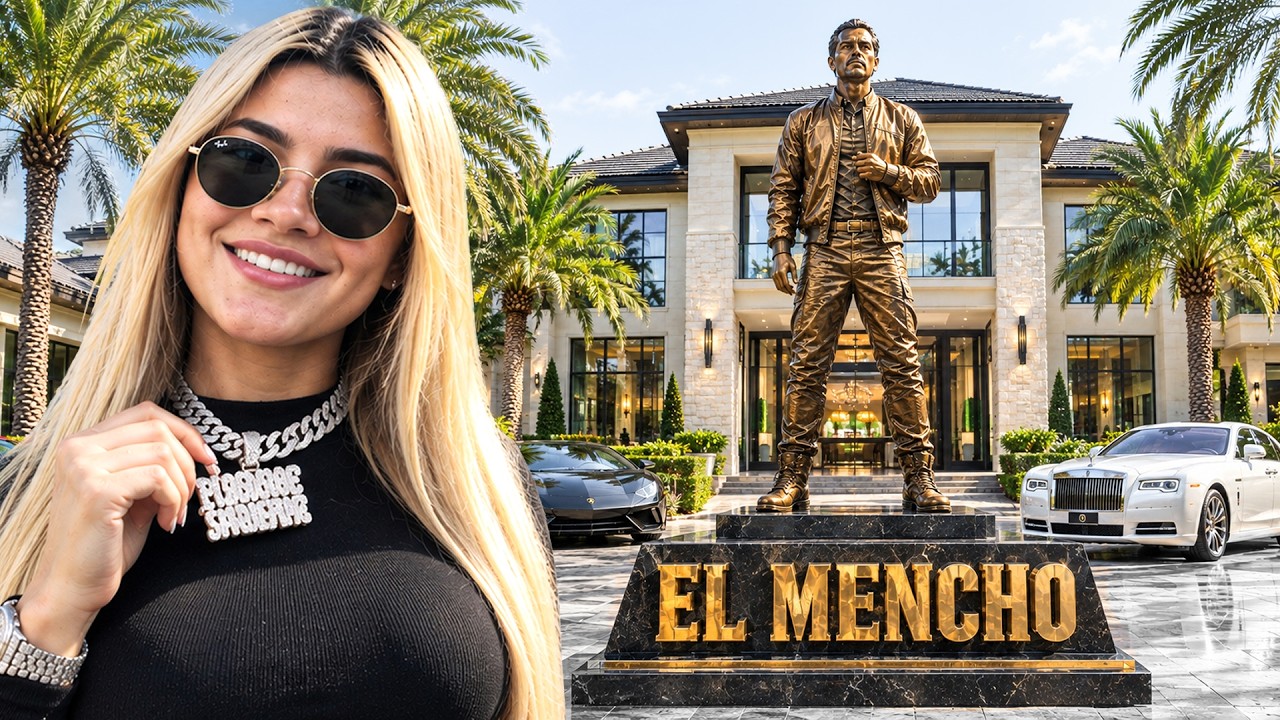
Her older sister, Jessica Johana Oseguera Gonzalez, known as La Negra, had been convicted in the United States on money laundering charges connected to CJNG-linked businesses and served twenty-five months in federal prison before her release in March 2022. Her brother, Ruben Oseguera Gonzalez, known as El Menchito, had been arrested in Mexico, extradited to the United States, and faced drug trafficking charges of his own. Laisha was the youngest, the one who ended up in California. For years, El Mencho had been the most wanted drug lord in Mexico and one of the most wanted men in the world.
The United States Treasury Department sanctioned him. The DEA placed a ten million dollar reward on his head. Governments tracked him across the mountainous terrain of Jalisco, yet he survived while his family fell around him. His son was arrested.
His wife was arrested. His son-in-law was eventually arrested. Through it all, he kept building the CJNG into what analysts described as the single most powerful criminal organization in Mexico. When he died, the organization he built was estimated to be worth around one billion dollars in assets, influence, and infrastructure.
That figure is the number that follows Laisha everywhere now. It did not arrive after her father’s death like a surprise inheritance. It was already surrounding her in the properties, the cash, and the financial structures built in her world long before El Mencho drew his last breath. A billion-dollar cartel empire does not flow into the life of a founder’s youngest daughter like a check in the mail.
It is a $1. 2 million house purchased in cash by a fake tequila company. It is $2. 2 million in bulk currency sitting inside that house.
It is luxury vehicles registered through shell corporations. It is designer watches and high-end jewelry that can be moved, liquidated, or disappeared without a paper trail. It is wealth that never appears on a tax return because it was never meant to. Laisha’s position as El Mencho’s youngest daughter, a United States citizen living legally in California, made her name exactly the kind of anchor a billion-dollar operation moving money across the border needs.
A US citizen can hold accounts, register businesses, and own property. That made her place in the Oseguera family structure not just personally meaningful but operationally significant. The public version of her life looked deliberately ordinary. She registered a small business in early 2023 in Perris, California, a quiet city in Riverside County about sixty miles east of Los Angeles.
The business was called El Rincon Las Chulas, the corner of the pretty ones. It sat in a modest shopping plaza in the Inland Empire. Inside, the walls carried Spanish phrases. One read, “Love can wait, but food cannot.
” The menu offered horchata lattes, strawberry matcha, Mexican mochas, chilaquiles, and crepes served on heart-shaped plates. Online reviews were warm. Customers described the atmosphere as friendly and the owner as a nice, normal, respectful person who ran a good business but never once mentioned her family or her husband. That was the strategy.
Not a mega mansion. Not a fleet of supercars. A coffee shop in a strip mall, positive reviews, and a face nobody in Perris connected to anything except well-made espresso drinks. When the New York Post broke the connection to the Oseguera family in March 2026, locals were genuinely shocked.
One customer said something like the cartel would never cross people’s minds. The man at the center of the financial world around her was Christian Fernando Gutierrez Ochoa, known as El Guacho. He was Laisha’s long-time partner, and depending on which court documents were read, her husband or the father of her long-time relationship. He was twenty-eight years old when he was arrested in November 2024.
According to the United States Department of Justice, he had been working for the CJNG for approximately ten years, meaning he was still a teenager when he entered the organization’s orbit. He rose quickly, becoming a high-ranking member responsible for coordinating drug shipments from Mexico into the United States: forty metric tons of methamphetamine and two thousand kilograms of cocaine. That was not street-level dealing. That was industrial-scale trafficking at the level of the cartel’s most senior logistics operations.
He was also the person who, in November 2021, allegedly ordered or directed the kidnapping of two members of the Mexican Navy. The kidnapping was reportedly carried out as a pressure tactic after Mexican authorities arrested Rosalinda Gonzalez Valencia, El Mencho’s wife. It was an attempt to secure her release. When Gutierrez Ochoa realized Mexican authorities were closing in on him, he staged his own death.
Reports indicated that El Mencho himself told associates he had killed Gutierrez Ochoa for lying to him, a story that served as cover for what was actually happening. Gutierrez Ochoa was not dead. He had fled to the United States and settled in Riverside, California, where El Mencho’s daughter was already living, and he did so under a fake name. The life he and Laisha were living there looked nothing like the strip mall cafe.
The house alone cost $1. 2 million, paid in cash, purchased not under either of their names but under a Mexican shell company that the CJNG owned and controlled. They had set up fake tequila brands specifically to move money through real estate transactions. Inside the house, federal agents eventually found $2.
2 million in bulk cash stacked at the residence. They found designer jewelry, luxury watches, high-end vehicles, and two untraceable ghost guns. Prosecutors described the lifestyle Gutierrez Ochoa had funded as lavish. In his June 2025 guilty plea, Gutierrez Ochoa admitted to three core methods that kept the money flowing.
High-end real estate, purchased through layers of corporate ownership so that on paper the house belonged to a Mexican tequila brand rather than to him. Shell companies, created with legitimate-sounding names to route drug proceeds through as business revenue, giving cartel cash the appearance of commercial income. And international wire transfers, moving money across borders in ways that mimicked ordinary business transactions, with varied amounts and rotating destinations, patterns complex enough that piecing them together required months of federal investigation. On November 19, 2024, Mexican and American law enforcement converged on the Riverside address and arrested Gutierrez Ochoa.
He pleaded guilty on June 20, 2025, to one count of international money laundering conspiracy. On December 18, 2025, United States District Judge Beryl Howell sentenced him to 140 months in federal prison, eleven years and eight months, followed by three years of supervised release. As part of his sentence, he agreed to forfeit the Riverside residence, the bulk cash, the jewelry, the watches, the vehicles, and other property seized during the investigation. The Justice Department’s statement was direct: Gutierrez Ochoa had laundered money for one of the most violent and prolific cartels in Mexico and funded his lavish lifestyle with drug trafficking proceeds.
Laisha herself was not charged. The government’s investigation into her financial life and her connections to the property did not produce public charges against her as of early 2026. The cafe continued to operate. Its reviews remained positive.
Its customers continued to order horchata lattes and crepes without knowing what was happening in federal courtrooms in Washington. Her older sister had been convicted and served time. Her partner had been convicted and was now serving eleven years. Her brother had been arrested and extradited.
Her mother had been arrested and used as leverage in a kidnapping operation. Her father commanded one of the world’s most powerful criminal organizations for years before dying in a military operation. And through all of that, Laisha was in Perris, California, serving Mexican mochas to locals who described her as a really nice, normal person who never mentioned her family. Reports connected members of the Oseguera family to multiple businesses and properties across Riverside County.
A taqueria linked to El Mencho’s brother. Other commercial real estate in the Inland Empire. The Inland Empire was a deliberate choice. Cash-rich operations setting up front businesses wanted lower visibility, lower real estate costs, and less media density than Los Angeles proper.
A taqueria in Perris, a coffee shop in a strip mall, a million-dollar home registered under a tequila company. From the outside, just another corner of suburban California. From the inside, infrastructure. The fake tequila companies were a particularly instructive example.
Tequila companies were useful laundering vehicles because they involved international commerce, product moving between Mexico and the United States, which created legitimate-seeming invoices and wire transfers. They involved alcohol, a cash-intensive industry. They required warehouse space, distribution relationships, and retail connections that could all be structured around shell entities. And they traded on Mexico’s most internationally recognized product, giving them cultural cover a random American LLC would not have.
The CJNG’s use of fake tequila brands to purchase the Riverside home was not improvised. It was a method developed and refined across years of laundering operations. Gutierrez Ochoa had been embedded in the United States to do the cartel’s bidding, and his placement was made more secure and more difficult to investigate precisely because he was living with El Mencho’s daughter. That cover was effective for over a year.
According to court documents, he was not simply hiding. He was actively conducting counter-surveillance on the federal agents watching him. He knew they were there. He kept operating anyway, because the Riverside residence was too valuable both as a money laundering asset and as a location near Laisha to abandon easily.
The $2. 2 million in bulk cash was kept at the residence because moving large amounts of cash out of a location under surveillance created more risk than keeping it in place. The ghost guns were there for protection. The jewelry and watches were portable, high-value assets that could be moved quickly if a rapid exit became necessary.
After El Mencho’s death, the organization did not dissolve. The structures criminal empires become over decades have their own momentum, their own leadership pipelines, and their own financial infrastructure that continues generating revenue regardless of whether the founder is alive. What changes when a founder dies is succession. Who controls the relationships.
Who has authority over the assets. Who commands the loyalty of the people who built their careers around the organization. Laisha is not in that succession struggle. She is in Perris.
But the shadow of the billion dollars, the relationships, the infrastructure, and the family name does not disappear when a man dies in a military operation in Mexico. It attaches to the people connected to him. What transfers, potentially over time, through the networks and relationships that survive any single leader’s death, is access. And that is a much more valuable and more dangerous form of inheritance than any bank transfer.
The property purchased for $1. 2 million in laundered cash has been forfeited to the government. The cafe is still open. Laisha is twenty-four years old, an American citizen living in Riverside County, her partner in federal prison, her father dead.
The question of whether the financial infrastructure connected to the CJNG produces anything she can actually access or control is one that federal investigators and cartel watchers will be trying to answer for years to come. For now, the most visible answer is a strip mall in Perris, California, and a small cafe with good reviews and heart-shaped crepes, the kind of place where customers once said they could never imagine anything connected to the cartel existing. That is exactly the point.
The billion-dollar world does not always look like a billion dollars.