Heather Stigliano had been in Myrtle Beach for only two months. A young woman with a love for the stage, she had moved there with dreams of a fresh start, and her family saw it as a natural next step for a girl who lived to perform. Then she stopped answering her phone. When her family lost contact, they asked police to check on her.
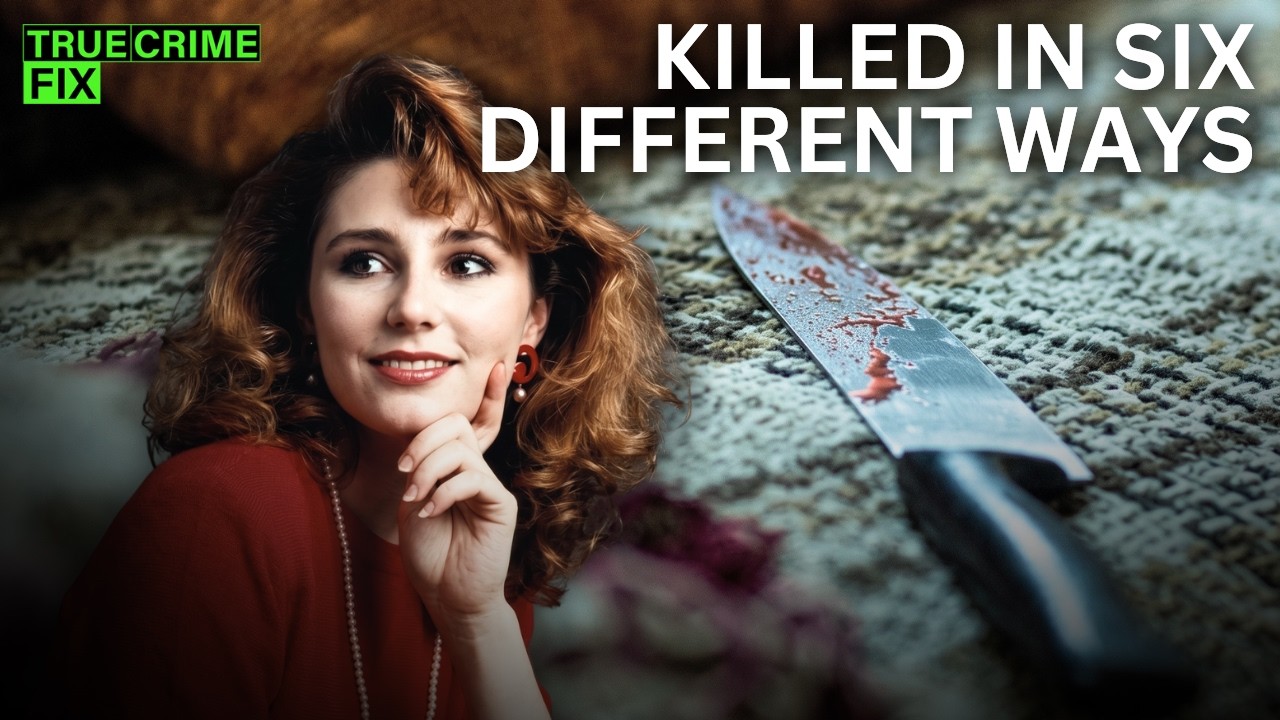
The radio dispatch reported a possible deceased person in an apartment on Third Avenue North near Flag Street. When the officer walked in, he saw blood spatter on the walls and on the couch. Heather was lying on the floor beside it. A butcher knife rested on the sofa, stained red.
The one-room apartment showed signs of a violent struggle. Her fingernails bore the marks of a fight for survival. She had been beaten, stabbed, and strangled. It was, one investigator said, the most brutal attack he had ever seen.
The scene was chaotic in another way too. Drawers hung open, clothing was scattered, and it appeared someone had rummaged through her belongings. Her purse, wallet, and identification were missing. Detectives initially considered robbery.
But odd details troubled them. A pillow lay beneath her head, free of blood, in the middle of a crime scene that should have left it soaked. Someone had tried to clean up blood in the bathroom. The killer had paused long enough to make the victim comfortable and to cover his tracks.
The coroner estimated Heather had been dead for six to ten days before her body was found. Dr. Jamie Downs, a medical examiner and FBI-trained expert in overkill murders, took the case. At the autopsy, he noticed something curious on her chest and abdomen: yellow abrasions.
On her shirt, he found faint linear marks that turned out to be shoe prints made in blood. A full-size eleven shoe. At the scene, investigators used a chemical called amido black, which reacts with blood proteins, to lift footwear impressions from the bathroom floor. They matched the print on Heather’s shirt.
They now had a trail to follow, but no suspect to compare it to. During the autopsy, Dr. Downs found more. Black plastic fragments were embedded in Heather’s scalp and scattered through the apartment.
Her body carried a large cluster of abrasions on her head, plus two parallel lacerations on her forehead with a distinctive, repeated pattern. The right side of her face had a roughly square pattern injury that broke her cheekbone and jaw. A lamp cord was tied around her neck. She had three stab wounds to her belly that produced no bleeding, meaning they were inflicted after death.
Overkill, Dr. Downs concluded, was not simply more violence than necessary. It pointed to a killer driven by rage, and often by a personal connection to the victim. The first suspect was Jack Norton, an Air Force member stationed in North Carolina whom Heather had dated and then broken up with.
He had been deployed to Saudi Arabia at the time of the murder. Dr. Downs estimated the time of death differently from the coroner, placing the murder between four and six days before the body was found. That narrowed the window, and Norton was more than seven thousand miles away.
He was cleared. Another man in Heather’s life, Chris, knew her from Myrtle Beach and occasionally stayed at her apartment in exchange for money. He worked construction and had no criminal red flags, but he was in the scope of the investigation. His shoe size was an eight, eliminating him from the footprint match, and his alibi held.
He told detectives he had no idea who else might have wanted to hurt her. Then Heather’s mother revealed something that changed the investigation. Heather had told her about a Halloween party she attended with coworkers on an Air Force base. She had passed out and been left behind when the others went to eat.
A man who lived at the apartment had climbed into bed with her and assaulted her. Heather had wanted to report it to police but never got the chance. The accused was Robert Dolan, a well-respected officer. His career would have been destroyed by such a charge.
Dr. Downs noted that at the scene Heather’s legs were positioned apart and her body consistent with her genitals having been exposed, but no semen was found. As he put it, predators often do not ejaculate because the crime is about violence and control, not the act itself. Dolan admitted Heather had attended his party and that he knew her, but he had an alibi for every night during the estimated window.
He was at work or at home with his wife, who corroborated his account. Both passed polygraph tests. He had no scratches or bruises, despite how hard Heather had fought. He was cleared.
The investigation then turned to a missing piece of evidence: Heather’s car. A brown Chevrolet Monza with Pennsylvania plates was nowhere to be found. The tip line produced a call from an antique shop owner in Pawleys Island. A suspicious man had come into his shop driving a gold or brown Chevy Monza, trying to sell a camera.
He had cuts and scrapes on his hands and said he had been in a fight. He mentioned he worked for Dargan Construction Company, and when the shop owner threatened to call police, he left quickly. The shop owner had written down the license plate. It was registered to Heather Stigliano.
A composite drawing was made and shown at a Dargan Construction foreman’s meeting. Everyone identified the man immediately: James Whipple. An employee who had left a week earlier with no notice. His work partner had noticed the cuts on his hands.
Whipple told him he had been in a fight with his girlfriend, though the partner had never known him to have one, and that he was tired of Myrtle Beach and leaving. He was seen driving a brown Chevy Monza. Dr. Downs, meanwhile, documented twenty wounds on Heather’s body and six distinct methods of violence: stabbing with a butcher knife, another knife to the neck and behind the ear, strangulation with an electric cord, beating with a lamp, beating with another object, and a dish rag shoved down her throat so far it obstructed her airway.
People do not die in neat little boxes, he said. Her cause of death was multiple blunt force injuries with strangulation and suffocation, including multiple sharp force injuries. Whipple and the stolen car were entered into the National Crime Information Center system. Two nights later, a police officer in Melbourne, Florida spotted the car driving without headlights.
Whipple was arrested and cooperated. In the vehicle, investigators found a size eleven shoe with a sole matching the print on Heather’s shirt, still carrying dried blood. They also found a clothes iron missing most of its black plastic. Dr.
Downs recognized the L-shaped pattern on the base of the iron matched the repeated pattern on Heather’s head. The iron’s hot plate had left the linear mark on her right forearm. The black plastic fragments at the scene and in her scalp came from the iron itself. James Bernard Whipple confessed.
He told detectives he knew Heather through Chris, who had loaned him money and sometimes stayed at her apartment. He went to her door asking for Chris. She gave him a phone number. He left, tried the number, but it did not go through.
He returned knowing she would have money. He punched her in the face, then attacked her. She had forty dollars on her. As he said, he killed her for forty dollars because of his addiction to crack cocaine.
He admitted he came back afterward and placed a pillow under her head because he felt so bad. Whipple was extradited to South Carolina and charged with first-degree murder, first-degree assault, armed robbery, and grand larceny. At trial, the jury deliberated for two hours and returned a verdict of death by electrocution. In 1994, he was granted a new trial and received a reduced sentence of life without the possibility of parole.
Heather’s cause of death meant she died within minutes of the attack, a small relief to her family, who might otherwise imagine her suffering for longer. She would have been in her mid-forties by now, perhaps with children of her own. Instead, her case stood as the most brutal killing one veteran investigator had ever worked. For Dr.
Downs, the purpose of his work remained simple: the worst thing had already happened, but he could still give a family answers and help them find a measure of justice where otherwise there would be none.