In the late winter of 1853, in a narrow canyon in the eastern reaches of Fresno County, California, Captain Harry Love and his company of California Rangers cornered the most wanted outlaw in the American West. The man was Joaquin Murrieta, only twenty-three years old, and his band of outlaws had been caught unprepared in their small camp. They had no intention of being taken alive. Within seconds, gunfire filled the canyon, one outlaw fell dead, and two more lay gravely wounded.
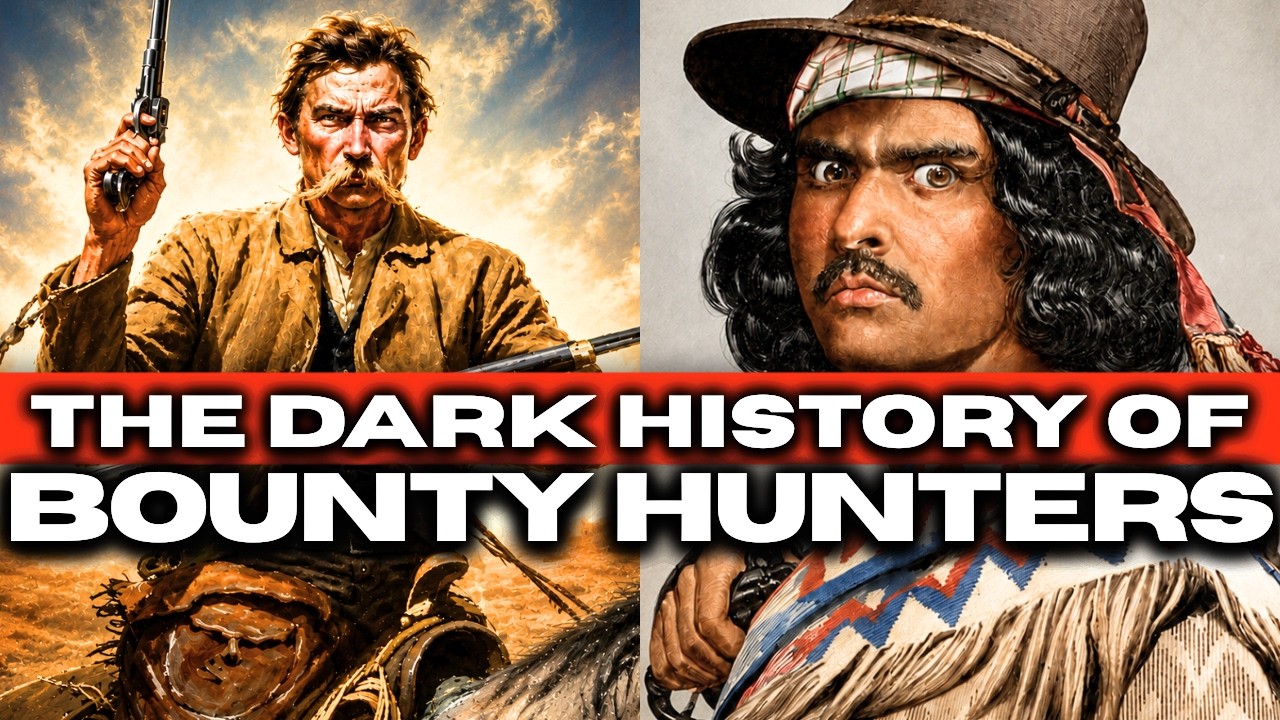
Seeing that they were outnumbered, Murrieta and his men bolted for their horses. Among them was the notorious Bernardo Garcia, known throughout the territory as Three-Fingered Jack. He fired five shots from his Colt Dragoon revolver at the pursuing Rangers, and every shot missed. The Rangers answered with a volley of nine bullets.
One of them, fired by Ranger Bill Burns, struck the broad, mustached face of Three-Fingered Jack and dropped him dead on the spot. Two other outlaws, Jose Ochoa and Antonio Lopez, threw up their hands and surrendered rather than share his fate. Three more of their comrades, two of them already badly wounded, managed to mount up and race for the mouth of the canyon. Murrieta himself leaped onto his horse and made a desperate dash for the open plains.
Ranger William Henderson raised his double-barreled shotgun, loaded with buckshot, and took aim at the fleeing outlaw. But just as he pulled the trigger, his horse reared in panic, and the shot went wide. Henderson and another Ranger, John White, tore down the canyon after their prize. White raised his Model 1841 Mississippi rifle, but Murrieta slid his arm under his horse’s neck and hung low along the animal’s side, making himself nearly impossible to hit.
Then a dry riverbed appeared in their path, a fifteen-foot drop to its rocky bottom. The two Rangers slowed their horses to avoid plunging over the embankment. But Murrieta swung back into the saddle and urged his mount over the edge. The horse kept its footing, but the rider smashed into the ground in a heap among the rocks.
Somehow, he was uninjured. He scrambled back onto his waiting horse and galloped away just as Henderson and White crested the bank. In his fall, Murrieta lost his treasured sombrero, the one he kept tied tightly to his head to conceal his identity and his notoriously scarred face. For a brief moment, the Rangers understood who they were pursuing.
Then both men resumed the chase. Henderson urged his horse down into the riverbed while White took position on the bluff above, hoping to cut the outlaw off. Henderson fired his revolver, but the bullet struck the hind leg of Murrieta’s mustang. The wounded animal only ran faster.
At the end of the dry riverbed, Murrieta forced the horse up a sloping hill. Henderson fired again and hit the animal once more. The horse’s pace began to falter despite Murrieta’s whipping and cursing. A third shot struck Murrieta himself, entering the small of his back and exiting through his lower abdomen.
Still, he refused to surrender, slumping forward and spurring the animal onward. From the bluff above, John White took careful aim. His shot struck the fleeing outlaw in the back and sent him tumbling to the dirt. Both Rangers assumed their quarry was dead.
But in a move that astonished them, Murrieta pulled himself to his feet and ran down the edge of the stream bed. Henderson, for a moment, felt as though he were witnessing something supernatural, wondering if the folkloric claims about Murrieta’s evil nature might be true. He shook it off and took one final shot. The bullet struck Murrieta in the chest, and the outlaw dropped into the dust, crying out in Spanish that he was dead.
He breathed his last in the dry, sparsely populated expanses of the San Joaquin Valley. The Rangers had killed the most feared man in California, but their work was not finished. There was a bounty on Murrieta’s head, five thousand dollars for him alone, and thousands more for Three-Fingered Jack. To claim it, they needed irrefutable proof.
Cameras were rare in 1853; the nearest studios were over a hundred and fifty miles away in Stockton. So Bill Burns drew his Bowie knife, the massive fourteen-inch blade that had become a frontier mainstay since Jim Bowie used one in a duel on the Mississippi twenty years earlier. He knelt over the body, briefly noting the young man’s light skin, nearly boyish features, thin mustache, and the long, pronounced scar along the left side of his face. For a moment, Burns felt a pang of sympathy, but it passed when he remembered the bounty.
He took up a handful of Murrieta’s shoulder-length hair and turned the corpse’s face away, exposing the neck. This marked the end of Joaquin Murrieta’s life, but not of his story. He was born in 1829 in Alamos, Sonora, in northwestern Mexico, a town of some five thousand people and a hub of the silver mining boom. He spent a brief time working in the mines at Baroca, where he met Rosa Feliz.
They married in 1848, both still teenagers. Less than a year later, news reached northern Mexico that gold had been discovered in California. Roughly ten thousand Sonorans uprooted their families and headed north. Joaquin and Rosa traveled across the deserts as part of an expedition composed of nearly his entire extended family, including his brother Jesus and brothers-in-law Claudio, Reyes, and Jesus Feliz.
They arrived in the southern goldfields in the Sierra Nevada foothills and staked a small claim on a sandy riverbank. Like nearly everyone around them, they found no luck after months of freezing, ankle-deep work. By the summer of 1849, tension between Anglo and Mexican miners boiled over. Mexican miners were driven from their claims under threats of violence.
One account by a Chilean miner recalled a Yankee invading a Sonoran’s claim with a revolver, watching him pan for gold, then putting a pistol to his head and ordering him off in broken Spanish. The Sonoran would simply shoulder his tools and leave, confident he could find a richer spot elsewhere. California folklore long held that this abuse created Joaquin Murrieta’s thirst for violence. John Rollins Ridge’s 1854 book, The Life and Adventures of Joaquin Murrieta, claimed he was driven from his claim, his half-brother Jesus hanged, and his wife assaulted.
Historians have since disputed those details. No newspaper recorded any hanging of anyone named Murrieta before 1852, and assaults on women were rare in the goldfields, where women were so scarce that even the most racist Anglo ruffian treated them with respect. But Murrieta himself told a California companion that he had been driven from a claim, insulted, grossly maltreated without justice, and flogged. A Ranger named William Henderson, who knew Murrieta in the Southern Mines, recalled that Murrieta lived with a Colonel Akan, found a rich claim near Sonora, and was driven out by Americans.
He found another claim, and one day a couple of Irishmen ordered him off. When he refused, one of them struck him a fearful blow to the face with a whiskey bottle, opening a frightful wound. From that day forward, Murrieta seemed a changed man. For a time, he continued mining in good faith, but his brother-in-law Claudio Feliz was the first in the family to turn to crime.
Feliz was accused of stealing gold from another group of miners, escaped custody in Stockton, and by early 1850 was a full-fledged outlaw. Meanwhile, Murrieta took up dealing cards, particularly the Spanish game of monte, in the saloons and gambling halls of the boom towns. By the spring of 1850, with racial tensions rising, he moved to Stockton. On November 28, 1850, at eighteen years old, he stole a pair of boots, was caught wearing them, tried, and sentenced to three months in the Stockton jail, where prisoners worked on the river levee by day and were chained at night.
He had only two weeks left to serve when many prisoners escaped, but he remained. During his confinement, Claudio Feliz gathered a gang of roughly twenty bandits and began pillaging the mining camps of central California. Upon his release, Murrieta joined his cousin’s gang. In early November, Murrieta, Claudio Feliz, his brother, and another bandit made their way to Bidwell’s Bar, a gold camp on the Feather River.
They robbed and killed the local butcher and his assistant. An account described the assistant being roped and dragged through bushes and rocks by a horse, then stabbed repeatedly until dead. The gang doubled back to confuse pursuers, then stopped at a roadside inn, where one of them spotted a teamster named George Mather. They ambushed him on the trail, clubbed him with pistol butts, slashed his arm, and cut his throat, dragging his body into the bushes.
Minutes later, they stopped two young miners, John Gardner and Andrew Jinkerson, stabbed Jinkerson seventeen times, and cut Gardner’s throat twice. A local citizen spotted them stashing the bodies and raised the alarm. The gang fled, abandoned their horses, and walked back toward Sonora Camp. Another traveler, a young man named Isaac Prey, was later found dead in the same position as the other victims.
On November 12, the outlaws walked into Sonora Camp in quiet triumph. But on the same day, another local outlaw was arrested and offered the location of the gang in exchange for a lighter sentence. Yuba County Sheriff Robert Buck Buchanan and Deputy Ike Bowen raced toward Sonora. Just after ten that evening, they found their way blocked by Murrieta and his men, who pointed revolvers at them and ordered them to leave.
Buchanan obliged at first, but then sent Bowen back to raise a posse while he crept toward the settlement. As he stooped under a corral rail, four shots rang out from a building. One bullet struck him in the lower back, destroying much of his intestines. He survived, but the killings had changed California.
These were the first recorded murders committed by Joaquin Murrieta. The gang split up. Most headed west to San Francisco, but Murrieta remained in Sonora, putting his loot to use at the monte tables. By April 1852, he was back to crime, helping steal horses at Ione.
The owner, a judge named Henry Carter, tracked the thieves to an inn at Willow Springs with a companion named James Corkran. The innkeeper, a powerfully built man named James Clark, walked up behind Murrieta, placed a hand on his shoulder, and declared, “You are my prisoner. ” Murrieta replied, “I think not. ” A gunfight erupted.
The cook, an African-American man named B. F. Moore, grabbed a rifle and killed one of the outlaws with a shot that removed the top of his skull. Clark and Corkran pursued the remaining outlaws to the door, where a bullet struck Clark in the head and killed him.
Moore, after reloading, shot down another of the outlaws as he fled. Murrieta, out of ammunition, roped at Moore with his rawhide riata, then freed his horse, draped his mortally wounded comrade across the saddle, and rode away. A search party found nothing. Murrieta was suspected of robbing and killing a man named Allan Ruddle, and soon after appeared at a fandango in Stockton, where his companion fired at an alleged offender and struck an innocent bystander.
He then joined forces to steal a herd of twenty horses and headed south through Tejon Pass toward Los Angeles. A rancher trailed them, recruited a local chief named Zapatro, and the warriors surrounded the outlaws and forced them to return the horses. But two men were still on Murrieta’s trail. One of their names has been lost to history.
The other was Harry Love, a former sailor, explorer, and Texas Ranger. Love tracked Murrieta to Los Angeles, then to a roadhouse in Santa Buenaventura. A short firefight broke out. Love captured a companion named Pedro Gonzalez but Murrieta escaped.
When Gonzalez tried to flee, Love shot him in the back of the head. The killing was declared lawful and justified. Murrieta returned to Sonora, reconnected with Claudio Feliz, and resumed raiding. In late August 1852, the band robbed a trio of Chinese miners, then struck Salvado camp, robbing the inhabitants and shooting a Chilean miner dead.
The Sonora Herald ran a detailed report. The gang split up. Claudio Feliz was cornered near Monterey and shot down when he tried to stab his captor. Murrieta returned to Los Angeles, took up with a new girlfriend, and kept a low profile until that fall, when troubles in love and the news of his cousins’ killings redoubled his commitment to the outlaw life.
He recruited a new gang, including Bernardo Garcia, known as Three-Fingered Jack, a highwayman known for his toothy grin and the missing finger on his right hand, most likely lost in a roping accident. Also among them were his half-brother Jesus Murrieta and other young, notorious recruits. During the winter of 1852, they headquartered in the Bear Mountains, plotting a crime and killing spree the likes of which California had never seen. In mid-January 1853, they mounted their horses and rode out.
They would come to be known as the Five Joaquins gang, and their raiding would not only terrorize the citizens of California but forever alter the history of the Golden State.