In the late 1990s, American network television went through a strange, brief obsession with science fiction. The X-Files had proven that prime-time audiences would spend an hour each week on conspiracies, wormholes, and things that should not exist. Every network wanted its own version. Most of them had no idea what they had approved.
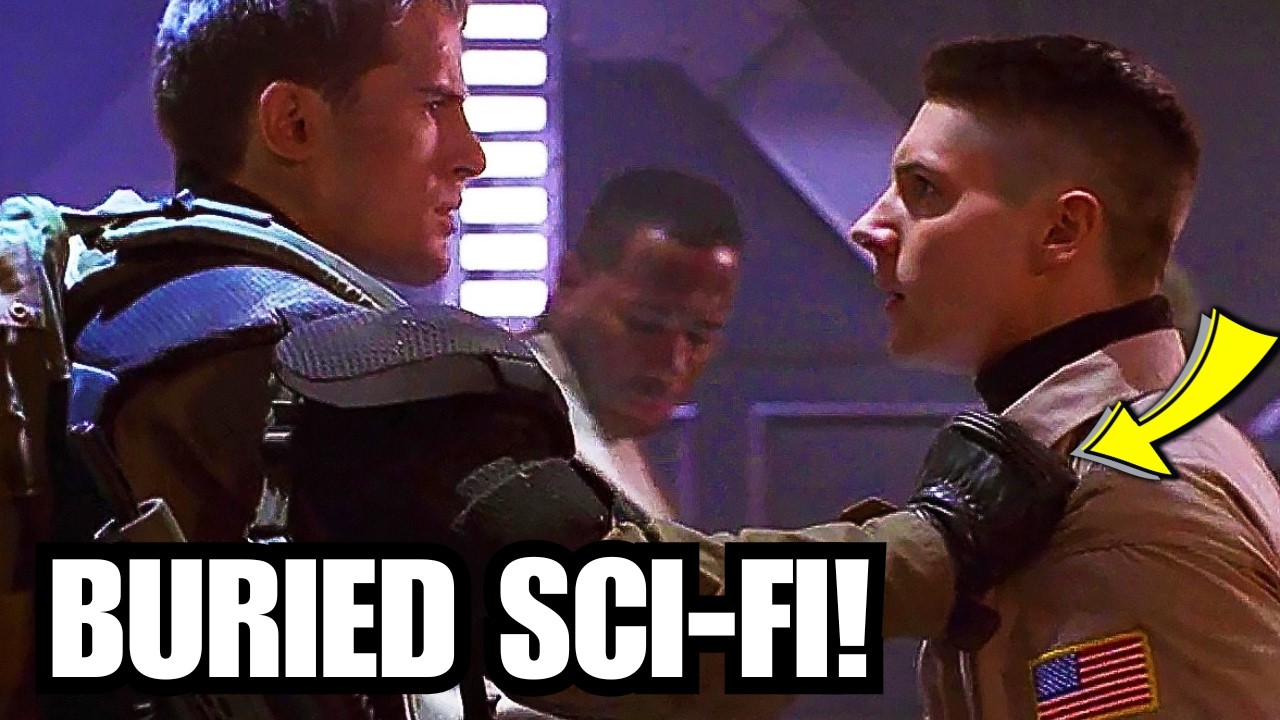
Wrong time slots, slashed budgets, constant preemptions for sports, and nervous executives buried the boldest shows one by one, often before the story could properly begin. One of the first to go asked viewers to follow a squad of young Marines fighting a war among the stars they were never going to win. Fresh from the writer’s room of The X-Files, Glen Morgan and James Wong brought their creation to Fox with five seasons mapped out. Space: Above and Beyond looked grim and cinematic, a boots-in-the-mud war story set in 2063, following an underdog squadron called the Wild Cards as they fought a hostile alien race, the Chigs, from the deck of the carrier Saratoga.
It treated its soldiers and their losses with a seriousness the genre rarely allowed on television. The Wild Cards were frightened young people, including one who had been gestated in a tank rather than born, thrown into a war nobody back home fully understood. The trouble began with the schedule. Fox dropped the series into the 7:00 Sunday slot, directly opposite the ratings fortress of 60 Minutes, then preempted it repeatedly whenever sports ran long.
Estimated at $1. 5 to $2 million per episode, it was expensive television, especially for a serialized drama, and an easy target for an incoming programming chief who reportedly had little affection for the show he inherited. The ratings never recovered. One season, 23 episodes, was all the Wild Cards got.
The finale refused every comfort the format usually offers, sending half the principal cast into a battle they did not return from and leaving the survivors staring at a war without end. It remains one of the bleakest, most unsentimental endings the genre has put on network television. Reruns on the Sci-Fi Channel and a delayed 2005 DVD set built the cult status Fox never granted. Thirty years later, fans still campaign for a revival.
Another ambitious premise told the story of aliens who had been steering human history from the shadows since the 1950s. The Kennedy assassination, the Vietnam buildup, even the British invasion were recast as moves in a slow alien war by creatures that could burrow inside a human host and take it over from within. NBC placed Dark Skies on Saturday nights at 8:00, the slot it assumed families were watching together. Bryce Zabel and Brent V.
Friedman had written one of the most ambitious conspiracy premises television ever attempted, a secret history in which a parasitic alien collective called the Hive sat behind the defining traumas of the 1960s. Eric Close and Megan Ward played a young couple driven onto the run after learning too much, hunted across the decade by the shadow agency Majestic 12, with the late J. T. Walsh lending genuine menace as its director.
Tobe Hooper directed the feature-length pilot, giving it a glossy cinematic weight the Saturday slot would never reward. A still-unknown Jeri Ryan appeared in her first series regular role not long before Star Trek: Voyager made her a household name. The plan was a five-season bible that would walk the conspiracy forward decade by decade into the audience’s present. That kind of slow burn rewards a patient network, and patience was not on offer.
Twenty episodes in, citing soft ratings, NBC let it go. The show spent almost a decade off the shelf, snarled in a music licensing dispute that no one resolved until Shout! Factory cleared the rights and released the complete run on DVD in 2011. By then it had found a home in late-night conspiracy radio, replayed and picked apart on programs where its central idea never quite stopped sounding plausible.
Fox, meanwhile, had quietly aired one of the strangest things it ever put its name to, four years before The Matrix asked a mass audience whether their reality was real. Lori Singer played Sydney Bloom, a phone company line worker who discovers she can draw other people into a deeper level of virtual reality through the wires in their walls. A shadow outfit called The Committee recruits her, then uses her, and the series spent its short life watching her work out how badly she was being played. It was moody, slow, and genuinely experimental, the kind of show that belonged on late-night cable rather than a Friday network lineup.
The cast ran deep, featuring Anthony Stewart Head shortly before Buffy turned him into a star, alongside Will Patton, David McCallum, and Oscar winner Louise Fletcher. Those dreamlike color-tinted sequences pushed each episode toward a million and a half dollars, an art-house budget on an ordinary network schedule. Fox produced 13 episodes and aired only 10 before its patience ran out, placing the show directly before The X-Files and still unable to hold that prime real estate. The final three installments sat unseen in the United States until a 1997 Sci-Fi Channel rerun.
There has never been a proper North American home video or streaming release, which is why the series keeps its odd half-buried reputation. That Friday night slot chewed up another Fox experiment entirely. Chance Harper, played with rumpled charm by D. B.
Sweeney, was a freelance photographer who could not walk into a room without a disaster, a crime, or some small miracle unfolding three feet away. Carl Schaefer, who had created Eerie, Indiana, built Strange Luck around that single uncanny idea and around the mystery Chance could never solve, the brother he had lost as a boy. Fox handed it the same warm-up slot before The X-Files. Schaefer even secured Chris Carter’s blessing for an on-screen nod to Agent Mulder, setting up a crossover the network never allowed to happen.
Instead, Fox preempted the show for sports and holidays week after week until whatever momentum it had built bled away. Seventeen episodes later, in February 1996, Fox let it go. D. B.
Sweeney’s everyman was decent and a little sad, the tone hovering between melancholy and wonder, and the format could have run for years on charm alone. There has never been an official home video release. The show survives on traded tapes and a brief 1997 cable rerun, remembered as one of the biggest what-if casualties of Fox’s golden run. UPN bet an entire season of drama hopes on one show.
Coleman Luck built it as a collision of Outbreak and The X-Files, a covert government unit called Delta X racing to contain biological and chemical outbreaks while strange religious and supernatural currents ran underneath the procedure. The science could tip into the metaphysical at any moment. At its center were two virologists played by a very young Jeffrey Dean Morgan and Tamlyn Tomita. For eleven episodes, The Burning Zone had the makings of a sleeper.
Then, facing soft ratings in January 1997, UPN fired both of its leads at once, wrote them out, and rebuilt the series around Daniel Cassian, a doctor who had spent the first half of the season as one of its antagonists, with a leather-jacketed newcomer brought in to fill the gap. The television historian John Kenneth Muir later called the overhaul a behind-the-scenes massacre. Audiences reacted about as expected. The retooled version limped to 19 episodes before UPN pulled it and handed the time slot to sitcoms including Clueless.
No DVD or stream ever followed. The show lives on mostly as a case study in how fast a nervous network can dismantle its own program. In the fall of 1994, NBC handed Amblin Entertainment a Sunday night slot and a genuinely ambitious idea. Earth 2 was pure frontier myth.
A group of refugees fled a dying space station civilization aboard the Eden Project, searching for a new home and a cure for the sickness killing their children. Their ship went down on the alien world G889, and the survivors had to learn the planet before it unmade them. It was the most cinematic premise Amblin had ever handed a television network. The production shot on location in the high desert around Santa Fe, which looked extraordinary and cost a fortune, reportedly near $2 million an episode.
NBC parked it at 7:00 on Sundays, grinding against 60 Minutes, and asked a 1994 audience to commit to a story that only paid off if watched every single week in an era before that was how people watched television. Twenty-one episodes aired between November 1994 and June 1995. Steven Spielberg is said to have removed his executive producer credit after seeing the pilot. Staff reportedly called the show Gilligan’s Planet.
Looking back, much of it arrived early. The series gave science fiction television a female mission commander before Star Trek: Voyager introduced Captain Janeway, and its blueprint of stranded survivors decoding a hostile, mysterious land runs straight through Lost. The final episode left Devon Adair seemingly dying, then remade by the planet’s enigmatic native race into something the story never explained. Three decades later, no one knows what was supposed to happen next.
He stepped away from his own dinner table for barely two minutes. When he came back, his wife looked at him like a stranger. The restaurant staff swore they had never seen him before, and the entire life he had walked in with had simply been deleted. That cold open belonged to Nowhere Man, and the man losing his mind in real time was photojournalist Thomas Veil, played by Bruce Greenwood.
His crime, as far as he could tell, was a single photograph taken in South America, an image of something he was never meant to witness, filed away under the title Hidden Agenda. Somebody wanted that negative badly enough to erase a man to get it. The show owed an obvious debt to The Prisoner and The Fugitive and arrived to some of the warmest reviews of the season, scored by Mark Snow in the same uneasy register that made The X-Files so memorable. Partway through the run, creator Lawrence Hertzog fell out with UPN over where the story should go, and they brought in a new voice who would later co-create 24.
Hertzog was pushed to the edges of his own series, and the network canceled it in the spring of 1996 after 25 episodes. The finale tied off a thread or two and left the big questions, the swapped-out senators, the real meaning of that photograph, hanging in the dark forever. A 2006 box set kept it findable for the faithful, and it holds up better than almost anything from that season. Late one summer, the Sci-Fi Channel slipped a quiet little anthology onto its schedule, every episode set in the same imagined future metropolis called Welcome to Paradox, a wink at Godard’s Alphaville.
Rather than spin its own stories, it adapted a different published work of science fiction every week by a genuinely first-rate author. Over 13 episodes it drew on James Tiptree Jr. and others, mining cloning, simulated reality, engineered people, and faith turned into a racket years before Black Mirror made that kind of thing a brand. It ran from August into November of 1998 and was then simply gone, having never drawn the audience the channel needed to justify a second season.
There is no proper home video or streaming release anywhere in North America. An anthology that adapted some of the finest short fiction the genre ever produced has effectively vanished, exactly the kind of library a streaming service would love to own now. An Air Force pilot flew into the Bermuda Triangle and vanished. Half a century later, he walked back into the world without having aged a day, carrying powers he could not fully explain.
That was the premise of The Visitor, Fox’s first venture into series television from Roland Emmerich and Dean Devlin, the team behind Independence Day, with John Corbett as the returned pilot. The structure borrowed openly from The Fugitive as the pilot crossed the country doing good while an obsessed NSA colonel and a dogged FBI agent stayed half a step behind. What made the show genuinely ahead of its moment was happening offscreen, a tied-in companion series on the web, an early stab at two-screen storytelling. The effects work earned a 1998 Primetime Emmy nomination, one of six the series collected.
None of that bought it more time. All 13 episodes aired across the winter of 1997 and 1998, and even with respectable early numbers, Fox lost its appetite for costly science fiction. Philip K. Dick wrote that reality is that which, when you stop believing in it, doesn’t go away, and a small Canadian-German co-production took that idea to heart.
Underneath a name borrowed from the Schwarzenegger blockbuster, Total Recall 2070 sat a moody, rain-slick detective story soaked in Blade Runner and in Dick’s own Do Androids Dream of Electric Sheep. Michael Easton played detective David Hume, and Carl Pruner played his android partner Ian Farve. The cases they cracked were closer to philosophy than action, all questions of memory, identity, and what a machine owes the people who built it. The look was genuinely beautiful, expensive cyberpunk that earned a 1999 Emmy nomination for special visual effects.
Twenty-two episodes were made, and the series went out mid-stride on a cliffhanger that left the android all but destroyed. A Canadian DVD eventually preserved all 22 episodes uncut, but the United States never got a proper release of its own. One point six percent. That is the entire genetic gap the show built its dread on, the thin sliver of DNA separating ordinary people from a new kind of human, faster, stronger, sharper, and missing whatever it is in us that feels for anyone else.
The series gave Debra Messing her first leading role on television months before Will & Grace turned her into a star. As bioanthropologist Dr. Sloan Parker, she is the one who first works out what is happening. The new species has a name, Homo dominants, and a chilling lack of warmth, and it has begun to regard the rest of us as a resource and an inconvenience.
Prey was chewing on Darwin, empathy, and the question of human survival years ahead of Heroes or the 44, real paranoid, grown-up science fiction with a genuinely upsetting idea at its core. ABC, by most accounts, only ordered it to satisfy a leftover Warner Brothers contract, treated it like an obligation rather than an asset, and scheduled it so erratically that it posted the lowest Thursday night rating in the network’s history at the time. The final five episodes were burned off across a couple of summer weeks in 1998 with almost no promotion. It ended on a gut-punch cliffhanger, and fans campaigned for a real ending for five solid years.
The closest anyone ever got was a blink-and-you-miss-it cameo tucked into a 2000 episode of The Invisible Man. The network kept apologizing for weeks. By their own account, Chris Carter and his showrunner were getting notes from Fox conceding it had botched the launch, and then Fox canceled Harsh Realm anyway after three episodes. Carter had adapted a comic by James Hudnall and Andrew Paquette into a story about a soldier dropped into a hyperrealistic military simulation and discovering it had been seized by a self-styled tyrant ruling a digital postwar America from inside the machine.
It premiered in October 1999, only months after The Matrix had primed mainstream audiences for exactly this kind of question about simulated worlds, and on paper it should have been the easy heir to Fox’s biggest hit. Fox barely promoted it. Programming chief Doug Herzog pulled it after three episodes, blindsiding the people who made it. The comic creators later won a precedent-setting trademark lawsuit that forced Fox to fix the on-screen credit.
The real reason to remember it is how unnervingly right it turned out to be. A show about an authoritarian power ruling through a faked, totally immersive reality, about surveillance and manufactured truth, looks less like science fiction every year. It won its category at the Saturn Awards. It pulled better than six million viewers a week, and the network shut it down anyway, having decided the show cost too much to keep alive.
The mind behind it was Glenn Gordon Caron, who had already made Moonlighting. A rumpled, overweight insurance executive named Michael Wiseman, played by John Goodman, dies in a subway accident. A secret branch of the government preserves his brain and installs it inside a genetically engineered, physically perfect new body, now played by Eric Close, all under the supervision of a charming and slippery handler played by Dennis Haysbert. There is one rule.
Michael can never make contact with his wife Lisa or his daughter Heather. If he does, the people he loves are the ones who will pay for it. So Michael gets a second life, a perfect body, and the only thing he wants is the family he is forbidden to touch. It became a superhero show, a spy show, and a love story about a husband watching his own family from across the street, unable to say a word.
It swept its categories at the 2000 Saturn Awards, taking best network series and drawing a healthy audience every week. The problem was the math. Each episode reportedly ran around $2. 4 million, and CBS canceled it after 22 episodes, calling it an expense it could not justify.
Caron, convinced the head of CBS never understood the show, ended the finale, an episode he pointedly called The Eggman Cometh, on the most deliberately savage cliffhanger he could build. In the final minutes, Close’s character finally tells his family the truth and rushes them out of the house seconds before a team led by Dr. Morris crashes through the door. At the very same moment, the most dangerous villain from the show’s first run walks straight out the front gate of a maximum security prison.
That is the image the series ends on, two catastrophes breaking at once. Caron froze the story right there in May of 2000 as a dare to anyone who might ever want to continue it. No one ever did. Thirteen shows, and very nearly the same story every time.
A network gets nervous, a time slot gets botched, a budget gets cut, somebody upstairs decides the audience isn’t there, and a strange, brilliant, ahead-of-its-time idea gets buried before it can grow. What stands out, though, is that not one of them actually died. Traded tapes, late-night reruns, box sets that took a decade to arrive, archive uploads, and fan campaigns that in one case ran five years past cancellation kept these shows breathing long after the people who made them had moved on. The networks gave up.
The audience didn’t.