In October 1991, an HBO camera crew set up inside an interview room at Trenton State Prison in New Jersey. Across from them sat a massive man, six-foot-five, roughly three hundred pounds, with a flat, unblinking stare. Richard Kuklinski told the interviewer that he had killed more than two hundred men. He described storing bodies in industrial freezers to throw off investigators.
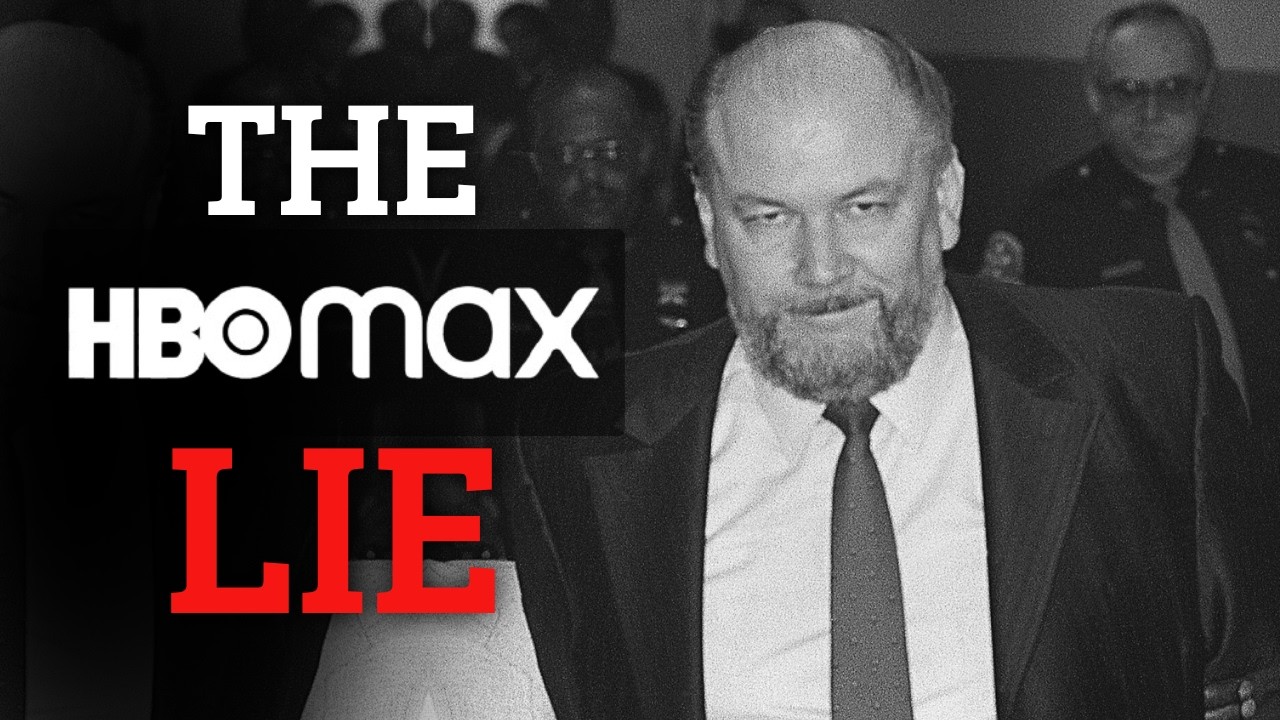
He described spraying cyanide into strangers’ faces on crowded streets. He was convincing. The world watched those tapes and saw a monster, the ultimate mob assassin, a man they called the Iceman. But the confession was a performance.
The man in that chair was not the Mafia’s hidden weapon. He was a convicted killer with a vivid imagination and a desperate need to be seen as something larger than himself. The story he told became books, documentaries, and a feature film. Nearly all of it was fiction built on the testimony of a psychopath who learned that in America, a scary enough lie will make you famous.
Richard Kuklinski was born in 1935 in Jersey City. He was physically intimidating, and he had a violent temper that he could not control. Those two facts shaped his entire life. He beat people to death in sudden rages.
He attacked strangers for cutting him off in traffic. That kind of behavior made him dangerous, but it also made him useless to the Mafia. Professional killers are supposed to be surgical. They are supposed to move quietly, do the job, and leave no trace.
Kuklinski was loud, impulsive, and unpredictable. He was a liability. There was another problem that no amount of muscle could overcome. He was not Italian.
He was of Polish and Irish descent. In the strict ethnic hierarchy of La Cosa Nostra during the 1970s and 1980s, that meant he could never become a made man. He could work as an associate. He could be useful.
But he could never sit in the room where decisions were made. He could never hold rank. The Mafia structure had a glass ceiling, and Kuklinski was permanently beneath it. He claimed that he took direct orders from Roy DeMeo, the notorious Gambino family killer, and that he sat down with the heads of the Five Families.
The evidence does not support that story. When the FBI dismantled DeMeo’s crew, informants began talking. Sammy Gravano, the Gambino underboss, admitted to nineteen murders and gave up the names of everyone involved in the family’s operations. He never once mentioned Richard Kuklinski.
Gravano had no reason to protect a freelance killer from New Jersey. The silence is revealing. Kuklinski was not a partner in the mob’s operations. He was a customer.
He bought guns from mob figures. He bought drugs from them. He was not on their payroll; he was on their receipts. The incident that gave Kuklinski his nickname was actually his most serious blunder.
In the early 1980s, he killed a man named Louis Masgay. There was no contract. No boss ordered the hit. Kuklinski owed Masgay money and decided that killing him was easier than paying him.
It was a crime of greed, not a professional assignment. After the murder, he stored the body in an industrial freezer inside a rented garage. He believed that freezing the corpse would prevent the medical examiner from determining the time of death. He thought he was being clever.
The plan failed. When he finally disposed of the body, he had not let it thaw completely. The coroner found ice crystals still frozen in the heart and tissue that had not decomposed at the same rate as the rest of the body. The medical evidence exposed the trick.
The Iceman nickname was not earned through cunning. It was earned through sloppiness. The details of that case undermine the entire legend. If Kuklinski was truly a top mob assassin, why did he have to rent a garage under his own name to hide a body?
Why did he not have access to the disposal networks of the Gambino family, the crematoriums, the isolated burial sites, the crews that made people disappear? The answer is that he had no such access. He was alone. He was a man in a panic, hiding evidence because he had nowhere else to turn.
The Gambino family, watching from a distance, saw exactly what he was: a man who kept corpses in rented lockers and attracted unwanted attention. That is not someone you hire for sensitive work. Kuklinski claimed to have been Roy DeMeo’s right hand. The claim does not hold up.
The DeMeo crew ran a brutal operation that made bodies vanish. When the authorities took the crew down, they compiled detailed records of who did what. Kuklinski does not appear in those records. He claimed responsibility for murders that had baffled police for years, inserting himself into famous cases to make himself appear important.
One of those claims was the murder of Paul Castellano, the Gambino boss gunned down in 1985. That assassination was orchestrated by John Gotti, who used his most trusted, most loyal men, close associates he had known for decades. The idea that Gotti would outsource the biggest murder of his career to a loud-mouthed freelancer from New Jersey is strategically absurd. It would be like a bank hiring a stranger to open the vault.
Kuklinski knew the details of the crime because they were in every newspaper in the city. He wove himself into the story because he could not stand being a nobody. The reality of Kuklinski’s life was far smaller than the legend. He killed small-time criminals.
He killed business partners. He killed people he owed money to. These were crimes born of desperation, the acts of a struggling man trying to stay solvent. That truth was pathetic, so he replaced it with a story of high-level contracts and international conspiracy.
He preferred to be remembered as a supervillain than as a thief. The media and the public accepted the fiction without hesitation. A hitman is a compelling story. A man who murders his pharmacist over a debt is just depressing.
Audiences wanted the spray bottle filled with cyanide. They wanted the rumors of rats in a cave. They wanted the demon. Kuklinski gave them exactly what they wanted.
He died in 2006, still in prison, with books written about him and a Hollywood actor portraying him on screen. In his own mind, he won. He had fooled the world. But compare him to the men he claimed to emulate.
Real mob figures lived in the shadows. They did not give interviews. They did not want credit. They understood that their survival depended on silence.
Kuklinski died in a prison hospital, telling elaborate stories to nurses. The actual gangsters he pretended to be either died with their mouths shut or entered witness protection and vanished into obscurity. Richard Kuklinski was a dangerous man. He was a killer.
But he was not the master assassin of legend. The paperwork tells a different story from the movies. He was a fraud, a violent man with a cold heart and an active imagination, who convinced the world that he was a professional because a real professional would never have needed to say so.