Anne Cooper Hewitt was born in Paris on July 20, 1914, the very day the Austro-Hungarian Empire declared war on Serbia, setting off the chain of declarations that became World War I. Her mother, Marion Andrews, would later remind her daughter of that ominous beginning. But an even darker fate was already being shaped around the child. Anne was born the illegitimate daughter of Peter Cooper Hewitt, a celebrated American engineer who had been carrying on an affair with Marion since the early 1910s.
Peter, already married to the wealthy Lucy Bond Work, divorced his wife and wed Marion in 1918, formally adopting Anne to conceal her illegitimate birth. Peter Cooper Hewitt was no ordinary engineer. In 1901, at the age of forty, he invented the mercury vapor lamp, a gas-discharge lamp that used an electric arc passing through mercury vapor to produce a brilliant light. The bulbs could last up to 24,000 hours and shone far brighter than anything previously available.
They were quickly adopted for street lighting, hospital operating rooms, stadiums, and public buildings across the Western world, and their descendants are still in widespread use more than a century later. He had also developed the mercury arc rectifier, which converted alternating current to direct current, a technical achievement that connected him to the famous war of currents between Thomas Edison and George Westinghouse. The rise of Hollywood brought another fortune, as his lamps were adopted to illuminate film studios. When Peter died in the autumn of 1921, shortly after Anne’s seventh birthday, he left behind an estate valued at roughly four million dollars, the equivalent of more than one hundred million dollars today.
His will was unusual. He did not leave his fortune to his wife, nor divide it evenly between her and their only child. Instead, Marion received one-third, while Anne was to receive two-thirds, held in a trust of about 2. 7 million dollars, to be paid out when she turned twenty-one in the summer of 1935.
One clause in particular would later prove to be the instrument of her mother’s cruelty: if Marion outlived her daughter and Anne died without children, Anne’s share of the estate would pass to Marion. Anne never really knew her father, and she never had a loving relationship with her mother. Marion treated her daughter harshly, calling her an ugly duckling and a moron, and physically abusing her as well. Anne later recalled that her mother rarely came near her, instead employing a team of maids to dress her, feed her, and put her to bed each night.
Marion lived a separate, isolated life, marrying twice more within a few years of Peter’s death, first to Baron Frédéric Émile Régis de Long in 1922, then to George William Charles MacArthur in 1926. She also developed destructive habits: increasing alcoholism and a taste for gambling, a toxic combination for a woman with a vast fortune to burn through. By the 1930s, she and Anne were living in San Francisco, where Marion kept her daughter confined to her room, deliberately preventing her from making friends or socializing. As Anne approached her twenty-first birthday and the inheritance that came with it, Marion began planning how to seize the money.
There seemed to be only one way to get it. The will stipulated that if Marion survived her daughter and Anne died without children, Marion would inherit everything. It was a legal path, but Marion intended to force it in a monstrous way. In August 1934, when Anne was twenty years old, she felt a troubling pain in her abdomen while lunching with her mother in the outskirts of San Diego.
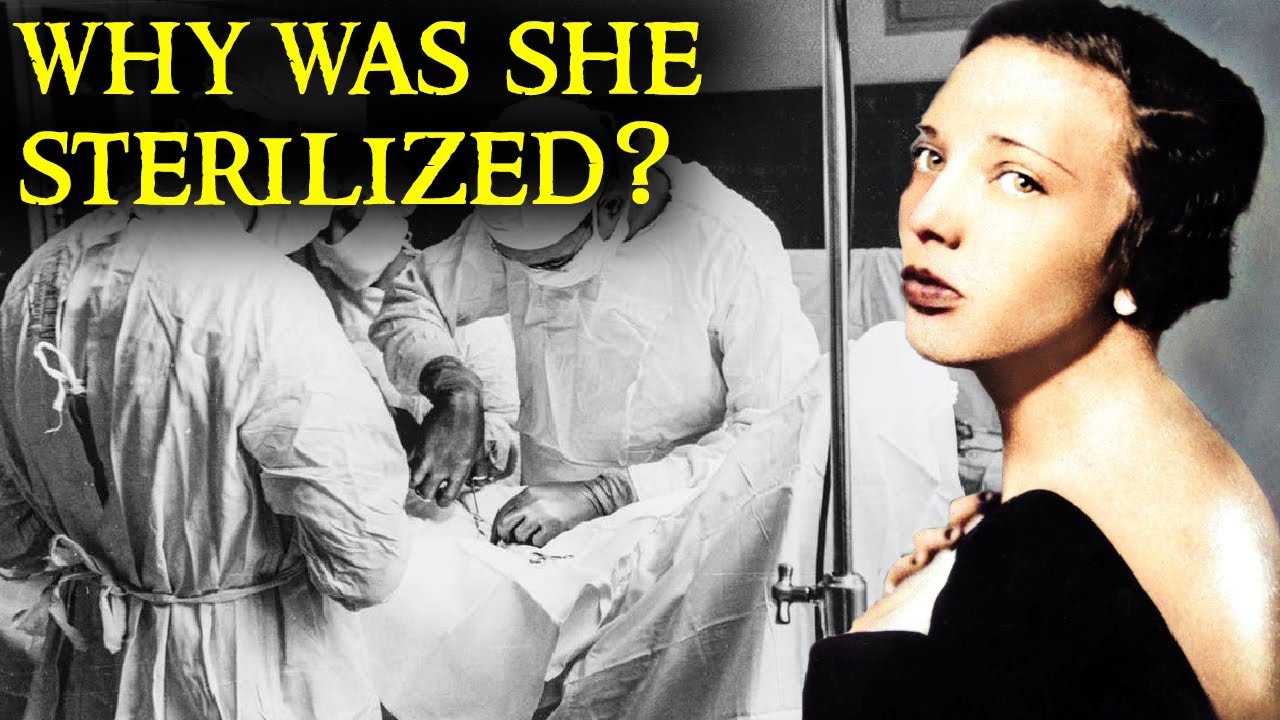
She was rushed to the hospital, where she was met by Dr. Tilton Tilman. Without ever physically examining her, the doctor told Anne she had appendicitis and needed surgery to remove it. Four days later, she was operated on and spent several weeks recovering.
During that time, she grew suspicious. She overheard conversations in which doctors and nurses spoke privately about her care, calling her a moronic patient. What she soon discovered was that, in addition to removing her appendix, the surgeons had also performed a salpingectomy, removing her fallopian tubes. Such a procedure is normally done to prevent cancer or treat an ectopic pregnancy.
In this case, it had been performed as sterilization. Anne’s mother had arranged it all. She had bribed the doctors and convinced the hospital staff that Anne was mentally deficient. Eugenic thinking was still accepted in much of Western medical and scientific circles at the time, and the doctors carried out the operation to prevent Anne from having children who might also be intellectually disabled.
Anne would never be able to have children, and the clause in her father’s will had been activated, allowing Marion to position herself to inherit her daughter’s fortune. Anne did not accept this quietly. She hired legal counsel, and in January 1936, at a highly publicized press conference in a San Francisco office, she announced that she was suing her mother for half a million dollars. She alleged that Marion had hired two doctors to sterilize her and had paid them using money taken from Anne’s own trust fund.
The press seized on the story, portraying a wicked mother against a young heiress, and throughout 1936 dozens of articles appeared in major newspapers across the country. The situation then turned criminal. Police became involved, and both Marion and the two bribed doctors were arrested on charges of mayhem, a loosely defined crime involving the infliction of a permanent injury or disfigurement. If convicted, Marion faced up to fourteen years in prison.
It never came to that. When police caught up with Marion, they found her in a New Jersey hospital after a suicide attempt. At the climax of the case, Anne was not willing to testify against her own mother if it meant sending her to prison, so the charges were quietly dropped. Marion’s scheme never succeeded.
Anne could not have children, but for her mother to inherit the 2. 7 million dollars, Anne still had to die before Marion. That never happened. In fact, Marion died within a few years, on April 30, 1939, at the age of fifty-seven, in a shabby one-bedroom apartment in New York City, penniless and alone.
Anne lived a long and eventful life after that. Though she could never have children, she married six times in total. Unlike her mother, she did not seek wealthy husbands. She had no need.
Instead, she married a series of men from modest backgrounds: a miner, a bartender, and a cowboy who also worked as a disc jockey. That cowboy and occasional disc jockey was Frank Rodeo Roy Nicholson, who was both her fourth and her sixth husband. She divorced him once, then reconciled and married him again later. Her marriage to Nicholson once again put Anne in the headlines.
Nicholson divorced his current wife to marry Anne, but only hours after the divorce proceedings were finalized, his wife was found dead. Her death was later ruled a suicide, and Nicholson was cleared of any involvement, but the newspapers sensationalized the story anyway. Weeks later, Anne and Frank found themselves in further legal trouble when they were found to have given false testimony in evidence submitted under California’s premarital blood test law in order to speed up their wedding. The final chapter of Anne’s dramatic life came in the 1950s, during the height of American anti-communist hysteria.
Determined to fight communism, she decided to run for the United States Senate from Nevada. Frank managed her campaign as she ran on the Republican ticket, though he curiously announced that he intended to vote for her Democratic opponent. The campaign went nowhere beyond generating a few sensational headlines. Anne Cooper Hewitt died of cancer in February 1956 while in Mexico, at the age of only forty-one, though some sources give her age as forty.
Her fortune, the one her mother had schemed so ruthlessly to obtain, was left to Frank Rodeo Roy Nicholson.