She was born Li Yunhe in 1914, in a small town in Shandong Province, into a family that offered her little stability. Her father, more than thirty years older than her mother, was a violent alcoholic who abandoned the family when she was six. Left with few options, her mother turned to sex work to survive, and the young girl spent her early childhood waiting at home while her mother returned each night with different men. Eventually placed in the care of her maternal grandparents in Jinan, she grew up acutely aware of how vulnerable women were in a society that gave men total control.
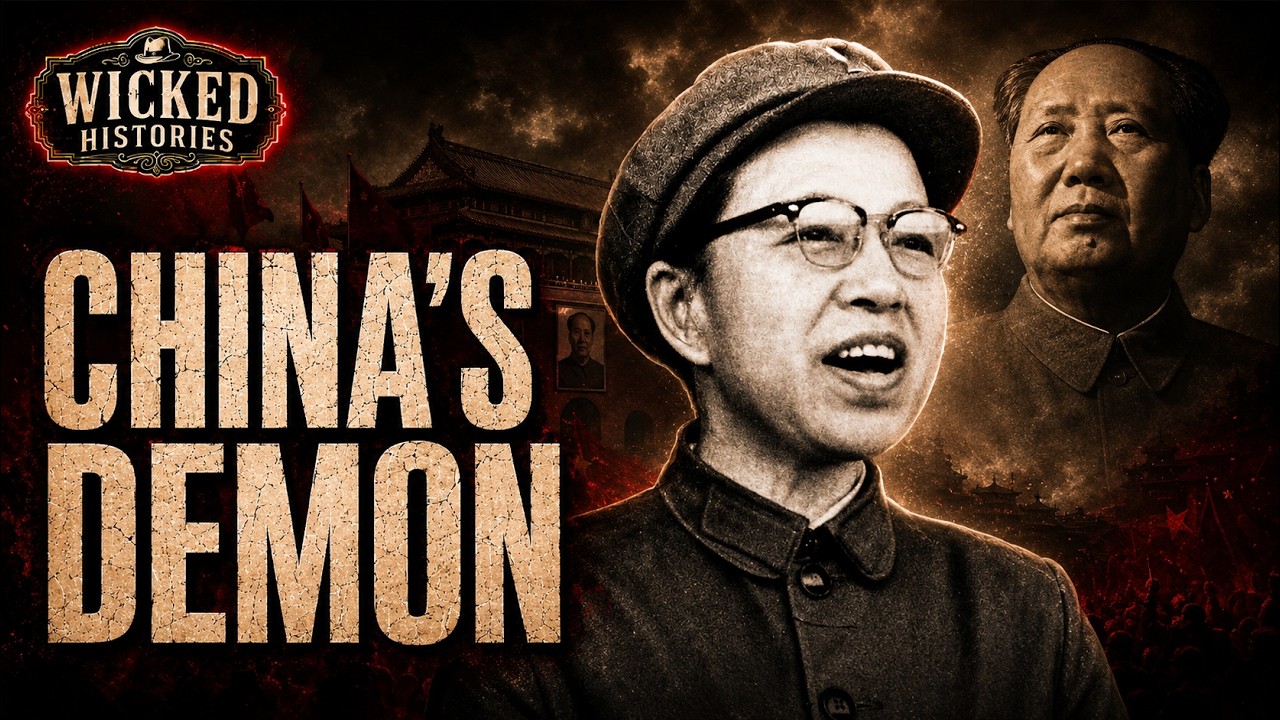
By the time she was ten, she was already willful and argumentative, resisting the constraints placed on her and suffering isolation and bullying from her peers as a result. At fourteen, she saw a way out. When a traveling theater troupe arrived in Jinan, she ran away to join it. Her grandparents, who had bought tickets to see the troupe perform again, were shocked to spot her on stage.
They demanded she return home, but she pleaded with them, insisting that being separated from the stage would break her heart. Moved by her determination, they offered a compromise: she could come home and live under their supervision, and in return, they would pay for formal training at the Academy of Performing Arts in Jinan. She accepted, and her life on the stage began. But the world of theater was not a refuge.
She quickly discovered that casting decisions were often influenced not by talent but by sexual exploitation, and as she entered adolescence, she was invited to auditions that strongly suggested such expectations. Having grown up aware of the abuses her mother had endured, she approached the situation with suspicion. She understood that conforming to these expectations could determine her advancement, but she refused to pay for fame with her dignity. Instead, she cultivated a strategy that would define her for the rest of her life: she layered arrogance over insecurity, leaned into contrarianism, and decided that if she could not be liked, she would at least be memorable.
Her talent was undeniable, but in 1930 the academy shut down, forcing her into Beijing’s competitive art scene. There, her provincial dialect was mocked as backwater babble, and she found that talent did not translate when wrapped in the wrong phonetics. She retreated to Jinan, emotionally and creatively drained. At sixteen, encouraged by her grandparents, she married for the first time.
The marriage lasted only a few months. Her mother-in-law declared her lazy, and Li refused to accept the role of a submissive domestic wife. She railed and raged against her assigned household rank, and the union imploded. She walked away with clarity, a bruised ego, and the certainty that she was not housewife material.
She moved on to Qingdao University, known for its passion for theater and the arts. There she fell in love with a radical left-wing student, and the pair exchanged vows in an informal ceremony. But revolutionary love proved unstable. When her husband was imprisoned for political activity, she was left alone in sorrow.
Upon his release, he abandoned their domestic life to pursue his own agenda. Alone and heartbroken, she packed her bags and set off for Shanghai, the city nicknamed the Paris of the East, where jazz was hot, politics were hotter, and women could be more than obedient daughters or decorous wives. In Shanghai, she saw two paths: follow in her mother’s footsteps and become a courtesan dependent on men’s wallets, or break onto the silver screen as a movie star. She chose the latter.
She scraped by performing in minor productions for minor pay, and threw herself into political rebellion, distributing anti-government leaflets and performing in anti-establishment plays. In 1934, she was arrested for subversive activities and spent three months in prison, where the harsh conditions chipped away at her health but did not break her spirit. Upon release, she rebranded herself as Lan Ping, a name meaning blue apple. The gamble paid off.
In 1935, Lan Ping landed a breakout role in Henrik Ibsen’s A Doll’s House, playing Nora, the woman who walks out on a suffocating marriage to a controlling older man. It was a role that mirrored her own life so closely it needed no rehearsal. Audiences wept, critics raved, and directors came flocking. But the casting couch loomed again, and again she refused to submit.
Her defiance set her apart. With her photogenic features, long hair, and independent streak, she stood out in an industry where her contemporaries perfected the art of obedience. During her four-year run in Shanghai, she married Tang Na, an art critic who reviewed her films and then her life. Their relationship was passionate, dramatic, and destructive.
It imploded, and this time the breakup came with a press tour. Tang Na’s friends in the journalism world took to their typewriters, recasting Lan Ping as a cold, calculating, career-climbing villainess. Tired of playing the villain in someone else’s drama, she responded with an essay titled My Life, laying bare the exploitative underbelly of the film industry. She had found her voice, and she was no longer reading lines.
She was writing them. Then came 1937, and the Japanese invasion extinguished Shanghai’s golden age. The film career, already wounded, took its last breath. At twenty-four, Lan Ping packed her bags and traveled to Yan’an, the Chinese Communist Party’s wartime headquarters.
She arrived with two failed marriages, one canceled film career, and a smoldering sense of purpose. In politics, she saw something the stage had never delivered: not just admiration, but transformation, the power not just to perform but to command. And in Yan’an, she met the man who would give her the biggest stage yet. Mao Zedong, the Communist Party leader, was already married to He Zizhen, a respected revolutionary who had marched alongside him during the Long March.
But Mao became enamored with Lan Ping. Their affair sparked immediate controversy. Many party members viewed her as politically opportunistic, and accusations flew. Some cadres criticized Mao as reckless, while Lan Ping was labeled a political climber and worse.
Despite the backlash, Mao’s dominant status within the party hierarchy shielded them both. He insisted he could not continue to lead the revolution without her by his side. The leadership reluctantly conceded, but imposed strict conditions, among them a consequential demand directed at Lan Ping: if she wished to remain with Mao, she would have to withdraw entirely from political life for thirty years. For a woman who had long aspired to political influence, the condition amounted to exile.
Yet she agreed. On Mao’s advice, she adopted a new name, Jiang Qing, meaning green waters, and a new look. Out went the flowing locks of Shanghai glamour. In came a close-cropped boyish cut.
She played the role of the beautiful consort, but within that quiet wife persona, a storm was brewing. Silenced for three decades, she was expected to keep her opinions to herself and stick to embroidery and child-rearing. It was a bitter existence for someone whose identity had always been defined by ambition and defiance. When her daughter was born, she began to see her position not as a gilded cage but as a strategic nest.
Slowly, methodically, she began to reclaim her voice, and her outspoken outbursts made party officials deeply uncomfortable. After the communists declared victory in 1949 and established the People’s Republic of China, Mao took the helm as chairman. But he steered the country into disaster with the Great Leap Forward, a forced modernization campaign that led to one of the worst famines in human history, with up to thirty million deaths. When the campaign failed, Mao’s colleagues pushed him aside, granting him a symbolic title while appointing themselves the real power brokers.
But behind Mao stood a woman with thirty years of bottled rage, theatrical training, and a flair for the dramatic. With Mao’s grip slipping, Jiang Qing made her grand return, re-entering from Shanghai, where she had been reconnecting with theater world connections and gathering intel. She handed Mao a play she claimed was subversive, and the two began discussing how dangerous culture could be when it was not properly curated. Art, she argued, was a weapon.
In 1966, the couple launched the Great Proletarian Cultural Revolution. For Mao, it was a political reboot. For Jiang, it was her long-delayed solo act. Appointed deputy director of the Cultural Revolution, she was finally free to speak, and what she said was usually terrifying.
Joining forces with Zhang Chunqiao, Yao Wenyuan, and Wang Hongwen, she formed the Gang of Four. Together they turned China into a national theater of cruelty, where ideology was a blood sport and dissenters were props in a performance of state violence. Their mission was to seize control of policy from the conservative faction led by Deng Xiaoping, and to position Jiang as Mao’s political heir. After decades of pretending to be a silent spouse, she wanted top billing.
During the Cultural Revolution, educational institutions were dismantled. Senior schools and universities were closed, halting formal education for millions of students. In their place rose the Red Guards, a mass movement of young people in their teens who had known only communist rule. Numbering in the millions, the Red Guards became a dominant force, at times wielding more practical authority than the official military.
Under party direction, they were mobilized to eradicate all traces of bourgeois, feudal, and traditional culture. Intellectualism, religious practices, Confucian values, and perceived symbols of privilege were all targeted. Teachers were publicly humiliated, tortured, and in many cases killed. Individuals from landowning, scholarly, or professional backgrounds were subjected to public degradation, including having their heads partially shaved and being drenched in ink.
Tens of thousands were sent to forced labor camps where conditions were harsh and mortality rates high. Cultural relics, historical texts, religious icons, and art were destroyed in vast quantities. Jiang Qing, once the stifled wife, was now the iron-fisted dramaturge of destruction. Whatever early dreams she may have had of feminist reform or worker empowerment had long since dissolved.
With power finally in her hands, she became cold, calculating, and chillingly indifferent to the human toll. She expanded her influence beyond political purges by reshaping China’s cultural landscape, rewriting the endings of plays, novels, and operas to conform to revolutionary doctrine, and commissioning new works to serve as tools for political indoctrination. Behind the scenes, she also settled old scores. Many of the cultural elites she targeted were individuals who had slighted her during her early career in Shanghai or who had been connected to her second husband, Tang Na.
She subjected these former colleagues and critics to public humiliation, professional ruin, and in some cases, political persecution. In the late 1960s, she was appointed the first woman to sit on the Politburo, the top decision-making body of the Communist Party. As the 1970s dawned, Jiang was racing against time. With Mao twenty years her senior and in declining health, she operated like a woman who knew the final curtain was dropping.
Her greatest fear was not death but irrelevance. By 1974, she had stopped pretending to care about discretion, openly taking lovers and flaunting her affairs. She granted a rogue interview to a foreign journalist without Mao’s permission, pitching herself as a global leader. She signed autographs in red ink, a color traditionally reserved for emperors.
The message was clear: she still believed she was destined to rule. But backstage, the revolution was falling apart. Even the Red Guards were getting restless, sick of the chaos they had helped create. By early 1976, martial law was declared to restore order, effectively ending a decade of national psychosis.
Mao slunk into the shadows, battered and exhausted. Jiang could not hide. She had taken every bow, and now the audience wanted a refund. On September 9, 1976, Mao Zedong died, and with him the last thin veil of protection between Jiang and the wrath of the nation.
The Gang of Four plotted military coups in Shanghai and Beijing. On October 6, guards burst into Jiang’s quarters and arrested her. She was hauled off to Qincheng prison, where she would sit for five years. When the trials arrived, the public was in no mood for nuance.
Unwilling to criticize the late chairman, they blamed his wife for everything the nation could not lay at Mao’s feet. She was called the white-boned demon. During her trial, Jiang maintained that she bore no independent responsibility for the events of the Cultural Revolution. Her defense was blunt.
“I was Chairman Mao’s dog,” she told the court. “Whoever he asked me to bite, I bit. ” In 1981, she was found guilty of counterrevolutionary crimes and sentenced to death, a sentence later commuted to life imprisonment. For the next decade, she remained incarcerated under strict surveillance.
At the age of seventy-seven, she was diagnosed with throat cancer and transferred to a hospital. On April 14, 1991, Jiang Qing was found dead in her hospital bathroom, having taken her life in one final act of control. Whether she ever truly understood the scale of her crimes, the millions persecuted under her ideological vendettas, the lives shattered to serve her thirst for relevance, is hard to say. Remorse was never her strong suit.
While she claimed to speak for women’s liberation, she wielded the rhetoric not to uplift but to punish. She was not fighting for equality. She was fighting for domination, dressed in revolutionary drag. Even Mao once called her a paper tiger, all noise and bluster, liable to collapse at the first push.
But he miscalculated. Jiang Qing was not fragile. She was volatile, a human cocktail of wounded pride, stage training, and revolutionary fury. Silenced for decades, she emerged not with reasoned reform but with scorched-earth vengeance.
In the end, she got everything she wanted: power, fame, and a nation watching her every move. What she did not count on was that history, unlike propaganda, has a long memory and no editor. In its judgment, she remains not a heroine but a cautionary tale.