On March 25, 1843, a makeshift decimation unfolded in the dusty yard of Hacienda Salado in northern Mexico. A clay pot sat on a table before 176 ragged, barefoot prisoners, their wrists bound. Inside were 176 beans: 159 white and 17 black. One by one, Texas prisoners stepped forward, blindfolded, plunged a hand into the jar, and drew their fate.
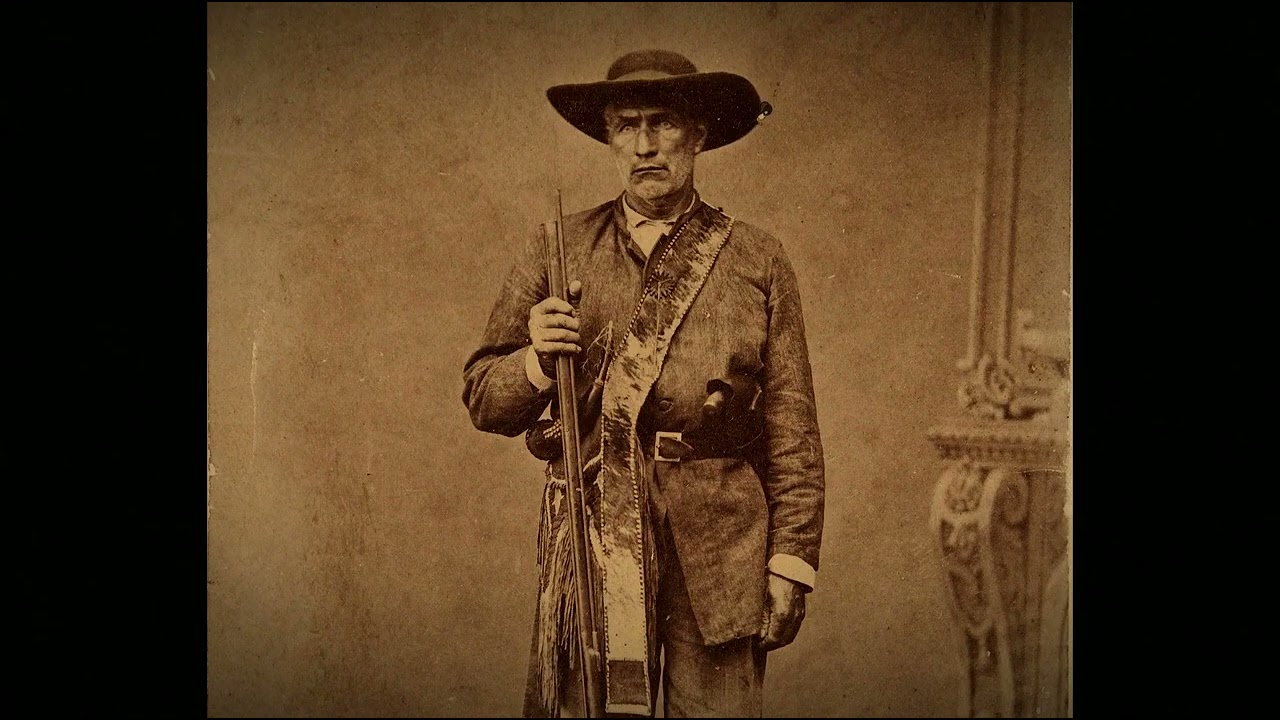
A white bean meant life. A black bean meant death by firing squad at dusk. Among the men waiting was William Alexander Anderson Wallace, a 25-year-old standing six feet two inches and weighing 240 pounds. Friends called him Big Foot.
Something in his careful observation of the beans drawn before his turn would, within minutes, save his life. The white beans, he noticed, seemed slightly larger than the black ones—a subtle difference in size that the careless mixing had not hidden. When his turn came, he slid his hand into the jar, moved his fingers slowly among the beans, found the smallest one, and drew it out. It was white.
He returned to the line without a word. Wallace had come to Texas seven years earlier, a 19-year-old farm boy from Lexington, Virginia. In the spring of 1836, word reached his father’s house of the massacre at Goliad, where a Mexican army under General José de Urrea had executed nearly 400 Texian prisoners, including Wallace’s older brother Samuel and a cousin. Wallace sold what he owned, told his father he was going to Texas to take revenge on the Mexicans, and rode west.
But by the time he arrived in 1837, the war was over. Sam Houston had defeated Santa Anna at San Jacinto, and the treaties had been signed. He tried farming near La Grange. It failed.
He tried beekeeping. That failed too. He drifted to San Antonio, where he gained his nickname. There are two accounts of its origin: his feet were genuinely enormous, requiring custom-made boots, and a Waco warrior, also called Big Foot, was raiding settlements near Austin.
Settlers sometimes could not tell their tracks apart, so they named Wallace after the raider. He hated the name at first but never lost it. In 1842, tensions with Mexico resumed. Mexico had never recognized Texas independence, and in September, General Adrián Woll crossed the Rio Grande with about 1,200 men, seized San Antonio, and carried off the entire local court—roughly 60 lawyers, judges, and jurors—as prisoners.
Wallace fought with Texian forces under Matthew Caldwell and Jack Hays at Salado Creek, where 220 Texans held off a much larger Mexican force. But the same day, a relief company of 53 Texans under Nicholas Dawson was surrounded in a cornfield and cut down; 36 died, and the rest were marched toward the Rio Grande in chains. Combined with the stolen court and earlier prisoners, the Texans decided to retaliate. President Sam Houston, knowing the republic was bankrupt, authorized a limited raid under Brigadier General Alexander Somervell: cross the river, but only if success seemed reasonably possible.
Somervell reached San Antonio on November 4, 1842, looked at his volunteers, and realized he was in trouble. They were not soldiers. They were reckless men—old rangers, farmers seeking revenge, land speculators, and Kentucky boatmen. About 750 rode out on November 25.
Discipline collapsed almost immediately. By the time they reached Laredo on December 8, only a few hundred remained. Somervell ordered a withdrawal on December 19. About 189 men obeyed.
More than 300 refused. They elected William Fisher, a former Texas Ranger, as their commander, voted to cross the river, and marched on the town of Mier. Wallace was among those who stayed. He knew what he was doing.
He believed Mier was guarded only by a small militia and that plunder would be easy. He did not know that Mexican General Pedro de Ampudia was already moving north with more than 3,000 regular troops, veterans hardened against the Comanche. On December 25, 1842, about 261 Texans crossed the Rio Grande at dusk, leaving 40 men to guard the camp. They entered Mier looking for promised supplies.
Instead they found Ampudia waiting. The Battle of Mier lasted nearly 18 hours, fought street by street and rooftop to rooftop. The Texans were among the finest marksmen in the world at the time, and according to Mexican reports, Ampudia lost nearly 650 dead and 200 wounded, while the Texans lost about 10 killed. But they ran out of powder, lead, and water.
At noon on December 26, Ampudia sent a flag of truce with terms: surrender and be treated as prisoners of war. Fisher put it to a vote. Some, including Wallace, voted to fight their way out at night. Most voted to accept.
They laid down their arms. Ampudia quietly changed the terms. They were no longer prisoners of war, but thieves, criminals, and rebels. All 243 were mustered, disarmed, and marched south.
The road from Mier to Mexico City ran more than 700 miles through the mountains of Tamaulipas and Nuevo León. The Texans walked it chained in groups of ten. At Monterrey, a Mexican woman saw the state of Wallace’s feet and pressed a pair of old sandals into his hands. Small kindnesses, but men remember them for life.
By February 1843, they had reached Hacienda Salado, a sprawling stone ranch with a walled yard and about 300 guards. On the morning of February 11, the escape plan they had built for weeks went into motion. A Scottish captain named Ewen Cameron, a 31-year-old Highlander, led the breakout. At the signal, the Texans rose up, seized rifles from their guards, and overwhelmed them in a brief, bloody fight.
Five Texans fell dead, but 181 broke free, some barefoot, most in rags, taking whatever horses and guns they could grab. Wallace was among them, riding a bad-tempered mule with a single canteen. Then the desert took over. North Mexico in February is dry limestone hills, thorn trees, cactus, and yucca.
There are no streams. The few springs were known only to local herders. Within two days, most men had emptied their water. Within three, they split into small groups, each hoping the next ridge would reveal a valley, village, or creek.
There were none. Men began dying of thirst, heatstroke, and cold nights. Some slit cactus and pressed the pulp to their mouths. One survivor recalled seeing a man drink the blood of a horse he had shot.
By the end of the first week, the flight had become a scattered drift of men crawling toward any smoke. Mexican cavalry under General Mejía simply followed their tracks. They did not need to chase. They only had to wait.
Only three of the 181 reached Texas on foot. The rest, 176 men, were gathered up and marched back to Hacienda Salado in chains. Wallace spent six days without food before a Mexican farmer captured him and took him to a village, where an old woman gave him a bowl of thin soup, a piece of tortilla, and washed his feet in warm water. He later said it was the best meal of his life.
He never learned her name. Then came the order from Mexico City. On March 25, word of the escape reached Santa Anna, who had ordered the Goliad massacre and stood in the smoke of the Alamo. He wrote an order: every man who fled Salado was to be shot.
Governor Francisco Mejía refused to carry it out. He would not shoot 176 men in cold blood. If Santa Anna wanted it done, he could send someone else. The American minister in Mexico City protested, as did the British minister.
Santa Anna held out for a time, then offered a compromise. He would use the old Roman punishment of decimation: one in ten would die. Colonel Domingo Huerta was dispatched with the order and a prearranged plan. On the night of March 24, 1843, one of Huerta’s men filled a clay pot with 176 beans—159 white, 17 black—mixed them, and covered the mouth with cloth.
The next morning, the prisoners were brought to the yard and told what was happening. The officers were called first, then the men in alphabetical order. Each man stepped forward, closed his eyes, reached into the jar, and drew one bean. Some prayed.
Some made bad jokes. The first officer drew white. The second drew white. The third drew black.
He looked at the bean in his hand and said, quietly, according to survivors: “Well, they killed my brother at Goliad. I guess they can kill me too. ” His name was William Mosby Eastland. A county in west Texas now bears his name.
Wallace was near the front of the line. He did not close his eyes. He felt for the smallest bean his fingers could find, rolled several in his palm, chose one, and drew it out. It was white.
He returned to the line without a word. Seventeen men drew black beans that day. They were taken to a separate yard, unbound, given paper and ink, and told they had a few hours to write letters home. Every letter survives in the Texas archives.
Quiet documents, fathers telling children to obey their mothers, sons asking their fathers not to grieve. At dusk, the seventeen were blindfolded, lined up against a stone wall, and executed. One of them, James Shepard, was shot by a bullet that ricocheted off his rib. He fell with the first volley and lay perfectly still while the others were finished.
That night he crawled from the yard on his hands and knees, hid in a ditch, and walked north for two days. On the third day, patrols captured him. He was returned to Hacienda Salado and shot again. This time the execution took.
Ewen Cameron, the Scottish captain who led the escape, had drawn a white bean. Under the terms of the drawing, he was to live. Santa Anna had other ideas. He sent a separate order: Cameron was to be executed regardless.
He was the man who led the breakout. On April 26, 1843, standing before the firing squad, he refused a blindfold. According to accounts from the time, he declared that for the freedom of Texas, he could look death in the face. He tore open his shirt at the collar and shouted the command to the Mexican soldiers himself: “Fuego.
Fire. ”
The survivors, those who drew white beans, were chained and marched to Perote Castle, a stone fortress east of Mexico City with walls thirty feet thick and cells carved into volcanic rock. In the summer of 1843, about 150 Texans were imprisoned there. They spent thirteen months breaking rock and hauling it on roads outside the city.
Wallace, 26 years old and six feet two inches, lost nearly 50 pounds dragging a stone cart under a tropical sun. At night, they returned to the damp, mold-smelling cells. Some men died of illness. Some died of despair.
A few escaped. Most waited. Wallace kept a scrap of paper hidden in his shirt and wrote letters whenever he could. One of them, later published in New Orleans newspapers, told his father in Virginia about the scant food, the cold weather, and his comrades, whom he called the bravest men he had ever seen.
He ended with a single sentence: “My bad treatment while in Mexico compels me to return, for I am determined to fight the Mexicans as long as I live in Texas. ” The Mexican authorities did not realize they had made an enemy for life. Diplomatic pressure built through 1843 and into 1844. Santa Anna, occupied with his own political troubles, began releasing prisoners in stages.
On August 25, 1844, Wallace walked out through the main gate of Perote barefoot, hatless, and shirtless. He and four other survivors of the black bean lottery began walking east toward Veracruz, 125 miles down the volcanic plateau through fog forests to the hot lowlands. Their feet bled on the volcanic rock. They begged for food, and Wallace remembered that the poorest people they met were the most generous.
Farmers with almost nothing gave them tortillas and beans without asking questions. A month later, a New Orleans merchant paid for their passage. In the fall of 1844, Wallace stood on the deck of a sailing ship in the harbor, looked at the American flag, sat down on a coil of rope, covered his face with his hands, and did not move for a long time. He returned to Texas at the end of 1844, thinner than he had ever been, with a limp that never fully healed and scars on his back from leg irons that remained visible even in old age.
He rested in San Antonio for a few weeks. Then, just as he had promised his father in that letter from Perote, he saddled a horse and joined the Texas Rangers. Captain John Coffee Hays, known to the Comanche as “devil Jack,” was forming a company of about 75 mounted volunteers to patrol between the Nueces and the Rio Grande. He took one look at the tall, quiet man and accepted him.
For two years, Wallace rode with Hays’s company, chasing Comanche raiders and bandits across the high plains and the Nueces Strip. In the spring of 1846, the United States annexed Texas and declared war on Mexico. Wallace served throughout the Mexican-American War, fighting at the Battle of Monterrey in September 1846, in the same narrow streets where he had once marched in chains. He was, by his own later admission, a brutal soldier during that war.
He had a personal account to settle. Some accounts of what he and other survivors of the black bean lottery did during the invasion are difficult to read. Wallace himself only said, in old age, that he had squared the account and did not want to talk about it further. He was not a saint.
He was a man who had watched his brother die before his eyes, survived a clay pot at twenty-five, and spent a year and a half moving stones in irons. What he did, he did as a man with a debt to pay. After the war ended in 1848, Wallace was 31 years old. He could have settled down.
Instead, in 1850, he took a job no other man in Texas wanted: driving the mail wagon between San Antonio and El Paso, 600 miles each way through some of the harshest country in North America. Water holes lay 50 miles apart. Comanche and Apache raiding parties roamed the route. He drove that route for years.
On one famous trip, Comanches attacked his wagon, killed his mules, and forced him into the brush. He walked on foot to El Paso. According to the story he told for the rest of his life, when he finally reached the first Mexican house on the edge of town, he sat down at their table and ate 27 eggs one after another before he could even say why he had come. Historians have argued about the exact number ever since.
Everyone agrees the general outline is true. In the 1850s, the Texas Rangers were reorganized, and Wallace commanded his own company for a time, chasing outlaws and invaders along the border. He had become a living legend in settled Texas. When the Civil War broke out in 1861, he was over forty.
He did not go east to fight. He stayed on the Texas frontier, protecting settlements from Comanche raids that grew worse after federal troops left to fight each other. By the 1870s, he had moved to Frio County in the brush country south of San Antonio. He built a small frame cabin, kept a garden, and owned a dog.
He stopped hunting big game but would occasionally take his rifle out after deer. Younger men would ride from the towns to sit on his porch and listen to him talk. By all accounts, he was a gifted storyteller with a dry, slow humor that made even bad stories tolerable. In 1870, a Texas writer named John Crittenden Duval collected his tales into a book called Adventures of Big-Foot Wallace, the Texas Ranger and Hunter.
It became a bestseller in its day. Wallace seemed indifferent to the fame. He liked visitors, coffee, and hearing the news from the north. Above all, he liked going out at dusk to sit on the west side of his cabin and watch the sun set over the mesquite trees.
He never married. In his later years, when friends joked about his bachelorhood, he said, in his dry humor, that he was too used to loneliness and no woman was likely to fix him now. The town where he spent his last years is called Big Foot, Texas. It is still there.
A small museum holds a replica of his cabin and some of his belongings. He died on January 7, 1899, three months short of his eighty-second birthday, in his sleep after a few days of what those around him called an old man’s cold. He was buried in a small local ceremony. That same year, the Texas Legislature voted funds to move his body to the Texas State Cemetery in Austin, where he lies today beside Stephen F.
Austin and the men of San Jacinto. The seventeen men who drew black beans at Hacienda Salado were not left in Mexico forever. In 1848, after American forces occupied northern Mexico, a survivor named John Dusenbury went to the hacienda, exhumed their bones, wrapped them in cloth, loaded them on a wagon, and brought them across the Rio Grande to a bluff overlooking La Grange in Fayette County. They lie there today in a common grave with the thirty-six men of the Dawson battle, beneath a monument on a hill that is now a state historic site.
Ewen Cameron, the Scottish captain who shouted “fire” at his own firing squad, was buried where he fell. His grave went unmarked in Mexico for a long time. In the late twentieth century, a group of Texans found the general location and placed a stone. It is not much.
But it is more than nothing. Historians have argued for more than 180 years about whether Big Foot Wallace actually cheated at the bean lottery. Did he really feel the beans, pick the smallest one, and draw white? Or did he draw a white bean like 142 other men and invent the trick later?
We cannot know with certainty. He told the story consistently throughout his life. Other survivors of the drawing said they heard him tell it at the time. Some said the beans were noticeably different in size.
Others said they were not. The actual beans and the clay jar are gone. The wall has fallen. What we know is that on March 25, 1843, at Hacienda Salado, 176 men reached into a jar under the guns of Mexican soldiers.
Seventeen drew death. One hundred fifty-nine drew life. One of the men who drew life was a twenty-five-year-old from Lexington, Virginia, who came to Texas to avenge his brother, and who was buried sixty-two years later in the state cemetery of the country he helped build. A white bean in a clay pot, inside a stone yard, on an evening in March.
A life that stretched fifty-six more years beyond it. Some men are made by the wars they win. Big Foot Wallace was made by the moment he did not lose.