On a September afternoon in 1943, Anna Petri was riding home in her carriage from a shopping trip in Lemberg when she saw them: six boys, aged six to twelve, nearly naked, crouching by the roadside. They had escaped from a rail car bound for the Sobibor extermination camp. They were terrified and hungry. Anna, the wife of an SS estate manager in occupied Ukraine, recognized them as Jewish children.
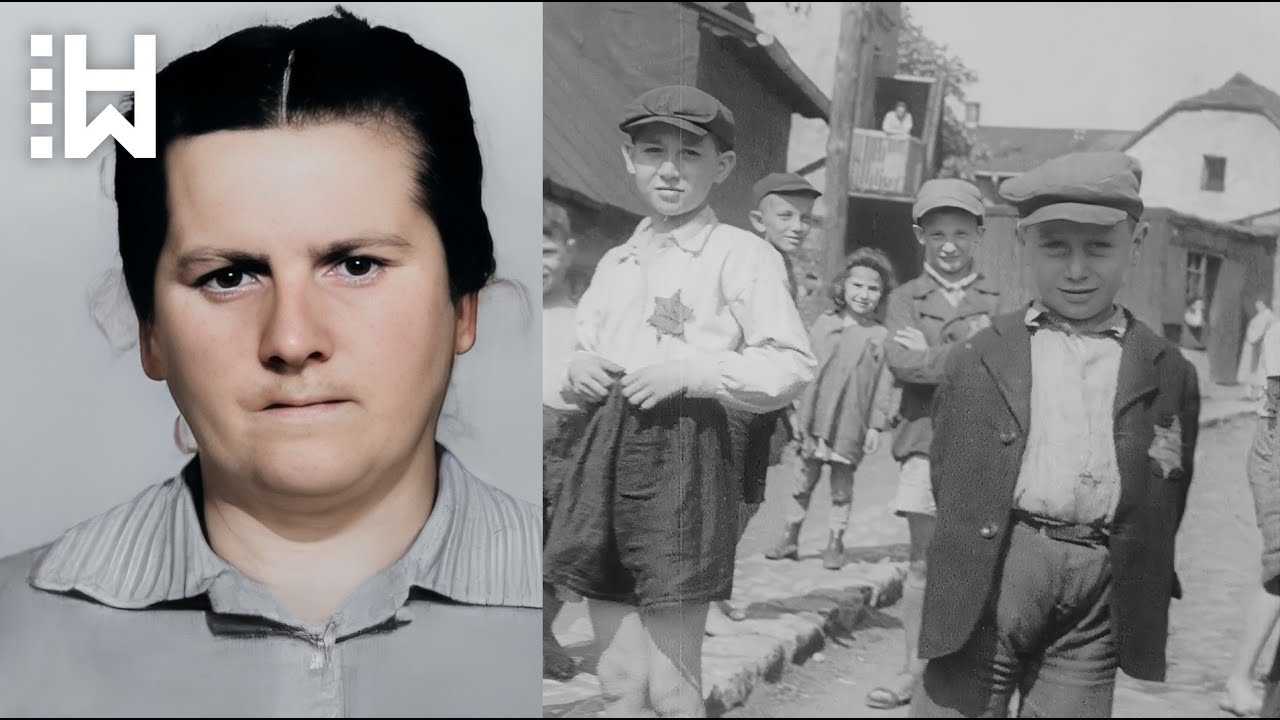
She calmed them, brought them to the manor house, and won their trust with food from her kitchen. She knew the rules. Jews found roaming the countryside were to be captured and shot. Her husband was not at home, so she waited.
But after several hours, he still had not returned. So Anna decided to shoot the six children herself. She led them into the woods to a pit where other Jews had been buried. She carried a pistol, one her father had kept from World War I and given to her as a parting gift when she left for Ukraine.
She lined the children up. She had learned from her husband that the most effective method was a single shot to the back of the neck. After she killed the first two, the others began to cry quietly. None fled.
They were too exhausted from days on the rail car. One by one, she killed them all. Anna Petri was born Anna Cebus on May 30, 1920, in Harras, then part of the Weimar Republic. The daughter of a farmer, she met Horst Petri in 1936, when she was sixteen.
Despite her father’s objections, the relationship quickly deepened. A year later she was pregnant, and in 1938 they married. Their first child was a boy; a daughter followed in January 1943. When Germany invaded Poland on September 1, 1939, the Nazi regime used propaganda to present Jews as subhuman and dangerous enemies of the German Reich.
After the invasion of the Soviet Union in June 1941, and especially after the catastrophic defeat at Stalingrad in February 1943, the propaganda intensified, linking Soviet communism to European Jewry and presenting Germany as the defender of Western culture against the Judeo-Bolshevik threat. The regime sought to create a climate of indifference to the fate of the Jews, and to draw not only the SS and the army but also ordinary German civilians into persecution and mass murder. In 1941, Horst Petri was conscripted into the Waffen-SS. Shortly after the German army conquered Galicia, in the southeastern part of the General Government, the civil administration assigned twenty-one agricultural estates to the SS.
These estates were the first step toward the germanization of the region, a plan to be implemented over fifteen to twenty years, aimed at eradicating the linguistic, cultural, and ethnic diversity of local populations. The estate administrators were responsible for supplying the military and occupation administration, delivering food to the Reich, securing agricultural production of surrounding villages, and collecting quotas. When quotas were not met, the SS farmers had the authority to impose severe punishments on entire villages. Horst arrived at the SS estate Lipit-Dolna in the summer of 1941 as an employee.
By the summer of 1942, he had taken over the SS estate Ganczary, today’s Ukrainian Hiyada, once the grand manor house of a Polish noble, and became its manager. Anna, who had stayed in Germany with their three-year-old son, moved with him into the manor house. Horst also became an adviser for eighteen other SS estates in the districts of Galicia and Kov. Within two days of moving in, Anna witnessed her husband beating a laborer.
Horst routinely raped his female servants. Local farmers called him a sadist who enjoyed whipping Ukrainians, Poles, and Jews. On one occasion, he killed four Jews who had escaped from a train bound for a gassing center near Lublin and been caught on the estate. He also participated in mass deportations, massacres of local farmers, and the bombing of a Ukrainian village with grenade launchers.
Anna followed her husband’s lead. She abused her farm workers, often firing warning shots at them, sometimes while her son watched. Once, after three Ukrainian peasant women refused to work, she had her husband send them to the Janowska concentration camp. To her surprise, all three survived, and she allowed them back to the manor several weeks later.
She also accompanied Horst on hunts for fugitive Jews, during which he personally killed four Jewish men. After the harvest in autumn 1942, the roughly 150 Jews from Ganczary were transported to Janowska or the Belzec extermination camp. In 1944, with the Red Army advancing, the Petris fled their manor. Horst had his SS tattoo removed to destroy evidence.
He was taken prisoner by American soldiers but released in May 1945. Both avoided detection in the initial post-war search for war criminals. They settled in East Germany and became farmers. In 1957, their son fled the country.
The Stasi, the East German secret police, began surveillance. In 1961, the couple was arrested for anti-state activities. Searching the house, officers found no evidence of plotting—but they found photos of the Ganczary manor and a guest book containing the names of numerous senior SS and German army officers. Both were interrogated for months.
Horst was the first to confess. Anna initially denied everything but eventually confessed after about a month of questioning. Asked why she had not spoken sooner, she said she feared punishment but expected her husband to take the blame. She told the officers she had learned how to kill by overhearing her husband’s colleagues discuss the mass shooting of Jews.
Asked why she shot Jewish men and children, she replied that she was barely twenty-five, young and inexperienced, lived only under her husband’s influence, rarely encountered other women, became hardened and desensitized, and wanted to show the SS men that she could behave like a man. Asked how she, the mother of two children, could shoot innocent Jewish children, she said she had been conditioned by fascism and racial laws and had been told she had to destroy the Jews. In September 1962, both went on trial in Freiberg. Seventeen witnesses, mostly former workers from the manor, testified against them.
The evidence showed Horst had abused and murdered people on his own initiative, without direct orders. He was sentenced to death and guillotined at Leipzig prison on December 22, 1962. Anna was not executed. On September 15, 1962, she was sentenced to life in prison.
Caught off guard by the severity, she retracted her statements and fought her case. Her family reassured her she would get out quickly, but her petitions for release were routinely ignored. She claimed the court interpreter had mistranslated the testimony of foreign witnesses, falsely implicating her. She insisted she had never killed anyone or handled a gun, and had only falsely confessed out of love and fear, hoping to help her husband.
She claimed she had protested the deportation of Jews to Lublin, telling her husband they were human beings, only to be silenced. She accused the Stasi of forcing a confession with a note from Horst, which she called a forgery implicating her in the murders. She said she had concluded it was a plea for help and chose to take some of the blame for his sake. All these claims were rejected.
When the Berlin Wall fell in November 1989, Anna, nearly seventy, was still in prison. In December 1989, she wrote to her West German attorneys to re-examine her case. In 1992, she was released for health reasons. It was alleged that Stille Hilfe, a relief organization for arrested, condemned, and fugitive SS members, had convinced the court to release her.
She then traveled to the Alps with Gudrun Burwitz, the daughter of Heinrich Himmler and a prominent member of Stille Hilfe. Anna once called Burwitz the most wonderful woman. When Anna Petri died in July 2000 at the age of eighty, hundreds of people attended her funeral, many believing she had served her sentence unjustly. Her children never retracted their support.
In a 2006 interview, her daughter said her parents had often shown the photo albums of the Ganczary manor to her and special guests. No tears were shed for Anna Petri.