The mountains of Pocahontas County, West Virginia, have a reputation for strange silences and older secrets. In the winter of 1956, four men from the valley town of Marlinton climbed to a remote cabin on Strangler Ridge to check on two brothers who had not been seen in months. What they found there did not involve violence or accident, but something far more unsettling.
The men who made that climb returned changed, described by their wives as quietly broken.
The brothers were Octavius and Lucius Purnell. Octavius, 47, was tall and lean, with pale eyes that locals said did not catch the light. Lucius, 41, was shorter and thicker through the chest, with a black beard and a reputation for silence.
They had lived alone on Strangler Ridge since their father died in 1938, coming down to Marlinton twice a year to sell furs and buy supplies. They kept a small herd of hogs and a dog named Brody. Their visits were so regular that shopkeeper Burl Hatcher could set his calendar by them.
That routine broke in October 1955. The brothers came to town on the third Saturday instead of the second. Octavius did not buy his usual tobacco.
He looked at Hatcher as if trying to remember who he was. The dog was not with them. When Hatcher asked about it, Octavius said only, "He went off."
Hatcher told his wife about it that night. He did not sleep well, and he did not know why.
Strange reports from the ridge had already begun. In early November, a hunter named Vester Cooms was tracking a wounded buck on the eastern slope when he heard a low, slow humming from the hollow below the Purnell cabin. It sounded patterned, like someone trying to remember a forgotten song.
Cooms, a Pacific war veteran not given to fanciful thinking, turned around and walked home without his kill. He never hunted that side of the ridge again.
Later that month, a trapper named Orris Pendry found several of his fox sets sprung but empty. At one set, a live fox lay flat on its side, looking straight up into the trees with its mouth half open, as if watching something the trapper could not see. Pendry dispatched the animal, gathered his line, and did not run that trap line again that season.
These stories spread sideways through the valley, the way stories do in places without television or much trust in outsiders. By late December, heavy snows had sealed the ridge. A brutal cold snap pushed temperatures below zero for nine straight nights.
The Purnells had wintered alone for nearly 20 years, and checking on them was generally considered an insult. But Hatcher could not stop thinking about Octavius's face, the missing dog, and the hunter who came home empty-handed.
In the last week of January, Hatcher walked to the home of Talcott Reeves, a 68-year-old friend of the Purnells' father. Hatcher said, "I think someone needs to go up there." Reeves replied, "I've been thinking the same."
They agreed to wait for a break in the weather and to bring two more men.
That break came on February 11, 1956. Four men made the climb: Hatcher, Reeves, a 26-year-old deputy named Wilkum Rines, and a logger named Audrick Soul who knew the trail best. They left before sunup, took a wagon as far as it would go, then continued on snowshoes with rifles and a sled.
The woods were unnaturally quiet. There were no tracks, not from deer, squirrel, or bird. The sky was the color of old tin.
They crossed the saddle where the wind always blew from the wrong direction and came up over the shoulder of rock around one in the afternoon.
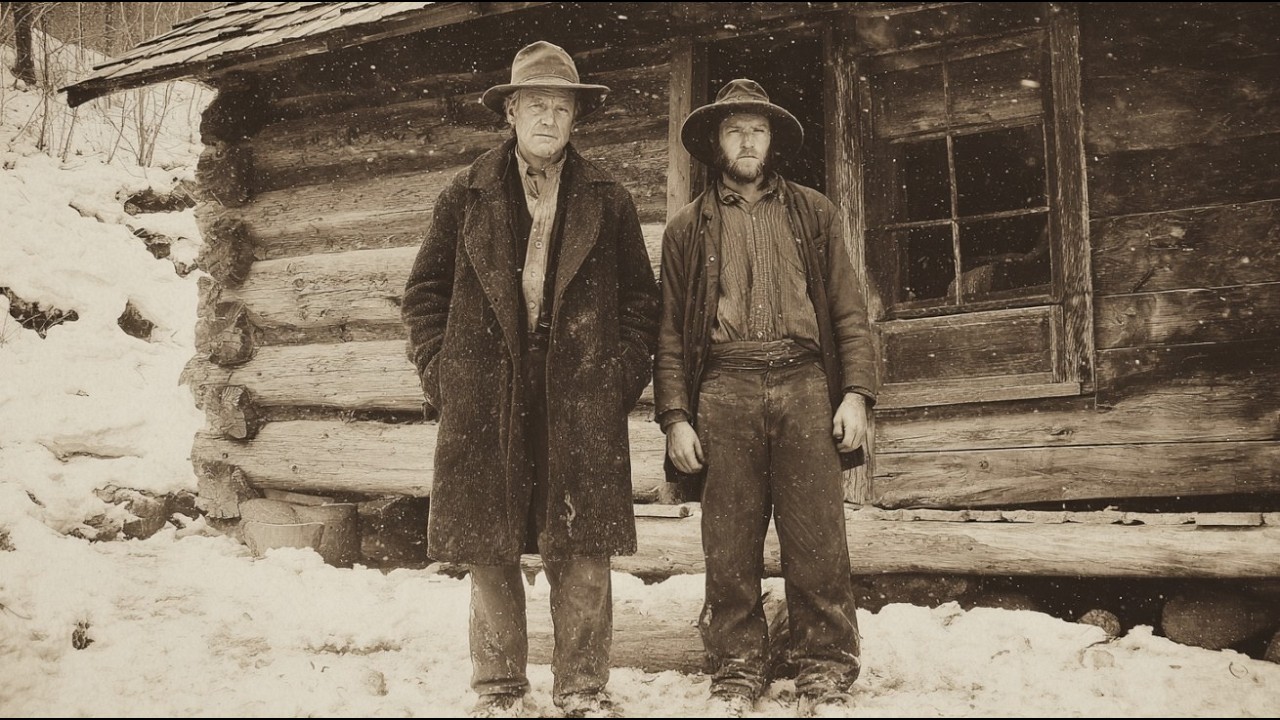
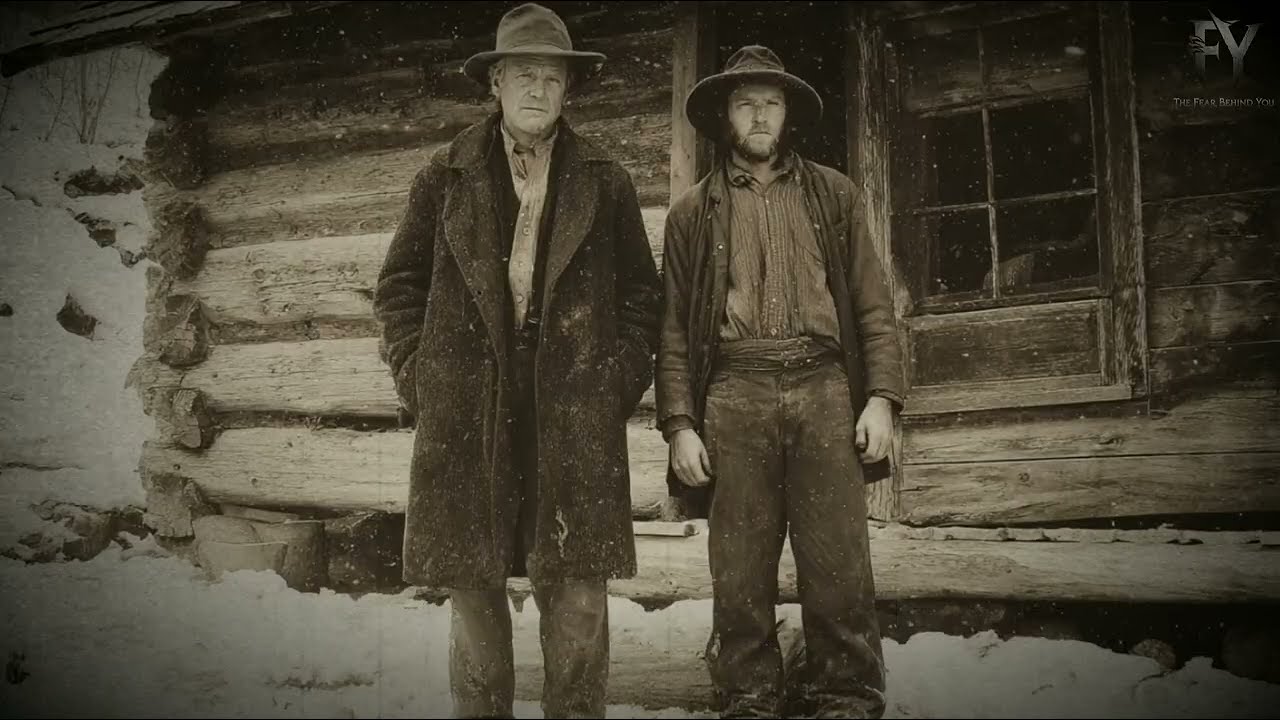
The cabin was still standing. The chimney was cold. The hog pen was empty, its gate pulled open from the outside and tied that way with a length of dark cord.
The snow had drifted halfway up the porch door. But the wood pile was full and neatly stacked. The brothers had not run out of fuel.
They had simply stopped using their stove.
The deputy called out both names twice. There was no answer. Talcott Reeves stepped onto the porch, brushed back the snow, and tried the latch.
The door swung open. He stopped in the doorway and did not enter.
The cabin was warm. There was no fire in the stove, and the ash was old and dry, but the air held a warmth that did not belong to the cold outside. The smell was wrong too, not the smell of death, but something sweeter, like a root cellar in summer with something patient underneath.
The front room was ordinary. Two chairs, a table, a kettle on the cold stove. Octavius's pipe sat on the table with tobacco in the bowl and a match laid beside it, as if he had been interrupted and simply never came back.
The beds were made. There was no sign of struggle, illness, or half-finished chores. It looked as if the brothers had stood up, walked into the back room, and not returned.
Talcott opened the door to the back room. The small, low-ceilinged storage space had a single window, covered from the inside with a piece of dark cloth nailed neatly around the frame. The crates and tools that had been stored there were moved and stacked in the corners.
In the center of the bare floor, the brothers were sitting.
They sat cross-legged, facing each other, about three feet apart. Their eyes were open. They were breathing at the slow, even pace of sleep.
Their hands rested palms up on their knees. There was no injury, no blood, no rope. Nothing explained why they were sitting in the cold and dark.
Deputy Rines later said his first thought was that he had walked in on something he was not supposed to see, and that the polite thing would be to back out and close the door. Talcott spoke first. He said, "Octavius."
There was no response. He knelt and put a hand on the older brother's shoulder, feeling the steady rise and fall of breath. He shook him gently.
Octavius's eyes shifted, not to focus on Talcott, but to fix on a point somewhere over his shoulder.
Talcott turned to look. There was nothing there. The logger Audrick Soul took two steps backward into the front room and did not go back in for the rest of the day.
Burl Hatcher went to Lucius and got the same result. The younger brother's eyes shifted and fixed on a point in the air behind Hatcher. The two brothers were looking past their rescuers at the same point, even though the men were standing on opposite sides of the room.
There was no single point in the room both brothers could have been looking at. Unless that point was not in the room at all.
Talcott tried to lift Octavius to his feet. The older brother did not resist or assist. As Talcott got him into a half stand, Octavius opened his mouth and spoke one sentence in a slow, dry voice.
Talcott would never repeat that sentence aloud. He told his wife about it 22 years later, on the night before he died. She wrote it down and kept it folded in her Bible.
After her death in 1984, her niece found the paper and burned it without reading it, saying the room felt wrong while she was holding it.
When Octavius spoke, Lucius smiled. His body was still slack, his eyes still fixed on their own point in the air, but his mouth turned up slowly, as if the brothers were sharing a private joke no one else could understand. Hatcher said, "Oh," the way a man says it when he has just understood something he did not want to understand.
They did not stay in that room any longer than they had to. The brothers walked when led and sat when sat down. They did not speak again.
They did not look at the men around them. They looked at the air, always the same air, even when carried out of the cabin and strapped into the sled. As the sled tilted on the trail, their bodies tilted with it, but their eyes stayed locked on the same point above the trees, as if the something was moving with them.
They reached Marlinton just before dawn. The brothers were carried into the back room of the doctor's house. Physician Marius Pelletier examined them both.
He found no injuries, no fever, no frostbite, no sign of starvation. Their pulses were slow but steady. They swallowed water when given it, but did not seem to notice.
By all medical signs, they were two healthy middle-aged men who simply were not present in their own bodies.
On the second night, around 3 a. m. , Pelletier wrote in his casebook: "Both brothers stirred at the same instant.
Neither awoke. Both turned the head equally to face the eastern wall of the room. Held this position for 41 minutes.
Returned equally to original posture. I do not know what they are listening to."
The brothers were transferred to the state hospital in the second week of February. They were placed in beds facing each other, because staff discovered that any other arrangement caused them to slowly turn their bodies during the night until they faced each other again. They lived in that ward for the rest of their lives.
Octavius died in 1963. Lucius died 11 days later. There is no record that either ever spoke again, ate without being fed, or recognized any face that came near them.
Hospital records described their behavior as catatonic, but with what the chief physician called in a private letter "an unusual quality of attention." He wrote, "The brothers were not absent. They were occupied."
The cabin was searched twice more that spring and again the following autumn. Searchers found nothing beyond what the rescuers had found. The dark cloth on the window.
The crates stacked neatly. The empty patch of floor where the brothers had been sitting was polished to a soft sheen, as if two men had sat there perfectly still for so long that they had worn the wood smooth without moving a muscle.
The dog Brody was never found. The hogs were never found. The cord that tied the hog pen gate open was examined and described as a length of dark, finely braided fiber that no one in the county recognized.
The cabin was left standing. No one bought the land. Talcott Reeves' youngest son told hunters who asked about the trail the same thing: "There's a trail.
There's a cabin at the end of it. Don't go."
The four rescuers carried the experience with them for the rest of their lives. Hatcher, the shopkeeper, died in 1971. He was quieter after that February, flinched at sudden sounds, and kept a lamp burning in his bedroom every night until he died.
When his wife asked why, he said, "Only I don't want anyone to think I'm not here."
Talcott Reeves lived to be 90. On the night he died, he gave his wife the sentence Octavius had spoken. She told her sister later that he did not say it the way you repeat something you remember.
He said it the way you say something you have practiced not saying for a very long time.
Audrick Soul, the logger, never spoke about the cabin again. His daughter said the only thing he ever told her was a single line: "Sometimes a man's eyes get pulled somewhere, and they don't come all the way back."
Deputy Wilkum Rines left the sheriff's office in the summer of 1956. He moved his family to Ohio and took a job in a feed store. He did not return to Pocahontas County for any reason, not even for his own brother's funeral in 1974.
His obituary mentioned his brief service in West Virginia law enforcement but gave no further details. He had asked in his will that no details be given.
The Purnell cabin is still standing, though the roof has fallen in on the front room and the trees have come back across the clearing. The back room, by accounts of hunters who have been there in recent years, remains in remarkably good condition. The dark cloth is still nailed across the window.
The patch of floor in the center of the room is still polished smooth.
A hunter from Virginia took photographs of that floor in 2012 and showed them to a folklorist in Charleston. He told her he had not stayed long. He had taken the pictures from the doorway and had not stepped inside.
When she asked why, he thought for a long time and said, "There was a place in the middle of that floor where I felt like if I sat down in it, I'd find out what they were looking at."
Then he said, "And I didn't want to know."
The photographs are still in the archive of the West Virginia Folklore Collection. In two of them, there is what looks like a faint shadow on the wall behind that patch of floor, a long, thin shape sitting upright. It could be a trick of the light.
It could be a stain on the wood. The folklorist's note on the file says only: "Possible photographic artifact. Do not enlarge."