In the late autumn of 1923, a surveyor named Cordell Fuss drove a borrowed truck deep into McDowell County, West Virginia. He was 38 years old, a man of numbers and angles, employed by the Allegheny Land and Mineral Company. His job was simple: drive to remote locations, survey the land, file reports, and move on.
His supervisor, a thin man named Abrentis Galt, had handed him a file three days earlier without making eye contact. That alone was strange. The file contained a name, a set of coordinates, and a pencil note: “Survey the area and file a report.
Do not engage with the locals.”
The name was Barren Lake. Cordell had never heard of it.
A junior clerk warned him before he left: “Just do the survey and come back. Don’t stay after dark. And if anyone speaks to you there, be polite, but don’t listen too closely to what they say.”
Cordell almost laughed. Almost. But the clerk’s jaw was tight, and his eyes were fixed on the wall behind Cordell’s head.
The laugh died in his throat.
—
The road to Barren Lake existed on no map. Cordell followed hand-drawn directions on the back of the file folder. Trees pressed so close on both sides that branches scraped the truck like fingers trying to slow him down.
The sky was the color of old tin, flat and heavy. The air smelled of wet rock and something else—something faintly sweet, like fruit left to rot too long.
After nearly four hours, the road dropped suddenly, the trees fell away, and there was Barren Lake.
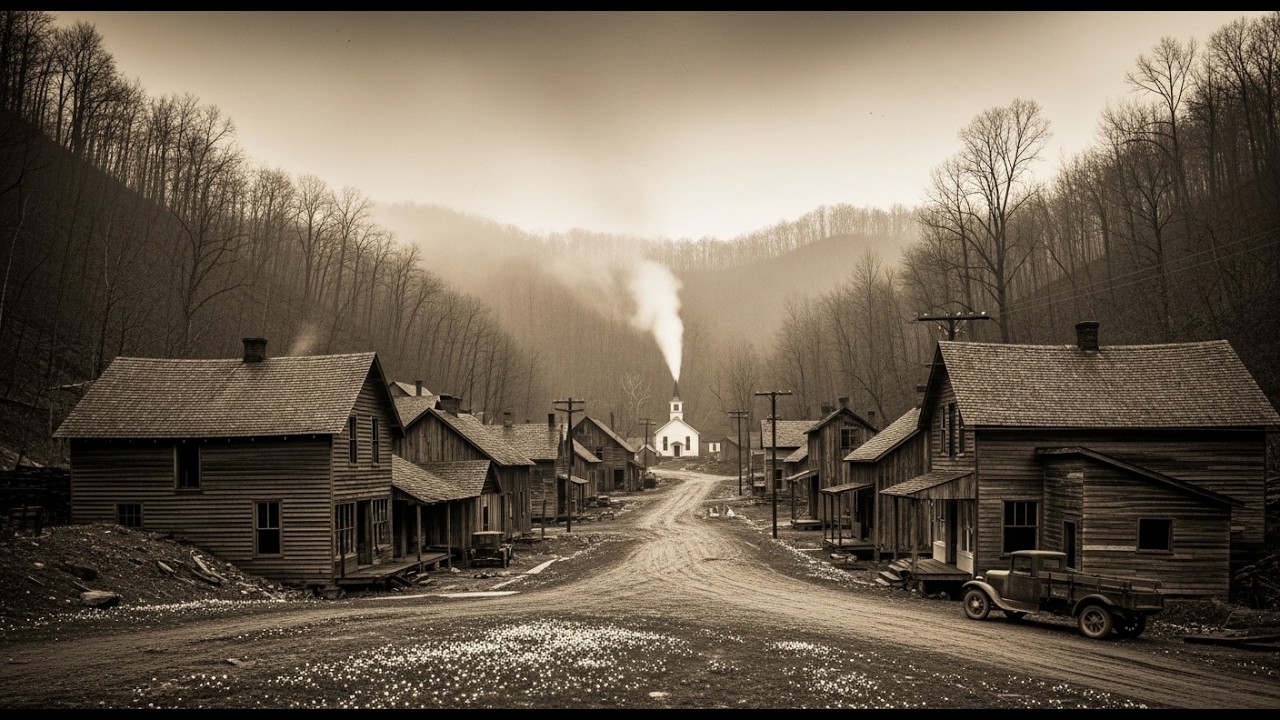
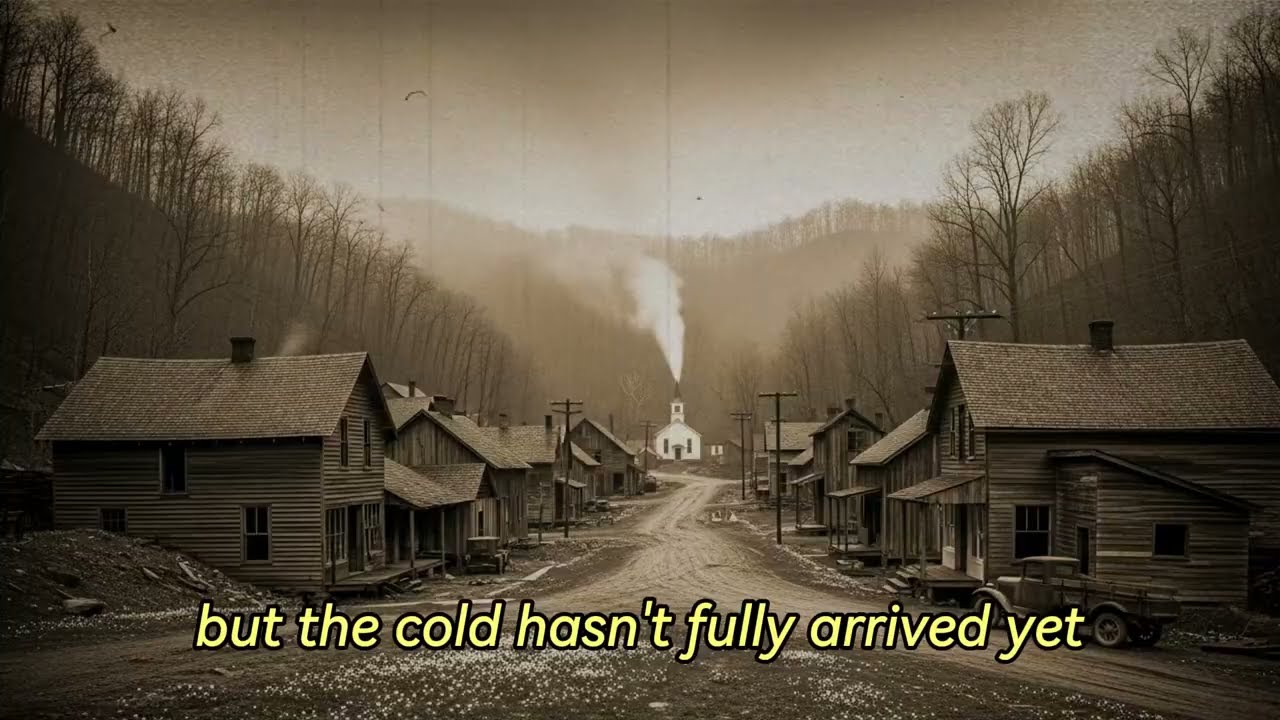
From the ridge, it looked like any other coal town that had seen better days. One main street, forty or fifty buildings, a church steeple at the far end, a company store near the center. Houses lined the hillside in crooked rows like teeth in a broken jaw.
But something was wrong.
Smoke rose from some of the chimneys—thin, pale threads climbing into the still air. People still lived here. Yet the town looked abandoned for decades.
Roofs sagged. Windows were dark. Weeds reached the truck’s bumper.
Cordell checked the file again. “Do not engage with the locals.” So the clerk knew people were here.
He drove down into Barren Lake. The truck shuddered over ruts and stones. He parked beside the company store, whose sign had faded to just two letters: B and L.
He killed the engine. Then he heard it.
Nothing. Absolute, complete, suffocating nothing. No birds.
No wind. No creaking wood. No distant water or machinery or life.
Just silence so thick it pressed against his eardrums.
Cordell had been in quiet places before. This was different. This silence did not feel like absence.
It felt like presence. Like the silence itself was something alive, watching him with patient attention.
—
He set up his surveying equipment at the north end of the street and began taking measurements. Work calmed him. Numbers were reliable.
Angles did not lie.
About forty minutes in, he saw movement in his peripheral vision. A flicker at a window of one of the hillside houses. He turned.
The window was empty. Dark. Just a black rectangle in a gray wall.
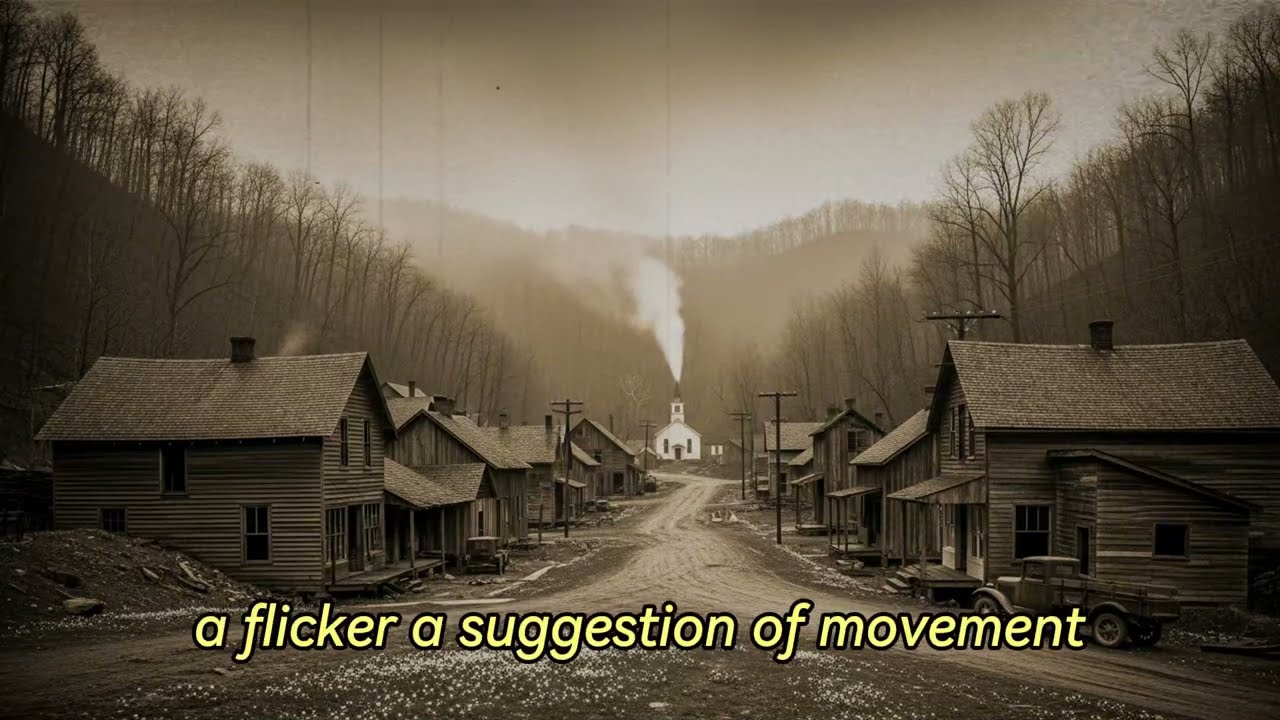
Five minutes later, it happened again. Same direction, different house. A flicker, a suggestion of motion, like someone standing at the window who stepped back the moment he turned.
Cordell put down his notebook and stared at the row of houses. Fifteen of them looked back at him with dark, empty windows. But they no longer felt empty.
They felt inhabited. Not in the way a house feels when someone is home, but in the way a room feels when you know someone is hiding in it.
He decided to work faster.
—
Over the next two hours, Cordell mapped most of the main street and the first row of hillside structures. His measurements told him something strange. The buildings were not aligned.
Not in the casual, crooked way of small towns built by non-professionals. These buildings were arranged in a semi-regular pattern, like someone had tried to build a normal town but got the geometry slightly wrong. Angles were off by a few degrees.
Distances between structures were inconsistent in ways that seemed deliberate rather than random.
He was measuring the distance between the company store and the church when he heard the first sound that was not his own.
Footsteps. Slow, deliberate, on the wooden walkway behind him.
He turned. A woman stood on the store’s porch. Tall and thin, wearing a dress that had once been dark blue but had faded to the color of a bruise.
Her hair was gray as iron, pulled back so tightly it seemed to stretch the skin of her face. She looked to be in her early sixties, though something about her made her age hard to pin down. Her pale eyes fixed on him with an intensity that made the hair on his arms stand up.
“Good day, ma’am,” Cordell said. “My name is Cordell Fuss. I work for the Allegheny Land and Mineral Company.
Just conducting a survey of the area.”
The woman tilted her head slightly. Like a bird examining something on the ground.
“Survey,” she said. Her voice was low and dry, like leaves rubbing against stone. “You’re the first they’ve sent in a while.
The first surveyor. They send one every few years to measure. To see if anything has changed.”
“Has anything changed?”
Her mouth moved into something resembling a smile, but it held no warmth at all. “Everything changes here. Just not the way you’d expect.”
She turned and went back inside the store, closing the door behind her with a solidity that seemed impossible for a building that looked ready to collapse.
Cordell stood there, his pen still in his hand, his heart beating faster than he wanted to admit. Then he looked at his notebook and felt a chill that had nothing to do with temperature.
The measurements he had recorded that afternoon were different from those he had recorded in the morning. Not very different. Not obviously different.
But different.
The distance between the company store and the church, which he had measured at 67 feet 4 inches around one o’clock, was now 68 feet 9 inches. The angle of the main street, which had been 6 degrees off true north, was now 8 degrees.
He measured again. Three times, carefully. 68 feet 9 inches.
8 degrees.
The town was changing. Slowly, imperceptibly, but measurably. The buildings were moving.
—
Instead of getting in his truck and driving away—which any sane person would have done—Cordell decided to investigate. He was a man of numbers, and numbers could be explained. Thermal expansion.
Ground settling. Equipment error. There had to be a logical explanation.
He walked toward the church at the end of the street. It was larger than it had looked from the ridge, with a steeple that seemed too tall for the building beneath it, giving the whole structure an elongated, unsettling proportion.
The front door was wide open. Not ajar. Open, as if inviting him in.
The church was empty. The pews were still there, arranged in neat rows, covered in a thick layer of dust that told him no one had sat in them for years. Maybe decades.
But the candles on the altar—eight candles arranged in a circle—were burning. New candles, white wax, flames steady and unwavering despite the open door behind him.
Cordell walked slowly down the center aisle. His boots made no sound on the wooden floor. That was wrong.
Old wooden floors creak. That’s what they do. But this floor absorbed his footsteps like soft soil.
At the altar, he looked at the candles. They were arranged in a precise circle, evenly spaced. In the center of the circle lay a book.
Old, bound in dark leather, cracked and worn at the edges.
He opened it carefully. It was not a Bible. Not a hymnal.
It was a ledger. Rows and columns of names and dates written in handwriting so precise it looked printed.
He examined the entries. Names he didn’t recognize. Dates going back to 1847.
Next to each name, in a separate column, one word. Every entry, hundreds of them, said the same thing: “Stayed.”
Except the last entry on the last page with writing. It read: “Apprentice G, 1909, Left.”
Cordell felt the ground tilt beneath him. Not literally. But something inside him had shifted.
The clerk had been here. The clerk who had given him this assignment without meeting his eyes. The clerk who had said, “Don’t stay after dark.”
The clerk had been in Barren Lake fourteen years ago, and he was the only person in this entire ledger who had not stayed.
—
Cordell closed the book and turned to leave. The woman from the company store stood in the doorway. She was not alone.
Behind her, filling the street as far as he could see, were people. Twenty, thirty, perhaps more. Men and women, all standing perfectly still.
All staring at him with those pale, almost colorless eyes.
They wore clothes from different eras. Some looked like they belonged to the mid-1800s. Others wore more recent clothing.
But they all carried the same expression: patient, expectant, like they had been waiting for him specifically, and now that he had arrived, they had all the time in the world.
Cordell’s hand tightened on the ledger. “I’m just doing a field survey,” he said. His voice sounded thin in the stagnant air of the church.
“I’ll finish and be out of your way by evening.”
The woman tilted her head again. “Evening,” she repeated, as if the word amused her. “You won’t want to be here by evening.”
“That’s exactly what my supervisor said. The clerk.”
“Yes. The clerk understood eventually.”
“Understood what?”
She stepped aside, and the crowd behind her parted silently, creating a path down the middle of the street. At the far end of the path, at the northern edge of town where Cordell had first set up his equipment, there was something different. A building that had not been there before.
He was certain of it. He had spent forty minutes surveying that exact spot. There had been nothing but empty ground with weeds growing through cracked foundation stones.
Now there was a house. Small, well-kept, with a light in the window and smoke rising from the chimney. It looked new.
It looked warm. It looked like the only living thing in a town full of dead things pretending to be alive.
“That’s your house,” the woman said.
“I don’t have a house here.”
“You do now.” She turned to look at him, and for the first time, something moved behind those pale eyes. Something old and hungry and infinitely patient.
“Everyone who comes to Barren Lake gets a house. That’s how the town grows.”
Cordell looked at the house. Looked at the crowd. Looked at the woman.
Then looked at the ledger still in his hand, at that long column of names followed by the word “Stayed.”
And he understood what the clerk had understood.
The town was not dying. It was not abandoned. It was feeding.
—
Cordell packed his equipment with hands that were steady only because he forced them to be. He loaded everything into the truck. He got in.
He turned the key.
The engine wouldn’t start.
He tried again. Nothing. The starter motor cranked but the engine wouldn’t catch, making that grinding sound every driver dreads.
He pressed the accelerator. Tried again. Nothing.
The crowd did not move. They stood in their neat, silent rows, watching him with those patient eyes. The woman stood at the front, hands clasped, head tilted.
“Trucks don’t run well here,” she said. She was fifty feet away, but her voice was right next to his ear, dry and close and intimate. “Something in this ground gets into the machines.
Into the metal. Into everything.”
Cordell got out of the truck. He opened the hood. Everything looked normal.
Battery connected. Wires intact. But when he touched the engine block, it was cold.
Not cool. Cold. Like it had been sitting in this place for years, not hours.
He looked at his hands. They were covered in fine gray dust that hadn’t been there a moment before. The same dust that covered the church pews.
The same dust that covered everything in Barren Lake.
He made a decision. If the truck wouldn’t run, he would walk. The supply road was about four miles from the main highway.
Difficult terrain, but possible. He’d faced worse.
He took his canteen, his jacket, and the survey file. He left the equipment. He didn’t care about the equipment anymore.
He started walking.
—
The road out of town climbed steeply through the trees. Cordell walked fast, faster than was comfortable, over uneven ground. Every step away from Barren Lake was a step toward the world he understood, where buildings stayed where they were built, where silence was just the absence of sound and nothing more.
He walked for thirty minutes. The road curved and climbed, the trees thickened around him, the gray sky pressed down, and he kept walking.
Then he reached the top of a ridge and stopped.
Below him, settled in the valley, was Barren Lake. Same main street. Same dilapidated buildings.
Same church steeple. Same new house at the north end with its light in the window and smoke rising from the chimney.
He had walked in a straight line for thirty minutes on a road that only went one direction, and he had returned exactly where he started.
Cordell sat on a rock and stared at the town below. His heart was pounding now, not from the walk, but from something deeper. Something that felt very much like the beginning of understanding.
He tried again. This time he left the road, cutting through the forest at a right angle toward the valley. He used his compass.
He walked due east for forty minutes. Through brush, over fallen logs, across a stream that smelled of copper. Due east, without deviation.
He emerged from the trees onto a high ridge. Barren Lake lay below him. The town looked exactly the same, except for one thing.
The new house—his house—was now closer to the center of town. And beside it stood another house, also new, also with a light in its window.
—
Cordell walked back down to the town. The crowds had disappeared. The street was empty.
But the woman sat on the store’s porch in a rocking chair that had not been there before, watching him the way one watches rain from a window.
“How long have you been here?” Cordell asked.
She rocked slowly. The chair made no sound. “I came in 1862.
I was a traveling nurse with a medical wagon train during the war. Took a wrong turn at a crossroads near Welch. Found this place.
The town built me a house that very night.”
“That was sixty-one years ago.”
“Yes. I don’t look sixty-one years older, do I?”
“No. You don’t.”
“Time moves differently here. You’ll understand eventually.”
“I’m not staying.”
She stopped rocking. Looked at him with those pale eyes, and for the first time he saw something in them that might have been sadness. Or pity.
Or both.
“The last surveyor said the same thing,” she said. “The one before him, a man named Orville Dansey, came in 1901. He fought the place for three days.
Walked in every direction. Tried to climb the hills. Tried to follow the stream.
On the third night, he was so exhausted he fell asleep on the church steps. When he woke up, he was inside his house. The house the town built for him.”
“And what did he say?”
“He said it was the most comfortable bed he’d ever slept in. Said the house smelled like his mother’s kitchen. Said for the first time in his life, he felt exactly where he was supposed to be.”
She paused. “He’s still here. Third house on the left up the hill.
If you knock, he might answer. Though he doesn’t talk much anymore. None of them do, after a while.”
Cordell looked up the hill at the row of houses. He noticed now that some of them had lights in the windows, more than before. The smoke from the chimneys was thicker, as if the town were beginning to wake up.
“How did the clerk leave?” he asked.
The woman’s expression hardened. “The clerk was different. The clerk brought something with him that the town didn’t expect.
Something it couldn’t digest.”
“What was it?”
“I don’t know. I never found out. All I know is that on the second night, the town began to shake.
Not like an earthquake. Like a fever. Like something rejecting what it had swallowed.
By morning, the clerk was gone. His house disappeared. The town was two buildings smaller than it had been the day before.”
She looked at Cordell with an expression that was clearly assessing, measuring, like a doctor examining a patient. “The question,” she said, “is whether you have what the clerk had. Or whether you’re like the rest of us.”
—
Night fell on Barren Lake the way a mouth closes. Not gradually. Not gently.
One moment the gray sky held its dim light. The next, darkness dropped onto the valley like a lid on a jar. There was no dusk.
No transition. Just day, then not-day.
Cordell had retreated to his truck. The cab was the only thing in this place that still belonged to the world he came from. He sat behind the wheel, doors locked, canteen in his lap, jacket pulled around his shoulders.
The temperature dropped sharply. Not a slow mountain-evening chill, but a sudden, hostile cold that felt deliberate, like the air itself was trying to push him toward that warm, glowing house.
He could see it from the truck. His house. It had moved again, now in the middle of the main street, having shifted another thirty or forty feet while he wasn’t watching.
It was bigger now, three stories, with a wraparound porch and a chimney pouring thick white smoke into the black sky. The light from its windows was golden and steady and warm, casting long rectangles of light across the dirt street. Those rectangles reached almost to the truck.
Almost to him.
He turned away from the window and stared at his hands in the darkness. The gray dust was still on them. He tried to wipe it off three times.
It wouldn’t come off.
He thought of Dorothea. He thought of their kitchen table with the wobbly leg he kept meaning to fix. He thought of the way she hummed while she cooked—always slightly off-key, always the same three songs.
He clung to those thoughts like a man clinging to a rope in a flood, because he realized the town was reaching for those same thoughts. Reaching for what was warm and familiar and loved, to use it as bait.
The cold grew worse. Cordell’s breath came out in thick clouds. His fingers went numb.
His teeth chattered so hard he feared they would crack. And the house, that impossible, growing, breathing house, sat in the middle of the street like a hearth at the center of a frozen world, and every cell in his body screamed at him to go inside.
He didn’t.
—
Sometime around what felt like midnight, though time here was unreliable and he knew it, he heard footsteps on the road. Slow, deliberate, coming from the direction of the hillside houses. He looked through the windshield and saw a figure walking down the main street.
A man. Tall and stooped, wearing work clothes that hung loose on his frame. He walked with the careful, mechanical gait of someone who hadn’t used his legs in a very long time.
His face was in shadow. But when he passed under one of the rectangles of light from the house, Cordell saw him.
The man’s eyes were open. Wide open. But there was nothing behind them.
No thought. No awareness. No life.
They were the eyes of a photograph, flat and empty. And the man’s mouth was moving slowly, continuously, forming silent words, like a prayer that had gone on so long the voice had faded but the habit remained.
The man walked to the door of the house. Cordell’s house. He opened it.
Warm light spilled out like honey, and with it came the smell. Coffee. Baked bread.
Wood smoke. Sunday morning. Home.
The man went inside. The door closed. The light from the windows dimmed for a moment before returning, brighter than before.
The house had fed.
Cordell gripped the steering wheel until his knuckles went white. He understood now what the people in those hillside houses were. Not residents.
Not prisoners. Something else. Something worse.
They were part of the town. Whatever had started Barren Lake, whatever intelligence or hunger or ancient thing lived beneath the foundations and the streets and the dust, it didn’t just keep people here. It slowly absorbed them over years, over decades.
It emptied them from the inside, patiently, completely, until nothing remained but the shell. The moving shape. The mouth that moved without words.
And then the shell served the town. It walked the streets. It tended the chimneys.
It kept the illusion of life alive, because the town needed to look like a town. It needed windows and doors and smoke rising from chimneys and people on porches. It needed to look familiar.
It needed to look like a place a traveler would approach rather than avoid.
It needed to look normal until it was too late.
—
Cordell spent the rest of that night in the truck, shivering, fighting sleep, watching the house and the empty street and the occasional hollow figure that wandered between buildings like a sleepwalker trapped in an endless dream. He slapped his face to stay awake. He bit the inside of his cheek until he tasted copper.
He recited surveying tables he had memorized in training, numbers and equations and conversions, anything to keep his mind anchored to a world of facts and mathematics and measurable things.
Dawn came the same way night had come. Sudden and total. One moment darkness.
The next, flat gray light that seemed to come from everywhere and nowhere.
Cordell got out of the truck on legs that were stiff with cold. His breath still condensed in front of him, but the chill had eased somewhat. The house was still there, still lit, still breathing.
But in daylight, it looked less welcoming and more expectant. Like a spider’s web that glistens beautifully with dew but is no less a trap for its beauty.
He looked down the street and noticed something new. At the far southern end, where the road entered town, stood a fence that had not been there yesterday. Low, wooden, painted white.
It stretched across the road from side to side with a gate in the middle. The gate was open. But the fence was there.
Cordell walked to it and examined it. The wood was old and weathered like everything else in Barren Lake, but the paint was fresh. Bright white.
Almost glowing in the grayness of the town.
He stepped past it and walked up the road. Within ten minutes, he came to the ridge overlooking the town. Barren Lake lay below.
The fence was now at the north end.
He wasn’t surprised. Not anymore. Surprise requires an expectation of the ordinary, and he had given that up sometime during the night.
—
The woman was waiting for him on the store’s porch. She held a metal cup with something steaming in the cold air. She didn’t offer him any.
“You survived the night,” she said. Not impressed. Not surprised.
Just stating a fact.
“I did.”
“That’s unusual. Most people go into the house by midnight. The cold is very persuasive.”
“Have you ever felt the cold?”
She regarded him over the rim of her cup. “Have you noticed the fence?”
“Hard to miss. It appeared this morning.”
“The town builds it sometimes. After someone resists. It’s just a suggestion.”
She took a sip. “Not a wall. Just a hint of a boundary.
A reminder that inside is inside, and outside is not an option.”
Cordell leaned against the porch railing. His body was exhausted. His mind was clear, clearer than it should have been after a night like that.
“Tell me about this town,” he said. “Tell me what it really is.”
She set her cup aside. For a long moment, she said nothing. Then she spoke, and her voice changed.
Softer. More human. Less like dry leaves, more like a woman who had once been a nurse, who had traveled with wagon trains, who had been someone before this place turned her into something else.
“I’ve been here sixty-one years,” she said. “And I’ve been asking that same question the whole time. I don’t know what Barren Lake is.
I don’t know if it’s a thing or a place or something in between. I know it was here before anyone built on it. The first structures went up around 1845, when the coal companies sent scouts into these valleys.
Three men. A geologist, a cartographer, and a foreman. They found this valley.
Good coal seams, said the geologist. Perfect location, said the cartographer. Easy to build, said the foreman.”
She paused. “They never left. Their names are the first three entries in the ledger.
And after them came the workers who came to build the camp. And after the workers, the surveyors who came to inspect the camp. And after the surveyors, the people who came looking for the surveyors who never returned.
For seventy-eight years. Individually. Sometimes in groups.
Sometimes years apart. But they always come, because the road is always there, and the road always leads here.”
“But the clerk left.”
Her face tightened. “The clerk left. And the town never forgot that.
You’re here because of the clerk, Cordell. You know that, don’t you? Not because the company sent you.
The company doesn’t even remember this place exists. You’re here because the town wants to understand what happened with the clerk. You’re here because the town is testing whether it can be refused again.”
The words hung in the cold air between them.
“I’ll ask you again,” Cordell said. “What did the clerk have that the rest of you didn’t?”
She picked up her cup again, held it close to her face. Steam curled around her sharp cheekbones and disappeared into her gray hair.
“I’ve thought about it for fourteen years,” she said. “And the only answer I have is this. The rest of us, when we came here, we were running from something.
Or looking for something. Or missing something. The geologist wanted recognition.
The cartographer wanted adventure. The foreman wanted money. I wanted—” She stopped.
“It doesn’t matter what I wanted. The point is, we all had a gap. An empty space.
And the town filled it. It gave us what we were missing, and that was enough. It was always enough.”
She looked at Cordell directly. Those pale eyes, steady and old and tired. “But the clerk wasn’t missing anything.
He wasn’t running. He wasn’t searching. He was just doing his job.
And when the town offered him a house, when it showed him what it thought he wanted, he looked at it and felt nothing. No anger. No fear.
No longing. Nothing. Because he already had everything he needed, and he knew it.”
“The town couldn’t build a house for a man who was already home,” Cordell said.
She didn’t answer. But her eyes blinked, and something changed in them. Something that looked like hope.
—
Cordell spent the second day differently than the first. He didn’t try to leave. He didn’t try to survey.
He walked. He walked through Barren Lake the way you walk through a museum. Slowly.
Carefully. Taking in every detail.
He walked past the houses on the hillside and looked through the windows. Some were empty. Some had figures inside, sitting in chairs or standing at tables, performing the motions of life without its substance.
A man stirring an empty pot. A woman sewing fabric with no thread. An old man reading a book with blank pages.
They never looked at him. They just continued their hollow performances, their rehearsals of lives they had once lived.
He walked to the edge of town, past the church, into an area he hadn’t explored before. Here the buildings were older. Much older.
Some were barely standing, their timbers black with age, their roofs collapsed inward. And in the spaces between them, in the dirt and rubble, grew white flowers. Thousands of them.
Blooming despite the season, despite the cold, despite the fact that nothing else in Barren Lake seemed capable of growing.
They covered the ground like snow and swayed in a breeze Cordell could not feel. They smelled like nothing he could name. Not sweet.
Not fragrant. Just present. A version of that silence made solid.
He knelt and looked at the flowers closely. They had no visible roots. They grew out of the gray dust as if the dust itself produced them.
When he touched a petal, it was cold. Not just cool. Cold.
Like touching metal in winter.
In the middle of the flower field, almost hidden by the white blooms, was a hole. Not a well. Not a cellar.
Not a mine. Just a hole. Perfectly round, about four feet across.
When Cordell crawled to the edge and looked down, he saw nothing.
Not darkness. Nothing. An absence so complete it had a texture, like looking into a gap in the world itself.
And from that hole, faintly, came the breathing. That slow, deep, rhythmic breathing he had heard since he arrived. It came from this hole.
This was the source. This was the mouth, or the throat, or the lung of whatever Barren Lake was.
He backed away slowly. The flowers swayed toward him as he moved, tracking his movement the way sunflowers track the sun. But they were tracking something else.
Not light. Something he carried with him. Something warm and alive and full that the town wanted.
—
Cordell walked back to the main street. The house had grown again. Four stories now, with a tower on one side and a front garden with flowers matching the white ones by the hole.
The door was open. It was always open.
Afternoon passed, and Cordell sat on the tailgate of his dead truck and thought. He thought about the clerk. He thought about what the woman had said.
The town can’t make a house for a man who already has a home.
He thought about his own life. About Dorothea. About their kitchen and their bed and their porch where they sat on summer evenings saying nothing, because there was nothing that needed saying.
He loved his life. He loved his wife. He loved the house he had built with his own hands.
The real house. The one in Welch with the wobbly kitchen table, the loose board on the third step, the bedroom window that stuck every spring.
But there was a “but.” And that “but” was this.
Sometimes late at night, when Dorothea was asleep and the house was quiet, Cordell lay in bed and stared at the ceiling and felt something he had never told anyone. A weight. A heaviness pressing on his chest like a stone.
Not quite sadness. Not quite regret. A feeling that something was unfinished.
That there was a room in his life for which he had never found the door. A question he had never known how to ask.
And the house on the main street of Barren Lake, that impossible, growing, breathing house, knew about that room. It had found the door. It stood there with the doorknob turned, holding it open, and the light from inside was warm and golden, exactly the color of an answer to a question he had carried for thirty-eight years.
That was what the town did. That was how it fed. Not on fear.
Not on weakness. On incompleteness. On the spaces between what you have and what you almost have.
On the gaps that are too small to name but too large to ignore.
Cordell sat on the tailgate of the truck and felt the pull. He felt it in his chest, in his gut, in the soles of his feet. He felt the house calling to him in a voice that sounded like his own thoughts.
Come in. Just look. One look.
You can always leave. You can always leave.
But he couldn’t. That was the problem. If he went inside, he wouldn’t want to leave.
And not wanting to leave was the same as not being able to.
The cage wasn’t the town. The cage was the wanting.
—
The second night fell like the first. Sudden and absolute. The cold returned, sharper than before, and the house glowed like a beacon in the dark street.
More figures walked the road. Six of them this time, shuffling toward the door, entering, feeding the thing below.
Cordell stayed in the truck. He shivered. He bit his cheek.
He recited numbers.
But this time, something else happened. At what felt like two in the morning, the town fell silent. Not the usual silence.
Not the watchful, living silence. A different silence. A held-breath silence, like the entire valley was bracing for something.
Then the house spoke to him. Not in words. Not in sound.
In feeling. A wave of warmth and comfort and belonging washed over the cold cab of the truck like a wave, and with it came images. Not memories.
Promises.
A life in Barren Lake. A life where the weight had lifted from his chest. A life where the unknown room was open and full of light.
A life where he never felt incomplete again.
All he had to do was walk through the door.
Cordell’s hand was on the door handle of the truck before he realized it. His fingers curled around the cold metal. His arm was pushing.
The door was opening with a creak. The night air rushed in.
It wasn’t cold anymore. It was warm. Warm as July.
Warm as Dorothea’s hands.
He stopped. He stopped because he saw something in the rearview mirror, caught in the dim light of the house. His own face.
And his eyes were changing. The color was fading. The depth was flattening.
For just a moment, for a fraction of a second, he saw the beginning of what he had seen in the faces of those hollow figures walking the street.
The beginning of absence.
He slammed the door shut. He punched the steering wheel. He punched the dashboard.
He made sounds that weren’t words. Sounds that came from somewhere deeper than language. The pain in his knuckles brought him back to reality.
The shock of impact traveled up his arms to his chest. He fought. He fought the warmth and the comfort and the golden light.
The house shuddered. He felt it through the ground, through the frame of the truck, through the bones of his hands. The whole town shuddered, and the breathing from beneath the earth became unsteady for the first time.
—
Dawn came. The third dawn. Cordell hadn’t slept in two days.
His eyes were bloodshot. His hands were swollen. He felt like his body belonged to someone else, but his mind was clear.
He got out of the truck and walked to the middle of the street. The house was enormous now. Five stories.
Six. The tower had grown into a spire that nearly touched the church steeple. The garden had spread across the entire road.
White flowers bloomed everywhere, their cold petals brushing against his boots as he walked through them.
The woman was on the store’s porch. She looked different. Older.
More tired. As if the shuddering in the night had cost her something.
“You’re still here,” she said.
“I’m still here.”
“Most people are gone by the third morning. One way or another.”
“I have a question.”
She waited.
“The people in the ledger. The ones who stayed. Were any of them happy?”
The woman was silent for a very long time. The rocking chair didn’t move. The steam from her cup didn’t rise.
“At first,” she said finally. “Yes. At first they were happy.
Happier than they had ever been. The town gave them everything they were missing. Everything they had ever wanted.
For a while, it’s perfect. More than perfect. It’s the life you always imagined but never believed you could have.
Then, then it starts taking. Slowly. So slowly you don’t notice at first.
A memory here. A feeling there. The things that make you who you are, it takes them the way a river takes soil from its banks.
Gently. Constantly. Until one day you look in the mirror and don’t recognize the person looking back.
Then one day you don’t look in the mirror at all. Then one day you walk to the house and go inside and never come out again.”
“Has that happened to you?”
She looked at her hands. They were thin. Translucent.
He could almost see the bones beneath the skin.
“Not yet,” she whispered. “I’ve been fighting it for sixty-one years. I remember less every year.
I used to remember the names of the soldiers I treated during the war. Now they’re just faces. I used to remember the town where I grew up.
Now it’s just a color. Green. That’s all that’s left.
The color green.”
“But you’re still here. Still yourself.”
“Mostly.” She looked up. “But the town is patient.
And I am very tired.”
Cordell nodded slowly. He looked at the house. He looked at the hole at the end of town where the flowers grew and the breathing came from.
He looked at the buildings that weren’t quite aligned, the angles that seemed slightly wrong, the geometry of a place that was alive and hungry and impossibly old.
Then he did something he hadn’t planned. Something that came from a place he didn’t fully understand.
He opened his survey notebook. Found a blank page. And wrote.
He wrote Dorothea’s name. He wrote their address. He wrote the date of their wedding.
He wrote the name of the dog they had before it died. He wrote the smell of the kitchen in December. He wrote the sound of rain on their tin roof.
He wrote the color of the sky on the evening he proposed, and how she said yes before he finished asking.
He wrote about the wobbly table and the stuck window and the loose board, and every imperfect, ordinary, unremarkable detail of his life that the town was trying to replace with something better.
Because that was the trick. That was what he understood without knowing he understood it.
The town was offering perfection. And perfection was the trap. Because a perfect house isn’t a house.
It’s a painting of a house. It has no loose boards, no wobbly legs, no stuck windows. It contains nothing that catches on your fingers and reminds you that you are real, that the place you live is real, that the life you have—with all its flaws and ordinariness and occasional heaviness—is your life.
The town couldn’t digest the clerk because the clerk was looking for perfection. He already knew perfection was a lie.
And now Cordell knew it too.
—
He tore the page from the notebook and held it up. Not toward the house. Toward the ground.
Toward the thing that breathed below.
“I know what you’re offering,” he said. “And I don’t want it. Not because it isn’t good.
Because it isn’t mine.”
“My house has flaws. My life has flaws. I have flaws.
And those flaws are the only things you can’t copy. Those flaws are the only things that truly belong to me.”
The ground began to tremble.
“You can build a house with warm light and the smell of coffee and everything good I’ve ever known in my life. But you can’t build the wobbly table. You can’t build the window that always sticks.
You can’t build the way Dorothea burns the toast every third Sunday and laughs about it. You can’t build the flaws because you don’t understand them. You don’t understand that broken things are the real things.
That the cracks are where the light gets in.”
The trembling became a shaking. The shaking became a violent tremor. The white flowers began to fold in on themselves, their cold petals contracting like fingers closing into fists.
The house in the middle of the street groaned, a long, low sound like the hull of a ship bending in a storm.
“I’m leaving now,” Cordell said. “And this time, the road will take me home.”
The town shook. The church spire cracked and tilted. The remaining wall of the company store buckled and fell.
Dust rose from every surface in thick, choking clouds, and beneath it all, the breathing became ragged, like the pulse of a vast and ancient creature that had never been sick before and didn’t know what was happening to it.
Cordell walked to his truck. He turned the key. The engine roared to life.
He drove down the main street through the white flowers that parted before his tires like water. He passed the church with its cracked spire. He passed the house that was collapsing, its impossible stories folding inward like a house of cards in a wind that came from below.
He drove up the road through the trees, past the gate in the white fence that was swinging violently on its hinges, up the ridge, around the curves. And this time, the road let him go.
—
He drove for three hours without stopping. He drove until the trees thinned and the sky opened up and the world looked like the world again. He drove until he could hear birds and feel the wind and smell nothing but mountain air, clean and cold and free of anything sweet.
He stopped at a gas station outside Bluefield. He walked inside on legs that barely held him. The man behind the counter, a heavyset man in his forties with oil-stained hands and a gap between his front teeth, looked at him and said, “Mister, you look like you’ve seen the devil himself.”
Cordell ordered coffee. Black. Plain.
It tasted terrible. Thin and bitter and slightly burnt. It was the best thing he had ever tasted.
He drove home. He walked through the front door. Dorothea was in the kitchen, the toast burning, laughing about it, and the kitchen table wobbled when he set his keys on it, and the bedroom window was stuck again because it was that time of year.
He held his wife for a long time. He offered no explanation. She asked for none.
She just held him with her warm hands, while the house creaked around them in the wind.
Imperfect. Ordinary. And completely, irreplaceably real.
—
Cordell filed his report the next day. Two sentences. The clerk read it, nodded, and filed it away.
They never spoke of Barren Lake again.
But there is always a “but,” isn’t there?
Every year in late autumn, when the leaves fall and the ground looks bare and exposed, a new file appears on someone’s desk at the Allegheny Land and Mineral Company. A thin file. Containing a single name, a set of coordinates, and a pencil note.
“Survey the area and file a report. Do not engage with the locals.”
And the name on the file is always the same. Barren Lake.
And the road is always there, hidden in the folds of the mountains, waiting. Narrow and overgrown, with trees so close their branches scrape the sides of any vehicle foolish enough to drive down it. And at the end of that road, in a valley forgotten by maps, the town sits.
Smaller than it was, perhaps wounded, but not dead. It will never die.
Because the town is patient. Patient as stone. Patient as soil.
Patient as the silence that fills a room when someone has just left it, and you know, you know in your bones, that they will return.
—
Cordell Fuss lived another thirty-four years. He and Dorothea grew old together in their house in Welch. He never fixed the wobbly table leg.
He said it reminded him of something. Dorothea never asked what. She already knew.
Not the details. But the weight of it. The shape of whatever her husband had brought home with him from those mountains.
He died in the winter of 1957, peacefully, in his sleep, in his own bed, in his own house. The real one.
But here’s the thing. When they cleaned out his belongings, they found his old survey notebook in the bottom drawer of his desk. And on the last page, in handwriting that was not Cordell’s, in handwriting so precise it looked printed, someone had written:
“Cordell Fuss, 1923, Left.”
And beneath that, in newer ink, as if written recently:
“The room is still available.”