For generations, the Sámi of northern Europe puzzled the scientists who studied them. They looked much like any other northern Scandinavian population, yet modern DNA research revealed something unexpected: a part of their ancestry reached back thousands of miles to ancient Siberia. This made them one of the most genetically distinctive peoples in all of Europe, a people with a history etched into their very cells—a history that survived centuries of being told to abandon their language, their traditions, and even their identity. The Sámi homeland, known as Sápmi, does not follow modern borders.
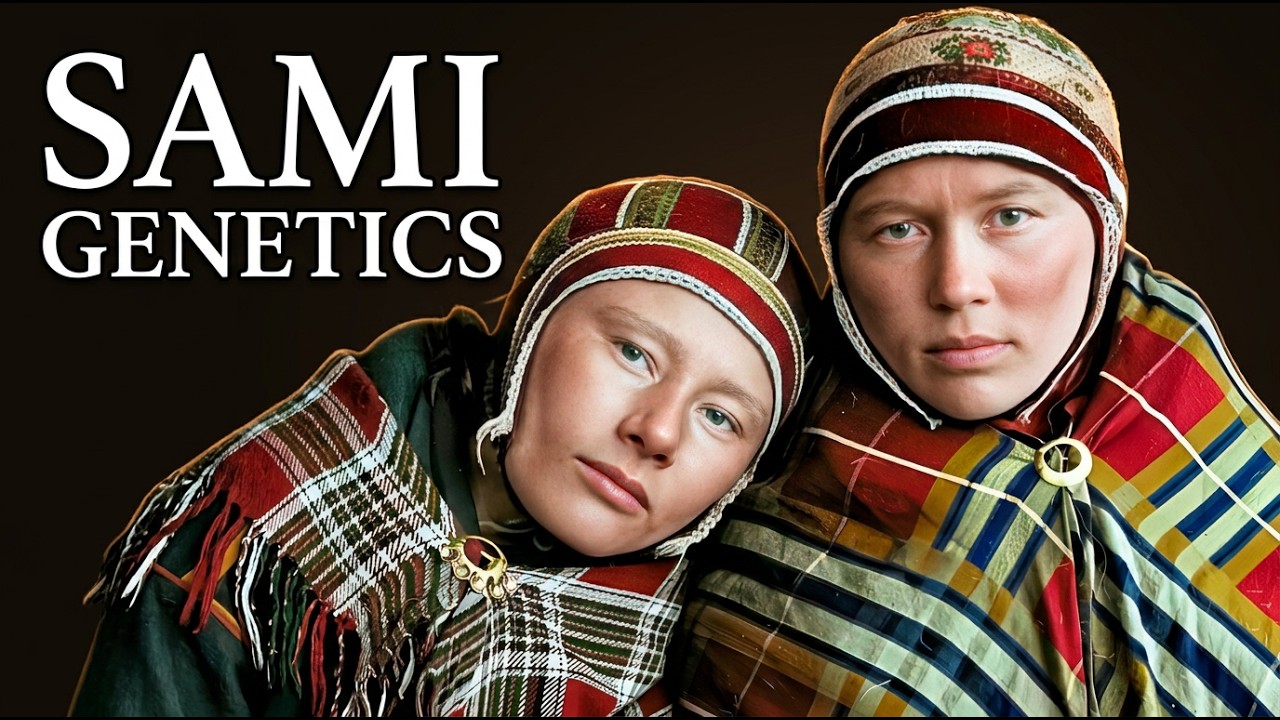
It stretches across the Arctic reaches of Norway, Sweden, Finland, and into Russia’s Kola Peninsula. Long before these nations existed, the Sámi lived there, hunting and adapting to one of the harshest environments on Earth. Between 50,000 and 100,000 Sámi still live across this vast northern landscape today, though the true number may never be known, since many with Sámi ancestry no longer declare it. That silence has deep roots.
Throughout most of the twentieth century, the governments of Norway, Sweden, and Finland sought to assimilate them into the mainstream culture. Children were taken to boarding schools and punished for speaking their own languages. Traditional reindeer herding, a pillar of Sámi life for centuries, came under strict control, while sacred drums and spiritual objects were confiscated or destroyed. Across generations, many families felt pressure to hide their identity for fear of discrimination.
Yet despite all this, the Sámi survived. Their culture endured, their traditions persisted, and hidden within their DNA lay a history that no policy or border could erase. For a long time, few scholars knew much about where the Sámi came from. That began to change as ancient DNA technology improved, allowing researchers to finally uncover answers that had stayed buried for millennia.
About 11,000 years ago, the last Ice Age was ending. As the great glaciers receded, they revealed a vast, frozen landscape that would eventually become Scandinavia. It looked empty, but not for long. The first arrivals came from different directions—some followed the coast from the south, while others traveled west from what is now northern Russia.
They were small groups of hunter-gatherers who lived by fishing, hunting seals, and following migrating reindeer. Life here was never easy, but the Arctic rewarded experience and punished mistakes. When researchers studied the remains of some of Scandinavia’s earliest hunters, they found genetic links still visible in the Sámi today. The Sámi were not newcomers to the far north; their roots reached back to some of the first humans to settle this land after the Ice Age.
But that was only part of the story. Another piece came from a place thousands of miles away. On a small island in Russia’s Kola Peninsula called Bolshoy Oleniy Ostrov, archaeologists uncovered a burial site unlike any other. The people buried there had lived about 3,500 years ago, long before written history reached the far north.
At first, the site seemed like just another ancient cemetery. But when scientists were finally able to study it, they compared these ancient genomes with another burial site in Finland, where people had lived centuries later. Although the two communities were separated by time and space, they shared the same genetic fingerprint. That lineage was not what researchers expected to find in northern Europe.
Instead, part of the Sámi genetic story traced back thousands of miles east to ancient Siberia. The question of Sámi origins suddenly looked very different. Further evidence came from research led by the scientist Kerttu Majander. Ancient DNA revealed that people with a genetic profile very similar to today’s Sámi once lived further south in Finland than the Sámi live today.
Another part of the puzzle came from Levänluhta, an archaeological site in western Finland. About 1,500 years ago, dozens of people were buried there in what had once been a shallow body of water. Archaeologists have debated the meaning of this unusual burial tradition for decades, and still no clear answer exists. But whatever the reason, the site preserved something far more valuable than anyone expected.
When scientists analyzed DNA from the remains, they found that many of these individuals were genetically closer to today’s Sámi than to modern Finns. This discovery suggests that people with Sámi-like ancestry once lived further south in Finland than they do today. Over time, populations shifted, cultures changed, and the Sámi gradually became concentrated in the far north. But the DNA from Levänluhta shows that their ancestors were once part of a much broader landscape across Finland.
Thousands of years ago, Sámi ancestors were not always centered in the Arctic; they were spread across a far larger part of northern Europe. As new groups arrived and populations mixed, their numbers gradually shrank, leaving the strongest traces in the far north where the Sámi live today. That still left the biggest question: if part of Sámi ancestry came from ancient Siberia, how did it travel thousands of miles to northern Europe? Modern Sámi ancestry was shaped by two different populations that met in the far north thousands of years ago.
The first were the hunter-gatherers who settled Scandinavia after the last Ice Age; their descendants had already lived across the region for millennia. Then, roughly 3,500 to 4,000 years ago, another group arrived from the east carrying roots that went back to ancient Siberia. Evidence from Bolshoy Oleniy Ostrov shows this was not merely a distant genetic connection; it was a real migration. People carrying this ancestry traveled west and gradually mixed with the communities already living there.
One of the strongest pieces of evidence comes from a small indigenous group living thousands of miles away in northern Siberia. They are known as the Nganasan. Although the Sámi and Nganasan have been separated by vast distances for thousands of years, genetic studies found they still share part of the same ancient ancestry. This does not mean the Sámi descend directly from the Nganasan, or that the two groups are closely related today.
Rather, it indicates that both inherited DNA from an older population that once lived across northern Eurasia long before either modern group existed. Over thousands of years, these ancient people spread across different regions, and their descendants followed very different paths. Some stayed in Siberia, while others eventually reached northern Europe and became part of the ancestry of today’s Sámi. This old meeting can still be seen in Sámi DNA.
On the maternal side, two lineages known as haplogroups V and U5b make up most of the Sámi’s maternal ancestry. Within one of them lies a rare genetic marker so closely tied to the Sámi that researchers have named it the “Sámi motif. ” This small genetic motif appears not only among the Sámi but also among some groups in North Africa, including the Berbers. It may seem surprising at first—these peoples live thousands of miles apart with entirely different histories.
The explanation is far older than any modern migration. Scientists do not believe the Sámi descend from the Berbers or vice versa. Instead, this shared motif likely traces back to ancient peoples who once lived across Eurasia long before modern ethnic groups existed. As populations spread into different regions over thousands of years, small fragments of that ancient ancestry survived in different peoples.
The Sámi preserved some of these old genetic signals, making their DNA one of the most distinctive and most studied in Europe. The paternal side tells a similar story. Many Sámi men belong to a paternal lineage known as N1c, which is also common among many Uralic-speaking peoples across northern Eurasia. Together, these maternal and paternal lineages preserve the genetic legacy of one of Europe’s oldest indigenous peoples.
What makes the Sámi so distinctive is not just their Siberian roots, but the fact that this ancient genetic connection has remained intact for thousands of years. While much of Europe was repeatedly reshaped by new migrations and mixing, the Sámi stayed in the far north, where the harsh Arctic environment limited outside contact for long periods. They were not completely isolated—like any human population, they mixed with neighboring groups over the centuries. But compared with most of Europe, they preserved far more of this ancient ancestry, making their genetic history distinctive even today.
This is one of the main reasons the Sámi differ genetically from their Scandinavian neighbors: they have shared the same northern landscape for thousands of years, yet their DNA still carries the story of an ancient migration. Surviving in the Arctic required more than determination. Over thousands of years, the environment shaped the human body in remarkable ways. Winters were long, summers short, and farming was difficult across most of Sápmi.
Instead, the Sámi depended on what the Arctic could provide: reindeer, fish, and other foods rich in fat and protein. Over many generations, researchers have found that certain genetic variants linked to processing this kind of diet became more common among northern peoples like the Sámi, helping them make the most of the food available in such a harsh environment. Reindeer became the heart of Sámi life, providing not just food but clothing, tools, transport, and a way to survive where few animals could live at all. By following the seasonal migrations of the reindeer, the Sámi learned to live according to the rhythm of the Arctic rather than resist it.
These changes unfolded slowly over thousands of years, as people adapted to one of the harshest environments on Earth. Gradually, the Arctic shaped the Sámi way of life and, to some extent, their very biology. But survival in the Arctic was not the only challenge. For generations, the Sámi also fought to protect something far less visible: their language, traditions, and identity.
Sámi languages belong to the Uralic family, alongside Finnish and Hungarian. This sets them apart from the Germanic languages spoken by most Scandinavians. The Sámi have lived alongside Norwegians and Swedes for centuries, yet their language comes from a completely different family. Most strikingly, language and genes tell a similar story—both point to ancient connections stretching far to the east, linking Sámi ancestors to regions around the Ural Mountains and ancient Siberia rather than to the groups that shaped much of Europe.
There is not just one Sámi language; several are spoken across different parts of Sápmi, each with its own history and traditions. Sadly, some are now endangered, with only a few fluent speakers remaining. That happened by design, not accident. It was the result of decades of assimilation policies.
Many Sámi children were punished for speaking their language at school, and over the years, entire families stopped passing it on to the next generation. With every lost speaker, a piece of Sámi history was at risk of disappearing. But the story did not end there. The Sámi refused to let their culture die.
In Norway, Sweden, and Finland, Sámi parliaments now give their communities a political voice. Traditional practices such as joik, a unique style of singing, are being passed down to new generations and have even found a place in modern music. The struggle is not over—questions about land rights and traditional reindeer herding remain contested across their homeland. But after generations of pressure to abandon their identity, the Sámi have shown remarkable resilience.
Their culture is still alive, and so is their determination to protect it for generations to come. DNA does not replace the story; it adds another chapter to it. The evidence shows that Sámi roots reach back thousands of years to peoples who survived the end of the Ice Age and to another group that later arrived from ancient Siberia. Together, they formed one of the oldest continuous populations in northern Europe, descended from two ancient worlds.
While most of Europe was reshaped by successive waves of migration, the Sámi remained in the far north. Because of that, traces of this ancient lineage have stayed alive for thousands of years, offering a rare glimpse into a chapter of European history that might otherwise have been lost. But the DNA is only part of the story. The Sámi are far more than the sum of their origins.
Their history is also written in a language that has survived for millennia, and in the resilience of a people who adapted to one of the harshest environments on Earth while holding onto an identity many thought would vanish. That is why the story of the Sámi is not just a story of ancient origins. It is a story of endurance, survival, and a living culture that continues to shape the far north of Europe.