In July 2020, Carmen Blandin Tarleton, a nurse and mother of two, became the first person in the United States and only the second in the world to receive a second face transplant. The surgery, performed at Brigham and Women’s Hospital in Boston, lasted roughly twenty hours and involved more than forty-five health care professionals. It was a procedure made necessary by the failure of her first transplant, when her body rejected the donor tissue, leaving her with scarring, swelling, and pain. The road to that operating table had been long and brutal.
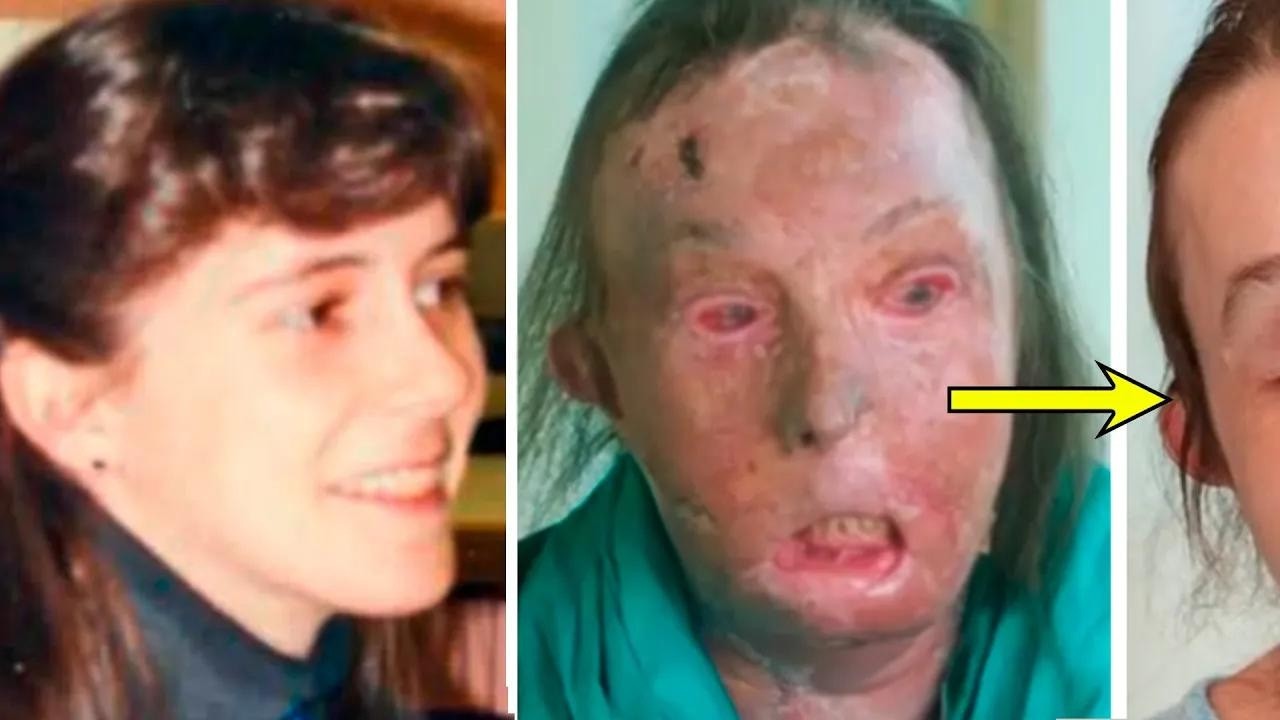
In June 2007, Tarleton was attacked by Herbert Rodgers, her estranged husband, who threw a corrosive chemical substance at her. The burns covered more than eighty-five percent of her skin. She was airlifted to Brigham and Women’s Hospital, where doctors placed her in an induced coma. Over the next three months, she underwent thirty-eight surgeries.
In the five years that followed, she endured another seventeen operations, some of them intended to restore her vision. Despite everything, she was left disfigured and nearly blind. Tarleton’s story had begun far from that hospital bed. At twenty-eight, she left her hometown of Rutland, Vermont, and moved to Los Angeles with her two children to work as a nurse.
There she met Rodgers, and the two married in 2001. By her own account, the marriage was happy, with no unusual problems until the couple moved back to Vermont. It was after that move, she later said, that Rodgers began to spiral out of control. The couple separated but remained on friendly terms.
A few days after an argument about selling the house, Tarleton woke at two-thirty in the morning to find Rodgers inside her home. That was the night everything changed. Her daughters called the authorities, and Rodgers was detained at the scene. In February 2009, he was sentenced to seventy years in prison.
He died in prison in 2017. Tarleton’s recovery was a matter of survival followed by reconstruction. In December 2011, she was approved for a face transplant. Two years later, in February 2013, the New England Organ Bank identified a donor: Cheryl Denelli Righter, a woman who had died suddenly of a stroke.
Tarleton received a full face transplant at Brigham and Women’s Hospital. At a press conference, the donor’s daughter, Minda Righter, spoke of the decision with remarkable grace. She said she could feel her mother’s skin again and see her mother’s freckles, and through Tarleton, she could see her mother live on. She called the transplant a blessing.
Tarleton approached her own suffering with a similar resolve. While lying in the hospital after surviving what doctors described as the most serious injury a human being can face, she decided that the attack did not have to ruin the rest of her life. She later described vivid dreams from that period, including one in which dozens of doors spread out around her and a voice said that life is a choice. The phrase appeared one by one in white letters on a dark screen.
She carried that lesson with her through years of painful recovery. Her book, Overcoming: Burned, Blind, and Blessed, was written three years after the attack, when her vision was limited in one eye. Reliving that night proved terrifying. She described sitting alone at her typewriter, feeling physically sick, dropping the pen and running to her room when her vision darkened.
It took her two days to write that section. She hired a team of writers to help with the rest, including the dialogues she remembered. She said there were some things she could not forget even if she wanted to. Writing gave her a way forward.
She wrote about facing Rodgers in court, about dealing with blindness and disfigurement, about her pain and the help she received from her community, family, and friends. She also wrote about forgiving the man who had done this to her, saying that forgiveness gave her the space to grow, move on, and trust someone again. She hoped the book would reach everyone, not just people who had endured similar trauma. She believed she could help people no matter what stage of life they were in.
Her first transplant had improved her quality of life in ways that made the decision to try again seem clear. But the first donor tissue eventually failed, rejected by her own body. In July 2020, when it became clear that a second transplant was her best option, her doctors hesitated. The procedure was complex and the risks considerable.
Dr. Bohdan Pomahac, director of plastic surgery at Brigham and Women’s Hospital, later said the decision was difficult. But Tarleton emphasized how much the first transplant had improved her life, and the team decided to move forward. The surgery itself presented an unexpected challenge.
The loss of blood was so intense that the surgeons chose to pause the operation for roughly fifteen hours, a break that had not been planned. The interruption allowed a more rested team to handle the most complex part of the procedure, the graft itself. The surgery was completed the following day. According to Dr.
Pomahac, the risk of rejection in the second transplant was lower because Tarleton had lost almost all of the antibodies that had sensitized her body the previous time. This time, her tissue matched the donor’s so closely that Dr. Pomahac told CNN they probably matched more than if the tissue had come from a twin brother. Tarleton’s recovery was slower than the first time.
She told CNN that the surgery was very long and divided into two parts because of the heavy bleeding. She remained hospitalized longer and spent more time recovering outside the intensive care unit. Her face remained swollen, and she still felt pain. The doctors warned that full recovery of facial functions would take about six months and would continue to progress after that.
Dr. Pomahac called her one of the most resilient patients he had ever cared for. He described the surgery as a return to life and said the team was moved to contribute so that she could live again the way she deserved. Tarleton did not regret the first transplant, and she remained in contact with her donor’s family, speaking with them through video calls.
Of her new face, she said it was lighter and smaller and seemed to fit better on her head. She acknowledged that the face was different, paler than her old one, and that blindness prevented her from seeing the small details. But she described herself as an optimist by nature. She said she still had a lot to do.
She had grandchildren and wanted to learn to play the guitar. She wanted to be around. After the surgery, she became a speaker, sharing her story with others. In the years since the second transplant, Tarleton rebuilt her life.
She had a boyfriend, grandchildren, and a busy schedule filled with music, exercise, and lectures. The woman who had once been told she had survived the most serious injury a human being can face had become one of only two people in the world to receive a second face transplant.