For generations, Wyatt Earp has been known as the brave lawman who brought order to the most dangerous frontier towns in America. Hollywood turned him into a hero with few flaws: calm under pressure, quick with a gun, always on the side of justice. The real Wyatt Earp was far more complicated. He was a gambler, a businessman, an occasional lawman, and an ambitious survivor who often moved through the gray areas between right and wrong.
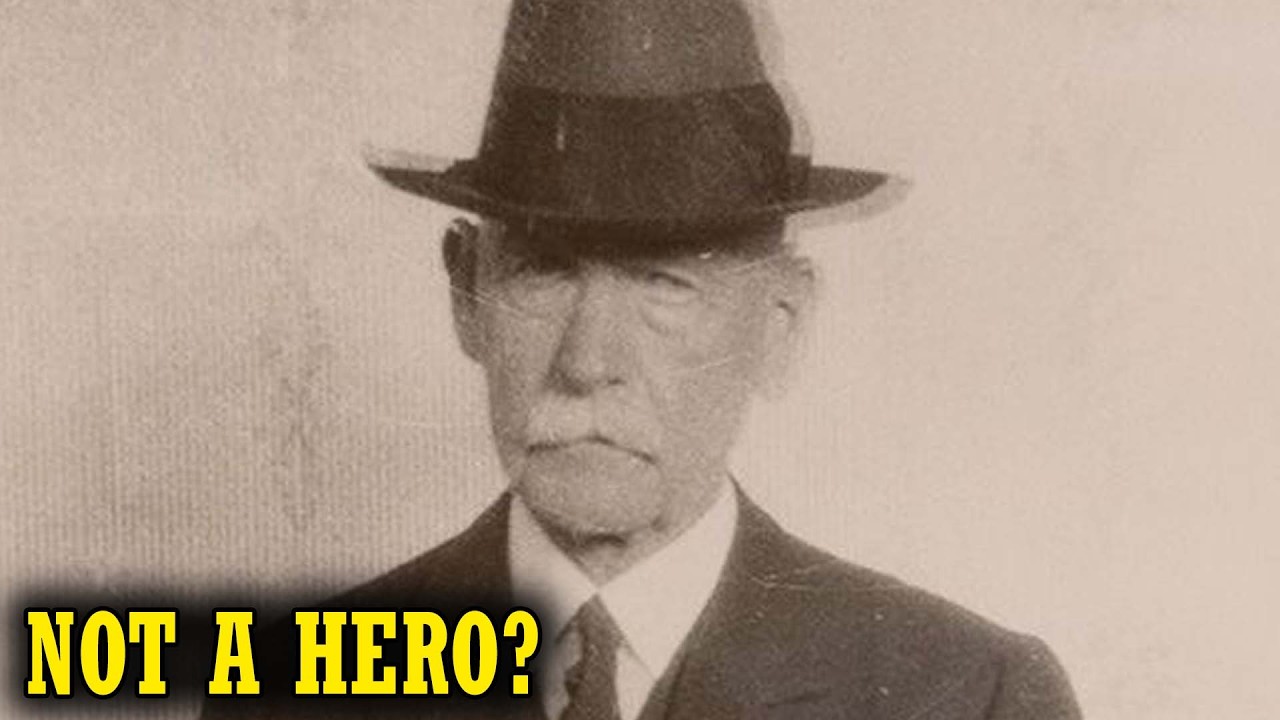
His true story is not less exciting than the legend. It is darker, messier, and far more human. The Earp the public knows was created and recreated many times. Few figures in American history have undergone such dramatic shifts in reputation.
At different moments, he was presented as a noble hero, a corrupt opportunist, a publicity-seeking storyteller, or a quiet man who preferred to stay out of the spotlight. Writers and historians repeatedly built new versions of Wyatt Earp, only to have later researchers challenge or dismantle them. Much of the controversy centers on the confrontation near the O. K.
Corral in Tombstone. Since that event, people have argued over whether Earp and his associates acted responsibly as law officers or overstepped their authority during a bitter local feud. The available testimony is often contradictory, and the newspapers of that era were heavily influenced by political loyalties, personal grudges, and competing business interests. By 1888, newspapers across the United States were already publishing conflicting accounts of Earp’s career.
Some described him as a brave frontier officer, while others portrayed him as dishonest or selfish. Many reports exaggerated his adventures, repeated rumors, or mixed real events with sensational fiction. This pattern continued into the twentieth century. Walter Noble Burns’s 1927 book Tombstone: An Iliad of the Southwest and Stuart N.
Lake’s 1931 biography Wyatt Earp: Frontier Marshal helped create the heroic image later audiences came to know. Both works presented Earp as a courageous defender of respectable citizens against organized lawlessness. Although later historians questioned many of their details and dramatic claims, these books inspired films, and those films expanded the legend further. Television eventually brought the idealized Wyatt Earp into American homes, especially through the series The Life and Legend of Wyatt Earp.
The show presented him as a nearly perfect law enforcement officer who relied on restraint and fairness rather than unnecessary force. For many young viewers, this romantic portrayal became accepted history. Burns, Lake, and the filmmakers who drew from their work belonged to the first major school of interpreting Earp’s character. They were mythmakers who elevated him into a near-perfect frontier hero.
Eventually, writers such as Frank Waters and Ed Bartholomew moved to the complete opposite, portraying Earp as the leader of a corrupt and highly organized criminal enterprise. After the celebrators and the critics came another group: writers who blended documented history with fabricated stories, often for commercial profit or personal fame. Glenn Boyer and Wayne Montgomery became the best-known examples. Together, these competing schools produced multiple versions of Wyatt Earp, each reflecting the assumptions and agendas of its creators.
Readers could choose whichever Earp they preferred: a noble lawman, a ruthless opportunist, or a mysterious frontier survivor, and defend that interpretation by citing books that seemed authoritative. The problem was that many of those sources relied heavily on unsupported claims, dramatic storytelling, or material that could not be independently verified. A more evidence-based period in Earp and Tombstone studies began near the end of the twentieth century. Researchers increasingly turned to court records, newspapers, government documents, correspondence, and other contemporary sources instead of repeating familiar legends.
Jack Burrows’s 1986 book John Ringo: The Gunfighter Who Wasn’t played an important role in this shift by carefully questioning established claims about Ringo and demonstrating the value of source-based research. Gary Roberts, Jeff Roger Peterson, Jack Burrows, and others took on the work of examining the remaining evidence about Earp’s life in the Tombstone conflicts. By that time, the reputations of Burns and Lake had already declined among serious researchers. Their books remained influential and entertaining, but scholars increasingly recognized that both authors had embellished events, invented dialogue, and presented unconfirmed stories with far more confidence than the evidence justified.
During the search for the real Wyatt Earp behind the legend, it also became clear that Glenn Boyer’s works contained major problems. Boyer had long been considered a leading reference on Earp’s life, but later investigations showed that many of his claims lacked reliable documentation. Some statements contradicted surviving records, while others appeared to have been invented or significantly altered. Further research complicated the picture even more.
Jeff Wedd and S. J. Reidhead discovered documents relating to Frank Waters, suggesting that he too had reshaped or invented parts of the material he presented as fact in his 1960 book The Earp Brothers of Tombstone. This proved that both the heroic and hostile versions of Earp had often been built on questionable foundations.
The books once treated as primary sources about Wyatt Earp frequently mixed speculation and fiction. Mythmaking and fabrication helped turn Earp into one of the most famous figures in American frontier history, but they also made it increasingly difficult to recognize the real historical man. The challenge for researchers was to move beyond these competing legends and reconstruct the real Wyatt Earp as accurately as the remaining evidence allowed. This required studying Earp himself, along with the political rivalries, economic pressures, law enforcement systems, and personal alliances that shaped the cattle towns and mining communities where he lived.
Earp’s public image also began forming on the movie screen during his lifetime. Actor William S. Hart dedicated his 1923 film Wild Bill Hickok to Bat Masterson. Hart played Hickok while Bert Lindley portrayed Wyatt Earp.
The real Wyatt Earp reportedly worked as a technical advisor on the production, though the exact extent of his contribution is difficult to determine. The film was one of the first screen portrayals of Earp, but Hollywood did not realize his potential as a major Western icon until years later. Once filmmakers adopted his story, the gap between the historical man and the popular legend widened further. Researchers eventually reached a point where much of what had once been accepted as unquestionable fact about Wyatt Earp could no longer be trusted.
Familiar stories about his career, his associates, and his adventures had to be reconsidered from the beginning. Among the most controversial findings were records linking Wyatt and Morgan Earp to Peoria, Illinois, where they were arrested in connection with brothels. Some researchers interpreted these records as evidence that the brothers worked as employees or managers of that activity. Although the surviving documents do not always specify their exact roles, other accounts connected Wyatt to a similar establishment operating on a riverboat.
These incidents allegedly occurred after Wyatt left Arkansas while facing legal proceedings related to the handling of public funds. The details of his departure remain incomplete, but the surviving records suggest that his early life was far more turbulent and complicated than the heroic biographies once suggested. What modern research has revealed is not a flawless frontier hero. Earp experienced success, hardship, disappointment, and self-reinvention repeatedly.
He made serious mistakes, but he also showed courage, loyalty, perseverance, and practical judgment at important moments. Above all, he appears as a clearly recognizable human being. During the nineteenth and early twentieth centuries, biographies were often written to provide young readers with moral examples. Authors were expected to emphasize courage, self-restraint, patriotism, and honorable conduct while minimizing their subjects’ weaknesses.
Burns and Lake crafted a version of Wyatt Earp that fit this cultural purpose. Parts of their narratives were based on real events, but the historical Earp was far more complex. He was influenced by ambition, money, loyalty, resentment, personal relationships, and the uncertain circumstances of frontier life. His decisions were not always admirable or consistent.
Earp’s attitude toward fame is similarly difficult to define. Some writers described him as a man who actively sought recognition and tried to promote his own reputation. However, many people who knew him later in life remembered someone who was reluctant to discuss his frontier experiences and uncomfortable with public attention. Friends and relatives often described Earp as reserved and modest.
In a 1925 letter to mining engineer John Hays Hammond, Earp complained that public fame had brought him only trouble. He wrote that he hated the exaggerated stories published about him and his brothers and insisted that many of those accounts were inaccurate. Yet near the end of his life, Earp became willing to cooperate in telling his story. Silent film star William S.
Hart, who admired both Earp and Bat Masterson, encouraged the idea of a biography that might later support a film project. Earp agreed, creating an apparent contradiction between his stated dislike of fame and his late attempt to influence how history would remember him. During this period, writers Frederick Rodel and Frank C. Lockwood spoke with Earp and later claimed he discussed frontier confrontations in precise detail.
They also stated that Earp took responsibility for the killing of John Ringo while leaving Arizona. This claim presents an obvious timing problem. Earp left Arizona months before Ringo was found dead in July 1882, making the story impossible as told. It is also significant that Earp apparently never repeated this claim to Stuart Lake, despite Lake’s extensive efforts to build a dramatic narrative of his life.
The incident illustrates the difficulty historians face when evaluating memories recorded decades after the events. Rodel and Lockwood may have misunderstood Earp, misremembered the conversation, combined separate stories, or exaggerated what they heard. Without contemporary confirmation, their account cannot be treated as reliable evidence. One unusual argument advanced by Glenn Boyer was that Stuart Lake had rescued a nearly forgotten frontier officer from obscurity and turned him into a famous national figure.
The historical record does not support this interpretation. Earp had already developed a significant public reputation during his lifetime. In August 1889, while attending horse races in Sonoma County, California, he attracted the attention of the Santa Rosa Democrat. The newspaper noted that Earp rarely spoke about himself, yet he enjoyed a widespread reputation across the country, presumably founded on his actions rather than self-promotion.
By that time, Earp was already known for his law enforcement work in Kansas and his role in the Tombstone conflict. His later pursuit of those believed responsible for attacks on his family also received national press coverage. These events ensured that his name was familiar long before Stuart Lake published his influential biography. Earp’s public reputation grew further after the controversial boxing match between Sharkey and Fitzsimmons in San Francisco in 1896.
As referee, Earp awarded the victory to underdog Tom Sharkey after ruling that Bob Fitzsimmons had committed a foul. The decision caused an immediate scandal. Fitzsimmons’s supporters accused Earp of corruption and claimed the outcome was prearranged, although conclusive evidence that Earp received money was never found. Newspapers across the country mocked him, investigated the controversy, and repeated the accusations for years.
For a time, this boxing dispute may have been more familiar to the American public than Earp’s earlier frontier career. It reshaped his image from a celebrated Western figure into a controversial sports official and demonstrated how quickly national newspapers could define a reputation. By 1923, Earp had outlived most people connected to his frontier years. He spent most of his final period living with Josephine Marcus Earp in modest rented lodgings in Los Angeles, near the rapidly growing film industry.
It was an ironic ending for a man whose life would soon become deeply embedded in Hollywood mythology. Earp lived long enough to witness the transformation of the Old West into popular entertainment, but the simplified legend that eventually carried his name only partially resembled the complex man who actually lived it. By the 1920s, Americans were entering a period of growing nostalgia for the frontier era. Newspapers across the country published recollections from people who claimed to remember the Old West directly.
A significant number of these stories focused on Tombstone, which had already become one of the clearest examples of the imagined West overshadowing the historical West. Many accounts were inaccurate, exaggerated, or entirely fabricated, yet they helped keep Wyatt Earp’s name before the national public and steadily increased interest in his life. When Earp died in 1929, the New York Times and other papers across the country reported his death. He was therefore not an obscure or forgotten figure when Stuart Lake’s Wyatt Earp: Frontier Marshal appeared in 1931.
The ashes of Wyatt and Josephine Earp were buried together at the Hills of Eternity Memorial Park in Colma, California. The current gravestone is said to be the third or fourth marker placed at the site. In 1998 or 1999, members of the Marcus family allowed a group of Earp enthusiasts in Southern California to install a replacement marker. The grave has since become one of the most famous memorial sites associated with American Western history.
The expansion of digital newspaper archives has transformed Earp research. As nineteenth- and early twentieth-century newspapers have become increasingly searchable, historians regularly uncover reports that were previously unknown or difficult to access. One interesting line of research concerns the long-debated encounter between Wyatt Earp and Clay Allison in Dodge City. Kansas researcher Roger Myers found several contemporary newspaper accounts related to the incident, and researchers Bob Cash and Chris Penn later found additional reports that seem to support the likelihood of some form of confrontation.
However, the remaining evidence does not confirm the dramatic version promoted by Stuart Lake, who portrayed Earp challenging Allison directly in the middle of the street. The more reasonable reconstruction suggested by later research is less theatrical and more strategic: Bat Masterson remained at a distance while convincing Allison that any escalation would place him in an extremely difficult position. Even this account must be treated with caution because the sources were recorded after the event and do not agree on every detail. Earp’s funeral also demonstrated his connections to California and the film industry.
The list of honorary pallbearers included W. J. Hunsaker, who had served as his attorney during the Tombstone period and later became dean of the Los Angeles bar. Others included George Parsons, former Tombstone mayor and newspaper editor John Clum, William S.
Hart, playwright and businessman Wilson Mizner, and actor Tom Mix. Their presence reflected Earp’s unusual position between real frontier history and the growing world of Hollywood mythology. When serious modern research began, Gary Roberts recalled that many in the field believed nearly everything discoverable about Earp had already been found. The only significant unknown material was thought to remain in the private collections of Glenn Boyer or the older researcher John Gilchriese.
Gilchriese repeatedly claimed to possess a vast collection of documents intended for a major Earp biography, but that book was never published. For years, Boyer and Gilchriese stood as obstacles to new academic studies. Lesser-known historians sometimes feared entering the field, believing these prominent collectors possessed secret evidence that could suddenly undermine any new interpretation. Much of the mystery surrounding his collection ultimately proved unfounded.
The collapse of those claims helped open Earp research to a new generation of scholars who relied on available documents, transparent methods, and evidence that others could independently examine. The real Wyatt Earp was neither the flawless hero of Hollywood nor the harsh villain portrayed by his harshest critics. He was a complex man shaped by ambitions, loyalties, courage, misjudgments, and the unstable world of the American frontier.