In the late twentieth century, amateur radio in the United States was a vast community of over 400,000 licensed operators. By the early 2000s, that number had grown to more than 700,000. These were hobbyists, not professionals; people who built their own equipment and understood the physics of the ionosphere with an expert’s intimacy. Today, fewer than ten percent of active operators are under forty, and the median age of a licensed ham is somewhere between sixty-three and sixty-eight.
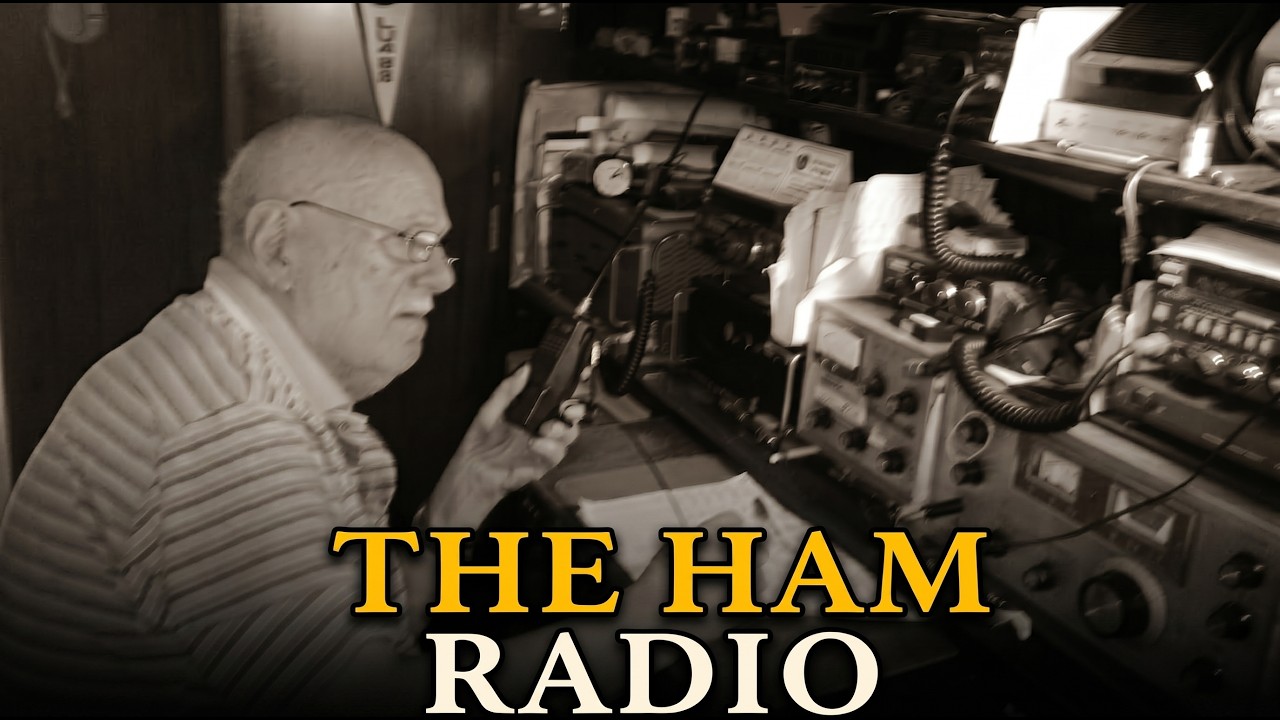
The bands that once carried millions of voices across continents are measurably quieter. Understanding what is being lost requires understanding what amateur radio actually was. From its earliest days, the hobby was built on a radical premise: that private citizens, given access to the electromagnetic spectrum and the technical knowledge to use it, could build communication networks rivaling those of governments and corporations. That premise proved correct, but it took a tragedy to force the federal government to take notice.
The sinking of the Titanic in April 1912 exposed the chaos of the airwaves. Wireless communications around the disaster were a catastrophic failure of coordination. Ships close enough to help never received distress calls, and amateur operators onshore contributed to the noise. Congress responded with the Radio Act of 1912, which licensed operators and pushed amateurs off the primary commercial and military wavelengths and into the shortwave bands above 1.
5 MHz. Professional engineers considered these frequencies worthless for anything beyond local communication. They were completely wrong. The ionosphere, the electrically charged layer of the atmosphere beginning at roughly 60 kilometers altitude, reflects certain radio frequencies back to Earth.
Shortwave signals could bounce off it and travel thousands of miles with modest power. The frequencies the government had discarded turned out to be the most effective long-range communication medium on the planet, and it was the amateurs, exiled to bands no one else wanted, who discovered this. The years between the end of World War II and roughly 1980 marked the golden age of the hobby. Hundreds of thousands of men returned from military service with formal electronics training from the Army Signal Corps and other branches.
The military surplus market flooded with high-quality equipment at prices that made the hobby accessible. ARC-5 transmitter sets could be bought for a few dollars and modified for amateur frequencies in an afternoon. Local radio clubs formed in virtually every American city, with technical libraries, licensing exam programs, and emergency communication plans. The American Radio Relay League, founded in 1914 by Hiram Percy Maxim, connected these clubs into a coherent national infrastructure.
By the 1960s, amateur radio had woven itself into the emergency communication fabric of the country. During Hurricane Camille in 1969, amateur operators provided primary communication links for large portions of the Mississippi Gulf Coast for more than 72 hours after the storm. The National Hurricane Center credited these networks with enabling rescue coordination that would otherwise have been impossible. That pattern repeated through earthquakes, floods, and tornadoes across the following decades.
Then, quietly, the numbers began to move in the other direction. The decline started before the internet and before smartphones. The first pressure was demographic. The veterans who had turned to amateur radio in the late 1940s and 1950s were aging, and the younger generation was finding other things to do.
Personal computers appeared in the late 1970s and drew exactly the kind of technically minded young person who might otherwise have gravitated toward radio. The hobby had also developed cultural characteristics that discouraged newcomers. The examination for the entry-level technician license was not trivial, the equipment was expensive, and many local clubs had calcified around older, mostly male experts who were not always welcoming to beginners. Surveys conducted by the ARRL itself during the 1990s and 2000s documented that prospective operators often cited a sense that they wouldn’t fit in.
It was a self-inflicted wound that compounded every year. The numbers tell part of the story. In 1989, there were approximately 415,000 licensed operators. By 2000, that had grown to around 682,000, partly due to license restructuring and the elimination of the Morse code requirement in 1991.
But the growth plateaued quickly, and the underlying demographic concentration in a specific age cohort did not change. As of 2024 and 2025, the active database holds roughly 780,000 licensed operators, but the Technician class averages 58 years old, the General class 66, and Amateur Extra 67. The geographic distribution adds another layer. Rural western states like Idaho and Wyoming lead in operators per capita, where off-grid communication has practical value.
Urban states like New York register around 300 operators per 100,000, and Washington D. C. records approximately 174. Ham radio appears to be retreating to places where it still has utility and cultural resonance.
The international picture is even more sobering. Japan, which once had one of the highest concentrations of licensed operators in the world, lost more than 600,000 in the two decades between roughly 2000 and 2020. Germany’s amateur radio club reported membership declining by nearly a third between 2005 and 2020, and the United Kingdom documented similar trends. This is a structural pattern across every developed nation where the hobby had its strongest base.
In 2022, the FCC implemented a $35 application fee on all new licenses and renewals, authorized under the RAYBAUM Act of 2018. Ham radio was not specifically targeted, but for most of its modern existence licensing had been free. The ARRL lobbied against the fee, arguing it was inappropriate for a non-commercial service that provided public benefit. The commission was not persuaded, and the first year saw a measurable drop in new applications.
For a community already struggling to attract younger operators, the fee sent a discouraging message. Around 2017, something unexpected happened. The sun was near the minimum of its 11-year activity cycle, leaving the ionosphere weak and unreliable. Into that silence came a digital protocol called FT8, developed by Joe Taylor, a Nobel Prize-winning astrophysicist, and programmer Steve Frank.
FT8 encoded each transmission into a precisely structured 15-second burst synchronized globally through atomic clocks. It occupied just 50 hertz of bandwidth and could extract intelligible communications from signals buried 20 decibels below the atmospheric noise floor. Operators with small antennas were suddenly making reliable contacts across oceans in conditions where traditional communication was impossible. By 2019, FT8 accounted for the majority of contacts logged on several popular high-frequency bands.
But the protocol was almost entirely automated. The computer negotiated contacts with other computers with minimal human intervention, requiring no conversation, no technical exchange, no human voice. For operators who came to radio through a culture of technical craftsmanship, FT8 felt hollow. The debate it sparked captured the tension between keeping a hobby alive in a changed technological environment and keeping it recognizable as the thing it was.
In late September 2024, Hurricane Helene made landfall near the Florida-Georgia border and moved into the Appalachian Mountains with destructive force. Western North Carolina took catastrophic damage. Cell towers went down, power grids failed, fiber optic lines were severed by flooding and landslides. Roads were washed out, and standard 911 emergency response architecture failed across large portions of the affected area.
Amateur radio operators filled that void, working from battery and generator-powered stations and establishing emergency communication networks on pre-designated regional frequencies. Repeaters on Mount Mitchell provided VHF coverage across areas where terrain would otherwise have blocked signals. The FCC’s licensing records showed a statistically significant spike in new license applications in the weeks immediately following Helene, concentrated in North Carolina, Tennessee, and Florida. That response pattern has repeated after every major disaster.
Each time there is a surge of interest, and each time the underlying demographic trend continues. The easiest way to describe what is being lost is to talk about the people. There is a man in rural Tennessee, a licensed operator for 51 years, who got his license at 17 because his father had a radio and there was a club at his high school. He has built more than 30 antennas, made contacts in 187 countries, and served as emergency communications coordinator for his county for nearly two decades.
He is 68 years old. His club, which once had 40 members, now has 11, and the youngest is 54. He has been trying to recruit younger operators for 15 years with limited success. The operational knowledge he carries, how to run an emergency net under pressure, who to call, what frequencies to use, how to manage traffic when the volume becomes overwhelming, lives in him and in a handful of people like him.
When he steps back, some of that knowledge goes with him, and the same thing is happening in communities across the country. The ARRL reported in its 2023 membership survey that membership had declined for four consecutive years, sitting around 150,000, down from a peak of roughly 170,000 in the mid-2010s. Its 2022 strategic plan explicitly identifies demographic renewal as one of the hobby’s most urgent challenges, acknowledging that the emergency communication infrastructure is at risk if the operator base continues to shrink. The people still in the hobby are some of the most technically sophisticated anywhere in the civilian world.
Operators are bouncing signals off the lunar surface with path losses of around 260 decibels, receiving echoes nearly three seconds later. Software-defined radio has opened the spectrum to a new generation, and the amateur satellite program has launched dozens of satellites providing communication links worldwide. Contest operators spend entire weekends making contacts around the globe in competitions as intricate as any professional sport. These communities are still vital, still producing real knowledge.
The question is whether they are large enough to sustain themselves. Amateur radio operators have functioned as a keystone community in the American emergency communication landscape for a century, occupying a role no one else fills: the independently trained, independently equipped voluntary communicator who operates outside the institutional systems that tend to fail precisely when they are most needed. The frequencies are still allocated, the equipment is better and more affordable than ever, and the technical knowledge is more accessible than at any point in the hobby’s history. None of that is the problem.
The problem is the human transmission of something that doesn’t quite fit in a manual: the knowledge of what to do when the power goes out and someone needs help sixty miles away and the road is washed out. That knowledge lives in people, not in documents, and the people who carry it are on average getting older. Somewhere in that man’s county, there is almost certainly a 25-year-old who would find this world genuinely fascinating. They just haven’t found it yet.
Whether they find it in time is the question nobody in the amateur radio community knows how to answer.