The Dodge roadster rolled through the cottonwood shadows on the evening of July 20, 1923, ten kilometers outside Parral, Chihuahua. Pancho Villa was behind the wheel, though he was not the driver. His . 45-caliber pistol lay on the seat beside him, not in his hand.
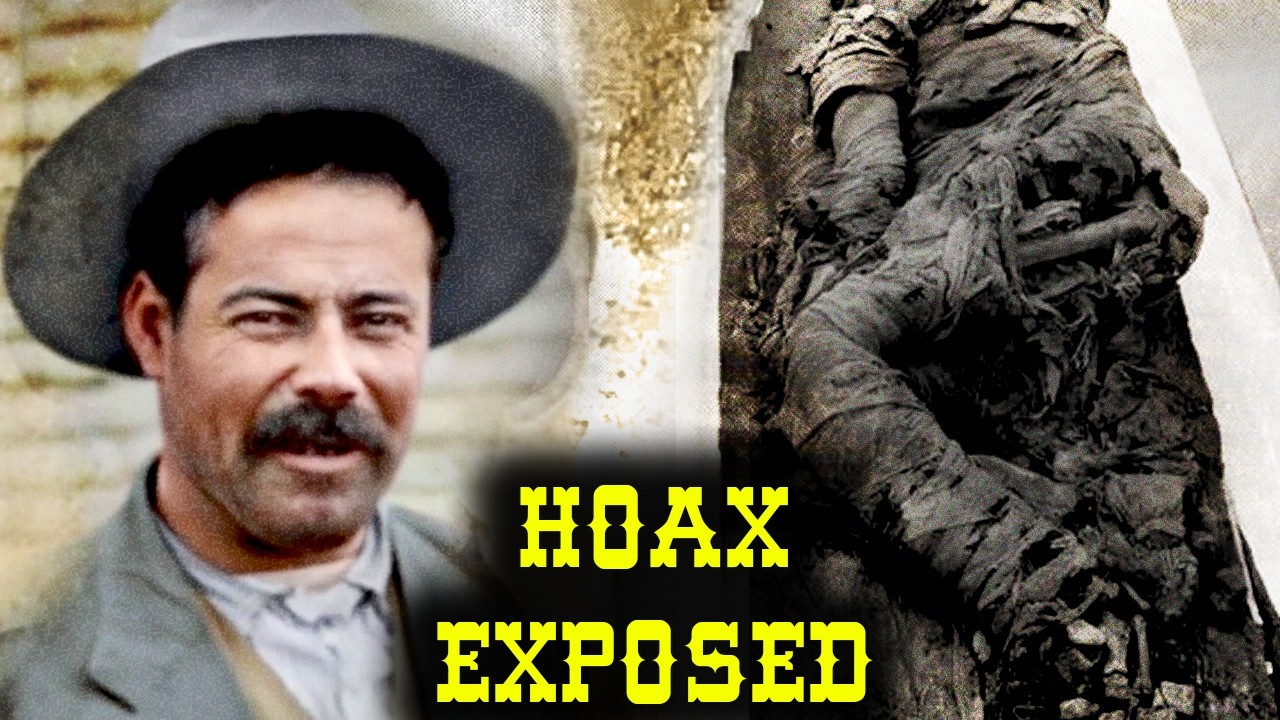
He was forty-five years old, retired from a revolution that had made him the most feared military commander in Mexican history, and he was driving himself into town with four men instead of the fifty who once surrounded him. Less than sixty seconds later, more than forty bullets tore through the car. Nine struck Villa. Four entered his head.
Three of the five men inside were dead, and the most dangerous guerrilla commander Mexico had ever produced died with his hand reaching for a gun he never got to fire. But the killing was not the strangest part of the story. Two and a half years later, someone pried open his grave, broke apart his coffin, and severed his head. It has never been found.
The theories about who took it and why have implicated the United States military, an Italian dictator, and a secret society at an American university. None has ever been proven. The man in the Dodge had been born Doroteo Arango in 1878 on a hacienda near La Noria in Durango, the son of a peon, born into debt, into someone else’s land, into a life whose best possible future was dying in the same field where he had worked since childhood. He was illiterate and would not learn to read until he was an adult, long after he had learned to kill.
At sixteen, he shot a landowner who, by his own account, had assaulted his sister. Whether the details are exact, the result is not disputed. Doroteo Arango became a fugitive, fled into the Sierra Madre, took the name Francisco Villa, and began the transformation from runaway farmhand into the most famous outlaw in North America. When the Mexican Revolution erupted in 1910, Villa was already a legend in Chihuahua.
He could not read a map, but he could move an army. At his peak, he commanded a cavalry force that rivaled anything on the continent. He robbed trains to fund his campaigns and gave the money to the poor. Hollywood filmmakers followed him into battle.
American newspapers could not decide whether he was Robin Hood or Attila the Hun. He was both, depending on the day and the strategic necessity. Then he made enemies he could not outrun. In 1916, he raided Columbus, New Mexico, on American soil.
President Woodrow Wilson sent General John Pershing with ten thousand troops across the border. The punitive expedition covered five hundred miles of Mexican desert and failed to catch one man. Pershing went home empty-handed, and the humiliation never faded. By 1923, Villa had become what he had once fought against.
He owned Canutillo, a massive hacienda. He employed peons. The revolutionary who had bled for land reform was now a landlord. He had married five times, fathered eighteen children, and settled into a retirement that looked almost peaceful from the outside.
It was a slow-burning target from the inside. Nearly everyone had a reason to want him dead. The followers of the late President Venustiano Carranza, whom Villa had fought bitterly, had never forgiven him. The government under President Álvaro Obregón had made a deal with Villa: retire quietly, take the hacienda, stop making trouble.
But Villa was talking about returning to politics, and rumors reached Mexico City that he intended to run for governor of Durango. A living Villa was a manageable nuisance. A Villa with political ambitions was a crisis. The man who organized the killing was none of these things.
Jesús Salas Barraza was a thirty-eight-year-old former schoolteacher from Coahuila. The revolution had turned the educator into a soldier. He had fought with Carranza’s Constitutionalists against Villa, and whatever he had seen in those years had turned him into something else entirely. By 1923, he had assembled a cell of seven volunteers, miners and farmworkers from Chihuahua and Coahuila, all veterans, all carrying personal grudges.
They armed themselves with Mauser 98 bolt-action rifles and waited for their moment. Salas Barraza later wrote that they trembled with excitement but that duty steeled them. He did not feel conflicted. He felt righteous.
They believed they could take Villa because of a decision Villa made in the weeks before the ambush. He decided to stop being afraid. For the first year of his retirement at Canutillo, he had traveled like a man who expected to be murdered, with a bodyguard of twenty to fifty armed men, scouts riding ahead, routes varied. The old guerrilla instincts that had kept him alive through a decade of war were sharp.
But the months passed. No one came. The bodyguard shrank from twenty to ten to six to four. Villa began driving himself into Parral along a road he had taken dozens of times without incident.
His loyalists warned him. He waved them off. He had survived Pershing’s ten thousand soldiers. He had survived the revolution itself.
He was Pancho Villa. Who would dare? On July 20, 1923, he climbed into his 1919 Dodge roadster with four men: his driver, two bodyguards, and Ramón Contreras, a ranch hand turned fighter in his early thirties who had been with Villa through the late campaigns. Contreras was loyal, tough, and armed.
He was also the only one who would survive the next hour. The seven riflemen had arrived at the ambush site in the early afternoon. Salas Barraza had chosen the spot carefully, a stretch of dirt road flanked by a dense stand of cottonwood trees, close enough that a rifle shot at a passing car would be nearly point-blank. They had been tipped off by informants in Parral who tracked Villa’s movements.
The summer heat was brutal, over thirty degrees, and they crouched in the shade with their Mausers across their knees. Aureliano González, a miner who had lost family during Villa’s northern campaigns, later wrote in his diary that they barely spoke. The heat was suffocating. Insects hummed in the scrub.
They waited for two hours. At roughly seven in the evening, Villa’s car approached. Salas Barraza heard the engine before he saw it and gave the signal. Someone shouted, perhaps as a greeting, perhaps as a signal: Viva Villa.
The revolutionary’s battle cry became the last thing he ever heard. Then the grove came alive with gunfire. Seven Mauser rifles fired into the car at close range. The sound was a single continuous roar.
More than forty bullets punched through the metal body, the doors, the windshield. The driver and the two bodyguards died in the first thirty seconds. Nine bullets struck Villa. Four entered his head.
The forensic reality of that is unsurvivable, instant, final. Villa died in the driver’s seat of his own car on a road he had driven a hundred times. Contreras, bleeding from a graze wound, later said he saw Villa’s hand reaching for his gun. He was ready to fight even in death, Contreras told a Parral newspaper journalist that same night.
Whether that was a final conscious act of defiance or simply the way a body falls when struck by multiple rounds to the head, Contreras chose to see it as defiance, and Mexico chose to believe him. He also reported Villa’s alleged last words: Don’t let it end like this. Tell them I said something. They have become the most famous dying words in Mexican history.
They are also, in all probability, impossible. Four head wounds from Mauser rounds do not leave room for speech. Forensic experts who have examined the autopsy report consistently conclude that death was instantaneous. Contreras was the only survivor, and he told a story in which his commander died with poetry on his lips.
No one could contradict him. In the middle of the ambush, Contreras did something remarkable. He pulled his weapon, leaned out from behind the bodies of the dead bodyguards, and fired. He killed one of the seven riflemen.
The surprise created a moment of hesitation, and Contreras used it. He threw himself out of the car and ran two hundred meters, wounded, over uneven terrain, while six men with rifles decided whether to chase a fleeing bodyguard or confirm their primary target was dead. They chose the target. Contreras reached help and raised the alarm.
Within hours, Villa’s loyalists recovered the bodies and transported them back to Parral. The Dodge sat on the side of the road riddled with more than forty bullet holes. By midnight, the town knew. By the morning of July 21, all of Chihuahua knew.
By that evening, telegraph wires had carried the message to Mexico City. On July 22, the funeral procession through Parral drew thousands. Women wept openly. Men removed their hats.
The casket was lowered into a cemetery plot and sealed beneath a cement slab. The assassins scattered. Salas Barraza, however, did something unexpected. Within days, he surrendered to authorities and confessed.
He wrote a letter to the governor of Chihuahua declaring that they had acted in the name of duty to the fatherland. There was no remorse, no hedging. The schoolteacher believed he had killed a tyrant and avenged the revolution. He was convicted but served minimal prison time, was released, lived freely, and died in 1957, having written memoirs that presented the killing as a patriotic act.
González fled to the United States and was never brought to trial. The other four vanished. Six men got away with the murder of Pancho Villa, and no one in power seemed to mind. The grave was sealed.
It stayed sealed for two and a half years. Whoever opened it did not act in the chaos of July 1923. They came deliberately, with tools, in the middle of the night. That timing eliminates the most obvious theory and changes everything about who might have done it and why.
February in Parral is cold, with morning temperatures around five to ten degrees Celsius. The cemetery caretaker, a man in his early fifties who could not read or write, began his morning patrol at approximately six in the morning as he did every day. What he found that day made international headlines. The cement cover on one grave had been shifted roughly thirty centimeters.
The wooden lid had been partially destroyed, broken apart with crowbars or similar tools. The embalmed body inside had been disturbed. Clothing was torn. And the head had been cleanly severed and taken.
Nothing of material value was taken. Whoever did this wanted one thing only: the skull of Pancho Villa. The investigation produced no arrests, no witnesses, no physical evidence. The estimated time to complete the act, one to two hours, suggests at least two people working with tools in the dark.
The head has never been recovered. The theories began circulating immediately. One claims American intelligence agents or Pershing loyalists arranged the desecration to obtain Villa’s skull as a trophy, with a persistent sub-theory involving Yale University’s Skull and Bones secret society. No documentary evidence has ever surfaced.
Another claims the head was sent to Benito Mussolini in Italy as a gift. This theory gained traction in the 1960s through tabloid reporting but has been thoroughly debunked by Italian archival research; there is no record of such a gift in Mussolini’s extensive inventories. Chihuahua folklore points to local enemies who may have taken the head for use in brujeria, witchcraft rituals, a theory that is the hardest to prove or disprove precisely because it operates outside the world of official documentation. The darkest theory is that President Obregón’s government wanted Villa dead but feared a martyr.
A dead Villa could become a revolutionary saint whose grave became a pilgrimage site. A headless corpse is harder to mythologize. Remove the face and you remove the icon. In this reading, the desecration was not about the skull.
It was about the symbol. No theory has been proven. No arrests were ever made. The head remains missing a century later.
DNA testing has been proposed as a way to settle the matter if a skull ever surfaces, but the proposals have never been funded. The mystery persists not because it cannot be solved, but because no one with the power to solve it has decided it matters enough. Contreras lived quietly in the Parral area for the rest of his life, gave his eyewitness account to anyone who asked, and died obscurely in the 1940s. He never changed his story.
He never admitted to fabricating the famous last words. He also never had to prove them, because there was no one left alive who could contradict him. Whether Villa said those words or Contreras invented them, they became true in the way that myths become true, not because they happened, but because they captured something real. A man who had spent his entire life insisting on being seen, being heard, being remembered.
The head theft was the final act in the transformation of Villa from a man into a ghost. A body with a head can be laid to rest. A headless body is an open question. Whoever took that skull, American agents, local enemies, political operators, guaranteed that Villa’s story would never have an ending.
And a story without an ending cannot be buried.