Lucy Walter was one of the first of many mistresses to King Charles II of England. She came from a moderately well-to-do family and was his mistress for a time while he lived in exile on the continent during the English Civil War. Charles was the acknowledged father of Lucy’s son, James, born on April 9, 1649. That son would later cause a political crisis when he led a rebellion against his uncle, King James II, claiming that Charles had married Lucy and that he was therefore legitimate and the rightful heir to the throne.
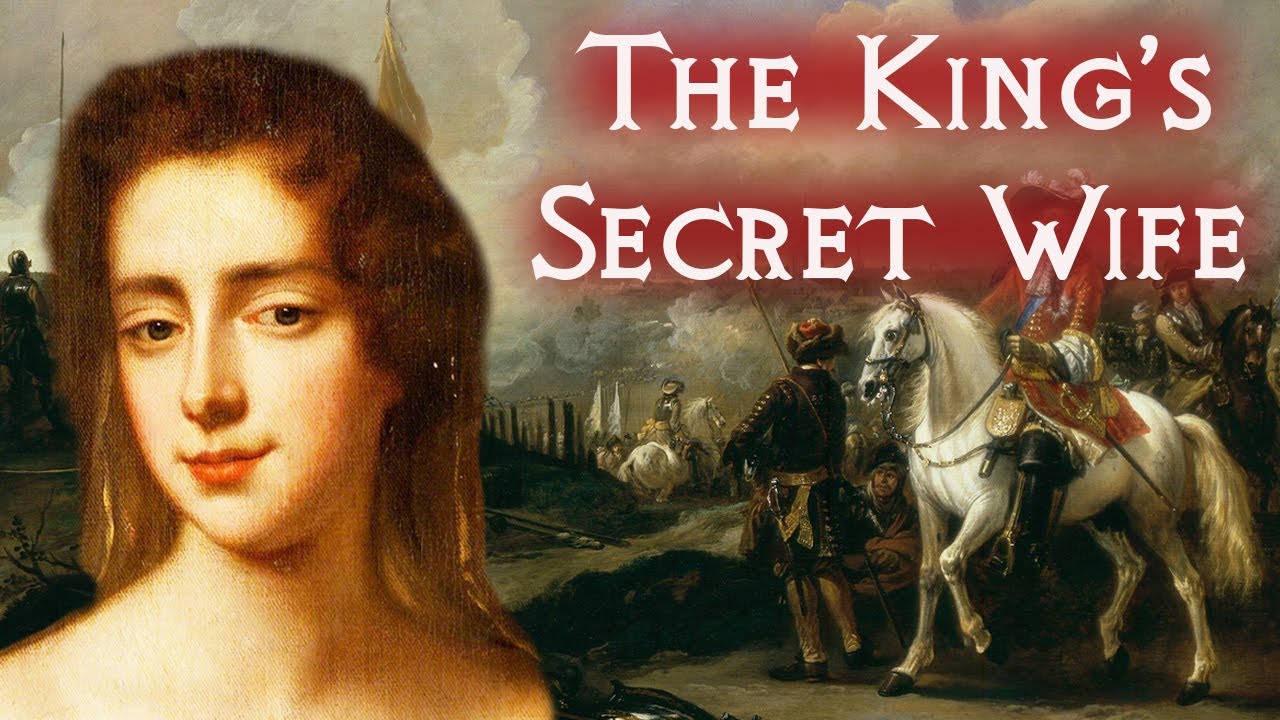
Lucy was born around the year 1630 at Roche Castle, near Haverford West in Pembrokeshire. Her father was William Walter and her mother was Elizabeth Protheroe, a niece of John Vaughan, the first Earl of Carbery. Her parents were part of the Welsh gentry, and her mother brought a dowry of six hundred pounds to the marriage. Lucy did not receive a formal education, but she learned the social graces required to mingle with good society.
She had two brothers, Richard and Justice. Her parents’ marriage was tempestuous, and they separated in 1640. William Walter remained at Roche Castle, while the rest of the family went to live with Lucy’s maternal grandmother in London. In May 1641, Lucy’s mother petitioned the House of Lords, stating that her husband had deserted her and denied her maintenance.
The Lords demanded Walter answer the charges. He countered that he had not received her six hundred pound dowry and that his wife had been unfaithful. He claimed he only had one hundred pounds per year to maintain himself. In June of the same year, the Lords ruled that Elizabeth should attempt to return to her husband.
He refused to take her back and was ordered to pay sixty pounds per annum instead. In the meantime, Lucy’s grandmother contracted a second marriage, and the Walter family was left to their own devices. In 1642, the Lords sequestered William Walter’s estates, and in 1644, Roche Castle was surrendered to Parliament during the English Civil War. When Lucy was seventeen, the Lords ordered that she and her brothers be returned to their family, as their mother could no longer afford to keep them.
While Lucy was in London, she may have become acquainted with the family of Algernon Sydney, the tenth Earl of Northumberland, through contacts with her Protheroe relations. Algernon Sydney later told King James II that he had purchased Lucy’s services as a mistress for forty or fifty gold pieces but was subsequently called away to guard Dover Castle with his regiment and missed out on his bargain. Lucy decided to search for new lovers among the many young aristocrats who had gone into exile in the Netherlands with the Prince of Wales, the future King Charles II. Some accounts say Lucy made her way to The Hague via Paris with her uncle, though others state she may have sailed there on her own.
Once there, she befriended Robert Sydney, brother of her friend Algernon Sydney, and briefly became his mistress. In May 1648, a portion of the Parliamentarian naval fleet mutinied and sailed to the Netherlands to join the Royalist exiles. Two months later, Prince Charles left France and quickly made his way to Holland to inspect his new fleet. During this time, Lucy managed to meet and seduce Charles, and she soon became pregnant.
It is unclear if she and Charles resumed their relationship when he returned to the Netherlands in September 1648. In any case, her son was born in April 1649 and was named James. After the birth, the baby boy was placed in the home of a merchant named Claus Guyson in Schiedam, just outside Rotterdam, where a nurse looked after him. Meanwhile, Lucy found lodging in Antwerp, and Charles left for France.
Charles’s father, King Charles I, had been executed on January 30, 1649, and the prince became King Charles II. Because of this, Charles’s attention was increasingly focused on political matters during this trying time. It is likely he would not have had time to sneak off and make a secret marriage. He also knew his marriageability was one of the bargaining chips he had available in getting back his throne.
Possible wives being considered for him at the time included Dutch, Spanish, and Portuguese princesses. In August 1649, Lucy went to France to meet with Charles and be introduced to his mother, Queen Henrietta Maria. The diarist John Evelyn rode in a coach with Lucy from Paris to St. Germain.
His diary entry for August 19, 1649 reads: “I went to Saint Germains to kiss her majesty’s hand. In the coach, which was my Lord Wilmot’s, went Mrs. Barlow, the king’s mistress, and mother of the Duke of Monmouth, a brown, beautiful, bold, but insipid creature. ” Lucy was referred to as Mrs.
Barlow because she had taken to using the name of her kinsman, John Barlow of Slebech. Her reasons for this are unknown. Throughout her life she would be variously known as Lucy Walters, Lucy Waters, Mrs. Barlow, and Mrs.
Walter. After meeting the queen, Charles departed for Jersey in September. It is possible that Lucy accompanied him there, though it is not certain. Charles was then away fighting in Scotland and England for the next two years.
During this time, Lucy became the mistress of Colonel Henry Bennet, later Earl of Arlington. The next record of Lucy was in The Hague in June 1650. Unfortunately, during this time, there was an attempt to kidnap her son. He was missing for ten days but was eventually found.
Lucy suspected Commonwealth operatives were behind this. To secure James’s safety, Lucy decided to remove him from Schiedam, taking him first to Boxtel near Breda and then eventually to Paris. While in Paris, she took as her protector Theobald, the second Viscount Taffe. In 1651, she gave birth to a daughter called Mary, who Lucy presumed to be Taffe’s child.
Charles refused to recognize this child as his. When Charles returned to the Netherlands in 1652, he made it clear to Lucy that their relationship was over. Lucy was distraught by the breakup and refused to accept this. Over the next four years, she caused Charles much trouble, creating disreputable scenes.
In the years that followed, Lucy considered marrying Sir Henry de Vic, an Englishman who lived in Brussels. She even had Charles’s approval to do so. Nevertheless, if she was actually proposing to marry this man, it would constitute bigamy if she was already married to Charles. After her relationship with Taffe was over, she returned to The Hague with her two children and took up with Thomas Howard, the Earl of Suffolk’s brother.
In 1656, she was in Cologne, where some of the king’s friends promised her a pension if she returned to England. She was given some cash and a pearl necklace and sailed from Flushing to England with her two children, her brother Justice, Thomas Howard, and a servant named Ann Hill. Once in London, the party found lodgings above a barber shop opposite Somerset House. Unable to live tranquilly, she came to the notice of the republican government, who had her arrested as a potential spy and thrown into the Tower at the end of June.
She was interrogated in July, and the criminal intelligence department decided not even the Royalists would employ her as a spy. Upon the orders of the Protector Oliver Cromwell, she was deported back to Flanders. By now, Lucy was abandoned by Thomas Howard and was penniless with two children to feed. As a result of her financial situation and the fact that Charles was unable to pay her promised pension, she started threatening Charles with releasing his letters to the public if he did not pay her allowance.
Despite her threats, Charles made no attempt to alleviate her monetary situation. However, he did decide that he wanted custody of their son James. In order to fulfill the king’s wishes, there was an attempt to kidnap him in December 1657, yet this failed. Nevertheless, in March 1658, one of the king’s spymasters, Thomas Ross, managed to successfully capture the boy.
Subsequently, James was sent to Paris in the care of a gentleman of the king’s bedchamber named William, Lord Crofts. Young James went on to adopt this man’s name as his own. Although this capture gave young James a better quality of life, for Lucy it was a grave injustice, and she was irrevocably separated from her son. By this time, she was in Paris and suffering from venereal disease.
On her deathbed, she made a general confession of her life to Dr. John Cosin, the future Bishop of Durham. In this confession, she allegedly insisted that a marriage had taken place between her and Charles. She also supposedly provided Cosin with documentary proof of the marriage, which he kept in a black box.
When Cosin died in 1671, the black box supposedly came into the possession of Sir Gilbert Gerard, the bishop’s son-in-law. Lucy died between August 29 and December of 1658, at the young age of twenty-eight. Her aunt, Ann Busfield, acted as executor of her estate, administering the goods, chattels, and debts. Lucy was supposedly buried in the Huguenot cemetery in the Faubourg St.
Germain in Paris. The burial ground was later confiscated after the revocation of the Edict of Nantes in 1685. Destruction of the Huguenot churches was decreed, and this particular site was converted to secular purposes. The register of burials was destroyed, so her grave can no longer be found.
Charles was restored to the throne of England in 1660 and recalled his son James to England in 1662, showing him much favor. The boy was given many riches and honors, including the title Duke of Monmouth. Due to his nomadic, unstable childhood, Lucy’s son James was poorly educated and could barely read and write for the rest of his life. What little education he had included instruction on the rights of Catholicism, but he never actually adopted the religion.
This nuance became important between 1673 and 1680. King Charles and his queen, Catherine of Braganza, never produced an heir who could inherit the English throne, leaving Charles’s brother James as the heir. But James was a Catholic, and there were many in England who did not want a Catholic monarch. During these years, a rumor began that Lucy and Charles were married and therefore the Duke of Monmouth was legitimate.
Following this, a search for the mysterious black box was undertaken for proof of the marriage. Gilbert Gerard was summoned before an extraordinary meeting of the Privy Council convened by the king in January 1678. Gilbert swore he knew nothing whatsoever of a marriage contract. The king also denied the marriage.
Two months later, Charles made a declaration to four of his councillors, including the Archbishop of Canterbury, that he had not married Lucy. In June 1678, he reiterated the declaration before his entire council and committed it to paper. It was signed by sixteen councillors, and Charles signed it with his own hand. It was entered in the council book and registered in Chancery.
Charles II died on February 6, 1685. His brother James then became King James II. Later that same year, the Duke of Monmouth raised a rebellion against his uncle. The rebellion was crushed after the Battle of Sedgemoor, and Monmouth was beheaded.
During his reign, James attempted to enforce religious tolerance and integrate Catholics into government positions, but this angered many Protestants. They requested that James’s daughter Mary and her husband William of Orange come to England. In the Glorious Revolution of 1688, William invaded England, James was deposed, and William and Mary became the new monarchs of England.