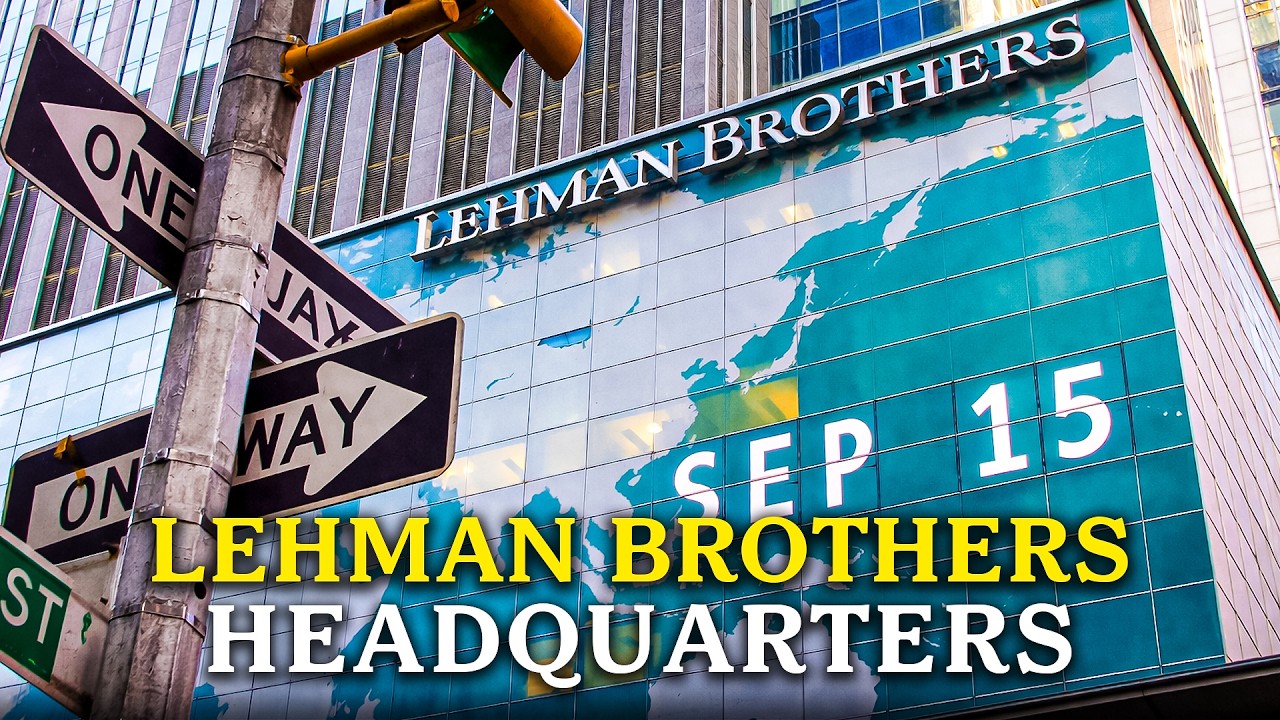
At 745 Seventh Avenue in Manhattan, the headquarters of Lehman Brothers stood as a monument to financial power. Thirty-two floors of glass and steel, polished marble lobbies, and trading floors buzzing with hundreds of desks where deals worth hundreds of millions of dollars were executed with a few keystrokes. The firm had survived the Civil War, two world wars, and the Great Depression. By 2007, it was the fourth-largest investment bank in America, employing over 25,000 people worldwide and reporting record profits year after year, including net income of more than four billion dollars that year alone.
The man at the helm was Richard Fuld, known on Wall Street as the Gorilla. He had run Lehman since 1993 and built a culture of intense loyalty and relentless work hours. Junior analysts arrived at six in the morning and left at midnight. Senior bankers took calls before dawn and after dinner.
The payoff was enormous. Fresh business school graduates could make six figures in their first year. Managing directors could pull in tens of millions annually in bonuses. Employees measured their worth in dollars, and the firm became their entire world.
They worked together, socialized together, and married each other. Lehman’s history added to its mystique. Founded in 1850 as a dry goods store in Alabama, the firm had moved into cotton trading, then finance, underwriting stock offerings and financing the growth of major American companies. It had navigated the panic of 1907, the crash of 1929, the Depression, and every crisis since.
That track record created a sense of invincibility. We’ve been through everything, the thinking went. We know how to navigate crisis. But by the mid-2000s, one area of business was driving profits more than any other: real estate, specifically mortgages and mortgage-backed securities.
The housing market was booming, and Lehman was at the center of it, originating mortgages, bundling them into securities, and selling them to investors while keeping some on its own books. The firm also used borrowed money to amplify returns, a practice called leverage. By 2007, Lehman’s leverage ratio was over 30 to 1. For every dollar the firm actually owned, it had borrowed thirty more to invest.
When everything goes up, leverage makes you look like a genius. When things go down, it destroys you. The first tremors came in late 2006 and early 2007. Home prices stopped rising in some markets, then began falling.
Foreclosures ticked upward. Borrowers who had taken subprime mortgages, loans given to people with poor credit, unstable income, and no down payment, started defaulting. Adjustable-rate mortgages that began with low teaser rates reset to much higher payments after a few years. The assumption was always that borrowers could refinance using the increased value of their homes.
That only worked while prices kept rising. When they stopped, the system broke down. Lehman had massive exposure to subprime mortgages, both directly and through the securities it owned. The firm’s leadership kept saying everything was fine, that this was a normal correction.
In the spring of 2007, New Century Financial, one of the largest subprime lenders in the country, filed for bankruptcy. Wall Street grew nervous. Lehman’s stock began a slow slide. Inside the building, risk managers ran stress tests.
The results were not comforting. The chief risk officer, Madelyn Antoncic, spent months pushing to reduce the firm’s real estate positions and build capital reserves. Her warnings were ignored. She left the firm in early 2008, frustrated that her concerns had been dismissed.
It was a pattern across Wall Street. The people responsible for making money had more power than the people responsible for managing risk. When risk managers said pull back, the revenue generators said we’re making too much money to stop. In a firm where compensation was tied directly to profits, the revenue generators won.
In August 2007, a French bank called BNP Paribas froze withdrawals from three investment funds because it could not accurately value the mortgage-backed securities they held. That announcement triggered near-panic. The problem was that these securities were supposed to be easy to value. Rating agencies had given many of them AAA ratings, supposedly as safe as government bonds.
But the ratings were worthless because the banks issuing the securities paid the rating agencies for their grades. Lehman’s stock dropped sharply, from the sixties into the forties. The firm reported its first quarterly loss in years. In March 2008, Bear Stearns, the fifth-largest investment bank in America, collapsed.
It had been heavily involved in mortgage-backed securities and used massive leverage, just like Lehman. In a matter of days, it went from a functioning investment bank to the verge of bankruptcy. The Federal Reserve arranged a rescue, and JPMorgan Chase bought Bear Stearns for two dollars per share, later raised to ten after shareholders revolted. A year earlier, the stock had traded at over 160 dollars.
Employees who had been paid largely in stock watched their net worth evaporate. Everyone on Wall Street understood what that meant. These firms depended on short-term borrowing to finance long-term investments, borrowing billions every day through the repo market. When lenders lost confidence, they stopped lending, and the firm collapsed.
Bear Stearns had died from a modern bank run, not depositors lining up, but sophisticated institutions refusing to lend overnight. At Lehman, executives knew they were in even deeper trouble. The firm had more real estate exposure than Bear Stearns, higher leverage, and a thinner capital cushion. Fuld and his team started exploring options.
They could raise capital, sell divisions, find a buyer. In June 2008, Lehman announced it was raising six billion dollars by selling new stock and preferred shares. It was supposed to be a show of strength. The market saw a firm desperate for cash.
The stock kept falling, from thirty dollars in June to the twenties in July. Lehman tried to sell its investment management division, but potential buyers knew the firm was desperate and bid accordingly. The firm tried to spin off its toxic real estate assets into a separate company called SpinCo. Investors had no confidence it would work.
There were layoffs, fifteen hundred jobs cut, employees escorted out of the building by security after an hour to pack their desks. The cafeteria conversations changed. People talked about whether the firm would survive, whether their stock options would be worth anything, whether they were going down with the ship. Lehman approached potential buyers.
Bank of America looked at the books. Barclays took a serious look. HSBC and Korea Development Bank were mentioned. One by one, they walked away.
The risk was too high, the potential losses too unpredictable. Why buy a sinking ship? In August, Lehman reported a loss of almost four billion dollars in a single quarter. The stock dropped into the teens.
Top performers began leaving while they could. The brain drain made everything worse. The final weekend began on Friday, September 12, 2008. Lehman’s stock closed at 3.
65 dollars per share. The firm’s market value had dropped from 45 billion to less than 2 billion in a matter of months. Throughout the weekend, officials from the Treasury Department and the Federal Reserve brought together executives from all the major Wall Street banks at the New York Federal Reserve building to decide Lehman’s fate. Two potential buyers emerged: Bank of America and Barclays.
Both wanted the government to provide financial support, to absorb some of Lehman’s toxic assets and reduce the risk for the acquiring bank. At 745 Seventh Avenue, a skeleton crew of executives and lawyers waited for news. Conference rooms were occupied by small groups having hushed conversations. People checked their phones obsessively.
The government made its decision. It would not provide support for a Lehman acquisition. Officials believed the market needed to learn that firms could fail, that bailouts were not automatic. They thought the financial system could absorb the failure.
They were catastrophically wrong. Bank of America pulled out and announced it was buying Merrill Lynch instead. Barclays pulled out when British regulators refused to approve the deal without government support. On Saturday night, it became clear there would be no rescue.
On Sunday, September 14, 2008, Lehman Brothers filed for Chapter 11 bankruptcy protection. It was the largest bankruptcy in American history, over 600 billion dollars in assets, 25,000 employees, 158 years of history, gone. Employees were told to come to the office to collect their belongings. Security was tight.
People were crying. Some were angry, shouting that the executives had destroyed the firm. Twenty-year veterans left with cardboard boxes full of family photos and coffee mugs. The trading floor looked like a graveyard.
Computer screens were dark. Phones were silent. Fuld had worked around the clock all weekend, making calls until the end. Now there was nothing left to do.
The firm he had run for fifteen years was bankrupt. Monday, September 15, 2008. The stock market opened and plunged. The Dow dropped over 500 points.
If Lehman could fail, investors realized, any financial institution could fail. Panic spread through the global financial system. Banks stopped lending to each other. Credit markets froze.
AIG, one of the largest insurance companies in the world, was on the verge of collapse and received an 85-billion-dollar government bailout. Money market funds broke the buck, and investors pulled their money out en masse. The government rolled out massive intervention programs, including a 700-billion-dollar bailout fund, emergency lending facilities, and guarantees on bank deposits. The recession that had been building accelerated into free fall.
Unemployment climbed. Housing prices collapsed. The stock market lost trillions of dollars in value. The failure of Lehman Brothers had turned a serious financial problem into the worst economic crisis since the Great Depression.
The human cost stretched far beyond the trading floors. Jennifer worked in Lehman’s human resources department for twelve years. She lost her position, her stock options, and a significant chunk of her retirement savings. She was 47 and had to start over at a smaller company for half her previous salary.
Michael was a managing director in real estate, making millions a year with stock options worth tens of millions on paper. After the bankruptcy, those options were worthless. He was in his early fifties, too young to retire and too senior for most firms to hire. He ended up doing consulting work for a fraction of what he had earned before.
Support staff, secretaries, IT workers, and facilities managers, lost stable jobs in the middle of the worst recession in decades. Employees encouraged to invest heavily in company stock saw retirement accounts worth hundreds of thousands of dollars become worth pennies on the dollar. Marriages fell apart under the stress. Depression and anxiety were widespread.
In the years after the collapse, there were former employees who took their own lives, their families and friends convinced that the loss of their careers and financial security had been major factors. Junior employees who had joined right out of business school with six-figure student debt found themselves unemployed with no experience and no career path. The bankruptcy proceedings dragged on for years. Creditors fought over whatever assets remained.
Shareholders got essentially nothing. Richard Fuld was called to testify before Congress, grilled about his compensation and whether he had misled investors. He defended his decisions, but his legacy became permanently tied to the collapse. The building at 745 Seventh Avenue was emptied and eventually leased to new tenants.
The Lehman name was gone from the facade. No plaque, no memorial marks what happened there. The financial industry changed after the crisis. New regulations imposed higher capital requirements, leverage limits, and mandatory stress tests.
But banks are bigger now than they were before. The financial system is more concentrated. Fuld never ran another major company. He remains wealthy, which is more than can be said for many of his former employees.
Lehman Brothers operated for 158 years, from a small dry goods store in Montgomery, Alabama, to a Wall Street powerhouse. It survived everything until it didn’t. In another fifty years, maybe nobody will remember that Lehman was ever there.
But for now, if you know where to look, the ghosts remain.