Pua Maga had one of those smiles. It was bright, genuine, and so warm that it seemed to reach through the television screen and make you smile too. For years, he was one of New Zealand’s most beloved stars, a cheerful presence in the living rooms of millions. He was the handsome nurse on the nation’s favorite soap opera, the fun-loving Red Ranger, the cheeky co-host of a popular breakfast radio show.
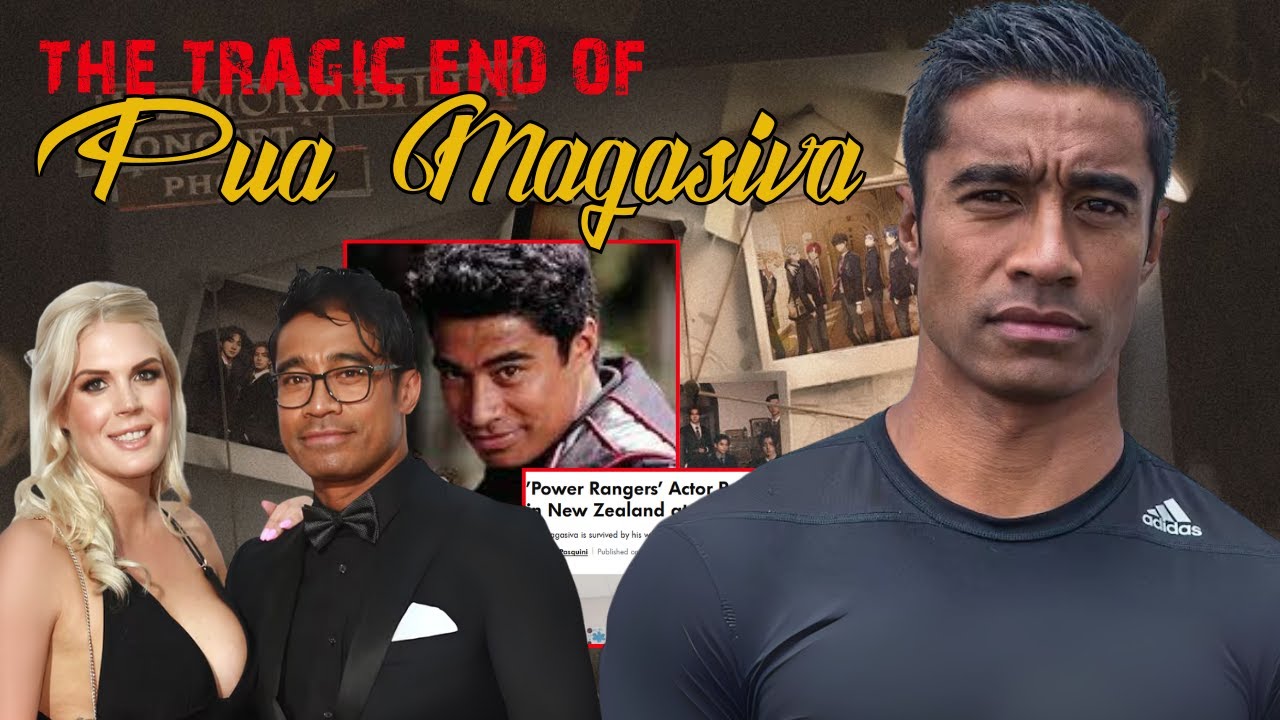
His energy was infectious, his laugh was loud, and his public persona was one of boundless, uncomplicated joy. But the smile was a mask. Behind the public image of a happy-go-lucky hero was a private world of pain, anger, and a darkness so profound that no one saw it coming. To understand the impact of Pua Maga, you first need to understand the cultural landscape of New Zealand.
Unlike the star-saturated celebrity culture of Hollywood, New Zealand is a small, close-knit country. Its celebrities feel more accessible, more like members of an extended national family. For decades, the undisputed heart of New Zealand television was a weeknight soap opera called Shortland Street. Launched in the early 1990s, the show was more than just a TV program; it was a national institution.
Set in a fictional Auckland hospital, it mirrored the country’s changing social and cultural dynamics for over thirty years. Generations of Kiwis grew up with it, its characters and storylines becoming part of daily conversation. To be a star on Shortland Street was to achieve a special kind of fame, a down-to-earth celebrity that made you a household name. It was also a landscape where cultural representation was becoming increasingly important.
New Zealand is a proudly multicultural nation with a large and vibrant Pacific community. For a long time, these communities were under-represented in the media. But by the late 1990s and early 2000s, a new generation of Pacific actors was emerging, bringing their voices to the mainstream. Pua Maga was at the forefront of this wave.
He was born in Apia, Samoa, in 1980, the son of a loving and supportive family. When he was a young child, his family moved to Wellington, New Zealand, in search of better opportunities. From a young age, Pua was a natural performer, a charismatic and energetic kid who loved to entertain. He and his older brother, Robbie, who would also become a successful actor, were inspired by the first generation of Pacific actors who were breaking down barriers.
They saw a path for themselves. Pua was not just an aspiring actor; he was a young Samoan man who was part of a cultural movement. His success was not just his own. It was a source of immense pride for his family and for the entire Pacific community.
He was a role model, a symbol of what was possible, and he carried that responsibility throughout his entire career. Pua Maga’s rise to fame was a story of natural talent meeting perfect timing. He had an undeniable star quality: a combination of classic good looks, comedic timing, and a deep well of emotional accessibility. After honing his craft in school productions and small theater roles, he got his first big break in the early 2000s.
In 2003, he was cast as Shane Clarke, the Red Wind Ranger, in Power Rangers Ninja Storm. The franchise had moved its production to New Zealand, and Pua was cast as the team’s confident and good-natured leader. For a global audience of kids, he became an instant hero. The show was a massive international success and gave Pua his first taste of global fame.
But it was his next role that made him a true star in his home country. He joined the cast of Shortland Street as the charming and lovable nurse, Vinnie Kruse. It was a role he would play on and off for over a decade. Vinnie was a classic good guy, a loyal friend, a devoted family man, and a source of comic relief.
He was the heart of the show for many viewers, and Pua’s natural charm made the character a national favorite. Through Vinnie, Pua became a nightly presence in the homes of New Zealanders. His career continued to flourish. He was a contestant on Dancing with the Stars, further endearing himself to the public with his enthusiasm and willingness to poke fun at himself.
He also had a successful career in theater and film, starring alongside his brother Robbie in the acclaimed 2006 film Siones Wedding, a comedy that was a cultural landmark for the Pacific community. In his later years, he expanded into radio, becoming a co-host on Flava, a popular national breakfast show. Here, his personality shone through in a new way. He was funny, self-deprecating, and incredibly open, sharing stories about his family, his struggles with parenting, and his daily life.
His infectious laugh became a familiar and comforting sound to thousands of listeners during their morning commute. On the surface, his life seemed perfect. He was a successful and beloved celebrity. He was married to Liz Sadler, and he had a young daughter from a previous relationship, as well as a step-daughter.
He posted frequently on social media, sharing smiling photos of his family, goofy videos, and inspirational messages. He projected an image of a man living a life full of love, laughter, and success. But behind this carefully curated public image, a very different and much darker story was unfolding. Those who knew him best describe a man of profound contradictions.
He was genuinely kind, generous, and loving. His co-stars and friends remember his boundless energy on set, his ability to make everyone laugh, and his deep sense of loyalty. But there was another side to him, a side he kept hidden from the world. He had a volatile temper, a dark and brooding side that could surface without warning.
He struggled with alcohol, which often exacerbated his inner turmoil, and he was haunted by a past trauma he rarely spoke of. His relationship with his wife Liz was tempestuous. It was a cycle of love and conflict, of happy moments punctuated by episodes of intense and frightening anger. Liz would later describe a man at war with himself, a loving husband and father who was also capable of terrifying outbursts of rage.
The pressures of his public persona weighed heavily on him. He felt an immense responsibility to be a role model, especially for the Pacific community. He was Pua Maga, the good guy, the funny man, the beloved star. He had to be on all the time.
This created a profound disconnect between his inner reality and his outer life. He had no outlet for his pain, no way to be vulnerable without shattering the public image he had constructed. This internal conflict manifested in a deep sense of self-loathing. His wife would later reveal that he would often refer to himself as a piece of trash, a sign of the intense shame and guilt he was carrying.
On May 11, 2019, the unthinkable happened. Pua Maga was found dead in a hotel room in Wellington. He was just 38 years old. Initial news reports were sparse, stating only that his death was not suspicious.
The nation was plunged into shock and grief. How could the man with the biggest smile in New Zealand be gone? Tributes poured in from colleagues, fans, and the prime minister. In the immediate aftermath, the narrative was one of tragic suicide.
The focus was on mental health and the hidden struggles that can lie behind a smiling facade. That was undoubtedly a crucial part of his story, but it was not the whole story. The full truth was far more complex and disturbing, and it would only come to light after a brave decision by his widow, Liz. At the time of his death, Pua was facing charges for domestic assault against his wife.
Due to New Zealand’s strict name suppression laws, his name was legally protected from being published in relation to the charges. His death meant the case would never go to trial, and under normal circumstances, his name would have been permanently suppressed. But Liz Maga made a courageous choice. She believed the truth needed to be told, not to tarnish her late husband’s memory, but to shed light on the pervasive issue of domestic violence.
She petitioned the court to lift the name suppression. In December of 2019, a judge agreed, and the full heartbreaking story came out. The revelations were shocking. Liz detailed a history of physical and emotional abuse that had escalated in the final years of their marriage.
She described a man who was a master of manipulation, charming and loving one moment, terrifyingly violent the next. He had assaulted her, strangled her, and verbally abused her. The night he died was the culmination of another violent outburst, a final terrible act in a long and painful cycle of abuse. The lifting of name suppression created a profound controversy.
It forced the New Zealand public to completely re-evaluate their perception of a man they thought they knew. The beloved hero was also a perpetrator of domestic violence. Some fans reacted with disbelief and denial. Others felt betrayed and angry.
But for many, especially those in the domestic violence and mental health sectors, the revelations were a powerful and necessary wake-up call. Liz Maga’s bravery was widely praised. She explained her decision in a powerful interview saying, “I did not want to be a silent victim. I want to help other women and I want Pua to be a lesson for other men.
”
The death of Pua Maga and the revelations about his hidden life of violence sent a shock wave across New Zealand. His story became a national reckoning, forcing a painful conversation about the country’s most pressing social issues. New Zealand has one of the highest rates of domestic and family violence in the developed world, an issue often shrouded in shame and silence. Pua’s case brought it into the mainstream.
It shattered the myth that domestic violence only happens in certain types of families, proving it can happen anywhere, even in the home of a smiling, successful, seemingly happy celebrity. His life and death also had a major impact on conversations about mental health, particularly among men and within the Pacific community. There is immense pressure to be the strong, silent provider. Pua’s story revealed the deadly cost of this silence.
He was a man in immense pain who felt unable to seek help for fear of damaging his strong-man image. His death highlighted the urgent need for more accessible and culturally appropriate mental health services. In the end, we are left with the difficult task of making sense of a life defined by profound contradictions. How do we remember Pua Maga?
There are no easy answers. To remember him only as the smiling hero would be a disservice to the truth and a betrayal of the victim who bravely spoke out. But to remember him only as a monster would also be too simple. It would ignore the genuine light he possessed, the joy he brought to so many, and the deep wounds he carried.
Perhaps the only way to remember him is to hold both truths at the same time. He was a man both loved and feared, a source of both great happiness and great pain. He was a victim who became a perpetrator, a man lost in a cycle of trauma he could not break.
His story is a tragedy in the truest sense, leaving us with a lingering sadness for the wife he terrorized, the children he left behind, and the man himself who could never find a way to escape the darkness within.