The morning they left smelled like wet asphalt and pine, a scent that clings long after the car disappears. Leela laughed at something small, her head tipped back, dark hair catching the pale light, while Mara checked her phone a third time, thumb hovering over a message she never sent. They were close enough in age that strangers took them for twins, but anyone who knew them could see the difference. Leela moved through the world with impulse and warmth; Mara carried an extra layer of thought beneath her words, listening to something the rest of them could not hear.
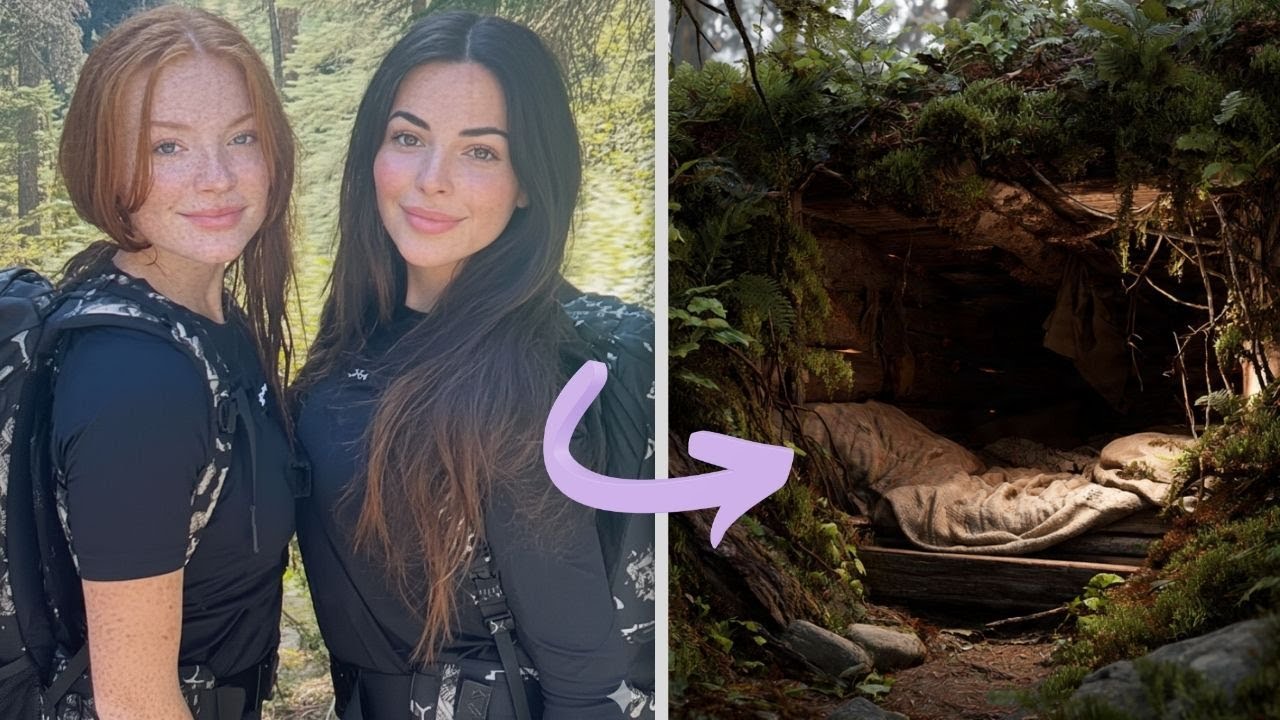
They hugged me on the porch, backpacks knocking into my ribs, and Leela promised they would be back before I had time to miss them. Just a weekend, she said. A breath of freedom. Mara held on a second longer, her hand tightening at the back of my jacket, and when she pulled away, her eyes searched my face as if she wanted to say something heavier.
Instead, she told me to keep the porch light on, joking that it made the house look like it was waiting for them. I laughed and promised. Their car rolled down the driveway, tires hissing over damp gravel, and the red brake lights glowed through the mist like dying embers before the road swallowed them. The Smoky Mountains had always been the place they talked about the way people talk about dreams, beautiful and a little unreal.
Leela had pushed for the trip, scrolling through pictures late at night, pointing out waterfalls and trails with names that sounded like poetry. Mara agreed slowly, reading reviews, mapping routes, packing extra food and a first aid kit, the practical counterweight to Leela’s fire. On the drive they played the same old playlist they had grown up with, singing too loud, windows cracked to let the cool air tangle their hair. They stopped at a diner outside the park, ordered pancakes they could not finish, and a waitress told them the mountains were beautiful but did not give anything away for free.
They took pictures in the parking lot, Leela pretending to wrestle her oversized backpack, Mara squinting into the sun with a rare, unguarded smile. Those photos would matter more than anyone could have guessed. By the time they reached the trailhead, fog was already creeping through the trees, thin and silver, curling around trunks like breath. The air smelled of damp earth and moss and something wild.
Mara checked the map, adjusted her straps, and reminded her sister not to rush ahead, that the path could get tricky deeper in. Leela only grinned and promised, though her boots were already crunching forward over fallen leaves. The first stretch was easy, wide enough to walk side by side, their voices echoing softly between the trees. They talked about work they were tired of, dreams they had not quite dared to chase, the way the world felt like it was moving faster than they were ready for.
Mara mentioned almost casually that she had been thinking about making a change, maybe leaving town, doing something just for herself. Leela bumped her shoulder and told her she would follow her anywhere. Sisters did not let distance break them. As they climbed, the fog thickened, turning the forest into a maze of muted shapes and dripping leaves.
The sounds of the world beyond faded until all that remained were their footsteps, their breathing, the occasional call of a bird unseen above. Leela’s laughter grew quieter, replaced by focused excitement, while Mara’s caution sharpened, her gaze constantly scanning for trail markers. They passed a fallen log slick with moss and a stream cutting across the trail in a rush of cold, clear water. They stopped to splash their faces, gasping and laughing, the sound echoing strange and hollow in the fog.
It was there that Mara pulled out her phone and frowned at the lack of signal. Leela teased her to let go, to pretend the world did not exist beyond the trees for a while. Mara slipped the phone back into her pocket, but her fingers lingered there, as if she needed to feel its weight to stay anchored. They went deeper, the trail twisting and climbing, the forest closing in until the sky was only a pale suggestion above them.
Leela moved ahead, her red jacket a bright thread in the gray-green world, while Mara followed a few steps behind, calling out when roots crossed the path, when stones shifted underfoot. The fog pressed closer, dampening sound, making the space between them feel longer than it was. At one point Leela turned around, face flushed, eyes shining, and said it felt like they were walking into another world, like the mountains were swallowing them whole. Mara told her not to say things like that, half laughing, half serious, because even jokes could make fear real if you let them.
They reached a fork where the trail split. One path was marked clearly; the other was narrower, its sign partially hidden by a leaning branch. Leela stepped toward the smaller path, saying it looked more interesting, more like the pictures she had seen. Mara crouched to brush leaves away from the sign, trying to read the faded letters.
The fog shifted then, thickening, and for a moment even the path they had come from seemed to blur, as if the forest were rearranging itself while they were not looking. Leela waited, bouncing lightly on her toes. Mara stood, map in hand, eyes moving between paper and trees, her brow furrowed with the weight of the choice. The simple, ordinary act of deciding which way to go felt suddenly heavier than it should have.
By the time the sun dipped behind the ridgeline that first night, their car was still sitting at the trailhead, a thin line of dust settling over the windshield like a quiet accusation. The waiting began, not with panic, but with a tightening in the chest that made every minute feel louder than the last. At home, the porch light glowed into the dark the way I had promised. I kept glancing at the clock, telling myself they were probably still hiking, lost track of time the way Leela always did when she was happy.
But when midnight came and went and my phone stayed stubbornly silent, that tightness spread until it wrapped around my ribs. Calls went unanswered. Texts stacked up without a single reply. When I drove to the park and saw their car exactly where it had been the day before, the fog still clinging to the trees like a second skin, something inside me finally broke open.
Rangers moved with calm efficiency, asking what they were wearing, where they were headed, how experienced they were. I answered automatically, words spilling out as if I were reciting a story I had heard before, not one I was suddenly living. Search teams formed quickly, boots lacing, packs tightened, dogs straining at leashes. Soon the forest was filled with voices calling their names, branches snapping under hurried steps, whistles cutting through the damp air.
I followed as far as they would let me, standing at the edge of the trail, watching bright vests disappear into the gray-green world, feeling useless in a way I had never known before. Their parents arrived by midday, faces pale, eyes wide with a fear that did not yet have a name. Their mother gripped my hands so hard it hurt, asking what I knew, what I had heard. I told her everything, every small detail of that morning, the hugs, the jokes, the way Mara had lingered, and with every word her face crumpled a little more until she pressed her forehead to mine and whispered their names like a prayer.
The first night of searching ended without answers. Lights moved through the dark like distant stars, dogs barked somewhere far off, and then, one by one, the teams returned, muddy and exhausted, shaking their heads. Rain began to fall again, soft at first, then harder, drumming on plastic and leaves, turning the ground into slick mud. No one said much.
There was nothing to say that could make it better. Days turned into a strange rhythm of hope and exhaustion. Each morning brought fresh teams, more volunteers, people from nearby towns who had seen the news and decided to help. They searched trails and ravines, called into hollows, checked shelters and streams, marking maps with lines that slowly spread like cracks across glass.
Helicopters thudded overhead while drones buzzed through gaps in the trees, looking for any sign of red fabric, any movement that did not belong to the forest. We clung to rumors that flared and died just as quickly. Someone thought they heard voices near a ridge, but it was wind. A hiker reported a red flash through the trees, but it was just scrap plastic caught on a branch.
Each false lead cut deeper than the last. After a week, the tone shifted. The words people used grew heavier, more careful. Recovery started to replace rescue in conversations that were meant to be private but were not, because grief has a way of leaking through walls.
The search areas widened, then narrowed, then widened again, but nothing changed. No backpacks, no footprints that could not be explained, no sign that two young women had ever passed through those trees at all. It was as if the mountains had swallowed them whole and sealed themselves shut behind them. Media trucks arrived, their cameras feeling obscene against the quiet pain of waiting.
Reporters asked the same questions over and over, their voices soft, their eyes sharp, hunting for tears, for sound bites. Their faces appeared on screens, smiles frozen in time, while strangers across the state learned their names and then moved on to the next headline. Weeks stretched into months, and slowly, almost imperceptibly, the search thinned. Volunteers went back to their lives, teams scaled down, updates came less often.
When officials finally sat us down and told us they were suspending active efforts, it felt like being told to start mourning without a body, without a goodbye, without any proof that goodbye was even the right word. The porch light stayed on every night, a stubborn little star against the dark. Their mother kept setting two extra plates at dinner, then pushing them away at the last moment, tears slipping into her napkin. Their father threw himself into work, coming home late, collapsing into bed without a word.
In dreams I saw fog rolling between trees and heard voices calling out names that echoed without reply. In waking moments, a car passing too slowly would make my heart race. A knock at the door would send a shock through my chest, and for a split second I would believe it was them, muddy and tired but alive, back to tell us it had all been some terrible mistake. But the door always opened to someone else.
Time did not heal us. It only learned how to move around the wound. And by the second year, the house had settled into a quiet that felt less like peace and more like surrender. It was in the third year that the calls began.
A woman in North Carolina swore she had seen a girl who looked like Mara working at a diner off the highway. A trucker said he had picked up a hitchhiker in Tennessee who had Leela’s eyes. Each time, hope flared like a match struck in the dark, bright and burning, only to die just as quickly when photos did not match, when timelines did not fit, when faces were similar but not the ones we knew by heart. Then came the voicemail.
It was a Sunday afternoon, gray and slow, when my phone buzzed with a number I did not recognize. The message was short, no more than a few seconds. But I knew that voice before my mind could catch up. It was Leela, thin and trembling, saying only my name just once, like she was afraid to say more.
Then a soft sound, like breathing, and the call cut off. I replayed it until my hands shook so badly I nearly dropped the phone. We took it to the police the same day. They analyzed it, ran it through software, checked phone records and trace towers, but all they could tell us was that it had come from somewhere in the eastern part of the state, bounced through a prepaid phone that was already dead.
Still, it was something. For the first time in years, we had proof, or at least the shadow of proof, that one of them might be alive. Then one cold morning in late autumn, the call came that was different. A deputy from a small town near the edge of the mountains said they had someone in custody.
A young woman found wandering near a closed rest stop, barefoot, disoriented, unable to say where she had come from. She had no ID, barely spoke. But when they showed her missing person’s photos, she had pointed to Leela’s picture and whispered a name that sounded like hers. They wanted us to come.
The drive felt endless, every mile tightening the knot in my chest. At the station, they led us down a narrow hallway to a small room with a table and three chairs. Then the door opened. She stepped in slowly, wrapped in an oversized hoodie, her hair tangled and uneven, her face pale under the harsh light.
She looked thinner than I remembered, sharper somehow, as if life had carved pieces out of her and left only the edges. Her eyes were the same, though, dark, wide, searching. Their mother stood, a sound tearing from her throat that was half sob, half prayer, and said Leela’s name. The girl flinched, not in recognition, in fear.
She backed toward the door, shoulders hunched, eyes darting between us, as if we were the ones who did not belong. In a voice so quiet it barely reached us, she said she was not Leela. She said she did not know that name. She said we had the wrong person.
Their mother reached out, whispering that it was okay, that she was safe now, that she could come home. The girl shook her head harder, tears spilling down her cheeks, repeating, no, no, no, like a child who had learned that word as a shield. But when her eyes met mine, something shifted. She stared at me for a long moment, breathing quick and shallow, and then, almost against her will, she whispered my name.
Just one. The room went very still. Bit by bit, through nods and broken words, we learned that she remembered very little. She knew she had been somewhere dark.
She knew she had not been allowed to speak. She knew she was supposed to follow rules she could not quite explain. Names, places, time, all of it was fog. But when they asked about Mara, her face went blank.
She did not know that name at all. In the hospital, doctors spoke of dehydration, malnutrition, trauma, long-term confinement. When they asked if she had been hurt, if someone had done this to her, she stared at the ceiling and said nothing. Her jaw clenched so tight a muscle twitched along her cheek.
Whatever she had survived lived somewhere deeper than language. One afternoon, a counselor asked if there was any name she preferred. The girl stared at her hands for a long time, then whispered a word none of us recognized, soft and uncertain. From then on, the staff used that name, and she seemed to relax just a little, as if being called something chosen, even half remembered, made the world less threatening.
A nurse first noticed the scars, faint and old, almost hidden along her wrists and ankles, pale lines that circled the skin like ghostly bracelets. When asked about them, the girl stiffened and whispered that she was not supposed to talk about that, that it was not allowed. She shut down completely, curling into herself until they backed off. Then one quiet afternoon, as rain traced thin lines down the window, she asked me if I knew a song about fireflies.
It was a silly little tune Mara used to hum on camping trips, making up words as she went, teasing Leela until she laughed and tried to sing louder. No one else knew it. It was theirs. I told her I did.
She closed her eyes, brow furrowing as if reaching for something just out of grasp, and asked me to sing it. My voice shook as I began the simple melody, carrying with it a thousand memories of nights under open skies, of laughter and warmth and being whole. As I sang, tears slid down her cheeks, silent and steady. When I reached the end, she whispered that someone used to sing that to her in the dark, that it made the dark feel smaller.
I asked her who. She shook her head, confused, pressing her fingers to her temples like she could squeeze the answer out. Then she looked at me, eyes wide and wet, and said she thought it was her sister. I did not ask which one.
I did not name her. In that moment, I knew that somewhere beneath the fear and the fog, beneath the scars and the silence, Leela was still there, fighting her way back, one memory at a time. The day they finally let her leave the hospital, the sky was low and gray. She stood by the window in borrowed clothes, a sweater too big for her thin frame, watching rain bead and slide across the glass.
When the nurse told her it was time, she did not move right away, as if stepping outside meant crossing an invisible line she was not sure she was allowed to cross. Their mother took her hand, and only then did she nod. She kept her eyes down on the way home, counting tiles, breathing in short, careful pulls. When we crossed the bridge over the river, she leaned forward, peering down at the dark water, and asked in a small voice if it ever stopped moving.
I told her it did not, that even when it looks calm, it is always going somewhere. At home, she moved from room to room, touching things lightly, tracing the edge of a picture frame, her face a mix of curiosity and quiet grief, like she could feel the memories even if she could not fully see them. She asked what had happened to Mara. I told her the truth, that Mara had never come back, that searches had gone on for months, that eventually they had stopped calling her missing and started calling her gone.
She nodded slowly, absorbing it, her face pale. Then she whispered that she was supposed to protect her, that she had promised on the trail to stay close, not to wander off, that she must have failed. It was the first time we saw her cry like that, not in small, silent tears, but in deep, wrenching sobs that shook her whole body. We held her between us on the kitchen floor, letting her grief pour out until it left her exhausted and limp in our arms.
One evening, as the sun set, painting the sky in soft oranges and pinks, she stood at the front window and asked if we could go back to the mountains someday. She said she did not mean now or soon, just someday, when she was stronger, when she could stand there again and not be afraid. She said she wanted to remember the good parts, the wind in the trees, the way the trail smelled after rain, the sound of Mara laughing when she slipped on a rock and pretended it was on purpose. I told her maybe, that we would see.
She smiled faintly, leaning her forehead against the glass. And in that moment, for the first time since she had walked out of the woods and back into our lives, she looked less like someone who had been rescued and more like someone who might one day learn how to live again. The dawn came pale and thin, sliding over the Smoky Mountains, and I stood at the edge of the clearing with the smell of wet pine in my lungs. They had found the place before sunrise, the narrow ravine where the earth dipped and the rocks formed a crude shelter.
I watched from a distance as the search team moved carefully, their flashlights cutting through the last of the dark. When they uncovered what remained, there was no shock left in me, only a hollow quiet that felt like the end of a long-held breath. I did not go closer. I did not need to.
I had carried that sight with me every night since the moment I ran. Since the moment fear made me choose my own heartbeat over my sister’s fading one. I closed my eyes and saw her as she had been before the mountains swallowed us, laughing with her head thrown back, teasing me for being too cautious, too afraid to live loud. When I turned, my father was there, standing a few steps away, his shoulders bent as if the years had pressed him down inch by inch.
I waited for anger, for the words I knew I deserved. But what I saw in his eyes was something softer and more devastating, a grief that had learned to live with itself and now did not know what to do with the truth. I thought I lost both of you, he said. I stepped toward him, then stopped, unsure if I had the right, but he closed the distance and wrapped his arms around me, holding on like he might fall apart if he did not.
For the first time in six years, I let myself be held without flinching. Later, when most of the people had gone, I walked alone to the edge of the trail where the ground sloped down toward the ravine. I knelt and pressed my palm to the cold earth, and I whispered her name, not like a plea this time, but like a promise. I told her I was sorry, that I was afraid, that I had been so young and so small in the face of that endless dark, and that I had carried her with me every step of the way, even when I pretended I had not.
The wind moved through the branches above, making the leaves shiver. I did not know if forgiveness was something I could ever earn, but I stayed there anyway, letting the mountains hear me at last. When I stood, my legs trembled, but I felt steadier than I had in years. I turned toward the path that led back to the waiting world.
I knew it would not be easy, that some nights the dark would still come for me. But I also knew I would not run anymore. The mountains had taken enough from us. They would not take the rest of my life, too.
As I walked away, the light filtered through the trees, catching on the drifting mist and turning it gold. And in that quiet glow, I imagined her walking beside me, not as she was at the end, broken and afraid, but as she had been at the start, strong and bright, teasing me to keep up. I carried that image with me step by step until the trail curved and the forest closed in behind, leaving only the echo of two sets of footsteps fading into the heart of the Smokies.