In the summer of 1840, the first horse fell, then the rider’s hat, then the man himself. Dust rose slowly behind him across a plain southwest of a stream the Tonkawa people called “the place where the water bends. ” It was August 12. The Colorado River ran shallow that year, the grass tall enough to hide a man on his knees, and moving north across the horizon like a slow black storm was the largest column of Comanche warriors any settler in Texas had ever seen—six hundred, some said; a thousand, said others.
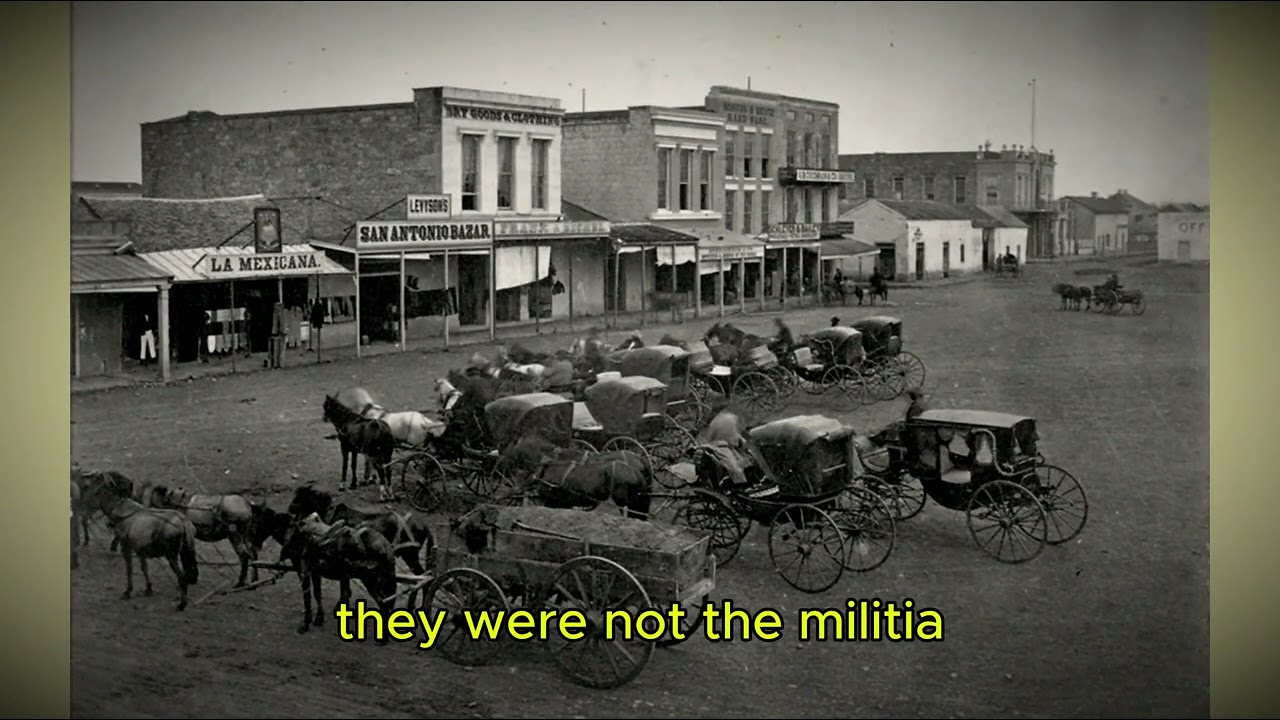
Whatever the number, it was enormous. They were driving pack mules laden with silk from a warehouse in a town that no longer existed. That town had been standing four days earlier. The Comanche had ruled a vast territory for nearly a century.
The Spanish had named it Comancheria, stretching from the eastern edge of New Mexico across the Panhandle into central Texas, and including parts of Oklahoma, Kansas, and Colorado. Within that territory, the Comanche were the government. They collected tribute, set the rules of trade, and decided who passed and who did not. By 1840, they had practiced this for four generations and mastered the art of the raid.
A single Comanche war party could cover four hundred miles in a week. Their horses were smaller than those of American settlers but trained for endurance, able to turn on a coin. A warrior could ride eighteen hours straight and loose fourteen arrows in the time it took a settler to reload a single-shot rifle. Fifteen years of raids had drained Texas outposts completely.
Families vanished between one day and the next. Thousands of cattle were stolen. The Republic of Texas, barely four years old, was desperately short of money and men. Something had to break, and in March it did, in a stone building on the main square of San Antonio de Béxar.
In the winter of 1839, a delegation of Comanche leaders sent a message expressing a desire to negotiate peace. The Republic agreed, and a meeting was set for March 19, 1840. The Texans declared in advance that peace could not be discussed until all white captives held by the Comanche were released. The Comanche leaders replied that they would come, and they did.
Sixty-five men, women, and children of the Penateka band arrived that morning. Twelve chiefs, including the great war chief Mukwooru, entered the stone council house, where three Texas commissioners, an interpreter, and two full companies of Texas soldiers waited. The Comanche brought one white captive, a fifteen-year-old girl named Matilda Lockhart, captured nearly two years before. The details of her condition were horrible enough that the Texans stopped negotiating the moment she spoke.
Colonel William Fisher demanded the other captives. The chiefs answered honestly, saying the others were in distant camps and would be brought one by one in exchange for horses, blankets, and guns. Fisher refused and said the chiefs were under arrest until every captive was released. What happened next took about ninety seconds.
Chief Mukwooru reached for his knife. A young warrior at the door drew his bow. A Texas captain at the entrance pulled his pistol. Then the room and the square around it exploded.
When the smoke cleared, thirty-five Comanche lay dead in the streets of San Antonio, twelve of them the assembled chiefs. Seven Texans also died, and twenty-nine Comanche were taken prisoner, mostly women and children. The Texans called it the Council House Fight. The Comanche called it the day peace was assassinated.
Whatever the name, many old rules died in that square—the rule that chiefs meeting under a truce would be safe, the rule that war and negotiation were separate acts. The Penateka buried their chiefs quietly over the following weeks and sent messengers across the southern plains with a simple message to Buffalo Hump, one of the last great war chiefs of the southern Comanche: come south with everything you have. Victoria lay on the Guadalupe River, about 130 miles southeast of San Antonio and a day’s ride from the Gulf of Mexico. It was a small town of about 250 people, mostly Germans, a few Anglos, and a number of Tejano families who had lived on the river before Texas was Texas.
The pastures around the town held more than two thousand horses and mules. On August 6, with nearly five months passed since the massacre on the square, word came from the north that the Comanche were quiet. Some settlers took this as a good sign. Older men, those who had ridden with Stephen F.
Austin’s Rangers in the 1820s, took it as something else—a held breath. They were right. That morning, a woman named Nancy Crosby was gathering vegetables near the road on the edge of town. She looked up and saw a line of riders, no fewer than four hundred, descending slowly from the north.
They wore paint. Some carried lances draped with scalps. Others wore silver cones braided into their hair. Behind them came loaded mules and a herd of stolen horses that stretched, witnesses said, to the horizon.
Nancy Crosby did not scream. She lost her voice, she later said, the way one loses one’s voice at the sight of something one has prayed all one’s life never to see. She turned and ran toward the town square, and the first arrow fell from the sky and struck the ground beside her. The column that attacked Victoria that morning was led by Buffalo Hump, known in his own language as Potsanaquahip.
He was not young, in his late forties or perhaps fifties. He had watched his people give up land, rivers, hunting grounds, and five months earlier he had watched twelve chiefs die under a false truce. He was not there for horses alone. The raid on Victoria lasted into August 7.
The town itself was compact and fortified enough that he did not need to enter it. He besieged it. His warriors swept the pastures and took nearly every horse and mule for miles. They killed at least fifteen people caught outside the ring of houses that morning.
Then Buffalo Hump did something never done at this scale: he kept going, driving his caravan south toward the coast. Linville stood on Lavaca Bay, a shallow arm of the gulf, about twenty miles south of Victoria. It was the second-largest port in the Republic of Texas, its long wooden warehouses holding goods bound for Austin, San Antonio, and every settlement between—bolts of silk, sacks of coffee, barrels of gunpowder, wine, ready-made suits and hats from New Orleans, furniture, silverware, rifles, and account books. It was, in the words of one merchant who worked there, the market square of the entire Republic, every dollar of it stored in wooden buildings a foot above the tide.
Buffalo Hump arrived around eight on Sunday morning. A merchant named Watts, standing on his porch, saw a line of riders on the horizon and told his wife, almost cheerfully, that a party of Mexican traders must have arrived. He went out to greet them. She watched him raise his hand in welcome from an upstairs window, and she later testified she had no memory of how she got from her bedroom to the boats in the harbor.
She only remembered running. The people of Linville, perhaps a hundred of them, fled to the water. The bay was too shallow for large ships, so they climbed into small boats, some still in their nightclothes, and pushed out to deep water where horses could not follow. From the water, they watched their town die.
The Comanche did not simply burn Linville. They studied it. They pulled the warehouse doors off their hinges and rode their horses inside. They dragged bolts of fine silk to the shore, tied one end to their saddles, and rode along the sand with a hundred yards of bright fabric streaming behind them.
They pulled tall hats from a merchant’s stock and wore them. They put on long coats and paraded back and forth. They hung mules with silver plate, coffee, and crates of wine. One warrior found a barrel of black paint and, according to settlers watching from the boats, painted his horse black from nose to tail.
Another found an umbrella and rode with it open above his head. It would be easy to make this seem comic, but it was not. The houses were burning. The silk trailing along the shore was being dragged through the ashes of everything a hundred people had built over ten years.
Watts and others who failed to reach the boats never left the town. The people of Linville stayed in the water nearly a full day, watching their homes turn to open sky. At dusk, they watched the column fall back into ranks, gather its stolen mules, and head north again. Linville was never rebuilt.
The survivors moved a few miles up the coast and founded Port Lavaca on higher ground. Linville itself, second port of the Republic, was erased from the map. Gonzales stood on the Guadalupe River, about seventy miles north of Victoria. Four years earlier, in 1835, its settlers had refused to surrender a small brass cannon and raised a flag over it bearing one line: Come and take it.
Now the town was about to hear another version of that sentence, spoken not by settlers but by riders coming from every direction. A traveler named Tucker, riding south, saw smoke on the horizon and turned his horse. He reached Gonzales late on August 9 and told them what he had seen: a column as long as any river, heading north within a day. The men of Gonzales mounted without orders from any government.
This was the peculiar nature of the Texas frontier. There was no standing army waiting to be called. There was one rider, then another, then another, each carrying the news to the next farm. Within eighteen hours of Tucker’s arrival, 180 men had gathered at Gonzales.
Within thirty-six hours, more than 200. They came with grease-stained shirts and hats worn thin from years of field work, with rifles, and a few with the new Colt Patterson revolvers that had reached Texas that spring. They elected a leader in the parade ground at Gonzales—Felix Huston, a former militia general. Beside him stood Edward Burleson and Matthew Caldwell, both Texas Rangers.
Caldwell was called Old Paint because his beard was gray and streaked. When they saw the ground the column would have to cross, they chose the same place: a line of low hills about ten miles east of Lockhart, overlooking a shallow ford on Plum Creek. The Rangers reached the creek at nightfall on August 11. They lit no fires.
They tied their horses and waited. News also came that Ranger companies from San Antonio and Bastrop, under Captains Jack Hays and John Moore, were pushing east to join them. On the morning of August 12, the Comanche column appeared just after sunrise. Six hundred warriors, two thousand horses, pack mules loaded with silver plate and bolts of Seville silk still dragging in the dust behind them, captives tied with ropes.
This was no raiding party but a small army with a supply train. It moved slowly because it was too rich to move fast, and that was the miracle of that morning. Had Buffalo Hump not stopped four days earlier to load his mules with luxury goods, he would have crossed Plum Creek before any Ranger arrived. But he had stopped, and so had eight hundred men from across the Republic.
When the sun was fully up and the column stretched for nearly a mile along the trail, the Rangers opened fire from the hills. A young ranger named Robert Hall, seventeen years old, remembered the sound of silk. When warriors began falling from their horses, the wind carried the silk streaming behind them, and for a long moment there were rivers of red and blue and gold cloth blowing across the tall grass over the bodies of horses. Another ranger remembered the mules.
The pack mules panicked at the first gunfire, threw their loads, and filled the trail behind the column with silver plate, hats, books, and wine barrels. The fighting lasted perhaps forty minutes. At the end, the Comanche column collapsed. Buffalo Hump himself, riding a black horse, tried three times to rally his warriors on the far bank of the creek, and failed each time.
His warriors had never fought a fixed battle. Their style was raid, strike, and withdraw. A stand-up fight against a fortified enemy in the middle of a summer afternoon, with two thousand horses and a train of loaded mules blocking their line of retreat, was not in their plans. By early afternoon, the Comanche were scattering north in small groups.
The Rangers chased them for miles. Most of the stolen horses were recovered. Some captives were freed alive. When the men of Gonzales returned to Lockhart that evening, they carried tied to their saddles some of the strangest plunder any campaign ever produced: tall hats, umbrellas, dress coats, beads, bolts of cloth.
In the following weeks, some men took bolts of Linville silk home to their wives. The silk had been on its way from New Orleans to a merchant in Austin, had passed through the hands of a dead Comanche warrior, and now ended up on the back of a farmer’s wife on the Colorado River. Everyone who told the story afterward told it differently, but all agreed on one thing: this was the last time a Comanche war chief rode a column of this size this far south. It was the last time the old Comanche raiding way succeeded.
The Comanche were not broken at Plum Creek. Buffalo Hump himself lived twenty-eight more years and led his people through their worst decades. What broke at Plum Creek was the method. For a century, the raid had been the way: attack settlements, take horses, take captives, and return home before word of the raid arrived.
The distances were vast, the country empty, the settlers too scattered for news to travel. The raiders always outraced the warning. In the summer of 1840, that calculation changed forever. It changed for a simple reason—not mostly the Rangers, but the roads.
In the ten years before 1840, the Republic had cut two important roads across the country between San Antonio and the coast. These roads, muddy as they were, allowed a rider to travel from Victoria to Gonzales in a day and a half where it had taken three days. A network of small new towns had spread like beads along the roads. A rider carrying news could now reach three towns in the time it took a raiding party to reach one.
For the first time, news traveled ahead of the raid, not behind it. Something else changed. In the winter after Plum Creek, a Texas gunsmith named Samuel Colt began selling a new type of revolver in San Antonio, the Colt Patterson, firing five shots without reloading. In 1841, Ranger Captain John Coffee Hays gave one to each of his men.
That summer, sixteen Rangers under Hays met a raiding party of about seventy Comanche warriors on the Pedernales River. The old rule of the frontier said one ranger with a single-shot rifle could kill one warrior before being overwhelmed. But sixteen rangers with five shots each meant eighty shots without reloading, and the calculation collapsed. The fight became known as the Battle of Walker’s Creek.
It was the first time in a century that a Comanche war party had been defeated in the open by a smaller force. After that, the raids never worked the same way again. Distances had shrunk, response times had shortened, and the single shot had become five, then six. By 1860, the great southern Comanche bands had scattered.
This was not a story of a people conquered but of a way of life ended. A generation of leaders who knew how to hold Comancheria together died in a single year—twelve chiefs in the main square, dozens more on Plum Creek and the trails north of it. Buffalo Hump, when he was very old, sat on a reservation in what is now Oklahoma and spoke through an interpreter to a white journalist. Asked if he had regrets, he said his only regret was that he had not turned back on August 8.
Had he gone home with the horses and left the silk on the shore, he said, he would have reached safety. The silk, he said, cost him his people. Historians have argued for 150 years about how reliable that account is, but it has endured because it captures the essence of what happened: a war chief stopped in the middle of the greatest raid his people ever launched to load his mules with a storehouse of goods, and a republic used those hours to gather two hundred men on a low hill above a shallow creek. Five towns, one summer, and a hinge on which a century turned.
San Antonio, where peace was broken in a stone building on the main square. Victoria, where a woman saw a column longer than any river coming from the north. Linville, present on Sunday morning and gone by night. Gonzales, which set aside its cannon and its old defiance long enough to raise a militia of two hundred men in a day.
And Lockhart, where the ambush closed, the raid broke, and the country quietly changed.