Sophia of Greece and Denmark was born on November 2, 1938, in a villa in Athens, the daughter of Prince Paul and the formidable Princess Frederica of Hanover. Her birth came as Europe teetered on the edge of the Second World War, and the Greek monarchy was already a fragile institution, resting on a throne that shook with every political tremor. Sophia was barely a toddler when Italian fascist forces, and then the Nazis, invaded Greece. What followed was not a royal procession but a desperate flight for survival.
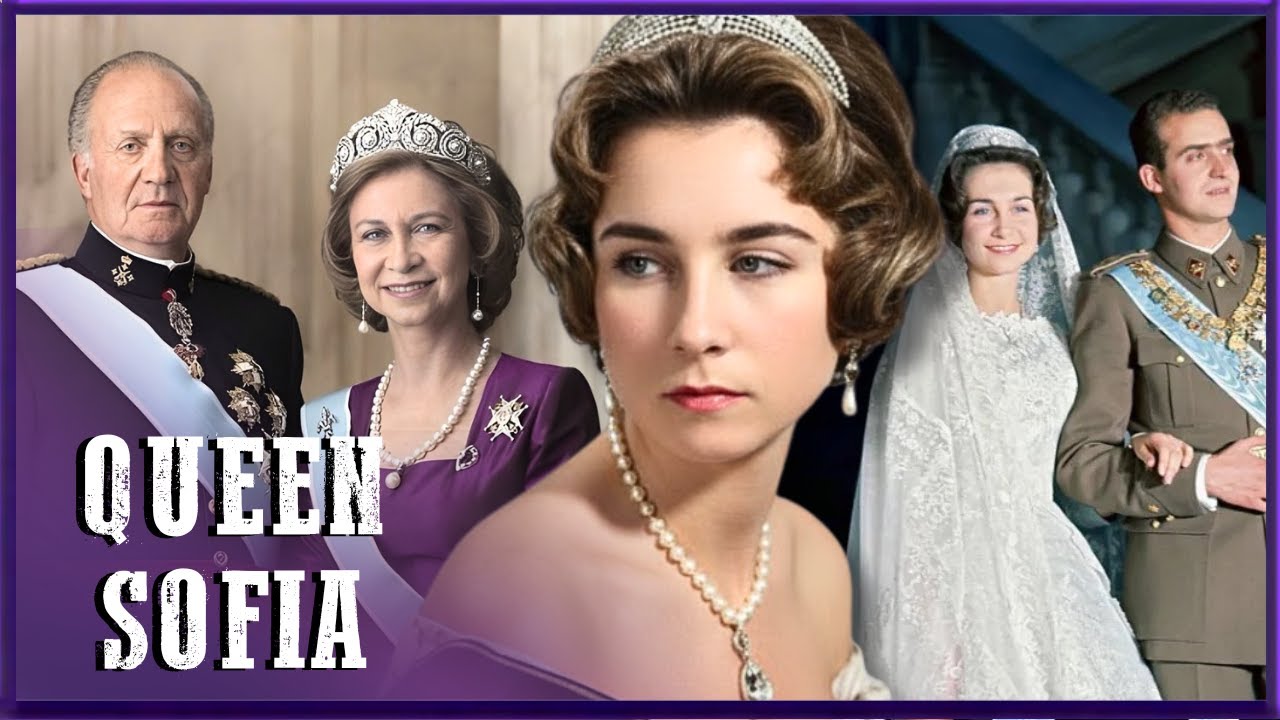
The family fled first to Crete, then were evacuated by a British destroyer, huddled below deck while explosions destroyed their homeland. For the next five years, they lived as refugees, moving from Egypt to South Africa, dependent on the charity of other governments, living in borrowed houses and wearing patched clothes. In these formative years, Sophia learned her first and most lasting lesson: security was an illusion. She saw her parents stripped of their palaces and servants, transformed into anxious refugees waiting for news from the front.
The trauma planted in her a deep, almost desperate need for stability. She became a quiet, watchful child, learning to make herself invisible, to be useful, and never to be a burden. When the war ended and the family finally returned to Athens in 1946, they returned not to peace but to a brutal civil war, with communists fighting to abolish the monarchy. Sophia grew up in a palace that resembled a fortified bunker.
Her mother, Queen Frederica, was a controversial figure—intelligent, interfering, and intensely ambitious—who dominated the family and instilled in her shy, sensitive daughter a particular philosophy: feelings were for the common people; royalty had duties. Sophia was sent to Salem, a remote and spartan boarding school in Germany run by her uncle, inspired by the educational philosophy of Kurt Hahn. There, the princess cleaned floors and broke ice from washing basins in the morning. She studied childcare and nursing, being shaped not merely as a queen but as a servant of the state.
She was intelligent, contemplative, and desperately lonely—a pawn waiting to be moved on the chessboard of greater Europe, and the player moving the pieces was her mother, who had one ambition: to find a king for her daughter. In 1954, Queen Frederica organized a cruise on the luxury ship Agamemnon, inviting the young generation of every European royal house. The press called it a floating marriage market. On board, the shy, serious fifteen-year-old Sophia met a tall, fun-loving sixteen-year-old boy named Juan Carlos de Borbón, the Prince of Spain.
He was handsome, athletic, and had a booming laugh, the life of the party. But like Sophia, he carried scars. Juan Carlos was a prince without a throne. His grandfather, King Alfonso XIII, had been exiled from Spain in 1931, and the country was now under the grip of General Francisco Franco, a dictator who held no affection for liberal monarchy.
Juan Carlos lived in a strange, suspended state, a hostage being prepared by a dictator who might or might not decide to make him king one day. On that cruise, there was no spark. Six years passed before their paths truly crossed again at the wedding of the Duke of Kent in London in 1961. They were older now.
Sophia had blossomed, cutting her hair and developing a quiet, regal confidence. Juan Carlos was lonely, caught between his domineering father in exile in Portugal and the dictator Franco in Madrid. He needed an ally, a partner who understood the strange burden of royal exile. He looked at Sophia and saw strength, a woman who would not bend under pressure, who knew protocol and history, and whose royal lineage Franco could not ignore.
Their courtship was based not on passion but on mutual understanding. Within months, he proposed. The wedding was held in Athens on May 14, 1962, a grand international event. But even on her wedding day, the cracks were visible.
There was the matter of religion: Sophia was Greek Orthodox, Juan Carlos Catholic. They were forced to endure three separate ceremonies in one day—Catholic, Orthodox, and civil. To marry Juan Carlos, Sophia agreed to convert to Roman Catholicism, a spiritual amputation of her Orthodox faith. She had to become Sofía with an f instead of Sophia with a ph, and learn Castilian Spanish from scratch, erasing her Greek identity to become the Spanish queen consort.
Her mother whispered a final piece of advice: a princess never cries in public, and a queen never complains. Sophia clung to those words like a shield. If Sophia thought marriage would bring freedom, she was wrong. The young couple did not move to a grand palace in Madrid but to La Zarzuela, a modest, run-down hunting lodge on the outskirts of the city.
They were entering the lion’s den. General Franco was still the absolute ruler of Spain, old, suspicious, and deeply conservative. He viewed Juan Carlos as a tool, a puppet to be shaped, and regarded Sophia with deep suspicion—she was foreign, Greek, too educated, and from the Masons. For the next thirteen years, from 1962 to 1975, Sophia lived on a knife’s edge.
They were Princes of Spain, a title Franco invented to avoid calling them by their royal Borbón rank. They had no official power. Franco’s spies constantly watched them; every call was likely tapped; every dinner guest was scrutinized. It was a suffocating, claustrophobic life.
But here Sophia’s genius emerged. While Juan Carlos chafed under Franco’s control, wrestling with his temper and frustration, Sophia played the long game. She realized the only way to survive was to be beyond reproach. She devoted herself to becoming the perfect Spanish wife, traveling through the dusty, impoverished plains of Spain in the 1960s, visiting hospitals, schools, and monasteries, winning over the skeptical Spanish aristocracy through sheer work ethic.
She bore children—Princess Elena in 1963, Princess Cristina in 1965, and finally the heir, Prince Felipe, in 1968. With the birth of a male heir, Sophia’s position was secure. She had done her duty. But at home, the silence grew.
Juan Carlos was a man of immense energy and appetites. He loved fast cars, sailing, hunting, and increasingly, the company of beautiful women. In the early years, Sophia deliberately ignored it, telling herself it was just his Borbón charm. She focused on the children and the mission of making him king.
She became his chief adviser and emotional anchor, lifting his spirits when Franco humiliated him and reminding him of his destiny when he wanted to give up. They were partners in a political project, but the emotional partnership was fraying. There were rumors of nighttime excursions, whispers of actresses and aristocrats. Sophia, isolated in La Zarzuela, far from her family in Greece, retreated into herself.
She could not complain, for complaining would be treason, a scandal that would allow Franco to discard them. So she swallowed her pain and poured her emotions into music, archaeology, and a fierce, protective love for her son Felipe. On November 20, 1975, General Franco died. Two days later, Juan Carlos was proclaimed King of Spain.
The ceremony was charged with tension; the country was a powder keg. Sophia sat on a velvet chair in a bright fuchsia gown, watching her husband take the oath. She looked regal, composed, triumphant—this was the moment she had sacrificed her religion, her language, and her youth for. She was now Queen Sofía of Spain.
But freedom proved dangerous for a man like Juan Carlos. The discipline Franco had imposed vanished. The king was now the supreme authority, beloved, handsome, and master of his own destiny—and a king accountable to no one often forgets the promises he made to the quiet, loyal woman standing two steps behind him. Without the pressure of survival that had bound them together, the differences between king and queen became chasms.
Juan Carlos, finally released from the old dictator’s restraints, indulged in an explosion of pleasures, with no room for a serious, intellectual wife. Sophia, feeling the growing distance, decided to make a romantic gesture. Juan Carlos was ostensibly on a hunting trip at an estate near Toledo. Innocently, perhaps desperately, Sophia took her children and drove to surprise him, imagining a warm family reunion.
When she arrived, the servants were clearly flustered, trying to delay her. With the authority of a queen, she pushed past them and found her husband—not alone, but with another woman. It was not just the betrayal itself but the contempt that accompanied it, signaling this was not a passing mistake but a way of life. Consumed by a rare Greek burst of emotion, Sophia took the children and fled.
She didn’t just return to Madrid; she left the country entirely, flying to India, where her mother, the exiled Queen Frederica, was living. She arrived in Madras broken, sobbing, determined to divorce Juan Carlos. But there, in the heat of India, the steel door of royal duty slammed shut on her personal happiness. Queen Frederica, the woman who had lost her throne and tasted the bitter meaning of insignificance, did not offer her daughter a shoulder to cry on.
Instead, she gave her a cold, pragmatic ultimatum: don’t do this. A princess never leaves. If you divorce him, you will become nothing, the ex-wife of a king wandering Europe, living in rented apartments while he keeps your son, the heir. Spain will forget you.
Your duty is to stay. Your duty is to be queen. Frederica’s words were cruel but accurate. Sophia realized with terrifying clarity that she was trapped.
Her identity, her children’s future, her entire life’s work were bound to the man who had betrayed her. She had nowhere to go. So she dried her tears, packed her bags, and flew back to Madrid. She returned to La Zarzuela, but the woman who walked through those doors was no longer the same.
The romantic wife inside her had died. From that day forward, she would be the queen consort, a professional partner, a supportive façade—but never again a vulnerable lover. The final test of their partnership came on February 23, 1981, in the attempt known simply as 23-F. Spain’s fledgling democracy was fragile, and old generals loyal to Franco’s memory were restless.
That night, Lieutenant Colonel Antonio Tejero stormed the Spanish parliament with a pistol, firing into the ceiling and taking the entire government hostage. Tanks rolled through the streets of Valencia. Inside La Zarzuela, the atmosphere was suffocating. The king’s advisers panicked, phone lines failed, and the king, dressed in his uniform as commander-in-chief, was the only barrier between Spain and a return to dictatorship.
Beside him throughout that agonizing night stood Sophia. While Juan Carlos made his phone calls, shouting at generals to stand down and demanding loyalty, Sophia managed the crisis inside the palace. She ordered the staff to maintain their daily routines to preserve a sense of normalcy. She kept the children calm, even as they asked if they would have to flee the country again—a shock she knew all too well from her own childhood.
She was the calm in the eye of the storm, ensuring the king had coffee, support, and the psychological strength to endure the pressure. When the king finally appeared on television at 1:14 a. m. , declaring his support for the constitution and ordering the military back to their barracks, the coup collapsed.
Juan Carlos became a global icon of democracy, the hero of the hour. In the aftermath, he reportedly acknowledged his wife’s pivotal role, telling a friend he could not have done it without her. For one brief, brilliant moment, the shock of the coup brought them together as comrades in arms who had saved Spain. But the adrenaline faded, the glamour of their public legend did nothing to heal private wounds, and the old patterns returned.
The king resumed his motorcycle rides, and the queen returned to her silence. By the mid-1980s, a new status quo had settled in the royal household: an unspoken professional arrangement. They would live two separate lives under one roof. La Zarzuela was divided into zones—the king’s wing, crowded with aides, generals, and his camarilla of sycophantic rich friends who encouraged his vices, and the queen’s wing, a quiet sanctuary filled with books, classical music, and the scent of incense.
Sophia built a life that didn’t require his presence, becoming the most cultured woman in Spain. While the king watched bullfights or hunted wild boar—activities Sophia, a vegetarian animal lover, despised—she attended archaeology lectures, funded cancer research, and explored her deep interest in spirituality. She hosted philosophers and musicians for long, intense dinners where the conversation revolved around the nature of the soul. She perfected her smile, a masterpiece of royal engineering—warm enough to comfort a hospital patient, polite enough to greet a diplomat, but opaque enough to hide the absolute loneliness behind it.
She became a master of psychological detachment, performing the role of the loving wife at official banquets with such skill that no one could see the ice in her veins. But the humiliation continued. The camarilla around Juan Carlos mocked the queen in her absence, calling her the Greek, sneering at her seriousness. They enabled the king’s behavior, providing women and covering his tracks.
Sophia knew. She knew that the people smiling at her at parties were the same ones facilitating her husband’s infidelities. Yet she received them with perfect manners, never breaking, never giving them the satisfaction of seeing her suffer. To the outside world, the Spanish royal family was the picture of happiness, carefully crafted every summer at the Marivent Palace on the island of Mallorca.
The magazines published glossy photos of the golden king at the helm of his yacht, the elegant tanned queen, and the three beautiful blonde children. They looked like the perfect modern family, sailing and eating ice cream in the square. These summers were Sophia’s masterpiece of public relations, understanding that the monarchy needed to be loved to survive, and nothing sells popularity like a happy family. She organized photo sessions, ensuring every image reflected unity.
But for those looking closely, the cracks were visible. The king’s temper flared at her publicly for split seconds before editors cut the scene. He arrived late and left early, rushing back to his private commitments in Madrid or to meet a mistress on another boat, leaving Sophia on the dock waving goodbye, preserving appearances for the photographers. The tragedy of these Mallorca summers was that Sophia genuinely loved the island, which reminded her of Greece, the closest thing she had to home.
Yet even this refuge was tainted. Her only true consolation during these years was her son, Prince Felipe. She poured all her emotional energy into him, determined that he would not become like his father. She raised him to be disciplined, serious, and respectful of women, speaking to him in English to create a private language that excluded the king.
In many ways, she was not just raising the future king but the antithesis of Juan Carlos—her quiet revenge was to mold the heir into a better man than the husband she had lost. As the 1990s approached, the king’s dalliances turned into long-term parallel relationships. The name Marta Gayá, a beautiful interior designer from Mallorca, began circulating in the velvet circles. Unlike the others, she was not a passing whim; it was said the king was actually in love with her.
He spent less time at the palace and more time in Switzerland or on private trips where security was ordered to look the other way. This was a new kind of pain for Sophia. A one-night affair is an insult; a mistress who functioned as a shadow wife is a threat to one’s very existence. Rumors swirled that the king wanted to divorce Sophia to marry Marta, and that panicked government ministers had to dissuade him, reminding him of the stability Sophia provided.
Sophia stopped being a wife and became a housemate, a colleague, a scheduler. She found solace in her sister, Princess Irene of Greece, who moved into La Zarzuela and became Sophia’s shadow. The two Greek sisters, lost in a Spanish palace, spoke German and English together, creating a bubble of comfort against the court’s hostility. With the 1990s ending, Spain was at the height of its boom—the 1992 Barcelona Olympics and the Seville World’s Fair showed a modern, confident nation.
The monarchy was at the peak of its popularity. But the woman waving from the balcony was hollow inside. She had survived dictatorship, coup, and the king’s mistresses. She had done her duty.
But the twenty-first century was approaching, and the protection of the press was about to collapse. The turning point came in the new millennium. The internet arrived, tearing down the walls of privacy that had protected the powerful for centuries. The discreet twentieth-century press, which had agreed to look the other way for stability, was dying, replaced by a ravenous 24-hour news cycle hungry for scandal.
For Queen Sofía, in the early 2000s, the king of Spain stopped caring about secrecy, believing himself invincible. In this atmosphere of hubris, a woman appeared who would become Sophia’s most dangerous rival. She was not just another whim but a woman who acted like a second queen. Her name was Corinna zu Sayn-Wittgenstein—a glamorous German-Danish businesswoman, 26 years younger than the king, fashionable, intelligent, and deeply involved in high-stakes business and international diplomacy.
They met at a hunting party in 2004. Unlike past mistresses who stayed in the shadows, Corinna burst into the king’s public life. She organized his private safaris, managed his travel, appeared on official state trips flying on the king’s plane, and was sometimes listed as a strategic adviser to the Spanish delegation. For Queen Sofía, this was unprecedented humiliation.
The king was effectively traveling with two wives. Madrid’s elite was shocked, calling Corinna the shadow queen. She even lived in a luxurious cottage within the grounds of La Zarzuela itself, miles from where Sophia slept. The king spent his days with Corinna, discussing business, renovating the cottage to her taste, and playing with her son.
Sophia knew; the security guards knew; the politicians knew. But Sophia was imprisoned by her role. She couldn’t scream or have Corinna thrown out, for acknowledging Corinna publicly would mean destroying the monarchy’s reputation. So she endured the unendurable, sharing a stage with a husband who would leave the royal box at the opera to go to another woman’s bed.
It is said the king began to diminish Sophia openly before staff, interrupting her, ignoring her questions, leaving while she spoke. He stopped wearing his wedding ring—a subtle but constant emotional violence. As if the marital crisis were not enough, the carefully cultivated image of the perfect family began to rot from within. Sophia’s second daughter, Princess Cristina, had married Iñaki Urdangarin, a tall, handsome Olympic handball player.
They were the golden couple of Barcelona. But in the mid-2000s, investigators began looking into the Noos Institute, a nonprofit run by Iñaki, and discovered the embezzlement of millions of euros of public money. The son-in-law was stealing from taxpayers—the beginning of the Noos case, a scandal that would drag on for years and drain the monarchy’s popularity. For Sophia, this was a Greek tragedy unfolding.
She was a mother who loved her children fiercely, believing in Iñaki’s innocence long after everyone else had given up on him. But the king, feeling the threat to the crown, wanted to get rid of them. The palace turned into a battlefield: on one side, the king and Prince Felipe, who wanted to exile Cristina and Iñaki to save the institution; on the other, Queen Sofía and Infanta Elena, who defended family loyalty. Sunday lunches in the palace became tense and silent, or were canceled altogether.
Sophia found herself in an impossible position, trying to comfort a daughter facing prison while standing beside a husband who wanted to strip that daughter of her title. By 2010, King Juan Carlos was physically failing. The vigorous athlete of the transition era was overweight, walked with a cane, and suffered from health problems—surgeries on his knee, hip, and lung. Each time he entered the hospital, Sophia was there, arriving elegantly dressed and telling the press that the king was recovering well.
But these visits became absurd theatrical performances. The press noticed Sophia never stayed more than twenty minutes, that they rarely met each other’s eyes, and that Corinna was often in the same city in luxury hotels nearby. The king’s judgment was deteriorating along with his body. He became short-tempered, arrogant, and disconnected from the suffering of the Spanish people crushed by the 2008 financial crisis.
While Spaniards lost their homes and stood in bread lines, the king lived a billionaire’s life funded by mysterious deals and relationships with Middle Eastern rulers. Sophia saw the danger coming—she read the newspapers, she felt the shift in public mood—and she reportedly tried to warn him to be more discreet, to show more empathy. He didn’t listen, dismissing her concerns as the nagging of a resentful wife. He was wrong; she was right.
In April 2012, the king planned a trip to Botswana to hunt elephants. He did not take his wife; he took Corinna. On the night of April 13, the king tripped on his way to the bathroom in the dark and broke his hip. When the rescue plane landed in Madrid, it carried not just an injured old man but the wreckage of a marriage and a lifetime of secrets.
Spain was in turmoil—unemployment exceeded 24%, youth unemployment over 50%, and people were being evicted from their homes. And in the midst of this national tragedy, the king had disappeared. The palace said he was on a private trip, but the reality was far more damaging. He was on a luxury safari costing tens of thousands of euros a day, paid for by a Syrian adviser, there to kill elephants—the very creatures he was supposed to protect as honorary president of WWF Spain—accompanied by Corinna and her son.
It was a family vacation with the wrong family. When the news broke, the dam collapsed. The Spanish press, which had protected the king for 37 years, finally turned on him. They published photos of him standing next to a dead elephant from a previous trip, and they asked the most painful question: who was the blonde woman with him?
Sophia was in Greece for Orthodox Easter when the news hit. She had to return to Madrid immediately, but this time she did not rush to his hospital bedside. In a move that spoke volumes, she waited. She left the king alone in the hospital for three full days before visiting him.
When she finally arrived at San José hospital, the world’s cameras waited. She stepped from the car in a neat formal suit, her mysterious, unreadable smile in place, and passed the photographers with her head held high. She entered the room of the husband who had just humiliated her before the entire world. We don’t know what was said in that room, but the visit lasted only twenty minutes.
When she came out, she gave a masterclass in royal ambiguity. He’s doing very well, she told the press, and he’s eager to get out. It was a perfect statement—beautiful but emotionally detached. She had done her duty.
She had attended, but she had not forgiven. She left him to face the consequences alone. The next day, the king emerged from his room, leaning on crutches, and delivered the most unprecedented apology in royal history. He looked like a scolded schoolboy.
I’m very sorry, he told the cameras. I made a mistake. It will not happen again. It was a historic moment, but for Sophia, it was too little and too late.
The apology was to the Spanish people; there was no public apology to the wife he had betrayed. The two years following Botswana were a slow-motion car crash. The king’s popularity plummeted, the Noos case worsened with the king’s daughter summoned to testify in court—the first time a member of the royal family sat in the dock. On the other hand, Queen Sofía’s popularity rose; the public saw her as a martyr, sympathizing with her dignity and pride.
On June 2, 2014, King Juan Carlos announced his abdication. His son Felipe would become King Felipe VI. At the abdication ceremony on June 18, 2014, in the Royal Palace in Madrid, the ceremony became a display of the cold distance between the king and queen. Juan Carlos signed the abdication document, then turned to his son and hugged him emotionally.
He hugged his two granddaughters. Then he turned to Sophia. He offered her a perfunctory acknowledgment, a quick gesture and a cold touch on the arm. He did not kiss her.
He did not embrace her. He barely looked her in the eye. Even in his final moment as king, he could not show warmth to the woman who had made his reign possible. Sophia, as always, maintained her smile, but the pain in her eyes was visible.
With the abdication, Sophia lost her title as queen consort. She became Queen Sofía while Letizia became the new queen consort. It was a changing of the guard, and for Sophia, it meant a loss of power. She was no longer the first lady of the land but the grandmother, a relic of the previous regime.
If Botswana was the professional betrayal, what happened at Easter 2018 was the personal one. At Palma de Mallorca Cathedral during the traditional Easter mass, tensions between Queen Sofía and Queen Letizia had been escalating for years. Letizia was a modernizer, wanting a slimmed-down monarchy, fiercely protective of her two daughters, Leonor and Sofía. Sophia was a traditionalist, believing the monarchy must be seen to be loved, and she felt isolated from the girls.
That Sunday, as the family was leaving the cathedral, the suppressed tension exploded. Sophia saw a photographer, grabbed her granddaughters, and pulled them close for a photo. Letizia saw this and lost her composure. In a video that went viral within minutes, Letizia walked in front of the photographer to block the lens with her back, then turned and forcibly removed Sophia’s hand from Princess Leonor’s shoulder.
But the most shocking moment came from twelve-year-old Leonor herself, who pushed her grandmother’s hand away sharply. Sophia looked stunned, struggling to maintain her smile while her face revealed a deep wound of confusion. King Felipe tried to intervene, grabbing his wife’s arm and whispering angrily. The Easter incident, the clash of the queens, was a catastrophe for Sophia.
It was a public declaration of her sidelining. The daughter-in-law she had supported against the king’s wishes was now pushing her aside, and the granddaughter she adored was pushing her hand away. The video was replayed on every news channel, analyzed by lip-readers and body language experts. The majority of Spaniards sided with Sophia, seeing an elderly grandmother being bullied.
At her next public appearance, she received warm, sustained applause. But the damage was done. The illusion of the happy family that Sophia had spent fifty years building had shattered completely. In the years after the abdication, investigations into Juan Carlos’s finances intensified.
Corinna’s name appeared in legal documents claiming the king had given her 65 million as a gift. In March 2020, Felipe renounced his inheritance from his father and stripped him of his royal allowance. Then, in August 2020, came the stunning announcement: Juan Carlos was leaving Spain. He did not tell Sophia; she reportedly learned through official channels like everyone else.
On August 3, 2020, the former king boarded a private plane and fled to Abu Dhabi, entering self-imposed exile, leaving behind his country, his crown, and his wife. Sophia did not go with him. After nearly sixty years of marriage, their separation was total. There is a haunting image of Queen Sofía from summer 2020, shortly after Juan Carlos’s departure: she was seen shopping in a store in Palma de Mallorca, wearing a face mask due to the COVID-19 pandemic, her eyes tired as she wandered the aisles examining creams and perfumes, a solitary figure in an ordinary setting.
She had won, in a sense. She was the one who stayed. She kept her title, her home, and her people’s respect, while the husband who had betrayed her was exiled. But any kind of victory was cold.
She had survived war, coup, betrayal, scandal, and family conflict. She was the iron queen, but as she walked the streets of Mallorca that summer, one could only wonder if she missed the chaos, and even the man who had caused her so much pain. The opposite of pain is not happiness, but silence. And now, finally, Queen Sofía had all the silence she could ever want.
Juan Carlos, the man who had yearned for freedom and pleasure, became trapped in a luxury hotel suite in the desert, surrounded by staff but essentially alone, cut off from the vibrant Spanish life he loved. Sophia chose the harder path, staying in Madrid in the heart of the storm, walking the halls of La Zarzuela haunted by their marriage’s ghosts. She relied heavily on her sister, Princess Irene, who had lived with her for decades; palace staff called them the girls. They had dinner together on trays watching television, speaking a mix of Greek, English, and German.
But this haven was fragile. In recent years, reports emerged that Irene’s health was declining. The thought of losing her sister—her shadow, her confidante, her only true friend—was perhaps the greatest fear Sophia faced in her autumn years. If Irene left, the silence in La Zarzuela would be deafening.
If her husband’s exile was a slow grief, her brother’s death was a sudden shock. In January 2023, former King Constantine of Greece, Sophia’s beloved younger brother, died in Athens after a long illness. Constantine was more than a brother; he was her connection to her past, the only one who truly understood the trauma of their childhood exile. Throughout her difficult marriage, he was her rock.
His funeral in Athens was a moment of immense historical weight, a reunion of the divided Spanish royal family. Juan Carlos came from Abu Dhabi, appearing frail. Princesses Cristina and Elena were there, as were King Felipe and Queen Letizia. But Sophia looked utterly broken; her usual professional smile was gone, replaced by the raw grief of a woman saying goodbye to a part of herself.
Yet something remarkable happened outside the cathedral. As Sophia emerged, crowds of Greeks—who had abolished the monarchy decades ago—began chanting, Sophia, Sophia, Sophia. They were not cheering for the Queen of Spain; they were cheering for the Greek princess who had made them proud. It was a resounding acknowledgment from her homeland, a bittersweet balm for her broken heart.
Inside the family dynamics, however, the ice remained. And after the funeral, Juan Carlos returned to his desert exile, and Sophia returned to her empty palace. In September 2022, at the funeral of Queen Elizabeth II in London, protocol forced Juan Carlos to sit next to Queen Sofía in Westminster Abbey. The image went viral instantly.
Sophia, in elegant mourning dress, stared forward with composure and discomfort, while beside her sat Juan Carlos, distracted, laughing at a private joke, his physical deterioration obvious. It was a visual representation of her burden. Even at the funeral of the century, she could not escape him; she was bound to him by the chains of history. Observers noted something else: when they arrived at Buckingham Palace and at the funeral itself, Sophia did not help him, did not offer her arm as he struggled with his cane.
She walked independently. The days of being his crutch, physically and emotionally, were over. The most painful chapter of Sophia’s recent life is not about the past but the future—her granddaughter, Princess Leonor, the future Queen of Spain. On October 31, 2023, Leonor turned eighteen and swore allegiance to the constitution in the Spanish parliament.
It was a historic day of immense dynastic significance. But Queen Sofía was not there. She had not been invited to the ceremony. The royal palace decided to exclude both Juan Carlos and Sophia from the official event, wanting to present Leonor as a fresh start, untainted by the grandfather’s scandals or the grandmother’s old-world atmosphere.
Imagine the bitterness of that rejection. Sophia had devoted sixty years of her life to the Spanish monarchy, saving the institution in its darkest hours so that this very moment could happen. And on the day of triumph, she was asked to stay home and watch it on television. It was the ultimate sacrifice to ensure the crown’s survival: she had to erase herself.
That night, a private family birthday party was held at the Palacio del Pardo. Sophia attended. Juan Carlos flew in for a few hours, barely spoke to anyone, and left the same night. But the message was clear: Sophia was no longer a central player.
She had become history, and her role now was to retreat into the shadows so the light could shine on Leonor. For a woman who had defined herself by her usefulness to the crown, being considered unnecessary was a quiet kind of death. Today, Queen Sofía is in her late eighties and has become frailer. In April 2024, she was hospitalized for a urinary tract infection, a rare crack in her iron health.
She still works, attending events for the food bank foundation she cares about, cleaning beaches of waste on environmental awareness days. She refuses to retire, because retirement for Sophia means death. Duty is the oxygen that keeps her alive. What is her verdict, sitting in the gardens of La Zarzuela watching the sun set over the Madrid skyline?
Was it worth it? She sacrificed her religion, her language, her homeland, her love, her pride. She endured a philandering husband, a hostile court, and a lonely old age. Critics may say she was an enabler, a woman who supported a patriarchal system that crushed her.
History will likely be more merciful. Queen Sofía was the ballast on a ship that was constantly trying to sink. Without her steadfastness, the transition to democracy might have failed. Without her professionalism, Juan Carlos’s scandals might have ended the monarchy altogether.
She absorbed the shock so the institution would not break. She is the tragic heroine of modern monarchy, a figure of immense strength destined to suffer. Her revenge, if she wants it, is simple: she is still loved. While Juan Carlos will be remembered for elephants and offshore accounts, Sophia will be remembered for her dignity.
When she enters a concert hall today, the applause is real—the applause of people who know they are looking at a woman who kept her promises even when everyone around her broke theirs. In the end, Queen Sofía of Spain remains what she has always been: an enigma wrapped in a smile.