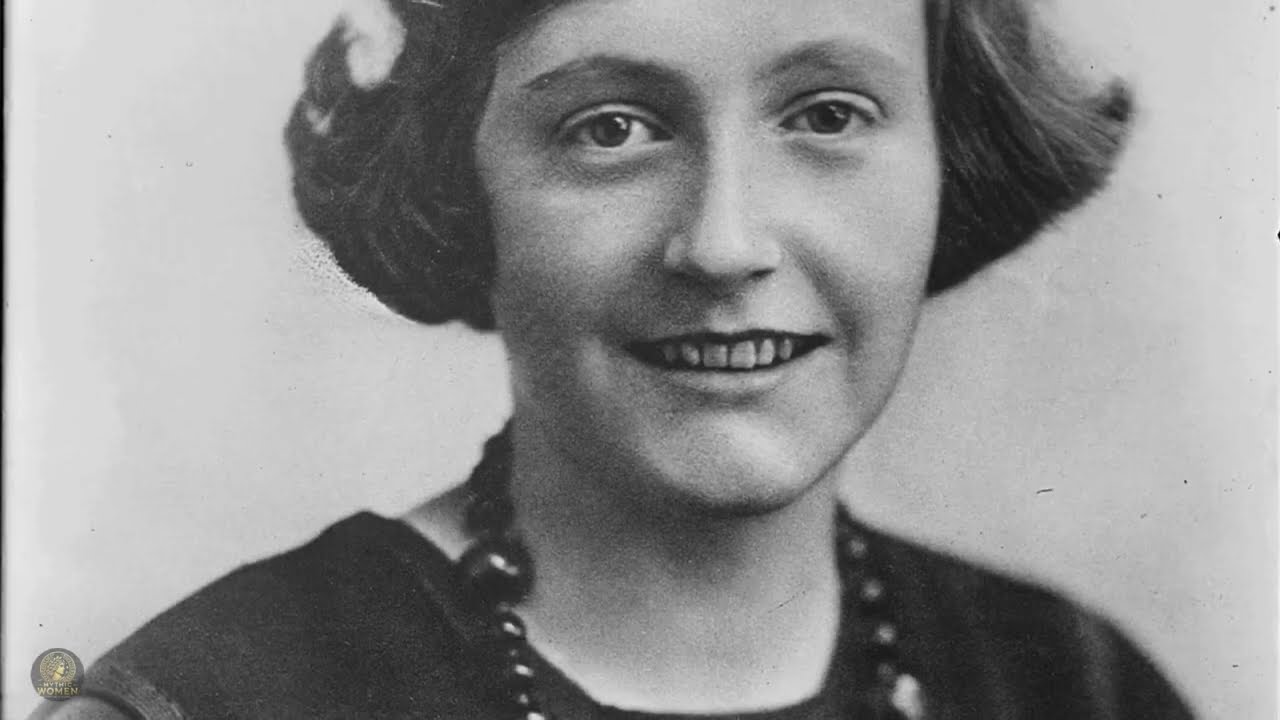
Edwina Mountbatten was born into immense wealth on November 28, 1901, but her gilded childhood was marked by profound loneliness. Her mother, Maud, was often absent, drifting between sanatoriums in pursuit of a cure for tuberculosis. Edwina’s grandfather, Sir Ernest Cassel, a self-made financier and confidant of kings, was her one constant source of affection.
When Maud died in 1911, Edwina was not allowed to attend the funeral. She learned early that sorrow must be silenced and that love had to be earned through good behavior.
Her father, Wilfrid Ashley, remarried quickly. The new stepmother, Molly, was brisk and controlling, dismissing the beloved governess who had brought warmth back into Edwina’s life. Edwina was sent to boarding school, which she loathed, and later to a domestic science college.
A grand European tour with her cousin followed, where she discovered freedom, flirtation, and the power of her own allure.
At 18, Edwina was launched into society as one of the richest heiresses in England. She was restless, brilliant, and uncontainable. At a Cowes regatta, she met Louis “Dickie” Mountbatten, a dashing young naval officer and great-grandson of Queen Victoria.
Their courtship was swift. When Sir Ernest died, Dickie was the only person Edwina wanted by her side. He proposed in India, and they married in a spectacular ceremony in 1922.
The marriage was passionate at first but quickly fractured. Dickie was devoted; Edwina was restless. While he was at sea, she filled her days with dancing, jazz clubs, and a series of affairs.
Her lovers included Hugh Molyneux, a handsome heir, and Laddie Sanford, a wealthy polo player. Dickie, initially oblivious, eventually confronted her. Their marriage survived, but it evolved into an arrangement of separate beds and separate lives.

Edwina was allowed her freedom, provided she remained discreet.
The birth of their daughters, Patricia and Pamela, did little to anchor her. Edwina was a distant mother, leaving childcare to nannies. She preferred the glitter of Paris, the thrill of new admirers, and the escape of travel.
A scandal erupted in 1932 when a newspaper hinted at an affair with a Black entertainer, widely believed to be Leslie Hutchinson, a singer known as Hutch. Edwina sued for libel and won, but the palace was watching.
The marriage found a strange equilibrium when Dickie fell in love with Yola Letellier, a French socialite. Edwina, shocked at first, responded by befriending her. Soon, both Mountbattens had lovers who were accepted within the family circle.
Edwina’s most significant companion was Harold “Bunny” Phillips, a tall, gentle guardsman who brought her a sense of peace. Bunny and Yola became part of the household, and the arrangement, though unconventional, worked.
When war broke out in 1939, Edwina transformed. She threw herself into relief work, joining the St. John Ambulance and training as a nurse.
She drove through the Blitz, inspected shelters, and organized volunteers. Her glamour, once a liability, became an asset. She was relentless, working 16-hour days and earning the respect of those who had dismissed her as a socialite.
By 1943, she was superintendent-in-chief of the nursing division, overseeing tens of thousands of volunteers.

Dicky, meanwhile, rose to prominence as Supreme Allied Commander in Southeast Asia. Edwina joined him, touring hospitals and front-line camps across India and Burma. She drove the Burma Road, slept under parachute silk, and visited troops within 500 yards of Japanese lines.
Her reports were blunt and invaluable. The war gave her purpose, and it also brought her closer to Dickie. For the first time in years, they were partners.
In 1947, Dickie was appointed the last Viceroy of India. Edwina arrived in Delhi determined to reshape the viceregal court. She discarded the old guest lists, inviting Indian poets, social workers, and dissidents.
She crossed social lines that British women had maintained for generations, working alongside Indian women on health and welfare issues. She lobbied for the Nursing Council Bill, which passed after she appealed directly to Jawaharlal Nehru.
Nehru, India’s first prime minister, had met Edwina in Singapore in 1946. Their connection was immediate and profound. During the chaos of Partition, as millions fled and violence erupted, Edwina worked tirelessly.
She organized relief councils, visited refugee camps, and walked among the wounded. Nehru was her constant correspondent. Their letters were intimate, philosophical, and deeply affectionate.
Whether their love was physical remains a matter of debate, but it was undeniably real.
When Gandhi was assassinated in January 1948, Edwina and Nehru mourned together. She invited him to the mountains, where they walked through orchards and talked by glacial lakes. She told him everything about her childhood, her marriage, her emptiness.
He listened with a tenderness she had never known. They made a promise that nothing would come between their work. But the bond was unbreakable.
After the Mountbattens left India, Edwina returned every spring. She and Nehru exchanged letters constantly, numbering them to keep them in order. Dickie understood the relationship.
He wrote to her, “I’ve always understood the very special relationship between you two. God, in his mercy, didn’t give me jealousy, only the desire for your happiness.” Edwina, in turn, entrusted her letters from Nehru to Dickie, hoping they might one day be published.
In the 1950s, Edwina continued her humanitarian work, traveling to Korea, Kenya, and Borneo. She was often ill, suffering from fevers and infections, but she refused to slow down. In February 1960, she collapsed during a tour of North Borneo.
She died in her sleep on February 21, surrounded by Nehru’s letters. She was 58.
Her body was returned to England. In accordance with her wishes, she was buried at sea from the frigate Wakeful. Nehru sent a wreath of marigolds from the Indian ship Trishul.
It floated on the water for a time, then disappeared.
Edwina Mountbatten was a woman of contradictions. She was cold and compassionate, restless and devoted, scandalous and selfless. Her affairs scandalized the crown, but her war work saved countless lives.
Her love for Nehru was the defining relationship of her later years, a quiet, fateful connection that transcended convention. She was never silenced, and her legacy endures in the work she did and the lives she touched.