Anne Woodward’s life was a story of ambition, scandal, and tragedy—one that ended with a single shotgun blast in a darkened hallway and, years later, a suicide that many blamed on Truman Capote. Their feud, born from a chance encounter in a Swiss café, would destroy them both.
Born in 1915 in Pittsburgh, Kansas, Anne spent her early years in a shack without indoor plumbing or heating. Her family moved constantly, and her parents divorced when she was young. Her stepfather was abusive, and her mother struggled to keep the family afloat.
Anne, however, was determined to escape. She was intelligent, scoring 130 on an IQ test, and beautiful. She dreamed of Hollywood, modeling herself after Joan Crawford, and by her late teens she had changed her name to Anne Eden and moved to New York to pursue acting and modeling.
Her mother, sick with tuberculosis, followed her to New York. Anne cared for her until her death in 1941, depleting her savings. To get by, she took a job as a bunny girl at the Fifi nightclub, where she was popular and received gifts from wealthy patrons.
It was there that she met William Woodward Sr. , a 55-year-old married banker and horse breeder. They began an affair, and he provided her with money and gifts.
When he wanted to end things, he hatched a plan: he introduced Anne to his shy, possibly inexperienced son, Billy, hoping she would seduce him.
She did. Billy, five years her junior, was captivated. Despite his mother Elsie’s fierce objections, he married Anne.
At first, they seemed happy, but the marriage soured quickly. Billy, back from the Navy, became a playboy, and the couple fought constantly. He beat her, insulted her in public, and resented that she was becoming a proper society woman.
She, in turn, grew jealous and paranoid. They separated in 1948, reconciled, and fell into a cycle of abuse, affairs, and violent reconciliations.
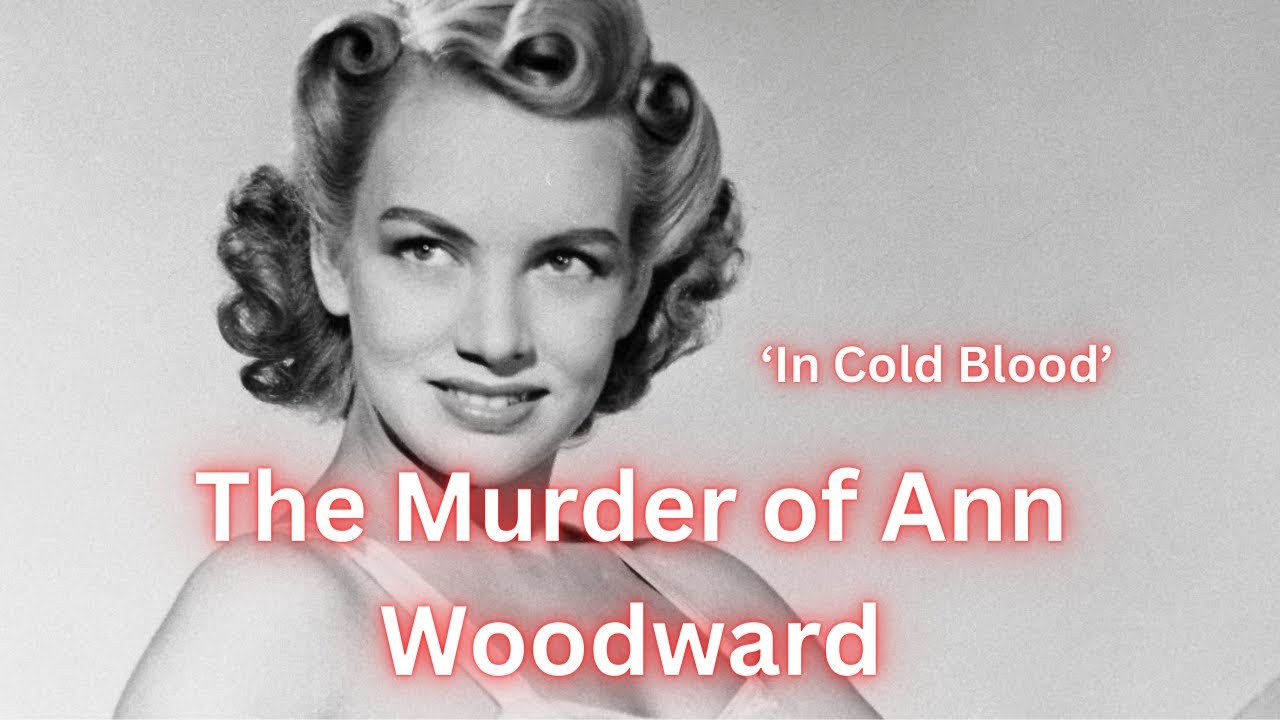
After William Sr. died, Billy took over the family’s horse farm, and Anne became a celebrated figure in society, appearing on best-dressed lists and in magazines. But the marriage was crumbling.
One night, Anne told Billy how she had met his father at the Fifi. He was humiliated. Their fights grew worse, fueled by alcohol and mutual suspicion.
On the evening of October 29, 1955, the Woodwards attended a party honoring the Duke and Duchess of Windsor. They had argued earlier about Billy’s plan to buy a plane—a plane manufactured near Anne’s hometown. At the party, Anne seemed nervous, asking everyone about a prowler reported in the area.
Billy had called the police about the intruder earlier that day and carried a pistol with him.
When they returned home, they checked the house for the prowler. Billy gave Anne a shotgun from the gun cabinet and kept one for himself. They retired to separate bedrooms, both drunk.
Anne took sleeping pills. Billy went to take a shower.
Anne later said she heard a crash and a growl. Thinking of the prowler, she grabbed the shotgun, opened her bedroom door, and fired at a shadow in the dark hallway. When she ran to the body, she found her husband dead.
She ran downstairs, threw shells into the gun cabinet, and called her lawyer. Police arrived to find her lying on top of Billy, covered in blood. She told them, “I shot Billy.
We both had guns. I thought it was the prowler.”

There were inconsistencies. A witness reported a 20-minute gap between the gunshot and Anne’s screams. A light in the hallway was on when police arrived, though Anne said it was dark.
But soon, a prowler named Paul Worth was arrested for violating parole. He admitted he had been in the Woodwards’ house that night, hiding behind a pillar, climbing onto the roof, and breaking in through a glass door. He heard a shot “so loud it sounded like a cannon” and fled.
The grand jury heard nine hours of testimony. Anne, heavily sedated, broke down repeatedly and was found credible. She was not indicted.
But Billy’s mother, Elsie, had made a deal: in exchange for the family’s influence to make the charges go away, Anne would give up her children. They were sent to school in Switzerland, and Anne was banished from their lives.
Many never believed her story. They thought she had murdered Billy in cold blood, and that her performance before the grand jury was her greatest act. She was ostracized from New York society.
Truman Capote had been watching. He had come from a similarly troubled background—abandoned by his mother, who later killed herself with pills. He was a literary star, and he saw in Anne’s story the perfect material for his next book.
He planned a novel called Answered Prayers, a thinly veiled exposé of high society, with Anne as a central character.
Their feud began in 1956, when Capote, in a Swiss café, approached Anne and taunted her. She called him a “little faggot.” He called her “Mrs.
Bang Bang.” The insult stuck.

Capote put the project aside to write In Cold Blood, the true-crime account of the murder of the Clutter family in Kansas. The book made him wealthy and famous. But he never forgot Anne.
In 1975, he published a chapter of Answered Prayers in Esquire. The story, “La Côte Basque,” featured a character named Anne Hopkins, a Midwestern gold digger who murdered her husband and got away with it. The portrayal was vicious: a trigger-happy, white-trash killer.
Anne, living abroad, received an advance copy. She told friends it was “a bomb that will explode.” She planned to leave the country before publication, but she didn’t.
In late October 1975, she put on her favorite dress, applied heavy makeup, swallowed a handful of Second—the same pills that had killed Capote’s mother—and got into bed. She died by suicide.
Elsie Woodward, upon hearing the news, reportedly said, “That’s that. Truman Capote just murdered her.”
Capote’s betrayal went beyond Anne. He had also exposed the secrets of his “swans”—the society women who had trusted him, including Babe Paley and Slim Keith. They turned on him.
Ostracized, his career in decline, he descended into alcoholism and drug abuse. He died in 1984, largely forgotten by the society he had once ruled.
The Woodward children also met tragic ends. James, the younger son, struggled with addiction and mental illness, and killed himself a year after his mother’s death. William, the elder, became a successful businessman but grew deeply depressed and jumped from his apartment window in 1999.
Anne Woodward and Truman Capote were both undone by their own flaws. Anne, desperate to escape her past, found herself trapped by scandal. Capote, driven by fame and a desire to shock, destroyed his friendships and his legacy.
Their story is a reminder of the destructive power of ambition, betrayal, and the relentless pursuit of social approval.