On the evening of Friday, April 6, 1979, Darlene Pettis came home to an empty house. The 26-year-old had spent the afternoon in the mill town of Greer, South Carolina, where she and her husband Roy had lived since their wedding in 1976. At 4:30 Roy had kissed her goodbye and driven to his father’s farm on Calhoun Road to help fix a fence. Darlene had put a chicken casserole in the oven for 6:30 and gone next door to return a pie tin to her neighbor Evelyn Marsh.
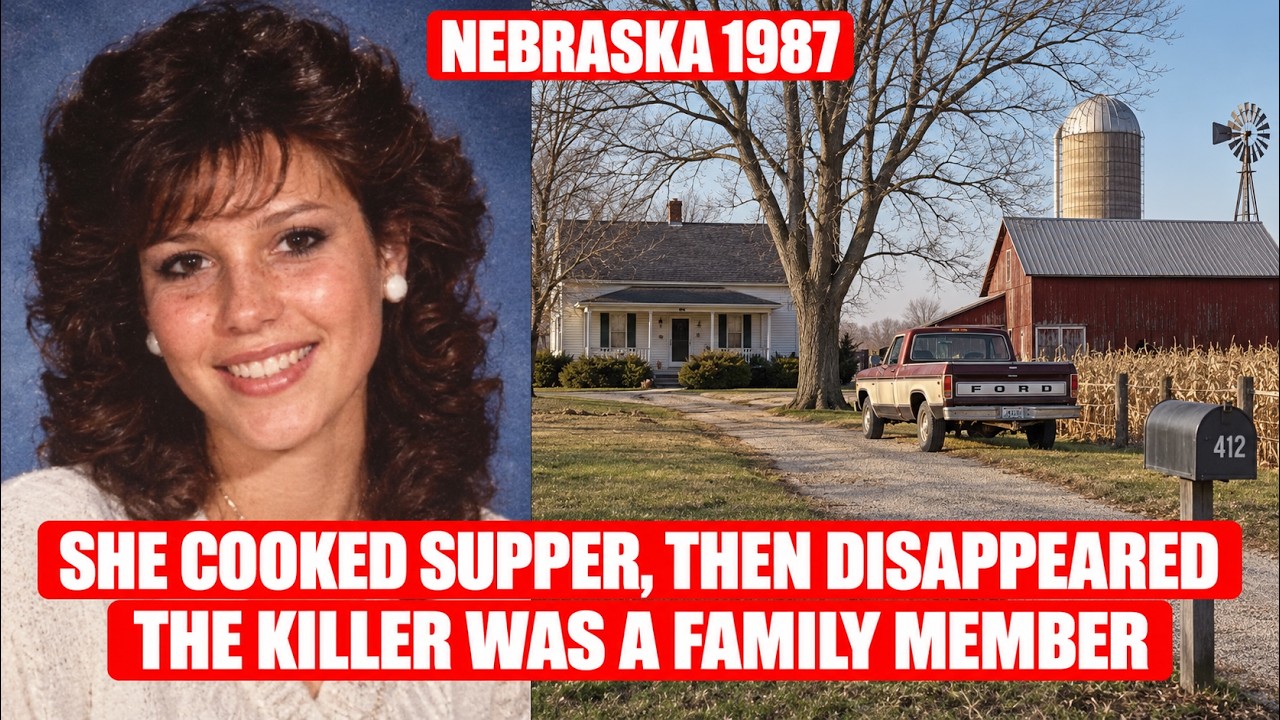
She told Evelyn supper was in and she couldn’t stay. She was back inside her own front door before 5:00. At 7:15 Roy came home to find the casserole burned dry in the oven, the front door standing open, and no sign of his wife anywhere in the house. She had been gone in those two hours and fifteen minutes.
The man responsible had been sitting at her family’s supper table for nearly a decade. Greer in 1979 sat between Greenville and Spartanburg in the red clay upstate of South Carolina. It was a textile mill town where nobody locked their doors and everyone knew everyone else. Darlene worked the morning shift at Beacon Manufacturing, was home by two every afternoon, and tended the garden behind the house.
She and Roy kept a jar in the kitchen cabinet where they saved money for a piece of land east of town where they planned to build a house with a proper yard. She had been trying to get pregnant for two years and handled it matter-of-factly, the way she handled most things. Roy called the Greer Police Department at 7:38. Officers arrived at 7:52 and found no signs of a struggle.
Darlene’s purse sat on the kitchen table. Her car was in the driveway. Her canvas shoes were beside the back door as if she had stepped out of them and not returned. No note, no broken glass, no overturned furniture.
Evelyn confirmed the timeline: Darlene had been next door at 4:55, calm and normal, talking about the garden. The search began the next morning. Sixty volunteers swept the fields and creek beds west of Birch Street. Roy Pettis walked with the searchers, and his father Harlan walked three rows to his left.
On Sunday, April 8, a search dog found Darlene’s body in a stand of sweetgum trees behind a drainage culvert, less than a quarter mile from her back door. She had been strangled. The lead investigator was Sergeant Edwin Poole of the Spartanburg County Sheriff’s Department. Poole was methodical and believed that the people closest to the victim almost always carried the answer.
He cleared Roy within the first week. Roy’s presence at Calhoun Road from 4:30 until approximately 6:40 was confirmed by three independent sources. That left Harlan. Harlan Pettis was 58 years old, a farmer who had worked seven acres on Calhoun Road since his own father left it to him.
He was a deacon at a church, reserved, self-contained, with opinions he kept mostly to himself. People described him as dignified, or when they were less generous, cold. Poole interviewed Harlan on April 11, five days after the disappearance. Harlan said he had been at the farm when Roy arrived at 4:30 and had stayed until Roy left at roughly 6:40.
After that, he said he’d gone inside, made supper, and not left the property. There was no one to confirm that second part. The farmhand had gone home at 5:00. The neighbor had only seen Harlan at the fence.
Calhoun Road was eight minutes from Birch Street by car. Poole brought Harlan in a second time, then a third. Harlan was cooperative each time, expressed grief for his daughter-in-law, said he couldn’t imagine who could do such a thing. He sat across the interview table with his hands flat on the surface and his face composed, and gave nothing away.
The physical evidence was the problem. Two days of rain had fallen between the disappearance and the discovery of the body. The sweetgum stand yielded a partial shoe impression too degraded for a match, and biological material that in 1979 could establish blood type but not identity. Harlan’s blood type was common.
Half the county matched it. Poole went back to his secondary interviews. He found two people who mentioned that Harlan had made comments suggesting he did not think Darlene good enough for his son. One recalled him saying at a church social that Roy had married too young and too quick.
Another remembered a remark at a family supper about Darlene’s people. None of it was actionable, but all of it told a story. In 1981 Poole submitted a written summary to the Spartanburg County Sheriff’s Office. He named Harlan Pettis as the primary and unresolved suspect.
He laid out the uncorroborated window, the proximity of Calhoun Road to Birch Street, Harlan’s knowledge of the neighborhood, and the testimony about his attitude toward his daughter-in-law. He wrote that he believed the evidence pointed clearly to one man, and that the absence of physical proof sufficient for prosecution was the only reason that man had not been charged. The summary was filed. The case was shelved.
Harlan drove home to Calhoun Road and planted his corn. Roy sold the Birch Street house in 1981, moved to Greenville, then Charlotte, then Florida, where he remarried and built a second life. The people of Greer who held their suspicions held them quietly, the way small towns do. Darlene’s parents aged into illness and grief.
Her mother died in 1994, her father in 1998. Neither lived to hear the name confirmed. Evelyn Marsh was still in her house, and every year on April 6, she thought of the woman who had handed back a pie tin at 4:55 and said she couldn’t stay. She had known since roughly 1981 what Poole had put in his summary, but she had never said Harlan’s name out loud to anyone but her daughter.
You do not say things like that in a small town without proof. And for 44 years, the proof had not been available. Edwin Poole retired in 1989. He died in 2014 at 83, his primary suspect twelve years dead, his investigation officially open.
Harlan Pettis had died in October 2001 at 80 years old with no criminal record, no public accusation, and a headstone that gave his name, his dates, and the fact of his deaconship. The evidence from the 1979 crime scene sat in the South Carolina Law Enforcement Division’s archive, preserved imperfectly, in a way that 1979 technology had permitted. No one was certain how useful it would prove. But someone had kept it.
In January 2023, cold case investigator Pamela Rhodes requested the Pettis evidence materials. Rhodes had joined SLED in 2019, assigned to a biological evidence re-examination program that had spent the previous decade retesting archived materials from unsolved cases using forensic DNA genealogy. The technique extracts a genetic profile from biological evidence, uploads it to public ancestry registries, and follows shared genetic markers outward through distant relatives until the unknown contributor can be identified and named. The Pettis materials arrived at the SLED forensic lab in February 2023.
The archivists had warned the preservation conditions were imperfect. In March, the lab returned a viable profile, 44 years old and still legible. Rhodes uploaded it to the ancestry registry on a Wednesday afternoon and set a reminder for four weeks. On a Thursday morning in April 2023, 44 years almost to the week from the evening Roy came home to a burnt casserole and an open door, her screen flagged a match.
She traced the genealogy map once, then again. She called the contracted forensic genealogist and asked them to run the male line specifically. The genealogist called back within the hour. The profile matched the direct paternal line of the Pettis family of Spartanburg County with certainty greater than 99.
7 percent. The contributor was not Roy. It was Harlan. On June 14, 2023, the South Carolina Law Enforcement Division, the Spartanburg County Sheriff’s Office, and the Greer Department of Public Safety jointly announced that Harlan Pettis had been formally named as the perpetrator in the 1979 murder of Darlene Pettis.
He had been a deacon. He had stood beside his son in the search party the morning after he killed her, walking three rows to Roy’s left through the fields west of Birch Street. He had sat across from Edwin Poole three times and given nothing away. He had attended Darlene’s funeral.
He had driven back to Calhoun Road and planted his corn and served his church and lived for 22 more years, dying in 2001 with a clear record. What he had never accounted for was the archive. The quiet, unremarkable fact of a state evidence locker holding a small amount of biological material from a 1979 crime scene, preserved imperfectly but preserved, waiting for a science that did not exist in his lifetime to read what it contained. The people in Greer who had known Harlan reacted not with clean shock but with the particular weight of having been right about something terrible.
Some had known for decades. None of them had been able to do anything about knowing. Roy Pettis, living in Florida in his mid-seventies, issued a brief written statement through his attorney asking for privacy. Evelyn Marsh, 89, was told by her daughter on the afternoon of the announcement.
She sat quietly. Then she said, she was a good girl. She always brought the pie tin back. Darlene Pettis was not killed by a stranger.
She was killed by a man who had eaten at her table, who had stood in the church when she married his son, who had watched her across three years of Sunday dinners and family gatherings and decided she was not what he wanted for Roy. Then he made that decision permanent in a way that could never be taken back or accounted for fully. Edwin Poole’s 1981 summary, a document that named the right man 42 years before the DNA did, is the kind of evidence the system could not use at the time, but that history vindicates completely. Justice found Darlene Pettis after 44 years.
It came too late for the people who needed it most to still be living. But it came.