In 1848, Henrietta Wood became a free woman in Cincinnati, Ohio. Five years later, a Kentucky deputy sheriff named Zebulon Ward, hired by the daughter of her former enslaver, lured her across the Ohio River, seized her on Kentucky soil, and sold her back into bondage. She would remain enslaved for sixteen more years, through the entirety of the Civil War and well beyond its end. Then she did something almost no other formerly enslaved American had ever managed: she sued the man who had stolen her freedom, and she won.
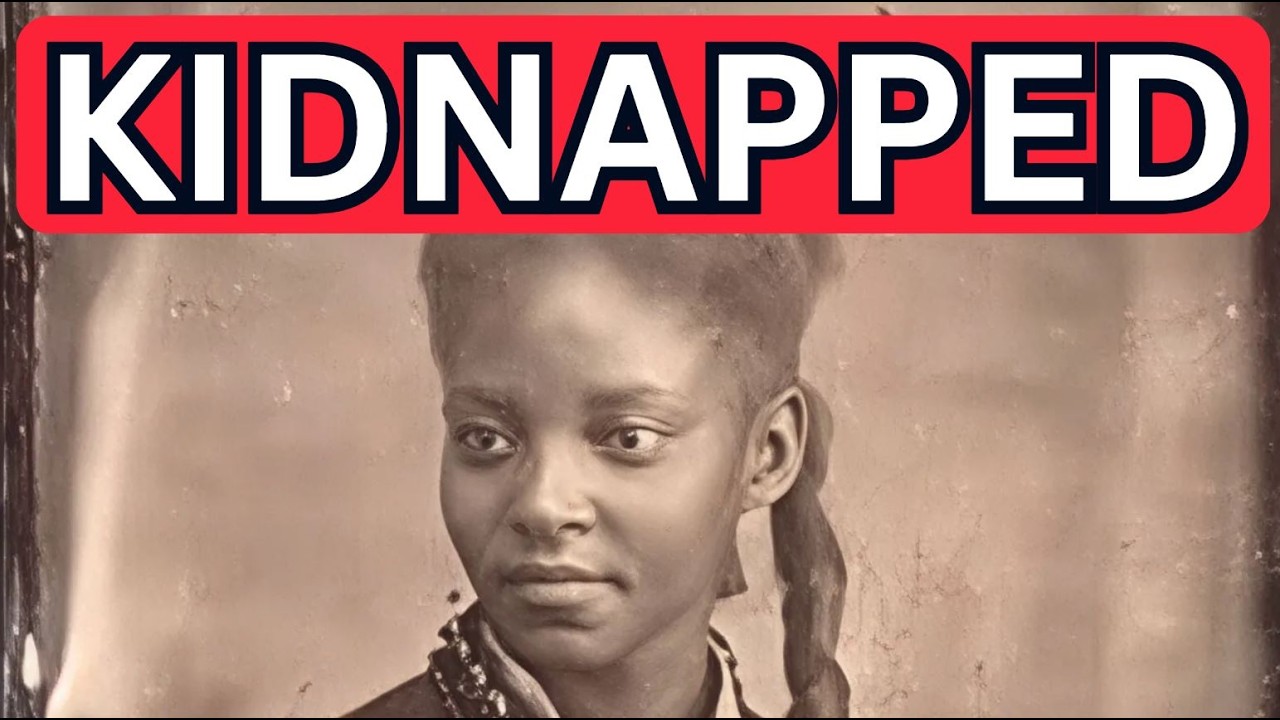
The judgment remains the largest sum any American court has ever awarded as restitution for slavery, yet her case sat forgotten for more than a century before a historian’s painstaking archival work brought it back to light. Henrietta was born enslaved around 1820 in Boone County, Kentucky, in a small settlement called Tousy Town along the Ohio River, the same waterway that separated slave territory from free soil. After her first enslaver died, she was purchased as a teenager by a Louisville merchant she later described as a mean man who beat her often while she cooked, scrubbed, and did his laundry. She was sold again to another Louisville merchant, and later passed into the household of a man named William Cerreau.
When Cerreau fled to France around 1844 to escape debts, his wife Jane Cerreau relocated to Cincinnati, a free city, while renting Henrietta out for domestic labor back across the river in Louisville. Kentucky occupied a grim position in the American slave economy. Its soil had grown less profitable for the large-scale tobacco farming that once drove demand, but the state remained deeply tied to slavery as a supplier state, a place where enslaved people were raised, trained in trades, and sold onward to the cotton plantations of the Deep South. Louisville, sitting directly on the river, became one of the busiest points along that route, and merchants routinely bought and sold domestic servants not because they needed permanent staff, but because training an enslaved person and reselling them was a reliable business model.
The constant threat of sale hung over every enslaved person who passed through this system. In 1848, for reasons that remain only partly documented, Jane Cerreau formally freed Henrietta in Cincinnati. Some records suggest it was part of settling the family’s tangled finances, converting an asset she could no longer easily transport into a clean legal transaction. Whatever the motive, Henrietta received formal free papers recorded in Cincinnati’s legal system, establishing her status beyond dispute.
For the first time in roughly thirty years, she was legally no one’s property. She later described that period as her first sweet taste of liberty. That liberty lasted five years. In 1853, William Cerreau’s daughter Josephine White and her husband Robert hired Zebulon Ward, a deputy sheriff from Covington, Kentucky, to capture Henrietta and resell her.
Ward worked directly with Henrietta’s employer to trick her into crossing back onto Kentucky soil, where Ohio’s free status offered no protection. Once there, he and his associates seized her. The betrayal cut deeper because it was someone she trusted enough to work for who helped deliver her into the hands of the men paid to erase her safety. Kidnapping free Black people back into slavery was a documented and disturbingly common practice across the antebellum period, particularly in border regions like Cincinnati and Northern Kentucky.
Historians estimate that hundreds, possibly thousands, of free Black Americans were kidnapped and sold south in the decades before the Civil War. The legal system made prosecution nearly impossible: testimony bans prevented Black Americans from testifying against white defendants in most southern and border state courts, meaning a kidnapping victim’s own account could rarely secure a conviction. Free Black travelers routinely carried their free papers as protection, but that documentation could be destroyed, ignored, or disputed. Henrietta was held for about a year in Lexington, Kentucky, awaiting sale into bondage.
With the help of a sympathetic innkeeper she remembered only as Mr. Williams, she filed what southern courts called a freedom suit, a legal claim that she was being wrongfully enslaved despite holding valid free papers. With an attorney, she pursued the case for nearly two years. Such suits had an inconsistent history; some courts had ruled in favor of plaintiffs who could produce documentary evidence of a prior manumission.
But Henrietta’s case failed, and she was sold anyway, this time to a Mississippi cotton planter named Gerard Brandon for one thousand dollars. Henrietta remained enslaved through the entire Civil War. She gave birth to a son during this period and never let go of the knowledge of who had put her there. Where many enslaved people had known nothing but bondage, Henrietta had tasted genuine documented freedom, only to have it stolen through deliberate fraud.
When Union forces approached, Brandon relocated the people he enslaved to Texas to delay emancipation reaching them, a pattern historians call refugeeing. Henrietta remained legally enslaved until 1869, four full years after the Confederacy’s surrender, finally gaining her freedom for a second time only when she signed a labor contract with the Brandon family. She returned to the Cincinnati area with her son, roughly sixteen years after Ward had first seized her. The legal landscape had shifted dramatically.
The Thirteenth Amendment had abolished slavery, and the Fourteenth guaranteed citizenship and equal protection, directly overturning the Dred Scott decision that had blocked legal claims like hers just over a decade earlier. For the first time, a formerly enslaved Black woman could, in theory, bring a federal civil suit against a white man and expect basic procedural seriousness. In 1870, Henrietta engaged a Covington attorney named Harvey Meyers to sue Zebulon Ward, by then a wealthy businessman, for twenty thousand dollars in damages and lost wages. Meyers was an unusual choice.
He was a man of real means whose political convictions ran against the grain of his Kentucky community, which remained bitter about Reconstruction. Around the time he took Henrietta’s case, he was also campaigning to change Kentucky law that still barred Black Americans from testifying in court. Taking her case carried real professional and social risk, and the fact that he pursued it anyway suggests genuine conviction. Henrietta’s lawsuit demanded an accounting of what her stolen freedom had cost her: an estimated five hundred dollars per year in lost wages as a free domestic worker, compounded across sixteen years, plus damages for the kidnapping itself.
The case dragged on for the better part of a decade. In 1874, the litigation suffered a serious setback when Meyers was killed. Many similar claims collapsed for exactly this reason, a plaintiff without resources could not sustain years of federal litigation without consistent representation. But Henrietta found a way to keep the case alive, securing new counsel and seeing it through to trial four years later.
The lawsuit finally reached trial in 1878 in federal court in Cincinnati before Judge Philip Swing. An all-white jury heard the case, twelve white men asked to hold a wealthy white businessman financially accountable for kidnapping and enslaving a Black woman. The case received real public attention, championed in print by Lafcadio Hearn, a journalist at the Cincinnati Commercial who would later become internationally known for his writing on Japan. His coverage helped keep the case visible throughout the trial.
The jury ruled in Henrietta’s favor. Rather than the twenty thousand dollars she and Meyers had sought, they awarded her twenty-five hundred dollars, a far smaller sum but a genuine, legally binding acknowledgment that what had been done to her constituted a real compensable wrong. Ward appealed, and the verdict held. Henrietta received her payment in 1879, an amount roughly equal to sixty-five thousand dollars in modern currency.
It remains the largest sum any American court has ever awarded as restitution for slavery. Ward’s later career traced a chilling path. He leased Kentucky’s state penitentiary starting in 1855, profiting from prison labor, and later moved to Arkansas, where he became a central figure in that state’s convict leasing system from the 1870s into the 1880s. That system used an exception written into the Thirteenth Amendment that permitted forced labor as punishment for crime to continue extracting unpaid Black labor for decades after slavery’s formal abolition.
The same man who had profited from Henrietta’s illegal re-enslavement spent much of the rest of his career profiting from a legal system built to achieve strikingly similar ends through different means. No broader program of reparations ever followed from Henrietta’s case. It set no binding precedent requiring similar restitution for other formerly enslaved Americans, and the federal government never pursued a comprehensive reparations program. Henrietta Wood lived until 1912, eventually settling in Chicago, where her story faded from public memory for more than a century.
It resurfaced in 2019 when historian W. Caleb McDaniel published a full biography, Sweet Taste of Liberty, drawing on court records, newspaper coverage, and genealogical research. The book won the Pulitzer Prize for History in 2020. McDaniel’s research also tracked down Henrietta’s own descendants, several generations removed, who had no prior knowledge that their great-great-grandmother had once forced a federal court to acknowledge in a legally binding judgment that slavery represented a debt owed to the people who survived it.
The judgment for twenty-five hundred dollars, however meaningful, could never fully account for sixteen stolen years, a kidnapped freedom, and a childhood spent enslaved. But Henrietta Wood won something that mattered beyond the dollar figure itself: a legally binding admission, extracted from a system built to deny her any standing at all, that what happened to her was real and that it cost her something the law was capable of measuring. Most formerly enslaved Americans never got even that much.
Henrietta Wood spent nearly a decade making sure she did.