In October 1968, on a guarded island in the Ionian Sea, Jacqueline Kennedy, age thirty-nine, married Aristotle Onassis, a sixty-two-year-old Greek shipping magnate whose name carried as much controversy as wealth. There were no cheering crowds, no cathedral, and no public celebration. The ceremony on Scorpios was small, secret, and held under tight security. When news of the marriage broke, it stunned America and Europe alike.
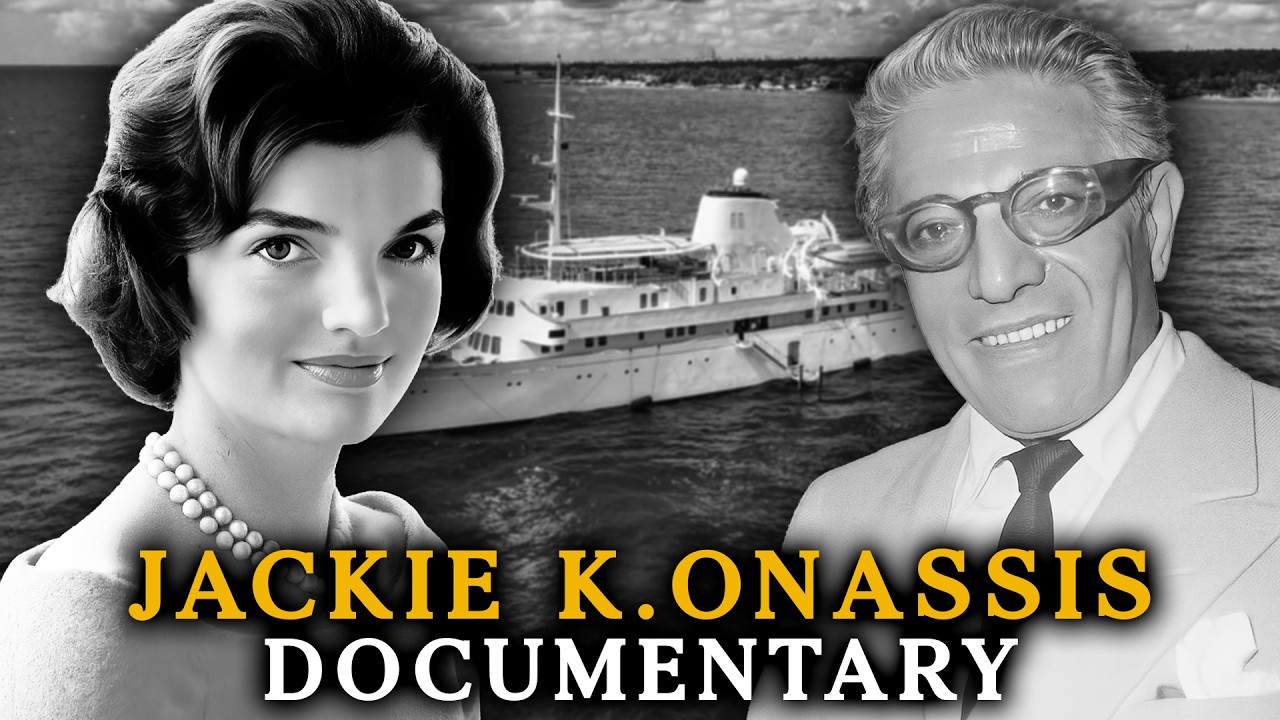
For millions of Americans, the choice felt like a betrayal. Jackie Kennedy had been the graceful widow of a fallen president, the quiet symbol of national dignity during its darkest hours. To many, her decision to marry a man often described as ruthless and morally questionable seemed incomprehensible. Newspapers erupted in criticism.
Commentators debated her motives. Some accused her of abandoning her country; others wondered whether grief had clouded her judgment. The public asked the same question again and again: why would Jackie Kennedy do this? The truth was far more complex than the headlines suggested.
By 1968, Jackie was not simply grieving. She was terrified. Her life had been marked by relentless loss. In August 1963, she had given birth prematurely to a son, Patrick, who died after only two days.
The tragedy sent her into a deep and silent depression. Just months later, on November 22, 1963, she sat beside her husband in Dallas when he was shot and killed before her eyes. The image of her bloodstained pink suit became etched into history, but what the public could not see was the fear that took root in her from that moment on. She feared for herself, for her children Caroline and John Jr.
, and for the safety of the Kennedy name itself. Long before the marriage, Jackie’s path had crossed with Onassis in the fall of 1963, while she was still first lady. The meeting was arranged by her sister, Lee Radziwill, who had a close and widely rumored relationship with Onassis herself. Many believed Lee hoped to marry him one day.
At the time, Jackie was still grieving the loss of her infant son, emotionally exhausted and searching for distance from the pressures of Washington. She accepted an invitation to spend time aboard Onassis’s luxury yacht, the Christina, a floating monument to his power, filled with marble bathrooms and gold fixtures. None of them knew how significant that meeting would become. As the early 1960s passed, Onassis’s attention slowly shifted from Lee to Jackie.
Unlike her sister, Jackie was not chasing glamour or status. She was wounded, guarded, and deeply human. To Onassis, a man who thrived on control and power, she represented something rare: someone untouched by his wealth, someone who did not need him to shine. Fate, however, had more cruelty to deliver.
After President Kennedy’s death, Jackie briefly found comfort with John Carl Warnecke, the architect who helped design JFK’s grave at Arlington National Cemetery. Their shared grief created a strong bond, and marriage was discussed. But Warnecke admitted he was deeply in debt and could not provide the level of security Jackie required. With two children and constant media attention, emotional connection alone was not enough.
Then, on June 5, 1968, Robert F. Kennedy was assassinated. The death of her brother-in-law reopened every wound Jackie had tried to close. According to those close to her, she told friends, “If they’re killing Kennedys, my children are next.
” She was done feeling exposed, done being watched, done being afraid. When Aristotle Onassis reached out again, his offer was simple but powerful: protection, privacy, and distance. He could give her something no one else could, a life beyond America’s reach. He owned islands, ships, and the respect of governments.
Paparazzi could be blocked. Security could be controlled. For the first time since 1963, Jackie saw a path away from constant fear. By the summer of 1968, her decision was clear.
She would leave the United States, protect her children, and do it on her own terms. On October 20, 1968, Jacqueline Kennedy became Jacqueline Kennedy Onassis. The ceremony was intentionally private, attended only by close family and trusted friends. When news broke, outrage erupted.
By marrying a foreign citizen, Jackie lost her Secret Service protection as the widow of a U. S. president. Critics accused her of abandoning America.
Rumors spread that she might be excommunicated from the Catholic Church, though Cardinal Richard Cushing, the Archbishop of Boston and a close Kennedy family ally, dismissed the claims outright. Jackie did not respond. For the first time in years, she chose silence, not as weakness, but as control. Life with Aristotle Onassis appeared impossibly luxurious.
She traveled by private jet, lived on islands, and sailed aboard one of the most famous yachts in the world. Scorpios, purchased by Onassis in 1962, had been transformed from a barren island into a secluded paradise with a grand villa, guest houses, private beaches, and a helipad. For Jackie, it was not just luxury; it was a shield. There she could walk without photographers.
Her children could swim freely. No strangers approached without permission. But wealth did not erase emotional distance. Onassis was used to control, commanding fleets and negotiating with governments, and marriage did not change that nature.
He was often absent, frequently traveling for business and deeply immersed in his empire. Jackie craved stability, quiet, and predictability. They cared for one another, but their relationship was built on mutual benefit and understanding rather than constant closeness. When they appeared together in public, they formed a powerful image, but behind closed doors, tensions surfaced.
Jackie struggled with Onassis’s rumored relationships, particularly his long-standing emotional connection with opera singer Maria Callas. She knew of it but did not confront it publicly. Instead, she withdrew emotionally, focusing on her children and personal projects. In 1973, tragedy struck Onassis in a way that forever changed him.
His only son, Alexander, died in a plane crash at the age of twenty-four. The loss devastated Onassis completely. He aged rapidly, his health declined, and his energy faded. Jackie, who recognized the signs of grief consuming someone from the inside, offered support through quiet presence.
But Alexander’s death also created distance. Onassis withdrew further into himself, becoming bitter and withdrawn. By 1974, his health was visibly failing. He suffered from severe respiratory illness and became dependent on constant medical attention.
Doctors urged him to slow down, but he refused, unable to imagine life without command. Another difficult reality became impossible to ignore: Greek inheritance law strictly limited what a non-Greek spouse could inherit. The majority of Onassis’s immense fortune was legally reserved for his daughter, Christina. Jackie was fully aware of these laws and accepted them without bitterness.
She had not married Onassis for wealth. On March 15, 1975, Aristotle Onassis died in Paris at the age of sixty-nine. For Jackie, it marked yet another chapter of loss. There was no national funeral, no shared mourning.
She faced quiet farewells and private negotiations. The settlement process with Christina Onassis lasted nearly two years. In the end, Jackie accepted a $26 million settlement, agreeing to relinquish any further claims to the estate. She did not fight for power.
She walked away calmly, choosing independence over entitlement. After the legal matters were resolved, Jackie made a decisive choice. She left Europe and returned permanently to the United States. She divided her time between New York City, Martha’s Vineyard, and the Kennedy compound in Hyannisport.
She was no longer a public figure seeking acceptance. She was a private woman determined to live on her own terms. In 1975, she accepted a position as a consulting editor at Viking Press. But when a novel involving a fictional assassination plot was scheduled for publication, public pressure forced her to resign.
Rather than retreat, she later joined Doubleday as an associate editor, where she worked quietly for years, helping bring historical works, biographies, and cultural studies to life. She approached the profession with the same discipline she had once applied to restoring the White House. Colleagues described her as meticulous, prepared, and deeply private. She avoided attention and never sought credit.
Alongside her professional life, Jackie devoted herself to historic preservation. In the 1970s, she became a key figure in the fight to save Grand Central Terminal from demolition. Developers wanted to replace the historic structure with modern towers, but courts ultimately ruled in favor of preservation, establishing an important precedent for protecting historic landmarks across the country. She also opposed developments that threatened Central Park.
Above everything else, Jackie was a mother. Every major decision she made after 1963 was guided by one central goal: to give Caroline and John Jr. the chance to live full, meaningful lives that were not shaped entirely by loss. She shielded them fiercely from unnecessary attention, limiting media access and guarding their private moments with determination.
In motherhood, she found a sense of purpose that no public role ever gave her. By the late 1980s, Jackie’s life had entered a period of rare calm. She walked through bookstores without being recognized, edited manuscripts quietly, and spent evenings with family and close friends. She lived with intention instead of urgency.
In December 1993, that calm was interrupted when Jackie was diagnosed with non-Hodgkin lymphoma. The illness progressed rapidly. She approached treatment with dignity and composure, refusing to dramatize her condition. She remained in her Manhattan apartment, surrounded by family and close friends.
On May 19, 1994, she passed away peacefully at the age of sixty-four. She was laid to rest beside President John F. Kennedy and their children. Time softened the anger that once greeted her marriage.
What once seemed shocking now appeared deeply human. The years Jackie spent with Aristotle Onassis were not a departure from her legacy. They were an essential passage through fear, grief, and survival. She had chosen safety over symbolism and peace over approval.
In the end, she belonged to herself.