The story of the people the Northern Paiute called the Si-Te-Cah, or the tule eaters, survives in a single haunting account written in 1883 by Sarah Winnemucca Hopkins, a Paiute woman and the daughter of a chief. In her book, Life Among the Piutes, she recorded what her elders had told her: a cruel neighboring people who raided their camps, took captives, and were believed to have eaten them. After a long war, the Paiute bands and their allies finally drove the Si-Te-Cah into a cave and, in her plain words, killed them all. She never mentioned red hair.
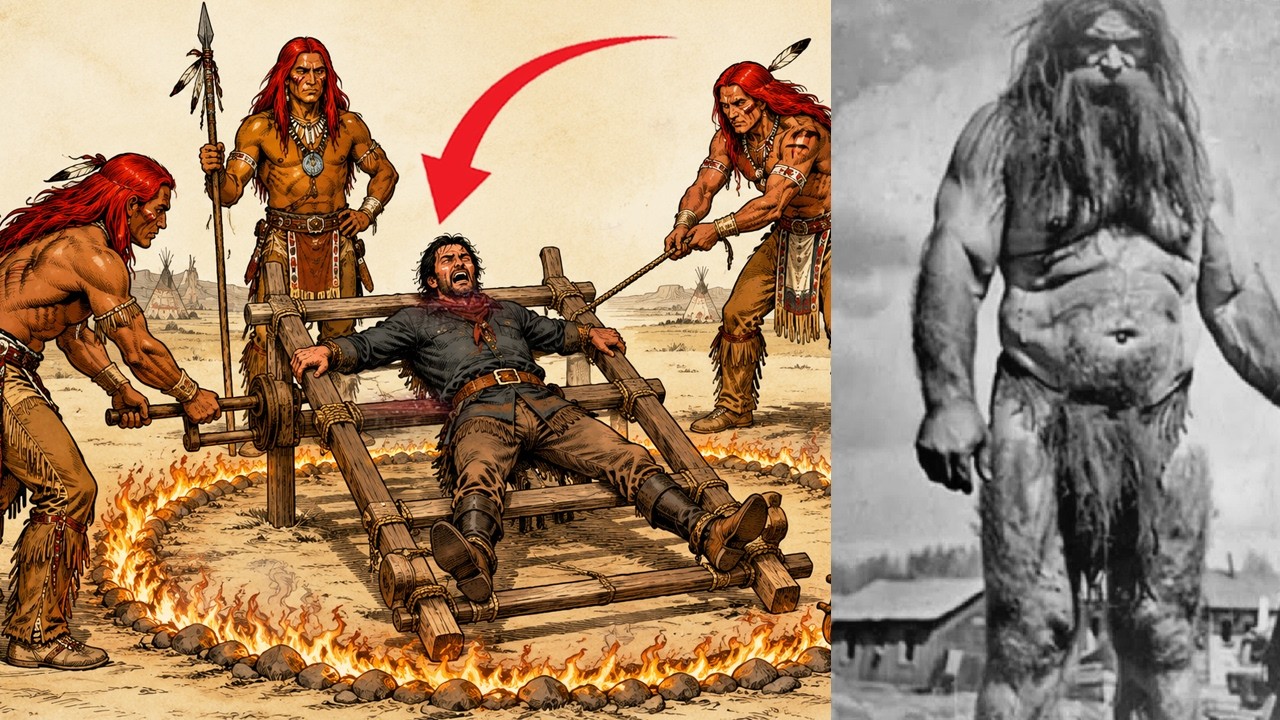
She never mentioned giants. Those details came later, from miners, newspapers, and storytellers with very different motives. The Great Basin of Nevada was a hard country. The lakes shrank and vanished in dry years, and the reed beds around them were life itself.
When two peoples wanted the same marsh, conflict was inevitable. The Northern Paiute were not a unified army but a collection of family bands, each controlling its own territory, water, and pine nut groves. The Si-Te-Cah, according to the oral tradition, were a real tribe, neighbors who lived on the marshy flats and ate what the water gave them: fish, ducks, waterfowl, and the starchy roots of the reeds. They made baskets and duck decoys woven from tules, and they raised their families in a landscape where survival was never guaranteed.
But they had a habit the Paiute could not forgive. They killed captives and ate them. Whether this cannibalism was literal or the accusation one starving people levels at another when resources run dry, the Paiute believed it. Fear fed on fear.
Raids became counter-raids, and the losses mounted for years, perhaps for generations. Eventually, the bands put aside their own quarrels and formed a coalition. A single family could not face this threat alone. What came next was a decision born of exhaustion and grief.
The coalition did not attack the cave first. They attacked the marshes. They burned the reed beds and killed the men they found in the open, forcing the Si-Te-Cah back band by band toward the one place they still believed was safe: a rock shelter high on a cliff above the Humboldt Sink, a dry lake bed that once held a shallow inland sea. The cave opened to the east and was reachable only by a hard climb up loose talus.
Inside, the ceiling came down as the shelter deepened. For the Si-Te-Cah, it was the only defensible ground left. They climbed with children on their backs and carried what they could. They sat down in the cool dark and thought they might live.
The Paiute did not offer terms. There was nothing left to say. Down on the flats, the coalition cut brush, sage, and the same reeds their enemies were named for, and carried it load by load up the slope to the cave mouth. In Winnemucca’s account, the entire military description of what followed is nine words: the tribes piled brush at the entrance and set it on fire.
Dry sage catches fast. Dry tule catches faster. Within moments, the pile became a wall of flame, curling smoke into the cave in long gray ropes. The men inside charged the mouth.
Some made it into the fire, some made it through, and everyone who made it through met an arrow. The coalition had arranged themselves in a half circle below, bows drawn. Any warrior who broke through the burning wall came out silhouetted and blinded into a rain of obsidian points. None of them reached level ground.
The line did not bend. Inside, the survivors crawled deeper, away from the light, into the low ceilings at the back of the shelter where the air was cleaner. But smoke rises to the ceiling, and at Lovelock Cave the ceiling slopes downward as the cave deepens. The further back they crawled, the lower the ceiling got, and the sooner the smoke reached their faces.
The people who ran deepest died first. The refuge became a tomb. The Si-Te-Cah in that cave were not an army. They were a population of old people, nursing mothers, and boys not yet old enough to draw a bow.
There was no escape route. The cave is a pocket in the cliff. Once the mouth was closed, the pocket was a tomb. Outside, the Paiute fed the fire.
They had gathered enough brush to burn for hours. They did not need to storm the cave or lose another warrior. They only needed to wait, to keep the wall of flame burning, and to shoot anyone who tried to come through it. By the time the fire burned down on its own, there was no sound from inside.
The silence was absolute. No one went in that night. In the morning, the dead were left where they fell. The Paiute did not bury them.
They took what they needed, some sandals, some cordage, the duck decoys, and returned to their territories. The war, as many wars end, ended not with a treaty but with a silence that held for centuries. Then, in 1911, two men named David Pugh and James Hart walked into the cave with shovels, digging for bat guano to sell to California farmers as fertilizer. Three feet down, they hit something dark and long.
A reed sandal. A fiber net. A piece of basketry so fine it looked new. Then human bones.
Pugh and Hart were miners in a hurry. They threw the objects onto piles outside and kept shoveling. They also told stories. And in the retelling, the bones grew.
A normal femur became a giant’s thigh bone. A tall man became a monster. Word reached the University of California, Berkeley. In 1912, archaeologist Llewellyn Loud arrived and did what the miners had not done: he measured, recorded, and mapped.
He was joined in the 1920s by Mark Harrington, and together they published the monograph that became the foundation of everything scientific known about the site. The 1929 report cataloged thousands of artifacts, including the famous duck decoys woven from cattail reeds and painted with earth pigments. And it documented approximately eight burials with preserved human remains. Every one of them was measured.
The tallest skeleton ever recovered from the cave is roughly six feet. There are no eight-foot skeletons. There are no ten-foot skeletons. There are no giants.
Decades later, physical anthropologist Sheilagh Brooks, chair of the anthropology department at the University of Nevada, Las Vegas, examined the “giant” bones that had accumulated in museum drawers and been cited in giant-hunter literature. She identified them by species. Some were not human at all. They were cattle.
Cow femurs and cow scapulae, mistaken by miners in dim light and by later enthusiasts in warm imagination for the bones of a vanished race. As for the hair, some mummified remains did preserve a reddish copper tone visible under glass. But hair does not stay the color it was in life. In an alkaline, dry, chemically active cave, black hair oxidizes and pigments shift.
Analysis showed the reddish tone to be a product of post-mortem change, not a marker of a genetically red-haired population. The people in that cave had hair as dark as their killers. There was another problem. Winnemucca never once identified the cave in her story as Lovelock Cave.
She described a cave but did not name it. The identification was made later by non-Paiute readers looking for a place on a map. It is entirely possible the massacre her elders remembered happened somewhere else, and Lovelock Cave, with its normal-sized graves and beautiful duck decoys, only became the site of the legend because two miners with shovels stumbled into it at the wrong moment in the history of American storytelling. The horror of Lovelock Cave is not that the victims were giants.
The horror is that they were not. They were families, and they died in the dark. The giants, the cannibal race, the eight-foot red-haired monsters of frontier lore, that story was born in a newspaper office, not in a Paiute grandmother’s mouth, and it grew decade by decade until the Nevada State Museum posted a sign at its display stating plainly that red-headed giants are a myth. The Si-Te-Cah were real.
The war was real. The extermination in some form was real. What was done to them was done by hungry human beings to other hungry human beings in a hard country, in a fight over reeds and water and the right to survive one more winter. The horror is real.
The monsters are not. That is the harder truth to sit with.