In the summer of 1951, at a roller skating rink in San Antonio, a nineteen-year-old airman named Johnny Cash met a woman named Vivien Liberto. Three weeks later he shipped out to Germany with the Air Force, and what followed was not a whirlwind romance but three years of handwritten letters crossing an ocean, more than ten thousand pages by some later estimates. They married on August 7, 1954, the week he came home, with no fame, no record deal, just a young couple starting over. Four daughters followed, and Vivian was there for everything that came next: the move to Memphis, the Sun Records years beginning in 1955, the first hit singles cut in a tiny studio on Union Avenue, the nights he came home broke, and the nights he came home famous.
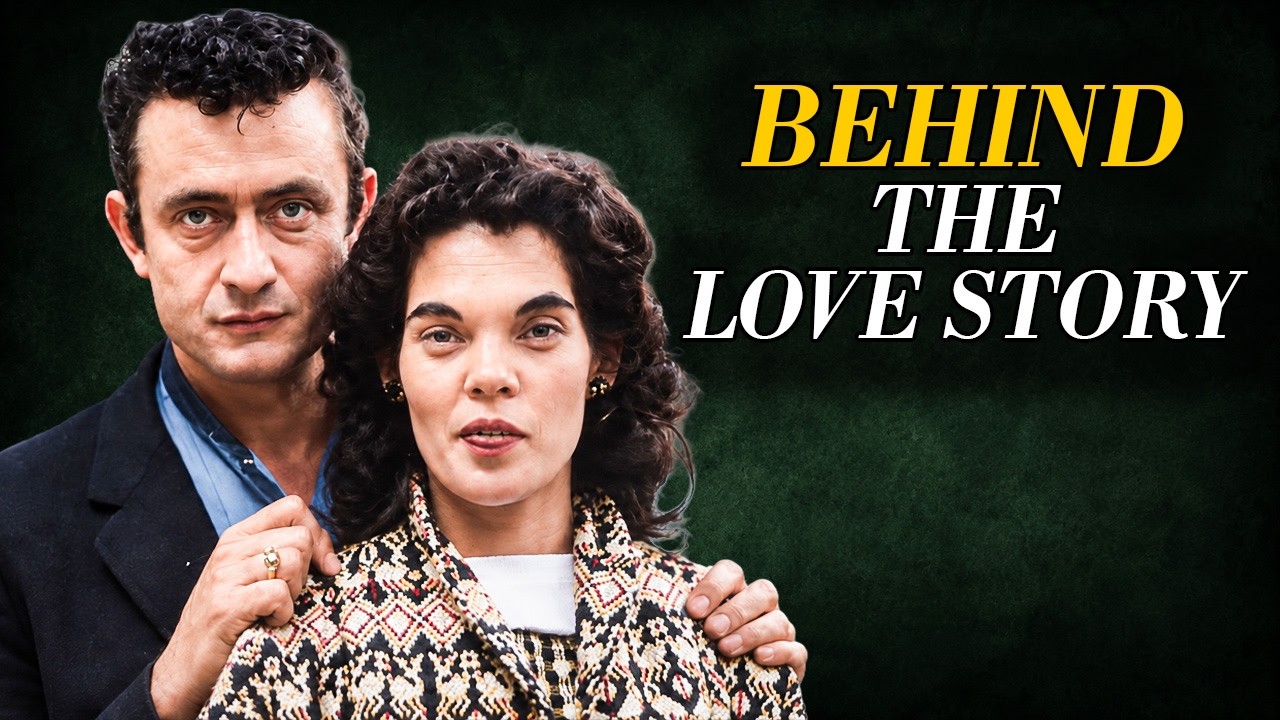
Cash himself later said that “I Walk the Line,” his breakthrough single, was written as a promise to stay faithful to her while he was on the road. One of the most famous fidelity songs in American music was written for a wife almost entirely erased from the story told about him now. By 1966, Vivian had filed for divorce. In her memoir decades later, she was direct about why: years of watching an addiction take her husband further from home than any tour schedule could explain, long before another woman ever entered the picture.
By the early 1960s, Cash was touring constantly, sometimes performing close to three hundred nights a year, crossing the country by car and small plane between dates. Constant exhaustion had a solution that half of Nashville was already using, amphetamines handed out like aspirin to keep working men working through back-to-back shows and all-night drives. Cash’s own autobiography describes what came next plainly: missed dates, disappearances stretching into days, a physical decline visible enough that his own band noticed before most fans did. Then in October 1965, customs agents at the border crossing in El Paso opened his guitar case and found it lined with pills, amphetamines and tranquilizers, hundreds of them.
He was arrested, charged, and given a suspended sentence. This was not a rumor started by a tabloid. It was in the court record, covered by wire services at the time, and reprinted in newspapers across the country. The man singing about Folsom Prison was closer to that world than his audience realized, and the person absorbing the daily consequences was Vivian at home in California with four young daughters, watching a marriage dissolve for reasons that had nothing to do with anything she had done.
Weeks after the El Paso arrest, a photograph ran in a newspaper showing Vivian embracing Johnny as he returned home from the airport. Someone claiming ties to the Ku Klux Klan sent that photograph to a newspaper in Alabama along with a letter falsely alleging that Vivian was Black, pointing to her darker complexion as supposed proof. The claim was untrue. Vivian was of Sicilian and Italian descent, and her family’s documented ancestry made that clear.
But the letter triggered a wave of hate mail directed at the family, a radio boycott threat against Cash’s records across parts of the South, and, in her own later account, genuine fear for her children’s safety, severe enough that she considered moving the family entirely. A woman receiving death threats over a lie about her own ancestry, printed beside a photograph of her simply comforting her husband after an arrest that was itself real. This was the mid-1960s South, when an accusation like that could end a career overnight. The public was punishing this marriage for exactly the wrong reason, at almost the precise moment the actual reason it was ending was already taking shape somewhere else entirely.
By then, Johnny Cash already knew June Carter well. She joined his road show as a regular performer around 1961 and 1962, part of a family act with deep roots in country music. Her mother, Maybelle Carter, had been performing since the 1920s as part of the original Carter Family, the group whose earliest recordings are still taught as the foundation of recorded country music. June and Johnny had spent years writing and performing together by the time the El Paso arrest made headlines, including “Ring of Fire,” a song whose exact authorship biographers still debate but whose emotional closeness to their relationship is not in dispute.
The romance the world associates with Johnny Cash did not begin cleanly after his first marriage ended. It was already forming while that marriage was still intact on paper. And June was notably not chasing it. She had already been married and divorced twice, first to singer Carl Smith and then to Edwin “Rip” Nicks.
By her own account in her memoir, she spent years actively resisting a third commitment, out of a specific documented fear that an audience who already knew her history would watch her fail a third time in public and judge her for it. In 1967, deep in his addiction and by his own later account genuinely suicidal, Cash walked alone into Nickajack Cave in Tennessee, intending to let himself get lost in the dark and die there. His body badly worn down from years of drug use, he crawled back out instead. The people who took him in afterward to help him get sober were not strangers or doctors.
They were June’s own parents, Maybelle and Ezra Carter, who let him stay at their home in Tennessee while he detoxed with June and her extended family present through the worst of the withdrawal. The support that eventually built the great love story was not only romantic from the start. It was practical, and it was there before a single wedding vow was ever exchanged. Cash proposed to June on stage in London, Ontario, in February 1968, in the middle of a live performance, and she said yes in front of that same crowd.
They married on March 1, 1968, in Franklin, Kentucky, weeks before Cash recorded his landmark live album at Folsom State Prison. That is the wedding the world remembers. What it conveniently leaves out is everything that had to happen first, and everything still waiting on the other side of it. A wedding does not dissolve a chemical dependency, and what happened over the following two decades proves it in specific documented detail.
Cash’s addiction did not end with the 1968 wedding. It changed shape and kept returning. Prescription painkillers replaced amphetamines through much of the 1970s, managed for stretches, then relapsing again, a pattern he discussed openly in interviews throughout that decade. Then in 1983, on his farm property in Hendersonville, Tennessee, Cash was attacked by one of the ostriches he kept there.
The animal knocked him down and caused severe abdominal injuries, breaking several ribs and requiring emergency surgery. The recovery from that surgery meant a fresh, entirely legitimate prescription for painkillers. According to Cash’s own account, that prescription reignited a relapse serious enough that it nearly killed him. He entered the Betty Ford Center for treatment later that same year, one of several stints in rehabilitation facilities he underwent across his life.
Each one was treated publicly as a resolution. Each one was eventually followed by another return to the same substances. Their son John Carter Cash has written about what actually filled those years: repeated interventions through the 1980s and into the 1990s, moments where relatives, band members, and close friends stepped in directly because June alone could not manage it. Some accounts described June coming close to leaving more than once during the worst stretches, exhausted by a cycle that kept repeating no matter how many times it seemed resolved, not because she had stopped loving him, but because loving him had never been the part that was hard.
Entire tours were reorganized around watching him closely, with band members informally assigned to track where he was between sets. Vivian Liberto absorbed twelve years of a rising addiction, then absorbed public hatred over a lie about her own race layered directly on top of it, and largely disappeared from the story she had helped build from its earliest years, raising four daughters mostly alone while the myth was being written around her absence. June Carter absorbed the knowledge of exactly what she was walking into, resisted it publicly for close to a decade, and then spent more than three decades managing relapses that never fully stopped, with direct help from her own family before the marriage had even begun and for years after it. Two women, more than twenty combined years, carrying essentially the same unresolved crisis in sequence, one after the other.
The popular version tells you this was a rescue. The documented version tells you it was closer to an inheritance. One woman handing an unfinished problem to the next, neither of them responsible for creating it, both of them living inside its consequences for years at a stretch. June Carter Cash died on May 15, 2003, following complications from heart surgery, at the age of seventy-three.
Vivian Liberto had remarried and spent decades largely out of the public eye. She had already begun writing her own account before her death in 2005, and her memoir, “I Walked the Line,” was published posthumously in 2007, finally putting her twelve years back into a record that had spent nearly four decades leaving them off the page. Johnny Cash followed June just four months later, on September 12, 2003, at the age of seventy-one. The official cause listed was complications from diabetes following a stretch of hospitalizations that year for other health problems, including pneumonia.
It has become common to say he died of a broken heart. That is understandable, but it is not the medical finding. What can be said honestly is that people close to him in those final months described a sharp, visible decline after June’s death. The first wife was written almost completely out of the story she helped build from the ground up.
A second wife understood exactly what she was choosing and hesitated for years before saying yes. A marriage survived less because it was easy and more because again and again someone else in the room refused to let it end. Somewhere in an archive box, there is a stack of handwritten letters from 1951, ink faded, edges soft from handling, that almost nobody reads anymore.