On the morning of December 30, 1978, police responding to a home in Littleton, Colorado, found three bodies. Nancy Spangler, forty-five, lay in the basement with a bullet in her head. Her children, seventeen-year-old David and fifteen-year-old Susan, were dead in their upstairs beds. A .
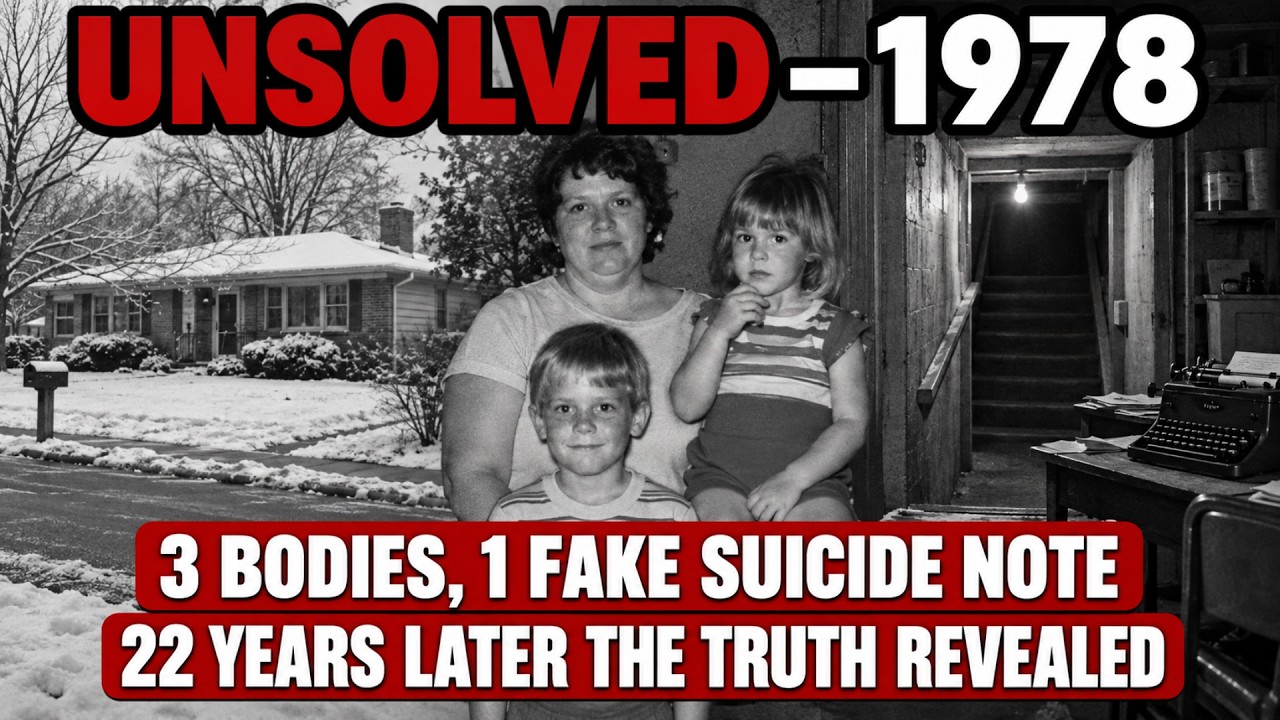
38-caliber revolver rested in Nancy’s hand, and a typewritten suicide note sat on the table, signed with the letter N. Robert Spangler, the husband and father, wept and trembled as he told police he had returned from work to find his family dead. Authorities believed him. Within four days, the case was officially closed as a murder-suicide committed by Nancy.
Evidence was returned to Robert or destroyed. But pieces of the scene never fit. Gunshot residue was found on Robert’s gloves, not Nancy’s hands. The typewriter bore no fingerprints, only deliberate wiping marks.
Nancy was terrified of firearms. She weighed less than one hundred pounds, and the bullet had entered her forehead, a location almost unheard of in female suicides. Her family insisted she would never have harmed herself or her children, but no one listened. For twenty-two years, Nancy Spangler carried the stigma of a mother who killed her children and then herself, while the man responsible lived openly, married three more times, and left a trail of deaths behind him.
It took two decades, a federal investigation, the FBI’s Behavioral Analysis Unit, and a terminal cancer diagnosis before the truth came out of the killer’s own mouth. Robert Spangler and Nancy Stallman began dating in high school in Ames, Iowa. Robert was a football star, tall and confident. Nancy was the all-American girl, bright and devoted.
They married in 1955 and later settled in Littleton, a quiet suburb south of Denver, where David was born in 1961 and Susan in 1963. From the outside, they embodied the postwar American dream. But around 1974, Robert began feeling suffocated. He resented his family’s independence and the routine of his life.
Then he met Sharon Cooper at work. She was lively and different, and Robert became obsessed. He left the family and barely saw his children for nine months. Divorce was the obvious solution, but after twenty-three years of marriage in 1970s Colorado, it meant losing half the property.
Robert would not accept that. He returned home, told Nancy he wanted to reconcile, and she believed him. In reality, he had spent weeks preparing. He typed a suicide note in the basement, crafted to sound like Nancy’s final words.
He told her it was a birthday message and placed it in front of her. Without reading it, she signed her initial, N, at the bottom. On the night of December 29, Robert staged a loud argument with Nancy, ensuring neighbors could hear. The next morning, he took the revolver from a cabinet and called her down to the basement, saying he had a surprise.
Nancy descended the stairs, and Robert shot her in the head. She died instantly. He went upstairs and shot fifteen-year-old Susan in the heart while she slept. Then he went to David.
The seventeen-year-old was larger and stronger, and the first bullet did not kill him. The boy woke and fought his father. Robert could not fire a second shot because the real Nancy would never have shot a child twice, so he used a pillow to smother his son to death. Robert arranged the scene, placed the gun in Nancy’s hand, set the fake suicide note on the table, and called police.
He played the grieving husband perfectly, admitting marital problems and an affair but speaking as a heartbroken man, not a suspect. A crime scene technician found gunshot residue on Robert’s gloves, but instead of pursuing that lead, the technician took Robert home, fed him spaghetti, and let him stay overnight. There were no fingerprints on the typewriter, only wiped keys, and no one questioned why a suicidal woman would clean her typewriter. No one asked why a woman afraid of guns and weighing under one hundred pounds would shoot her forehead.
The coroner ruled the deaths a murder-suicide by Nancy on January 3, 1979, just four days after the killings. The case was closed, and most physical evidence was returned to Robert or destroyed. Nancy’s family, the Stallmans, never accepted the conclusion. They knew Nancy had been optimistic about the reconciliation and had spoken of New Year’s plans the day before her death.
But they had no power, and for more than two decades, Nancy’s name remained tainted in official records. As one family member later said, it took twenty-two years to enjoy Christmas again. Robert wasted no time building a new life. On July 14, 1979, seven months after burying his wife and children, he married Sharon Cooper and brought her to live in the same house where his family had died.
The marriage eventually soured, and in 1986, Robert visited his adoptive father, Merlin Spangler, in Iowa. Days after Robert’s arrival, the ninety-two-year-old man suffered a fatal fall. No one investigated. In 1988, Robert and Sharon divorced, and two years later, he married Donna Sandling, a fitness instructor, and moved to Durango, Colorado.
He worked as a morning radio host and became popular in the small town. No one knew his past. Donna was afraid of heights. Robert’s life now revolved around hiking the Grand Canyon, with its sheer cliffs.
When Donna began refusing trips, Robert grew resentful. Hoping to save the marriage, she agreed to one final hike on Easter Sunday, April 11, 1993. That evening, Robert walked into a ranger station and reported that his wife had fallen to her death. He said they had been taking photos near the edge, he turned to adjust the camera, and she was gone.
Donna’s body was found at the base of a cliff, about 140 feet below. The death was ruled an accident. Donna’s family suspected foul play, knowing her fear of heights and the couple’s marital problems, but there were no witnesses and no evidence. After Donna’s death, Robert sold the Durango home and reconnected with Sharon Cooper.
In July 1994, she moved in with him. Five months later, on October 2, 1994, Sharon died at age fifty-two. Robert said she left a suicide note and overdosed on Tylenol. No meaningful autopsy was performed, and Robert collected $20,000 from her life insurance.
Sharon had told people before her death that she believed Robert was trying to harm her, but no one listened while she was alive, and no one asked questions when she died. Three wives dead, two children dead, and Robert Spangler was the sole survivor in every case. Finally, federal agencies began connecting the dots. After Donna’s death in 1993 and Sharon’s in 1994, the Department of the Interior, the National Park Service, and authorities in Arizona and Colorado linked the cold cases.
A federal prosecutor consolidated them under federal jurisdiction, building a framework based on insurance fraud and murder. The FBI’s National Center for the Analysis of Violent Crime, or NCAVC, was brought in. Analysts studied Spangler’s behavior and saw a clear pattern: whenever a marriage became unbearable, he eliminated his partner rather than leaving. They designed an interview strategy built around his vanity and love of storytelling.
Around 1999 or 2000, Robert was diagnosed with terminal brain cancer and given months to live. The team knew this was both a threat and an opportunity. If he died without confessing, the truth would die with him. But a dying narcissist often wants to control his legacy and prove his cleverness.
In September 2000, investigators approached Spangler at his home in Grand Junction, Colorado, where he was staying with his fourth wife, Judy Hilty. The interview was videotaped from beginning to end. He agreed to talk and did not ask for a lawyer. Spangler confessed to pushing Donna Sandling from the cliff.
Then he continued, describing the morning of December 30, 1978, in chilling detail. He had lured Nancy to the basement with the promise of a surprise and shot her in the head. He shot Susan in the heart as she slept. When the first shot did not kill David, he smothered his son with a pillow because a real Nancy would never have shot the same child twice.
Asked why, he explained that he was unhappy in his marriage, wanted to be with Sharon Cooper, and divorce was too expensive. He described the killings as an administrative decision. Then he said the words investigators had waited twenty-two years to hear: You’ve got your serial killer. He denied involvement in Sharon Cooper’s death, and investigators had no evidence to disprove him.
The next morning, Spangler called the FBI agent and asked to continue the interview after breakfast. He was not done telling his story. On October 3, 2000, Robert Spangler was arrested. On November 5, he changed his plea to not guilty, claiming the brain tumor had affected his judgment during the confession.
But the videotape showed a calm, coherent, detailed account, and the plan to record everything had anticipated his reversal. Facing the tape, Spangler agreed to a plea deal. A federal grand jury in Phoenix indicted him for first-degree murder in the 1993 death of Donna Sandling Spangler at the Grand Canyon. He was sentenced to life in prison without parole.
In Colorado, the taped confession supported charges for the 1978 murders of Nancy, David, and Susan. The official record was finally corrected: Nancy had not killed her children. Robert Spangler had shot his wife in the basement of their home, shot his daughter in the heart, and shot and smothered his son. Robert Spangler died in prison on August 5, 2001, from brain cancer at age sixty-eight.
He had lived free for twenty-two years after killing three people and seven more after pushing Donna from a cliff, spending less than a year behind bars. The case became a model for FBI training, a demonstration that cold cases can be solved even when physical evidence has been destroyed, if investigators understand the killer’s psychology. It also left a painful lesson about the cost of a rushed investigation. If anyone in 1978 had asked why gunshot residue was on Robert’s gloves instead of Nancy’s hands, or why the typewriter keys were wiped clean, or why a woman terrified of guns shot herself in the forehead, Donna Sandling and Sharon Cooper might still be alive.
No one asked. The system failed, and Robert Spangler remarried, worked as a radio host, and hiked the same trails where he had pushed a woman to her death. In the end, it was his own arrogance that destroyed him. He could not bear to die with his secret untold.
And in the moment he opened his mouth, Nancy, David, Susan, and Donna finally received what their families had waited over two decades for: the truth.