On June 25, 1876, the Seventh Cavalry under General George Armstrong Custer rode toward the Little Big Horn River with every expectation of a decisive victory. Instead, Custer and more than two hundred of his men were wiped out, cut down by Lakota and Cheyenne warriors who refused to surrender their lands. The battle became the most famous disaster in American military history, but for more than a century the full story remained buried in official reports and legend. The plain accounts of the men who survived reveal a battle far more desperate, chaotic, and horrifying than the romantic hero narratives that followed.
The path to the Little Big Horn began with gold. In 1874, prospectors discovered the precious metal in the Black Hills of South Dakota, sacred ground that the United States had guaranteed to the Lakota under the 1868 Treaty of Fort Laramie. Written promises meant little against the lure of riches. Settlers flooded the region, and when the Lakota, Cheyenne, and Arapaho refused to abandon their homelands and move onto reservations, the government answered with military force.
Custer, a decorated Civil War hero known for his flamboyance and ambition, was ordered to subdue the hostiles. On June 22, 1876, the Seventh Cavalry left camp on Rosebud Creek, marching under a scorching midday sun. For two days they pressed forward, following a trail marked by fresh signs of native movement. On June 24, six Crow scouts sent out ahead returned with urgent news.
Fresh pony tracks crisscrossed the ground, indicating a massive Indian village just beyond the horizon. That night, Custer gathered his officers for quiet consultation, their whispers too faint for the enlisted men to hear. At eleven o’clock, the order came to strike camp and march through the pitch black darkness. Dawn broke on June 25, and the scouts raced back with confirmation.
The village was there, thousands strong. Custer mounted his horse and rode out personally to survey the terrain, returning an hour later with visible frustration. According to his men, he muttered that he had seen nothing, dismissing the scouts’ reports. But Mitch Boyer, a half-native guide, and the Crow scouts held firm.
The village was there, and the Sioux had already spotted the column. War parties were moving. Custer issued the order that sealed his fate. Prepare for battle.
The command advanced cautiously along a narrow creek for six grueling miles. Every rustle in the brush heightened the tension. Then came a chilling sign. A solitary Indian lodge stood at the entrance to the Little Big Horn Valley, a dead warrior sprawled at its threshold.
Five miles away, clouds of dust rose into the sky as hundreds, perhaps thousands of horses thundered across the plains. Custer’s eyes gleamed with excitement. He declared that the Indians were fleeing, misreading the movement as a retreat. He scrawled a quick note to Major Marcus Reno and pushed his scouts forward.
Attack now. Reno, commanding his battalion, crossed the river at a shallow ford, cold water splashing against the horses as they charged onto the open prairie. After a mile, he ordered his men to dismount and form a skirmish line, sending their horses into a nearby thicket for safety. But the horizon erupted with mounted warriors, their war cries rolling like thunder, their numbers growing with every moment.
Reno’s skirmishers opened fire, but the enemy swung wide, cutting off the path back to the river. Fall back to the trees, Reno shouted, his voice edged with panic. The Sioux and Cheyenne pursued with relentless fury, bullets and arrows tearing through the ranks. Wounded soldiers stumbled toward cover, their cries lost in the chaos.
The accounts of the soldiers who survived paint a raw picture of what followed. One scout recalled warning Custer that the Sioux had seen them, that war parties were circling like wolves, but he would not listen, pushing the command forward like a man chasing a phantom. When Reno’s fight broke out, the scout saw thirteen soldiers staggering toward the trees, some bleeding, others trembling. They crouched in the underbrush for hours, listening to the distant roar of gunfire, unaware that it was Custer’s men being cut down.
The air was thick with smoke and screams, the earth itself seeming to come undone. Thirst became a killer almost as deadly as the enemy. Survivors described thirty-six hours without water, the sun scorching their skin until it cracked. Their tongues swelled until they choked, leaving men gasping like fish on dry land.
They chewed grass to trick their stomachs, but it stuck to cracked lips, useless and bitter. Some crawled to the ravine on their bellies to fetch water under a hail of Sioux bullets. One man had his leg blown apart, the bone jutting out like a snapped branch. He screamed until his voice gave out, and they dragged him back and sawed off the ruin.
The wounded died fast, their lips bleeding, begging for relief that no one could provide. While Reno’s men fought for survival, Custer had veered north with his battalion, splitting his forces in a daring attempt to flank the village. He counted on surprise, but the Lakota, Cheyenne, and Arapaho, perhaps three thousand warriors under leaders like Sitting Bull and Crazy Horse, were ready. Custer’s two hundred-plus men scrambled up a rise now known as Custer Hill, digging in with rifles blazing until barrels glowed and cartridges ran dry.
The warriors closed in, arrows whistling, bullets finding flesh, until the hill became a graveyard. Every soldier with Custer fell. Their bodies were left to bake under the relentless sun. Native accounts describe the scene with stark clarity.
Red Horse, a Lakota warrior, later told of soldiers falling like grass under a blade, their bravery no match for the tide that overwhelmed them. Legends swirled around the battle. A Cheyenne tale speaks of a white horse, perhaps Custer’s, galloping free after the slaughter, its flank streaked with blood. Whispers tell of a ghost rider, a lone trooper who escaped only to vanish into the wilds.
Sioux stories weave a darker thread, speaking of a curse dooming anyone who disturbs Custer’s remains to an early death, their spirits tied to the battlefield. Fact or folklore, these tales kept the mystery alive. Back with Reno, the ordeal stretched into a second day. As dawn broke on June 26, the Sioux launched fresh assaults, their waves crashing against the bluffs where soldiers huddled behind barricades of saddles, packs, and the bloated corpses of fallen horses.
By mid-morning, dehydration tormented the men. Hardtack and raw bacon sat uneaten without saliva to swallow them. The wounded slipped into fever delirium, their lips splitting as death approached. A group of volunteers braved a desperate run to the river seven hundred yards away, across open ground with Sioux sharpshooters ready to strike.
Fifty men dashed through the gauntlet, bullets kicking up dirt at their heels. At the water’s edge, hidden warriors fired from the timber, forcing the soldiers to creep within thirty feet under brush before darting out to fill kettles and canteens. One man fell with his chest torn open, another’s leg shattered beyond repair. Six or seven others limped back wounded, their efforts yielding just enough water to delay collapse.
By two in the afternoon, the native attacks began to weaken, though sporadic fighting continued until dusk. As night fell, the battlefield grew quiet. Reno moved his men to higher ground, fortifying a stronger position, bracing for a dawn assault that never came. When the sun rose on June 27, the plains were empty.
The silence was overwhelming until word arrived that General Terry’s relief force was six miles away. When his troops marched into view, hoarse cheers broke out. Rescue had arrived. But the trek to Custer Hill revealed a scene of horrific carnage.
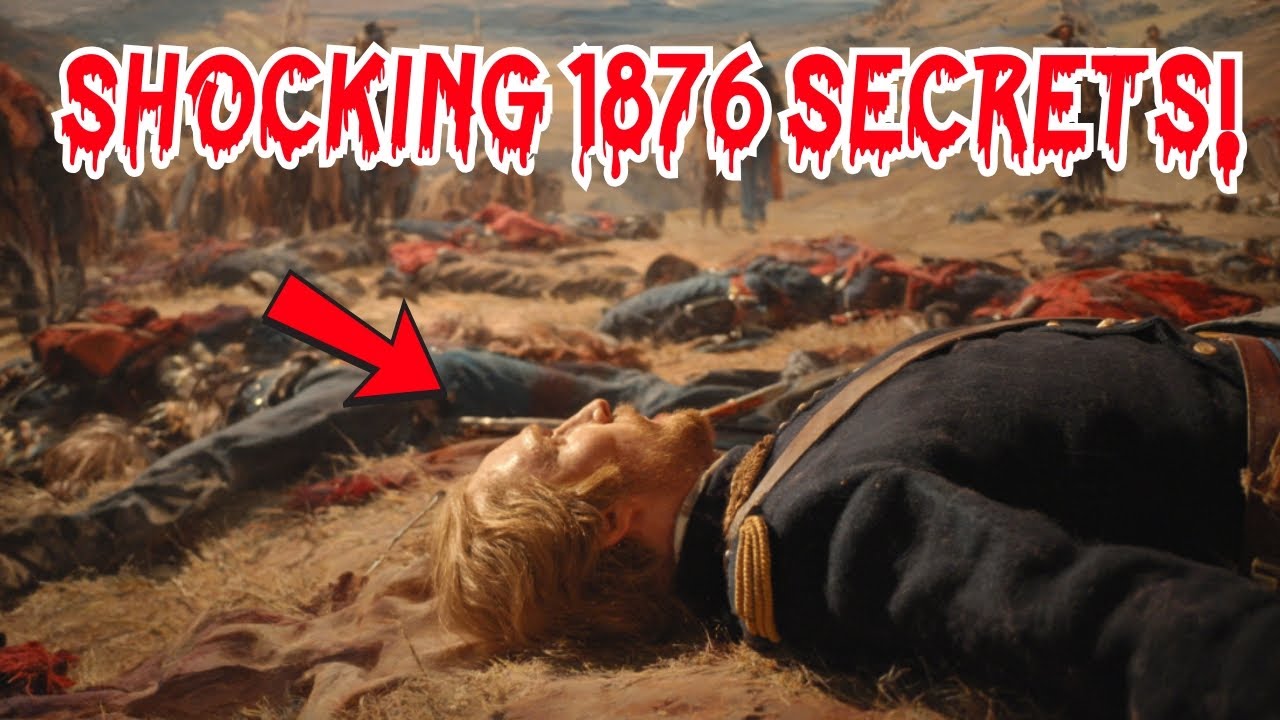
Bodies strewn across the slope, mutilated beyond recognition, scalped, disemboweled, skulls crushed by stone mallets wielded by grieving Sioux and Cheyenne women. Captain Benteen later wrote of the anguish, noting that many were so disfigured they could not be identified. Survivors recounted a Sioux tale of elderly women wailing as they roamed the field, smashing heads in a ritual of vengeance and mourning. Four soldiers’ heads were later found in the native camp, their bodies lost to the chaos.
Custer himself lay among the dead, his body stripped and pierced, though accounts vary on his wounds. None of his men escaped the encirclement of at least twenty-five hundred warriors. Not every man shone with courage that day. One soldier spoke of fear spreading through the ranks, pinning much of the blame on Reno’s wavering resolve, which drained the men’s will to fight.
Another hid behind a box of hardtack as bullets flew. A third clung to the ground behind a pack saddle, while a fourth faked a wound for two days, trembling at every sound. Yet others rose above. One soldier labored under the searing sun, dragging dead horses to form breastworks, firing at the enemy while his mind raced with questions about Custer’s fate.
The surgeon worked tirelessly tending the wounded, urging men to brave the river run despite the danger. A soldier shot while filling his canteen shattered his leg and was dragged back screaming, a sacrifice for the few drops he had secured. As June 26 faded, a lone Sioux sharpshooter on a hill terrorized Reno’s men, his buffalo gun claiming lives with chilling precision. Captain Ryan finally silenced him with a long-range shot, and the sniper was later found dead behind a boulder barricade, rifle still in hand.
By late afternoon, most native forces withdrew to mourn, leaving only a small group to keep the soldiers pinned down. Hunger gnawed at the men, who had eaten nothing since dawn on the twenty-fifth. Exhaustion felled men where they stood, some too weary to fear death. General Terry’s arrival sparked ragged cheers, but the joy soured as the scale of the loss sank in.
Over two hundred men were gone, their deaths a national wound that fueled cries for vengeance. The army doubled down, and within a few years the Lakota and Cheyenne were forced onto reservations, their resistance broken. The battle became a wound that would not heal, a puzzle that still begs for answers. Whether Custer was a heroic martyr or a reckless fool who divided his command and ignored warnings remains a matter of debate.
The truth lies with the dead, and the enduring legends of the plains carry it forward.