On October 14th, 1944, two black cars drove through a village in southern Germany and stopped at the Villa Lindenhof. Inside, Field Marshal Erwin Rommel was recovering from wounds he had received when his staff car was strafed by Allied aircraft in Normandy on July 17th. His skull had been fractured. He had come home to Herrlingen to convalesce.
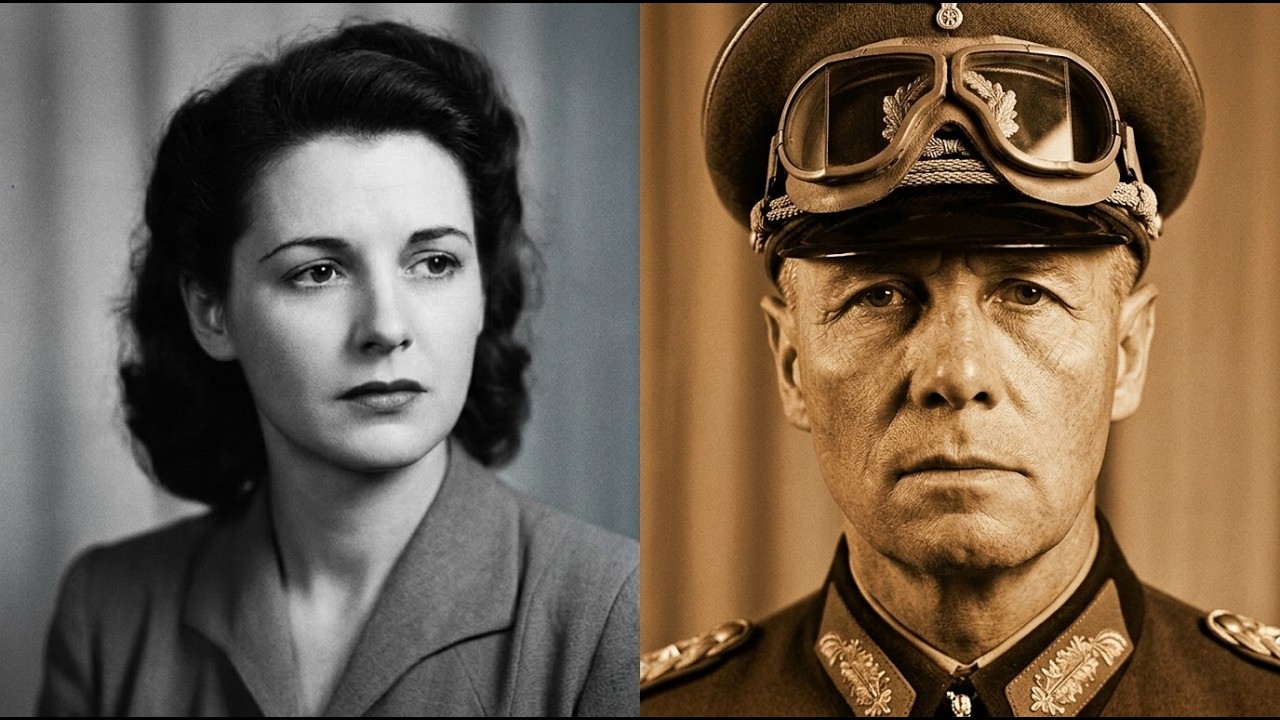
The men who stepped out of those cars were SS generals Wilhelm Burgdorf and Ernst Maisel, sent from Berlin by the regime. They carried an ultimatum. The investigation into the July 20th attempt on Hitler’s life had reached Rommel. The precise degree of his involvement has been debated by historians, but the choice he was offered that morning is documented.
He could face a public trial for treason, execution, and the activation of the regime’s collective punishment policy, which targeted not only the accused but his entire family. Lucie, his wife, and Manfred, their son, would not be spared. Or he could accept a private death. He would leave quietly in the SS car.
In exchange, the regime would guarantee the safety of his family. His pension would continue. His reputation would remain intact. He would receive a state funeral, and the official cause of death would be the wounds sustained in Normandy.
Rommel went upstairs. He had fifteen minutes. He told his wife what was happening. He spoke to Manfred, who stood in the room with them.
He came back down, got into the car, and was driven away. He was dead within minutes. Lucie watched the car go. The state funeral followed with full military honors.
Hitler sent his condolences. The official story was delivered over the coffin: valor, sacrifice, Germany’s debt to its fallen champion. Lucie stood through all of it, accepting grief from the men who had negotiated her husband’s death. She was part of the arrangement now.
The safety of her family, the pension, the honor, all of it purchased with silence. Living inside that lie meant standing at the grave and saying nothing that was true. She did it. The war was still on, and the regime still held the other side of the agreement.
Germany surrendered on May 8th, 1945. The arrangement was void. The regime was gone, and the men who had driven to Herrlingen were dead, captured, or in hiding. Within the year, Lucie Rommel made public statements asserting that her husband had been murdered on Hitler’s orders, not that he had died from his war wounds as the state funeral had proclaimed.
She had been in the house the morning the SS came. She had watched the car leave. She said what she knew, and the historical record accepted her account. The visit by Burgdorf and Maisel, the choice, the explicit terms of the transaction, became established facts of post-war documentation, confirmed further through Manfred’s later written accounts.
Lucie did not rest inside that truth. In 1951 she served as a consultant on the film The Desert Fox. In 1953, British military historian Basil Liddell Hart approached her with a larger proposal: a book of her husband’s wartime writings. She agreed, and The Rommel Papers appeared that year, edited by Liddell Hart, former Wehrmacht officer Fritz Bayerlein, and Rommel’s widow and son.
The publication served purposes that went beyond documentation. Liddell Hart had spent years developing his theory of the indirect approach, the idea that successful commanders attack an enemy’s vulnerabilities rather than meeting them head-on. He believed German successes in the early war years validated his theory. If German commanders had been applying his ideas, then his work had shaped the most effective military campaigns of the century.
Rommel was the commander best positioned to carry that argument. Historian John Mearsheimer later documented that Liddell Hart, by coaxing Lucie to include material favorable to himself, presented Rommel as his intellectual pupil, a commander whose instincts had been formed by Liddell Hart’s published theories. The Rommel Papers became a foundational text of the Rommel myth: the narrative of an apolitical, chivalrous commander victimized by the Nazis rather than complicit with them. The book served the West German rearmament project, the Allied post-war reconciliation narrative, and Liddell Hart’s academic legacy at the same time.
Whether Lucie fully understood how comprehensively the editorial process served Liddell Hart’s personal agenda is not established in the public record. What is established is that she cooperated, that the book ran under her name and her son’s, and that it shaped the public Rommel for a generation. She consulted again on The Longest Day in 1962, where she was credited as Frau Lucie Marie Rommel. She shaped in some degree how her husband appeared in both of the era’s major films about the war.
Her son built a different legacy. Manfred Rommel grew up carrying the name his father had died to protect. He became a lawyer, entered politics, and in 1974, three years after his mother’s death, was elected mayor of Stuttgart. He served twenty-two consecutive years.
Throughout his career he openly acknowledged the full truth of his father’s death: the SS visit, the choice, the state funeral lie. He did not soften it. He died in 2013 at the age of eighty-five. Lucie Rommel died September 26th, 1971, at seventy-seven, in Stuttgart, the city her son would govern for more than two decades.
She was buried in the Herrlingen Village Cemetery next to Erwin Rommel, yards from the house where she had watched the SS car drive away. She had outlived the regime by twenty-six years. She had outlived the state funeral lie by twenty-six years. She had stood silent at the funeral, broken the lie publicly when the war ended, cooperated with the historian, consulted on the films, and watched her son build an honorable civic life from a name his father had paid for with his own.
The terms of the deal Rommel accepted in those fifteen minutes were specific. The regime would protect Lucie, and she would not be made to pay for his choices. She was not. She lived in West Germany for twenty-seven years after October 14th.
The letters he wrote her, one every day across thirty years of military service, are in the archive. The book she cooperated with is still in print. The films she consulted on are still watched. The grave at Herrlingen is still visited.
The official cause of death on the state funeral announcement still says he died of wounds sustained in Normandy. Lucie knew better. She said so publicly in 1945.
Then she spent the next twenty-six years helping build the version of him the world needed.