Major Richard Winters, the most decorated officer of Easy Company, 506th Parachute Infantry Regiment, served as a consultant on the HBO miniseries Band of Brothers. Yet his role came with a clear limitation: he could advise, but he did not have final say over the script. The producers, led by Tom Hanks and Steven Spielberg, were crafting a television drama first and a historical documentary second. That priority sometimes meant sacrificing strict accuracy for emotional impact, and no scene troubled Winters more than the one set on a Paris metro in the fifth episode, titled Crossroads.
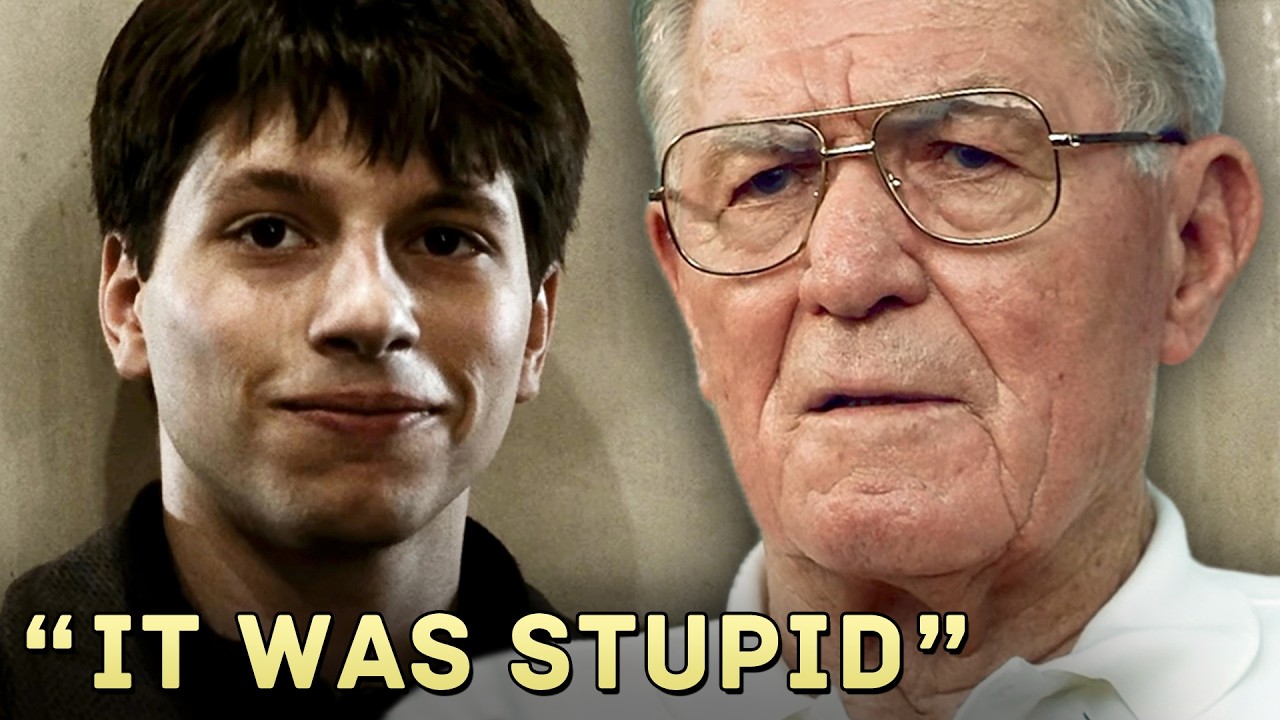
In that fictional sequence, Winters, on a 48-hour leave, rides the Paris subway alone at night. Across the carriage, he sees a young boy whose face triggers a haunting memory of the German soldier he shot during the October 5, 1944, action at the Crossroads in Holland. As he stares at the boy, flashbacks overwhelm him: the young German soldier smiling at him just before Winters fired. He loses all sense of time and place until the metro reaches the end of the line.
The boy steps off the train with him, salutes him with admiration, and the two part ways. The scene was designed to dramatize the psychological toll of combat and the lingering grip of post-traumatic stress. The only problem was that it never happened. Winters made his objection clear in a 2004 interview with American History magazine.
He recalled being interviewed for the production and telling one of the writers about the German soldier he had killed. When Winters shot him, the soldier looked at him and smiled. Winters continued with the rest of his story, but the writer latched onto that single detail. He wanted to build an entire flashback around the smile, the kind of intrusive memory that haunts a veteran for decades.
Winters acknowledged that he experiences flashbacks every day, but the writer focused on that one moment, and from it came the decision to portray the German soldier as a child and to stage the later Paris scene where Winters watches a boy on a train and relives the memory. Winters did not mince words about his reaction. He called the scene ridiculous. He never had the chance to review the footage before it aired.
The transformation of the soldier into a child was a significant departure from every available record. In Stephen Ambrose’s book Band of Brothers, which served as the basis for the series, the man is described simply as a German guard, with no mention of his age or anything unusual about his appearance. Winters’s own memoirs likewise refer to him only as a German soldier. Larry Alexander, who conducted extensive interviews with Winters for his biography The Biggest Brother, also described the man as an adult.
There is no indication in any of these sources that Winters shot a boy. The writers invented that detail to heighten the drama and to set up the Paris flashback sequence. There was another element of the scene that bothered Winters. He believed the performance did not match how he would have behaved.
In The Biggest Brother, Winters noted that the way Damian Lewis, the actor playing him, kept staring at the boy on the metro made it look as though he were trying to lure the child. Winters wondered what screenwriter Erik Jendresen had been thinking. He called it one of Jendresen’s worst ideas. The scene was crafted to show how PTSD affected the soldiers of Easy Company, including Winters himself.
That intention was legitimate, and the series was widely praised for bringing the psychological cost of war to a broad audience. But the way the writers achieved that effect came at the expense of the historical record. By turning the German soldier into a child, the show suggested, even if only by implication, that Winters had killed a minor during the Crossroads action. Every account from Winters, Ambrose, and Alexander points to the man having been an adult.
Winters was not one to publicly attack the series that had brought him and his men so much attention and respect. He generally tolerated the creative liberties taken throughout the production. But on this particular scene, he chose to speak out and correct the record. The Crossroads action itself was real, and it stands as one of the most celebrated small-unit engagements in American military history.
On October 5, 1944, near the Dutch town of Veghel, Lieutenant Winters led a small reconnaissance patrol against a German battery position. Armed with only rifles, grenades, and a single bazooka, Winters and his men killed or wounded approximately twenty Germans and destroyed several artillery pieces, all while taking minimal casualties. It was for this action that Winters was recommended for the Medal of Honor, though he ultimately received the Distinguished Service Cross instead. The real German soldier at the Crossroads was a man who, according to Winters, looked at him and smiled in the moment before he was shot.
That detail was true. The fictional transformation of that soldier into a child, and the imagined encounter on a Paris metro, was not. Winters wanted the public to understand the difference. He understood the need for drama in a television series, but he drew the line when the drama rewrote what he actually experienced.
For a man who spent his postwar years insisting that the heroes of Easy Company were the men who never came home, the invented image of a young boy he was forced to shoot must have felt like a distortion of both his memory and his service. He corrected it when he could, and the record now reflects his account.